

A narrow side yard can stir a quiet kind of frustration, and I mean… I’ve felt that same “what do I even do with it?” moment more times than I’d like to admit. Small footprints bring big questions, and I’m not sure but many homeowners end up ignoring that strip altogether.
Sunlight falls unevenly, pathways feel cramped, and clutter builds faster than motivation. Still, a spark shows up once you realize how much potential sits along that overlooked stretch.
A few smart upgrades can shift an entire home’s vibe, turning wasted space into something surprisingly warm, useful, and inviting. Here’s where fresh ideas finally give that forgotten strip its moment.
1. Serene Woodland Gravel Walkway – Transforming a Narrow Passageway into a Secret Garden
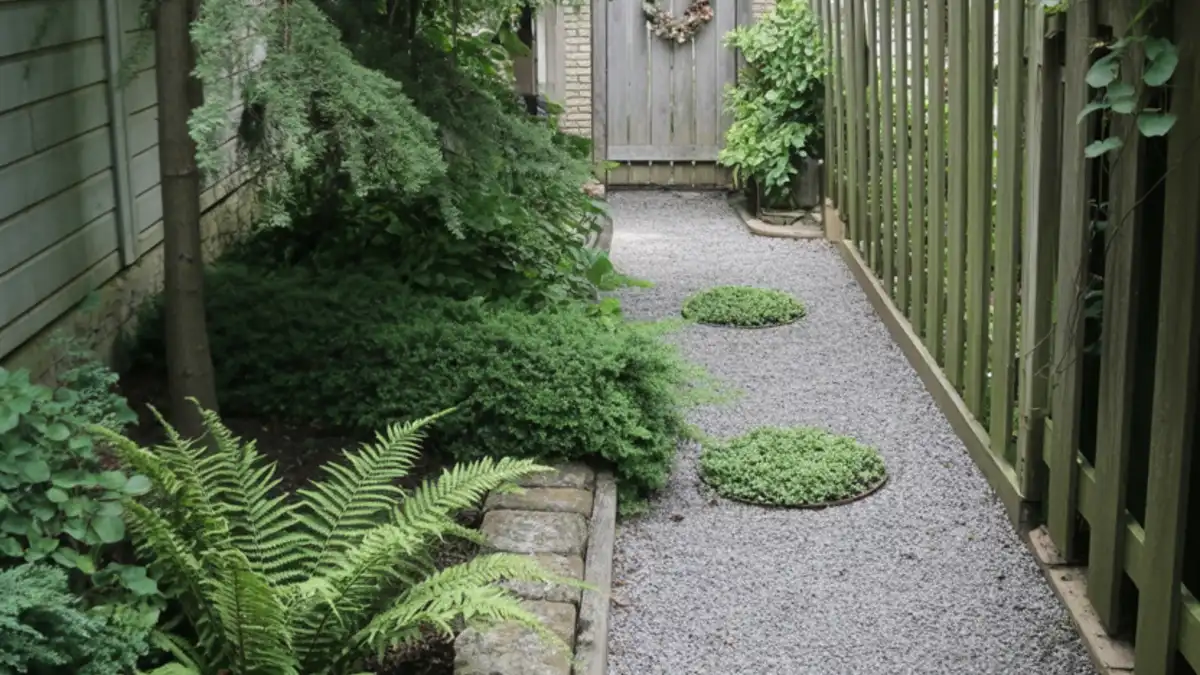
Neglected side strips often become dumping grounds for trash cans or tangled hoses, but a thoughtful mix of texture and greenery turns that narrative upside down.
Cool grey gravel creates an audible crunch underfoot, defining a clear path while keeping maintenance surprisingly low. Lush ferns and shade-loving ground cover spill over rustic stone edging, softening the hard lines between the house foundation and the walkway.
Textural Contrast: Rough stone borders and loose gravel sit in perfect harmony against the soft, feathery fronds of the ferns and the smooth wooden fence.
Defined Focal Points: Clever circular planting beds punctuate the stone path, adding whimsical pops of green that guide the eye straight to the charming wooden gate at the end.
Vertical Interest: Tall evergreens and deciduous trees create a natural canopy, offering dappled shade that makes the walk feel like a private hike through a forest rather than a shortcut to the backyard.
Privacy with Charm: A weathered picket fence provides necessary separation from the neighbors without feeling like a fortress, maintaining an open yet secluded atmosphere.
2. Rustic Harvest and Edible Greenery Side Yard – Cultivating Flavor in the Margins
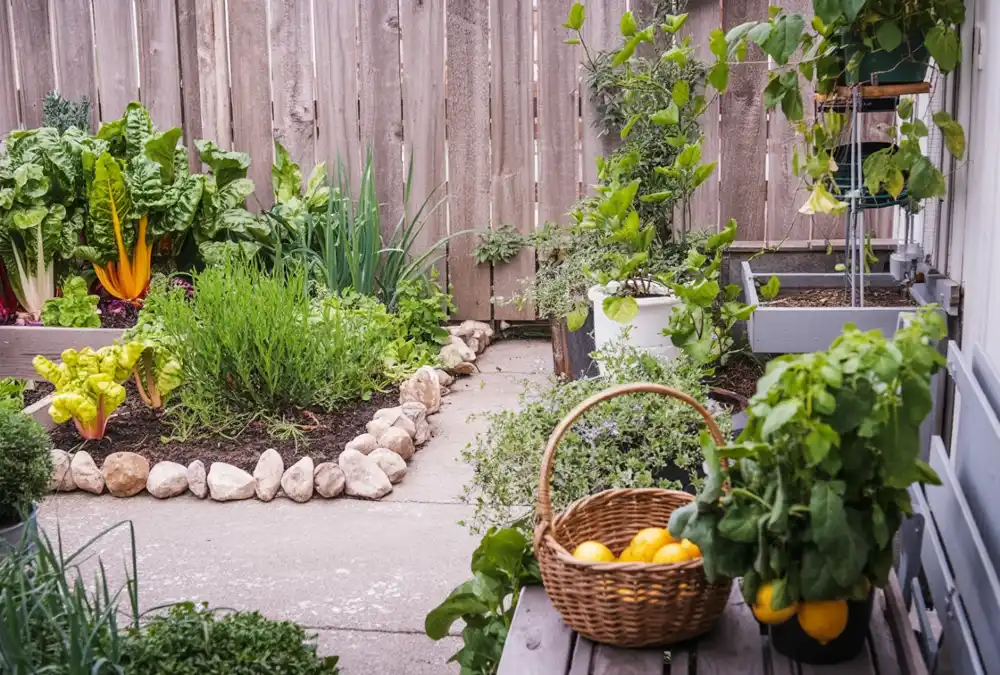
Concrete slabs often feel cold and utilitarian in narrow passages, but lining them with edible greenery softens the aesthetic instantly. Swiss chard with electric yellow stalks stands tall against the weathered grey fencing, turning a functional vegetable patch into a vibrant display of color that rivals any flower bed.
Bordering the rich soil, smooth river stones create a rugged, natural barrier that keeps the walkway clean while adding a tactile, earthy element to the hardscape. Vertical tiered stands and potted citrus trees make use of the vertical plane, ensuring production volume doesn’t suffer just because square footage is tight.
Functional Beauty: Brightly colored vegetables like chard and peppers serve a dual purpose as ornamental features and dinner ingredients.
Natural Textures: Wicker baskets, weathered wood, and rough stones contrast beautifully with the sleek, green leaves.
Space Optimization: Vertical planters and narrow beds prove that you don’t need a sprawling backyard to grow your own produce.
3. Rustic Burgundy Utility Wall – Maximizing Function in Narrow Corridors
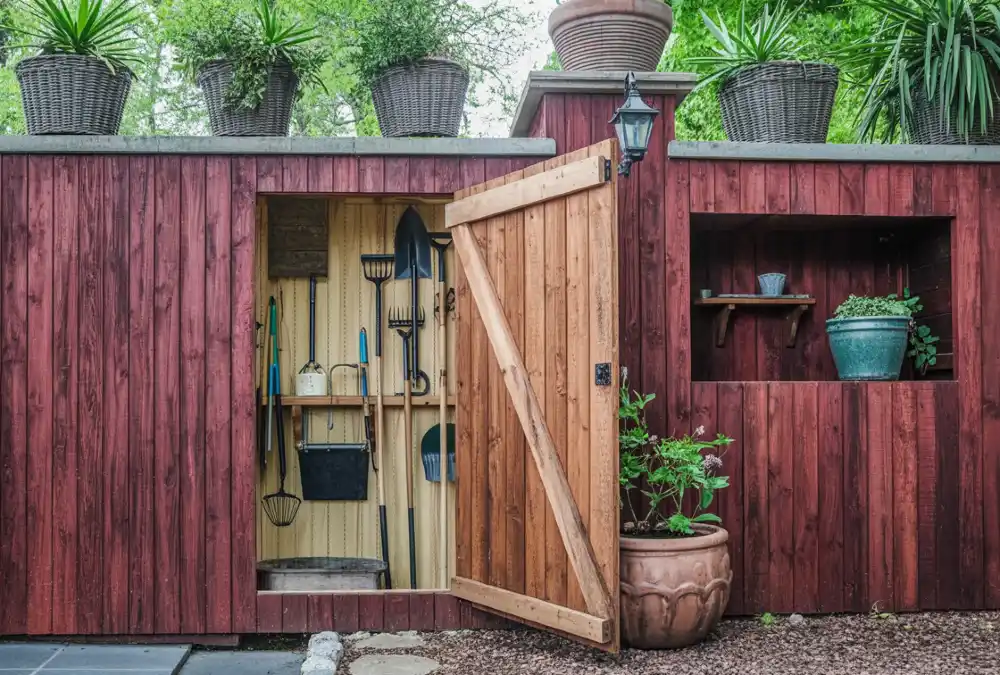
Clutter often plagues these tight spaces, but integrating storage directly into the boundary structure solves the mess without sacrificing precious walkway width. Deep burgundy vertical planking adds a splash of warm, rustic color that draws the eye away from the utility nature of the structure, turning a basic fence into a focal point.
Opening the custom wooden door reveals a pegboard paradise where rakes, shovels, and brooms hang in military precision, contrasting sharply with the usual chaotic pile of garden tools found in most side yards. Adding a row of woven baskets and ceramic pots along the roofline brings greenery upward, softening the structure’s height and making it feel like a garden feature rather than just a closet.
Concealed Organization: Shallow, built-in cabinets utilize the fence depth to hide unsightly tools while keeping them easily accessible.
Living Roofline: Topping the storage unit with potted yuccas and trailing plants adds vertical interest and breaks up the hard lines of the wall.
Material Harmony: Crushed red-brown gravel complements the wood stain, while slate grey pavers provide a solid, clean footing for high-traffic areas.
Niche Displays: Recessed shelving offers a perfect spot for decorative pottery or small shade-loving plants, breaking up the monotony of the wood surface.
4. Illuminated Alfresco Kitchen Corridor – Side Yard Entertaining Done Right
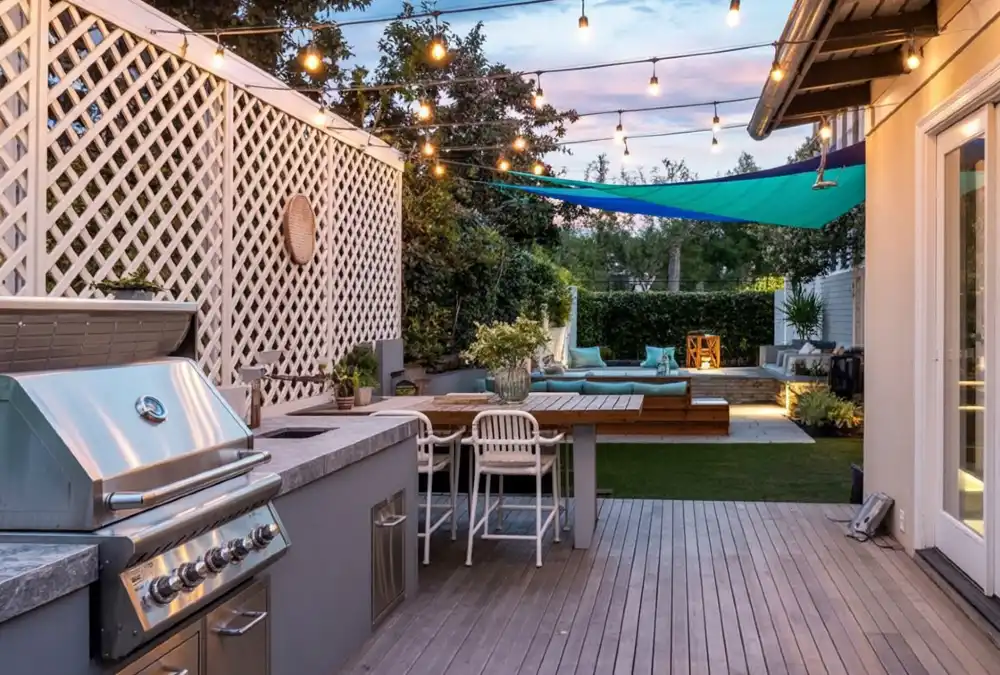
Treating the side of the house as a mere hallway to the backyard completely misses its potential as a prime entertaining zone. Installing a fully functional outdoor kitchen right off the side door changes the flow of summer parties entirely, keeping the smoke and cooking chaos away from the main seating areas.
Sleek grey countertops and a professional-grade stainless grill fit surprisingly well in this linear space, proving you don’t need a square footprint to cook up a storm. Overhead, festoon lighting zig-zags across the gap, instantly warming up the cool tones of the decking and creating that cozy bistro vibe we all crave.
Privacy with Airflow: Tall white lattice fencing screens out the neighbor’s view while still allowing summer breezes to cool down the cook, avoiding that claustrophobic “alleyway” feeling.
Ambiance Overhead: Simple string lights transform a narrow utility space into an inviting evening lounge, drawing guests out from the main house.
Seamless Transition: Running wooden decking flush from the kitchen area toward the grassy backyard visually expands the narrow corridor, making it feel like a continuous room rather than a path.
5. Formal Greenery and Stone Pathway – Elevating the Side Strip with European Structure
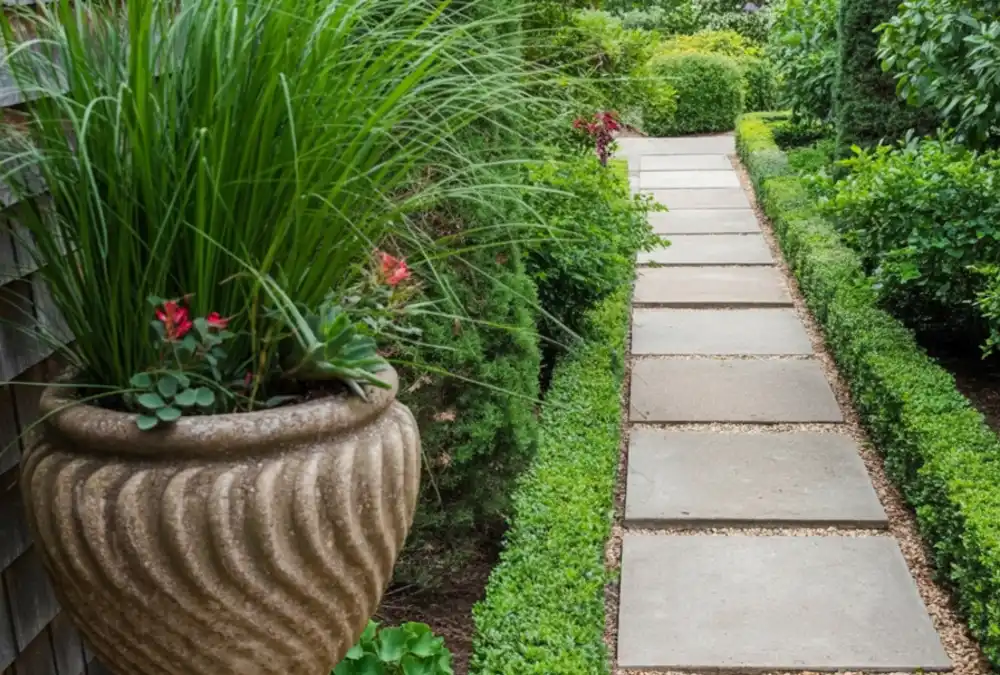
Wild overgrowth usually claims these narrow spaces, but taming them with geometric precision creates an entirely different, almost regal feeling. Heavy stone pavers provide a steady rhythm that slows you down, forcing you to appreciate the walk instead of just rushing through it to take out the trash.
Placing a massive, fluted urn right at the entrance creates an immediate focal point; it’s a bold move that signals this area is intentional and curated, not an afterthought. Warm wood shingles on the home’s exterior contrast beautifully with the cool grey of the hardscape, softening the rigid lines of the planting design.
Living Walls: Tall, columnar evergreens act like green sentries, offering privacy from next door without eating up the limited horizontal width available in a side yard.
Manicured Edges: Low, clipped boxwood hedges create a crisp, clean border that guides the feet and cleverly hides the messy bottom edge of fences or foundations.
Texture Play: Smooth, large stepping stones resting in loose pea gravel offer excellent drainage while preventing that muddy “slush” effect during rainstorms.
6. Sleek Aqua and Wood Lap Pool – Transforming Dead Space into a Private Resort
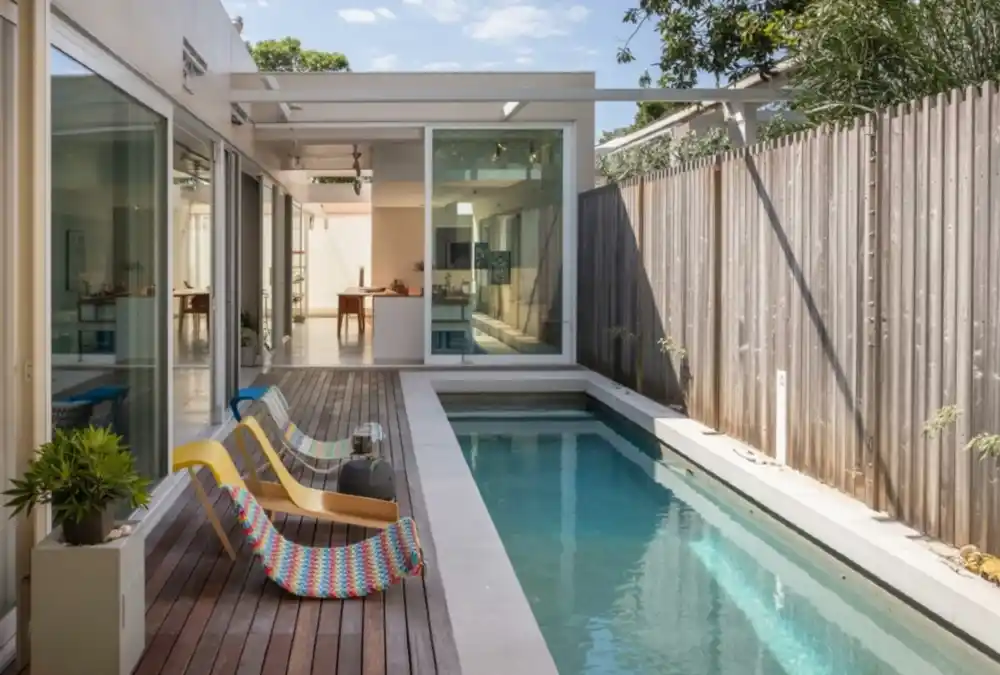
Who says a swimming pool requires a massive backyard to make a splash? Squeezing a refreshing plunge pool into a corridor usually reserved for A/C units is a bold move that pays off, turning a wasted strip into a high-end architectural feature. Crystal clear turquoise water runs the entire length of the home, creating a cooling effect that feels incredibly inviting on a hot day.
Large sliding glass doors erase the boundary between the indoor living area and the deck, which I honestly think is the smartest part of this design because it makes the interior feel huge.
Pop of Color: Low-profile, woven lounge chairs in vibrant yellow and blue add a playful, retro touch that breaks up the serious modern lines of the concrete and wood.
Clever Screening: Semi-transparent fencing allows sunlight to filter through while still blocking the view from next door, preventing that “caved-in” feeling common in narrow alleys.
Linear Flow: Orienting the decking planks parallel to the pool elongates the visual perspective, drawing the eye down the line and making the space appear much longer than it actually is.
7. Contemporary Slate and Cream Lounge – Turning Dead Space into a Sun Trap
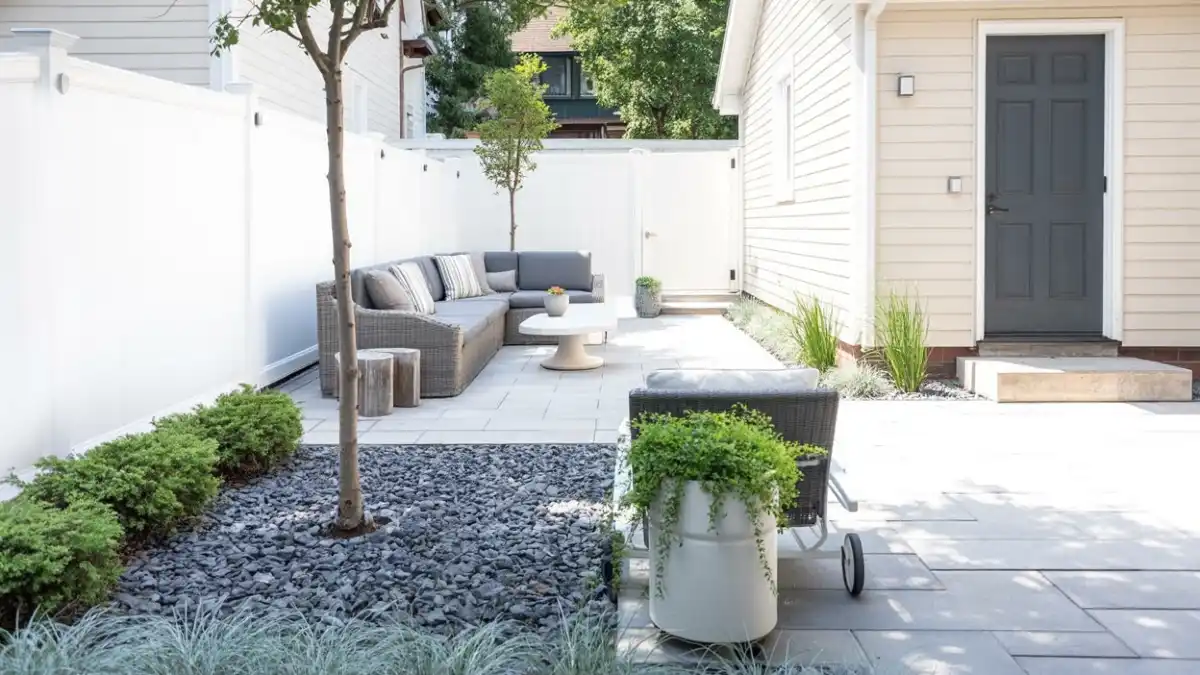
Sunlight floods this paved nook, proving that you don’t need a sprawling lawn to catch some rays. Paving the entire area with large, pale stone tiles instantly expands the visual footprint, making a narrow alley feel like a proper outdoor living room rather than a cramped corridor.
Contrast is key here; the deep charcoal slate chips surrounding the tree base really make the light beige siding and bright white fence pop, adding a modern edge that I honestly prefer over high-maintenance grass. A comfortable grey sectional tucked against the fence transforms the walkway into a destination, offering a surprisingly private spot for morning coffee or evening reading.
Texture Balance: Crushed blue-grey slate adds a raw, organic crunch that offsets the smooth, manufactured perfection of the patio pavers.
Vertical Zoning: Young trees planted within the hardscape break up the flat horizon line, adding necessary height without taking up valuable floor space.
Cohesive Accents: Painting the side door a deep charcoal links it visually to the dark gravel and furniture, tying the house into the garden design seamlessly.
8. Minimalist Zen and Concrete Lounge – A Side Yard Sanctuary for Silence
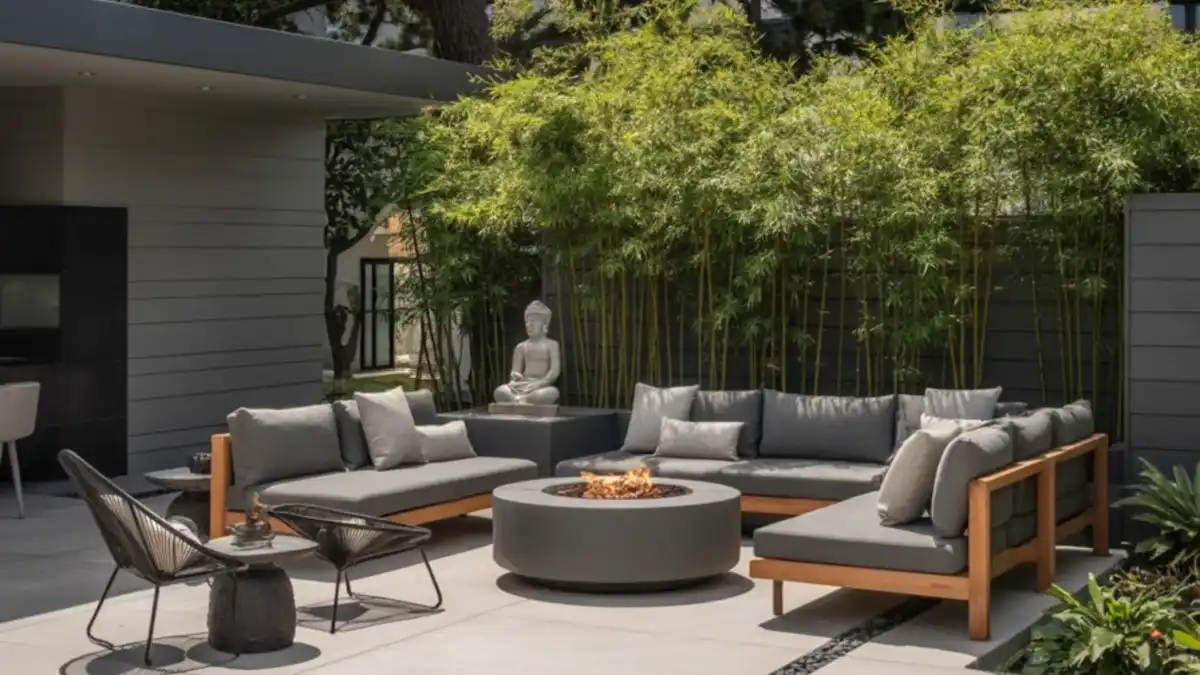
Neglected strips of land rarely feel this sophisticated, but using oversized concrete pavers immediately grounds the space in luxury. Dark, horizontal fencing provides a dramatic backdrop that makes the wispy green papyrus stalks practically glow in the sunlight, creating a high-contrast look that feels incredibly modern.
I honestly feel that choosing low-profile teak furniture is the secret weapon here; it keeps sightlines open and prevents the walls from feeling like they are closing in on you. A central concrete fire pit anchors the arrangement, promising warmth that extends the usability of this outdoor room well into the cooler months.
Vertical Softening: Tall, reed-like plants add essential height and movement, breaking up the rigid lines of the privacy fence without encroaching on the seating zone.
Linear Details: Narrow channels of dark river rocks running between the concrete slabs act as visual guidelines, subtly elongating the space while handling drainage.
Zen Elements: Placing a meditative statue in the corner reinforces the quiet atmosphere, reminding us that even a side yard can be a place for mental clutter to dissolve.
9. Sculptural White and Cacti Courtyard – Turning a Corridor into a Modern Gallery
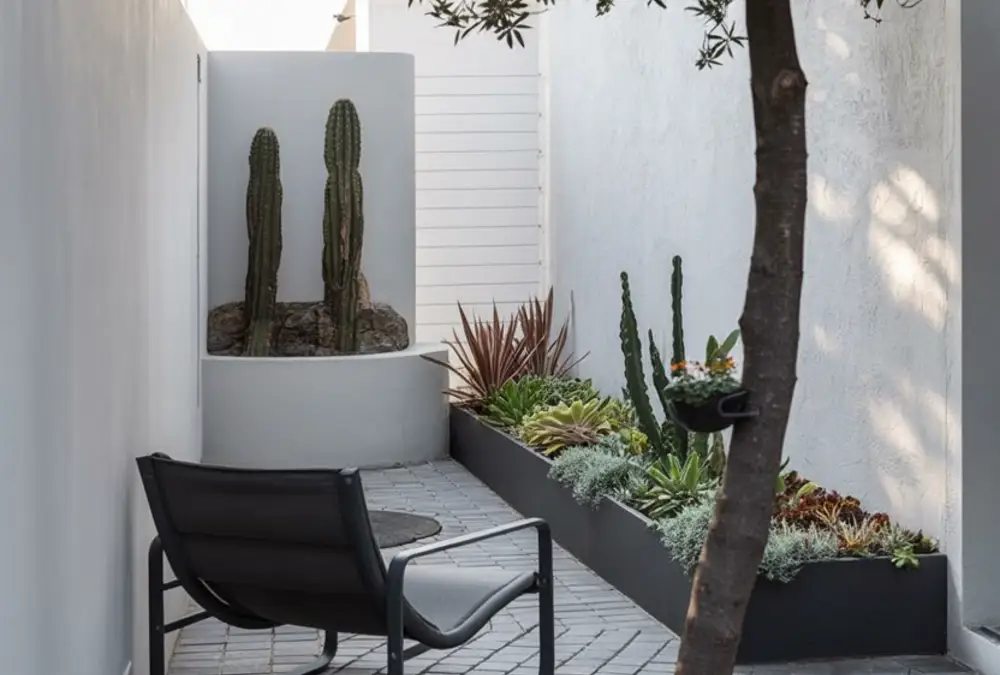
High walls usually make a space feel small, but painting them stark white actually does the opposite here, bouncing light around to create an airy, open feeling. It honestly feels more like walking through an outdoor art gallery than a side yard.
A solitary black chair sits quietly in the corner, inviting you to pause and admire the living sculptures—those tall, rigid cacti—rather than just rushing past them to get to the garage. Stark contrast defines the design, where the organic, rugged shapes of the plants stand out boldly against the clean, architectural lines of the planters and fencing.
Patterned Ground: Fan-shaped cobblestone pavers introduce a necessary textural rhythm that contrasts with the smooth, flat plaster of the walls, keeping the floor from looking boring.
Low-Water Artistry: Utilizing a mix of tall cacti and low-lying succulents in raised beds keeps maintenance excessively low while providing high visual impact.
Shadow Play: Dappled sunlight filtering through the overhead tree limbs creates moving artwork on the blank white canvas of the walls throughout the day.
10. Terracotta and Tropical Atrium – Extending the Living Room Outward
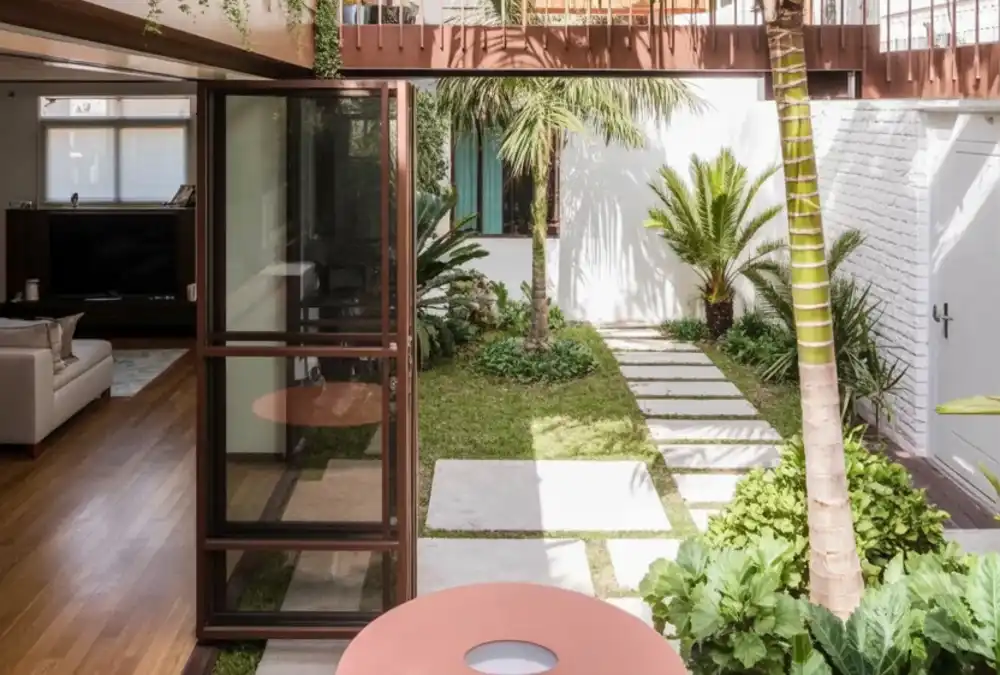
Vertical space is often ignored in these narrow strips, yet looking up reveals the biggest opportunity for expansion. Framing the house in deep terracotta metal creates a striking industrial-meets-tropical vibe that feels warm even on a cloudy day.
Massive glass pivot doors swing wide, effectively erasing the wall between the cozy living room and the grassy courtyard. Lush palm fronds and trailing succulents spill over the upper balconies, softening the hard architectural lines and making the whole volume feel like a contained jungle.
Overhead Connection: An elevated metal walkway connects the upper floors, turning the air above the side yard into usable square footage rather than just empty space.
Permeable Paving: Rectangular stone pavers set directly into the grass allow for drainage and keep the aesthetic soft and organic, unlike a solid concrete slab.
Cascading Greenery: Placing planters on the second-story ledges draws the eye upward, surrounding you with nature from every angle, not just at ground level.
11. Breezy Mediterranean Terracotta Dining – Turning a Corridor into a Café
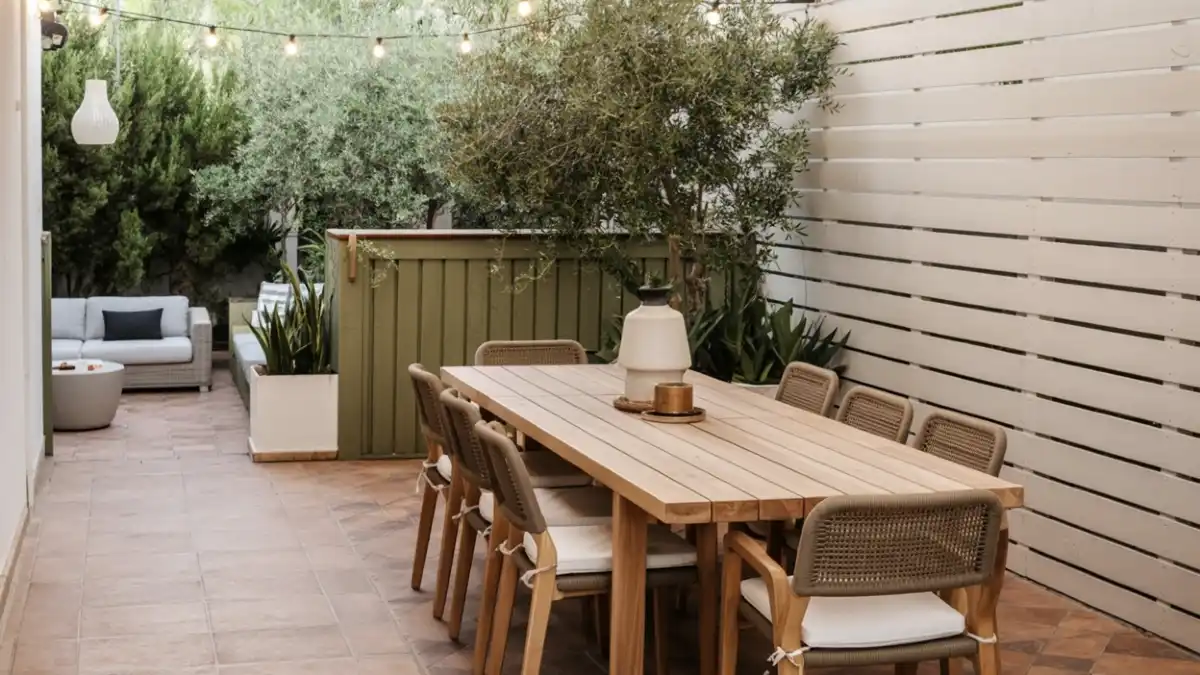
Dining al fresco often feels exposed in a big backyard, but tucking a long table into the side yard creates an instant sense of intimacy that main patios frequently lack. Star-shaped terracotta tiles underfoot bring a distinct European warmth, contrasting sharply with the crisp white horizontal fencing that reflects light and brightens the entire “tunnel.”
Overhead, a billowing white fabric canopy softens the harsh midday sun, turning a space that would usually be a heat trap into a cool, shaded retreat perfect for lunch. Potted olive trees and a sage green gate act as soft dividers, breaking up the length of the area so it feels like a dedicated room rather than just a pass-through.
Softened Ceiling: Draping fabric sails overhead lowers the visual height of the space, making the narrow area feel cozy and protected rather than canyon-like.
Old World Charm: Rustic terracotta flooring provides a timeless, durable base that hides dirt well and adds character that plain concrete lacks.
Reflected Light: Painting the tall privacy fences bright white bounces natural light into the dining area, ensuring it feels airy despite being enclosed.
12. Old World Spanish Colonial Courtyard – The Side Yard as a Majestic Destination
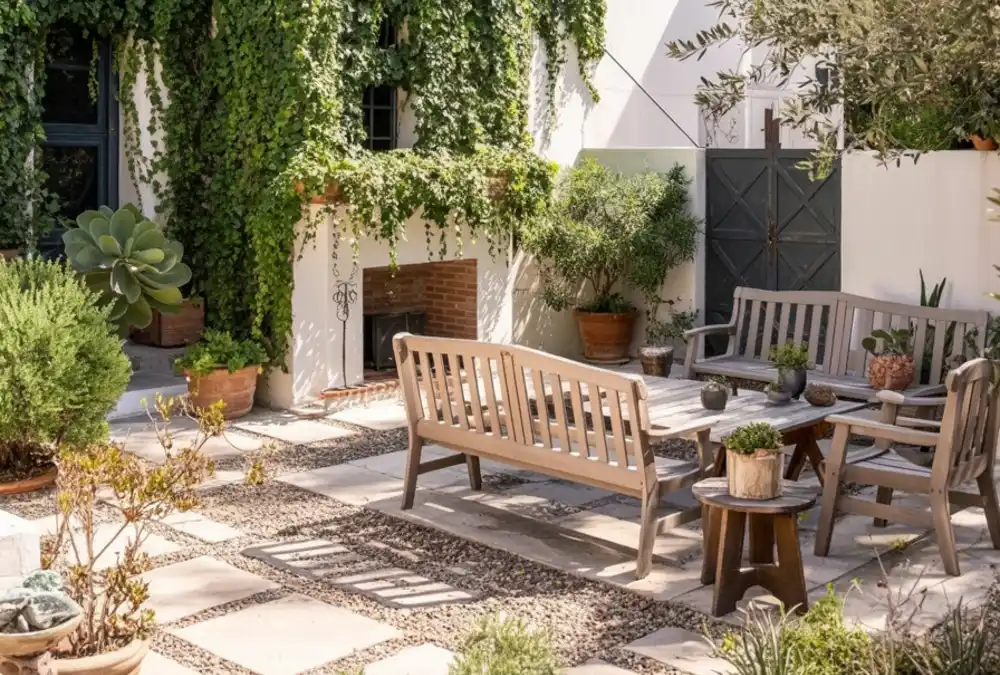
Instead of just walking through, this design forces you to stop and stay. The massive outdoor fireplace, practically consumed by vibrant green ivy against the stark white stucco, instantly transforms a utilitarian pass-through into the property’s most romantic feature.
Weathered teak benches arranged on a smooth concrete pad create an intimate conversation pit that feels surprisingly private thanks to the high surrounding walls and the mature olive tree overhead. Mixing textures like crunchy gravel, large flagstone pavers, and sculptural succulents keeps the ground level interesting and drought-tolerant without requiring constant mowing.
Architectural Anchors: Building a substantial structure like a fireplace in the side yard signals that this is a primary living space, not an afterthought.
Vertical softening: Allowing aggressive vines to overtake the chimney stack instantly ages the property, giving a brand-new renovation a sense of history and permanence.
Material Palette: Dark shutters, terracotta roof tiles, and rustic wood furniture work together to create a cohesive Spanish Colonial vibe that feels warm and inviting.
13. Rustic Brick and Emerald Tropical Walkway – A Culinary Escape in the Side Yard
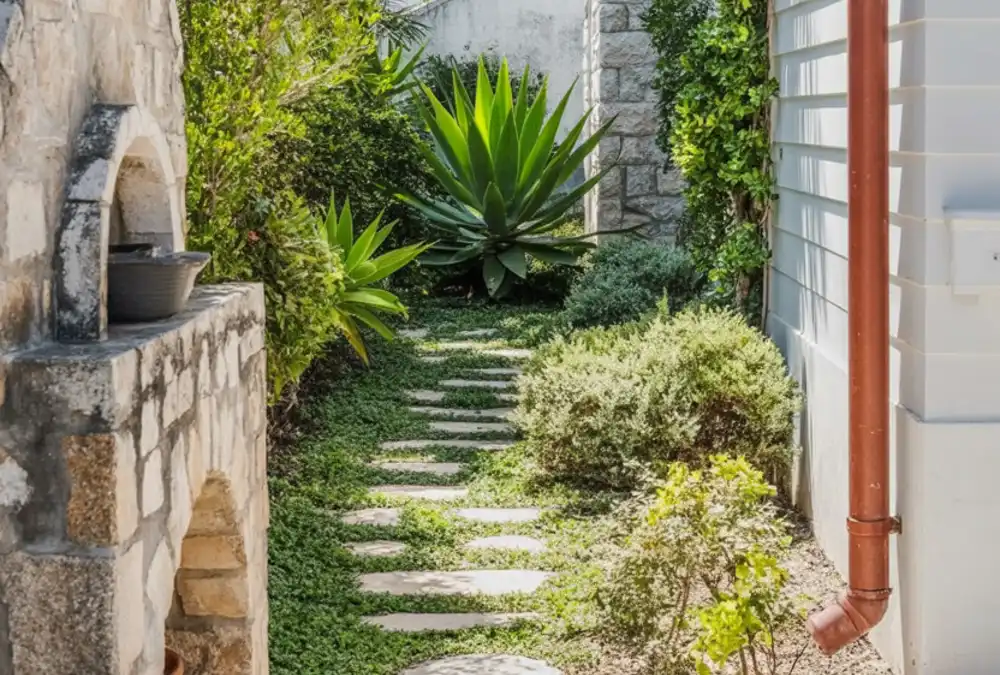
Installing a massive brick pizza oven in such a tight corridor seems audacious at first, but it effectively anchors the space, turning a simple walkway into a destination. Lush, emerald green ground cover creeping between the rectangular pavers softens the hardscape significantly, making the journey feel organic rather than rigid.
Sunlight filtering through the palm fronds overhead hits the whitewashed brick and siding, creating a bright, airy vibe that contrasts perfectly with the rustic, weathered tones of the masonry. It honestly feels like stumbling upon a hidden villa in the tropics rather than just walking around the side of a suburban house.
Culinary Focus: Integrating a wood-fired oven transforms the space from a transit zone into a functional outdoor kitchen, encouraging guests to gather where they usually wouldn’t.
Softened Hardscape: Spacing out the stone pavers allows nature to reclaim the path, reducing the heat island effect and aiding with drainage.
Tropical Layering: Diverse leaf shapes, from spiky palms to round bushy herbs, create depth and privacy without needing a massive footprint.
14. Modern Resort Lounge – A Five-Star Side Yard Retreat
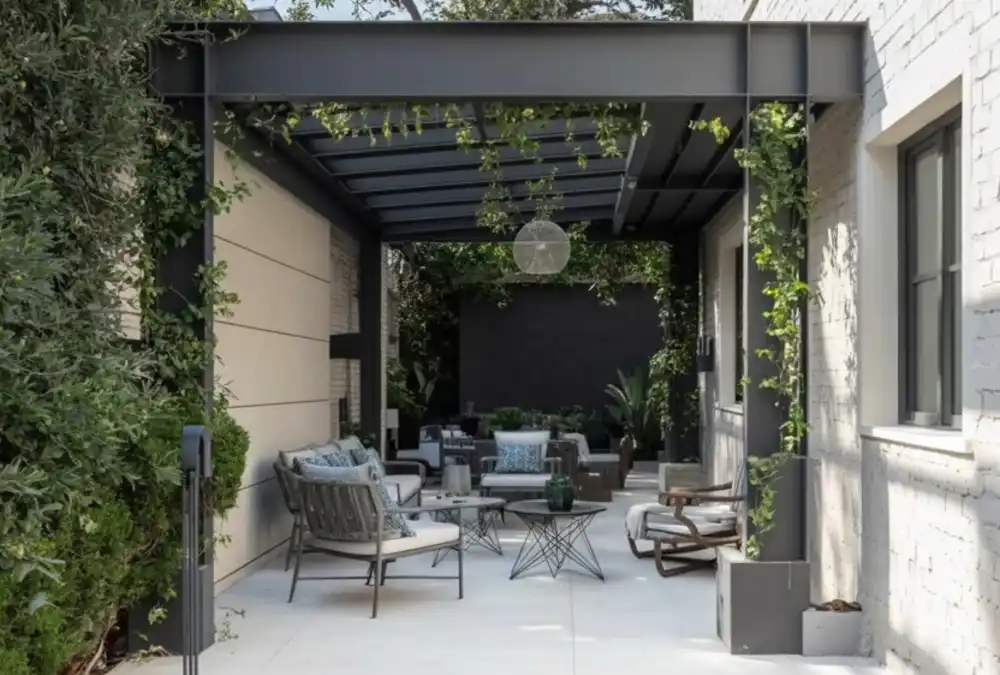
Instead of a neglected alley for trash cans, this side yard has been elevated into a private luxury zone that rivals a boutique hotel. Light-colored pavers brighten the narrow space significantly, bouncing sunlight around and making it feel much wider than it actually is.
A substantial dark metal pergola defines the lounge area, providing necessary shade and architectural structure without closing the space in completely. Just past the comfortable striped armchairs, a dining set offers an intimate spot for al fresco meals, all tucked privately behind a massive green hedge that completely blocks the outside world.
Plunging right into the small, tiled pool at the entrance turns a simple walk around the house into a tempting opportunity for a cooling dip.
Indoor-Outdoor Flow: A convenient pass-through window from the kitchen makes serving drinks or snacks to the poolside lounge incredibly easy.
Vertical Softening: Climbing vines training up the rigid metal posts of the pergola help blend the modern structure with the natural surroundings.
Defined Zones: Using the pergola to frame seating creates distinct “rooms” within the linear footprint, preventing it from feeling like one long hallway.
15. Minimalist Grey and Green Lawn Strip – Finding Serenity in Simplicity
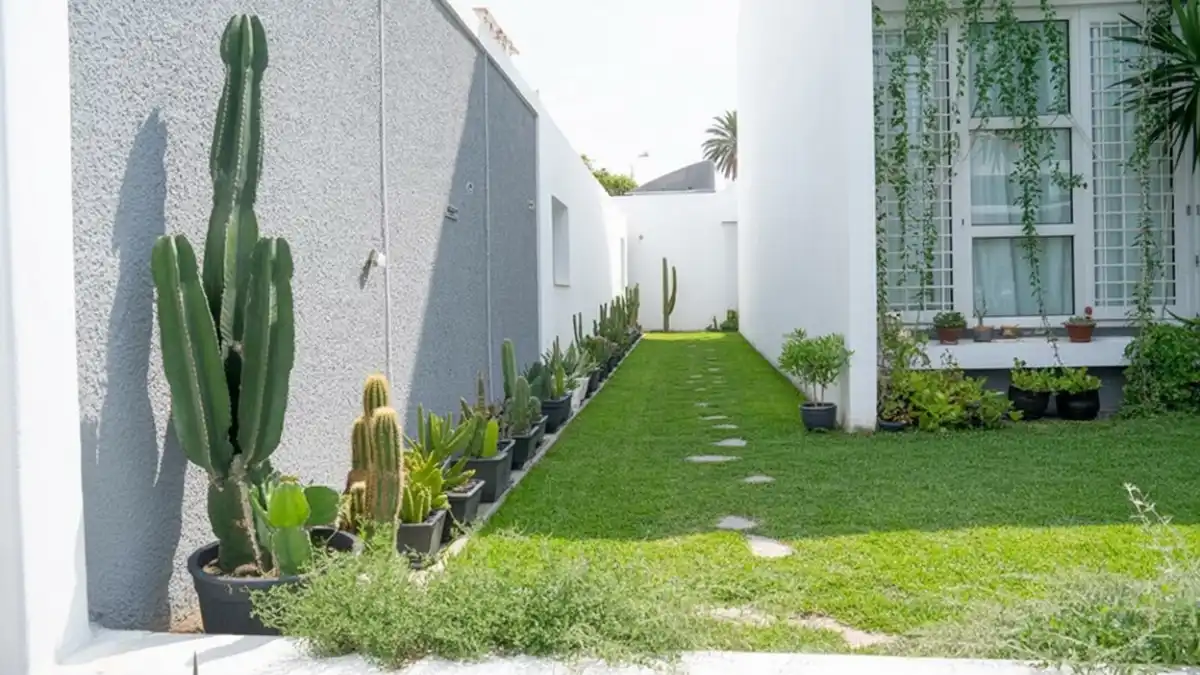
Overcomplicating a narrow space often makes it feel smaller, but stripping it back to a pristine carpet of green grass achieves the exact opposite effect. A towering grey concrete wall provides a stark, industrial canvas that makes the organic shapes of the tall cactus and upright snake plants stand out in high definition.
Contrast is the name of the game here; the rugged texture of the boundary wall highlights the delicate, trailing vines cascading down the clean white window frames across the way, softening the architecture without cluttering the ground.
Vertical Softening: Trailing greenery hanging from the window frame acts as a natural curtain, offering privacy for the interior without blocking the sunlight.
Sculptural Planting: Using architectural plants like tall cacti and upright snake plants along the perimeter adds height and drama without eating into the walkway width.
Textural Balance: Rough grey concrete and smooth white plaster create a modern backdrop that allows the vibrant green of the lawn to truly pop.
16. Manicured Green Bocce Court – Turning the Alley into a Competitive Game Zone
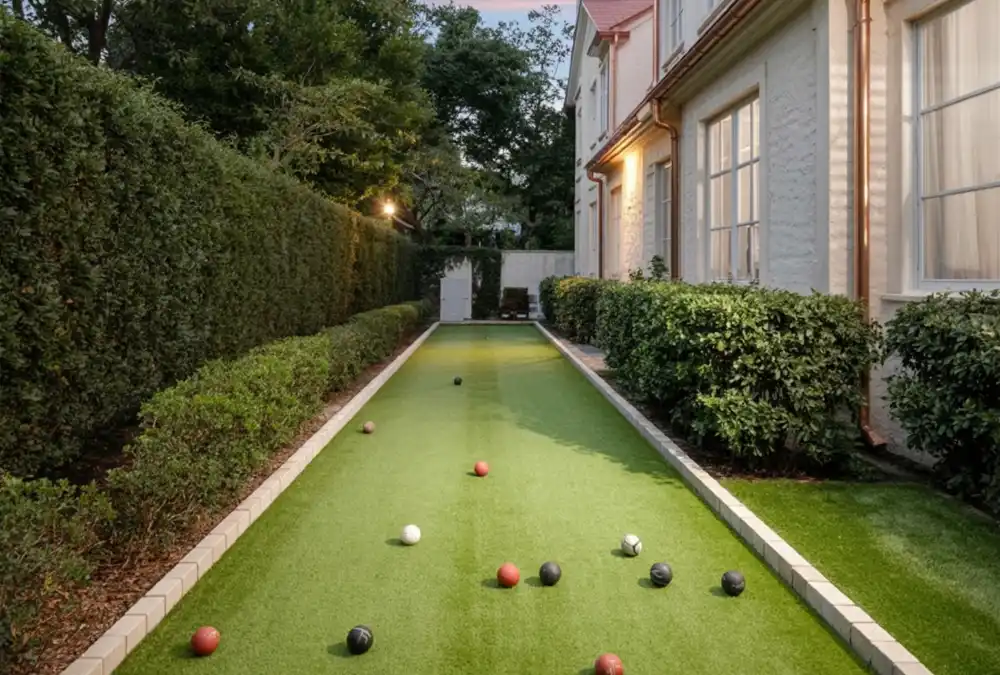
Long, narrow spaces usually frustrate homeowners, but they are actually the perfect geometry for a bocce ball court. I mean, it makes so much sense when you look at it, fitting the game lane perfectly into the footprint where grass usually struggles to grow.
Installing a dedicated lane with low-maintenance turf creates a smooth, fast surface for the red and green balls to roll, turning a dead patch of dirt into the highlight of every weekend party. Copper gutters and warm exterior lighting on the house add a layer of unexpected elegance to what is essentially a game room without a roof.
Linear Perfection: Utilizing the natural corridor shape of the side yard eliminates the need for complex landscaping, letting the game court define the space.
Privacy Screen: Tall, dense hedges act as a natural sound barrier and privacy wall, keeping the noise of the game contained and the neighbors happy.
Low Maintenance: Bordering the court with stone and using synthetic grass means you spend time playing rather than mowing or weeding tight corners.
17. Classic White and Stone Secret Garden – A Timeless Retreat from the Daily Grind
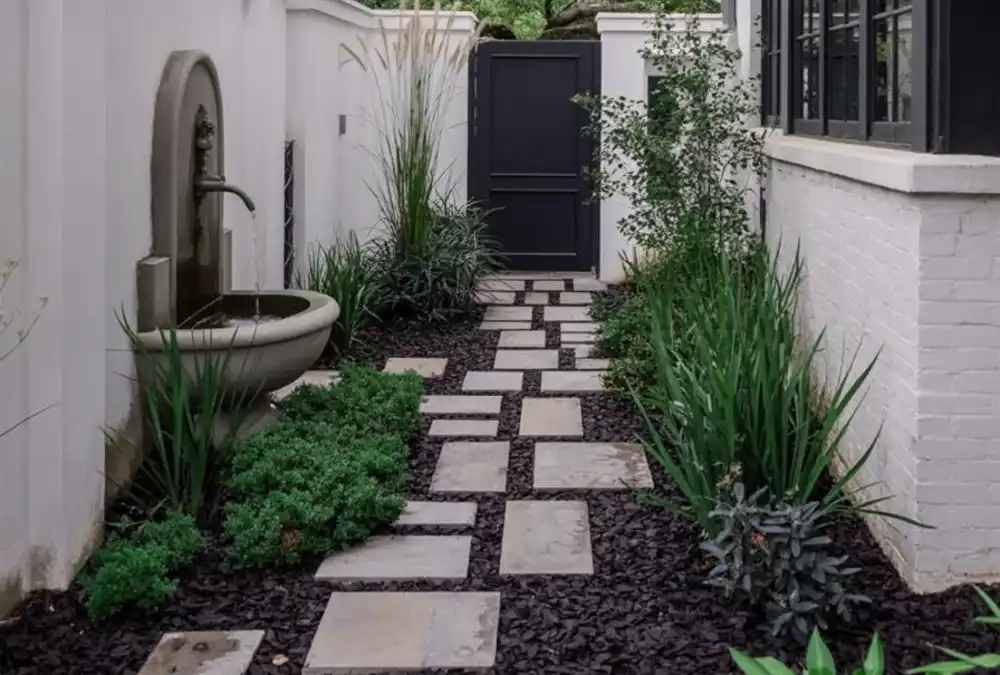
Escaping the noise of the street becomes instant reality when you step into a side yard designed with such intentional privacy. High white stucco walls act less like barriers and more like the enveloping arms of a secret outdoor room, shutting out the suburban bustle instantly.
A weathered stone fountain, mounted directly to the wall, introduces the soothing sound of trickling water, effectively masking neighborhood chatter or distant traffic.
Large, irregular flagstones interspersed with dark, moody ground cover create a path that feels ancient and established, leading the eye straight to that stunning arched dark metal gate at the far end. Mature tree limbs reach over the walls like a natural ceiling, completing the feeling of being somewhere far away from home.
Auditory Privacy: Installing a wall-mounted fountain serves a dual purpose as a visual feature and a crucial acoustic barrier, drowning out AC units with gentle splashing.
Softened Hardscape: Interplanting dark mondo grass between large flagstone pavers breaks up the expanse of stone and adds a lush, living texture that feels soft underfoot.
Dramatic Termination: A dark, ornate metal gate acts as a powerful focal point, drawing you down the path and hinting at another space beyond.
18. Rustic Industrial Pergola Path – Framing the Journey with Texture and Greenery
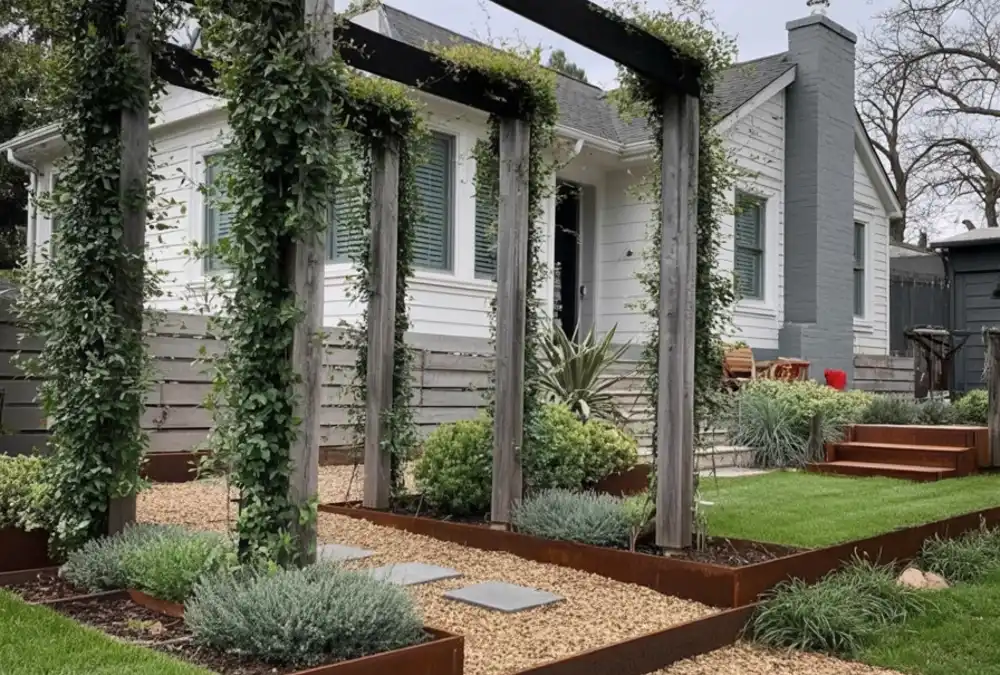
Often, side yards are just a means to an end, but this design uses bold structures to turn the walk itself into an event. Weathered, rough-hewn timber posts rise from the ground, forming a series of arches that instantly define the pathway and draw the eye forward.
Over time, the climbing vines currently scaling the posts will create a lush green tunnel, offering a sense of enclosure and mystery. Below, rusty Corten steel planter boxes provide a sharp, modern contrast to the natural wood, their warm orange-brown hues complementing the earthy tones of the pea gravel walkway.
Defined Passage: The sequence of timber arches creates a clear visual corridor, transforming a simple strip of land into a deliberate journey from front to back.
Material Harmony: Combining rough, aged wood with sleek, oxidizing steel and crunchy gravel creates a rich textural palette that feels both rugged and contemporary.
Softened Steps: Integrating circular stone pavers into a bed of low-growing green ground cover breaks up the gravel expanse and adds a soft, living element to the transition areas.
19. Modern Minimalist Pebble and Paver Retreat – Brightening the Forgotten Corridor
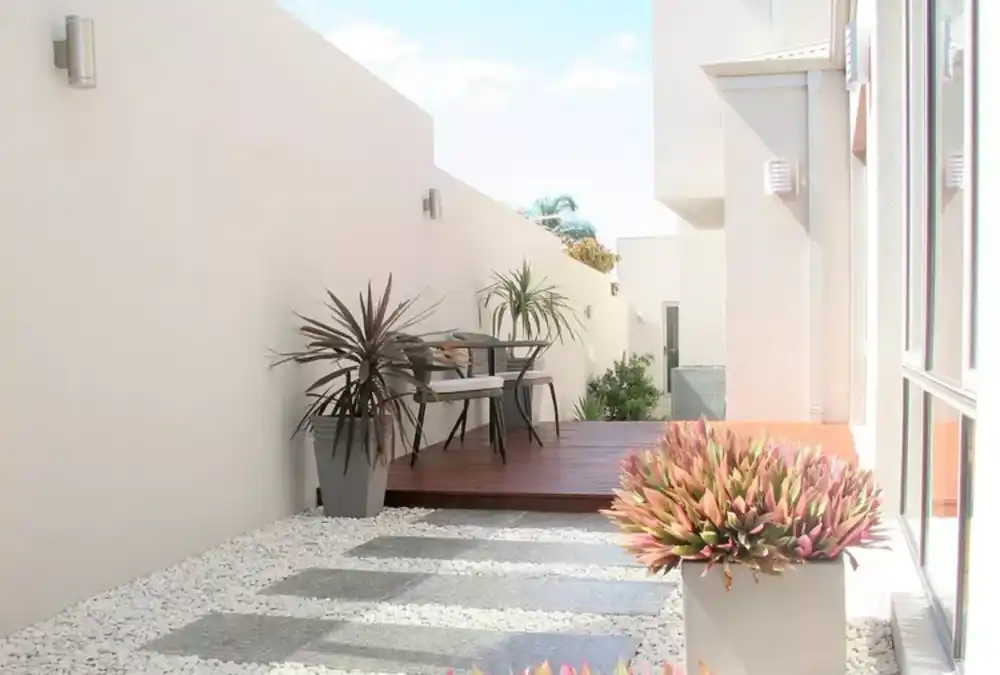
Narrow side yards often feel dark and cramped, but flooding the space with white instantly blows out the walls and makes the area feel expansive and bright. Large, cool grey pavers set into a bed of blindingly white pebbles create a rhythmic walkway that requires zero mowing and absolutely no watering; it’s the ultimate anti-chore landscape.
Intense pops of reddish-pink from the spiky architectural plants in sleek square pots break up the monochrome palette, proving you don’t need a riot of high-maintenance flowers to have vibrant color. Leading the eye to the back, a raised timber deck provides a distinct destination, turning a mere pathway into a functional morning coffee spot.
High-Contrast Geometry: The sharp visual break between the organic, loose pebbles and the rigid, geometric pavers creates a sophisticated, clean look that feels intentionally designed.
Foliage Over Flowers: Relying on dramatic, colorful leaf structures like these cordylines ensures year-round interest without the seasonal die-back and deadheading required by traditional blooms.
Destination Decking: Elevating the seating area on a wood platform at the far end creates a focal point that draws you through the space, making the yard feel longer.
20. French Country Grilling Nook – A Culinary Escape Behind the Blue Gate
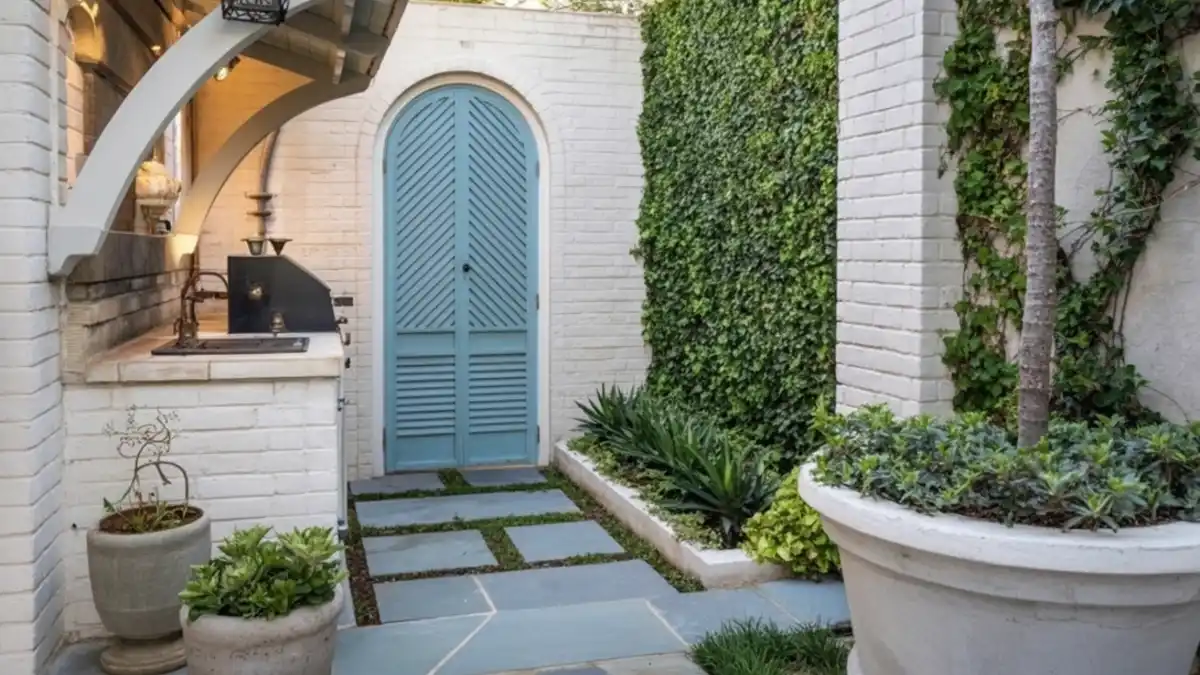
Stepping into this side yard feels less like a shortcut to the trash cans and more like stumbling upon a hidden courtyard in Provence. Tucking the stainless steel grill under a custom overhang supported by chunky white corbels keeps the chef dry and creates a dedicated cooking zone without cluttering the main patio.
That soft, powder-blue arched gate is the absolute star here, breaking up the sea of white brick with a splash of storybook charm that promises something magical lies beyond. Softening the opposite wall with a thick carpet of climbing ivy creates a “living wallpaper” effect that cools the space down visually and acoustically, balancing the hard masonry with aggressive nature.
Permeable Elegance: Large slate pavers separated by ribbons of grass allow the ground to breathe and prevent the space from feeling like a concrete tunnel.
Architectural Shelter: Adding a small roof extension over the grill protects the equipment and defines the area as a functional outdoor room.
Statement Hardware: An ornate iron lantern hanging above the cooking station adds instant age and character, reinforcing the European cottage aesthetic.
21. Golden Earth and Sculptural Xeriscape – The Art of Low-Water Wandering
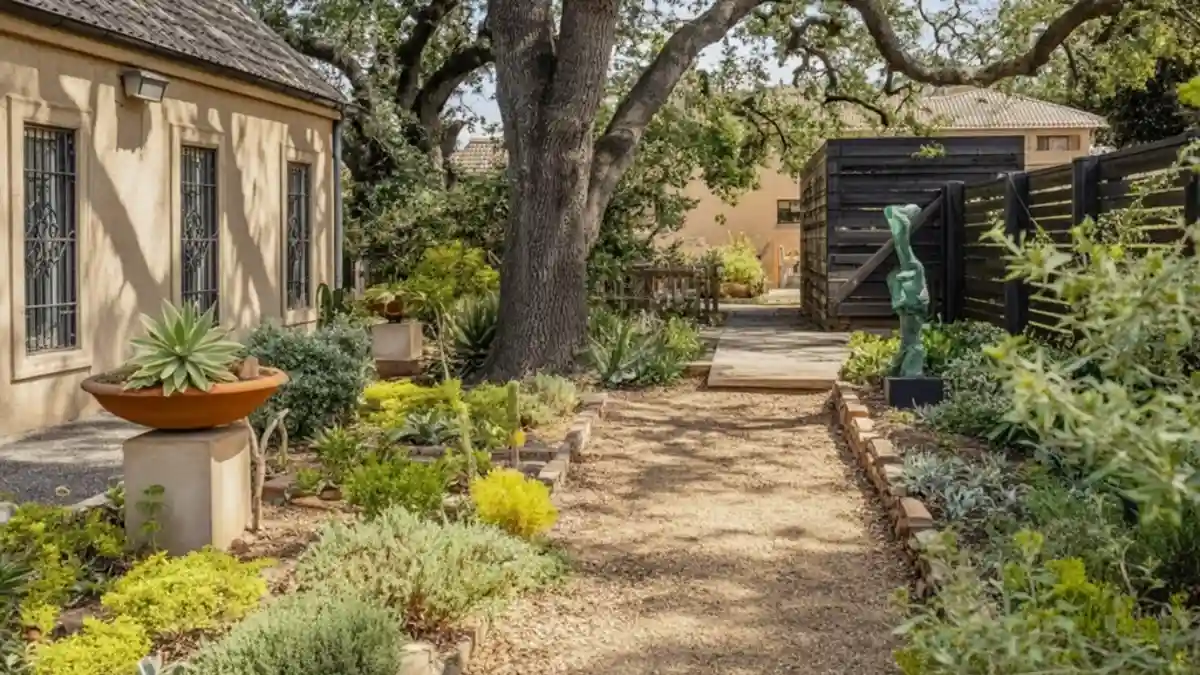
Massive, gnarled branches stretching overhead completely change the vibe here, turning a sunny walk into a dappled, protected journey. Decomposed granite makes for such a satisfying, crunchy surface that drains instantly, which I think is way smarter than pouring more concrete that eventually cracks.
Lining the beds with salvaged bricks gives it that “been here forever” look, contrasting really well with the sharp, modern lines of the black horizontal fencing on the right. Plunking a modern sculpture right next to the path is a bold move, but it works, transforming the garden into a personal gallery.
Natural Canopy: Relying on existing mature trees to roof the space creates immediate scale and drama that no man-made pergola can match.
Textural Edging: Low borders of rustic brick keep the loose gravel contained while defining the planting zones without feeling too rigid or manicured.
Artistic Interludes: Nestling abstract statues among the drought-tolerant shrubs proves that art isn’t just for the living room walls.