
I know that tug between loving cozy spaces and worrying about your footprint. Solarpunk style steps right into that tension: sun-drenched rooms, living greenery, tech that quietly cuts your bills, colors that feel hopeful instead of harsh.
I mean, who says eco-conscious design has to look like a science lab or a rustic cabin? I am not sure but maybe you crave a space that feels like a small rebellion against bland suburbia and climate anxiety at same time.
In upcoming ideas, you will see how to weave solar panels, smart storage, reclaimed materials, and biophilic touches into a home that feels light, future facing, and genuinely you.
1. Bamboo and Stone Riverfront Sanctuary – Future-Proof Living with Organic Elegance
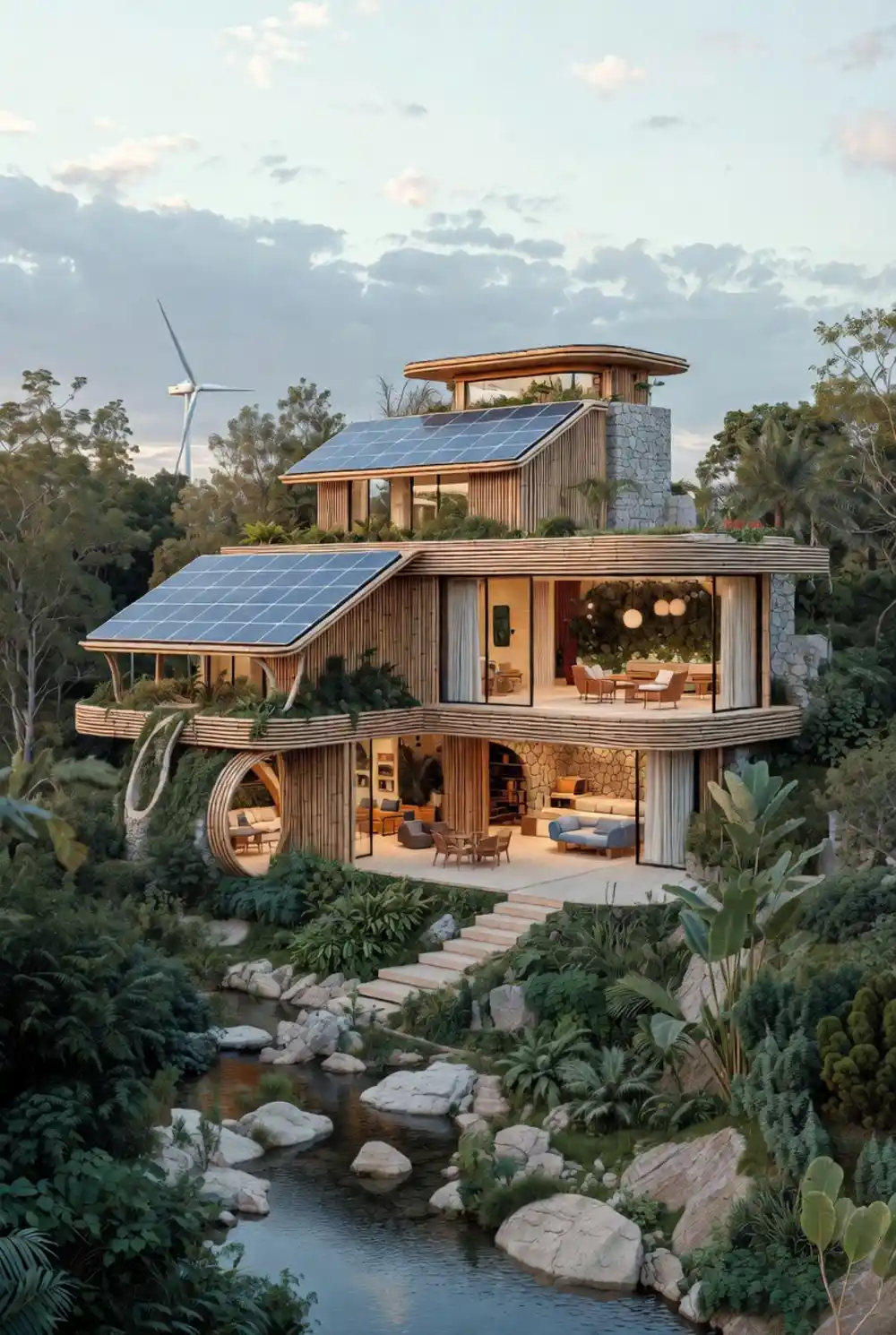
Natural Material Fusion Blending rustic gray stone masonry with warm, vertical bamboo slats creates a texture that feels both grounded and surprisingly airy. You see how the heavy stone anchors the structure to the earth, while the lighter timber elements define the rooflines and railings, making the home look like it grew naturally out of the forest floor. It’s a masterclass in using contrasting organic materials to achieve architectural harmony.
Integrated Green Energy Generating power becomes a key visual statement here, with sleek solar arrays mounted prominently on the tiered flat roofs rather than being hidden away. A white wind turbine spins silently in the background, confirming that this residence isn’t just about looking green—it’s a fully functional, off-grid powerhouse designed for modern independence. Energy efficiency serves as a proud design feature rather than an afterthought.
Seamless Indoor-Outdoor Flow Floor-to-ceiling glass walls completely erase the boundary between the cozy, warm-lit interiors and the lush tropical environment outside. Stepping out onto those cantilevered bamboo decks offers an immersive experience with nature, perfect for enjoying the view without sacrificing the comfort of a luxury living room. Living here means constantly engaging with the outdoors while staying protected from the elements.
Organic Architectural Geometry Sweeping curves and stacked, geometric levels prevent the multi-story house from feeling blocky or imposing against the skyline. Notice that striking circular cutout on the lower level; it frames the landscape like a living painting and adds a playful, artistic touch to the structural support system. Architecture that mimics the curves of nature always feels more welcoming and less intrusive.
Tranquil Water Setting Rushing water flowing over smooth boulders in the foreground provides a natural soundtrack and a passive cooling effect for the entire property. Warm, golden light spills out from the interior rooms, creating an inviting lantern effect that contrasts beautifully against the cool, blue-grey twilight hues of the surrounding forest and sky. Nature and design work together here to set a mood of absolute tranquility.
2. Golden Bamboo & Glass Pod – A Solar-Powered Eco-Retreat Design
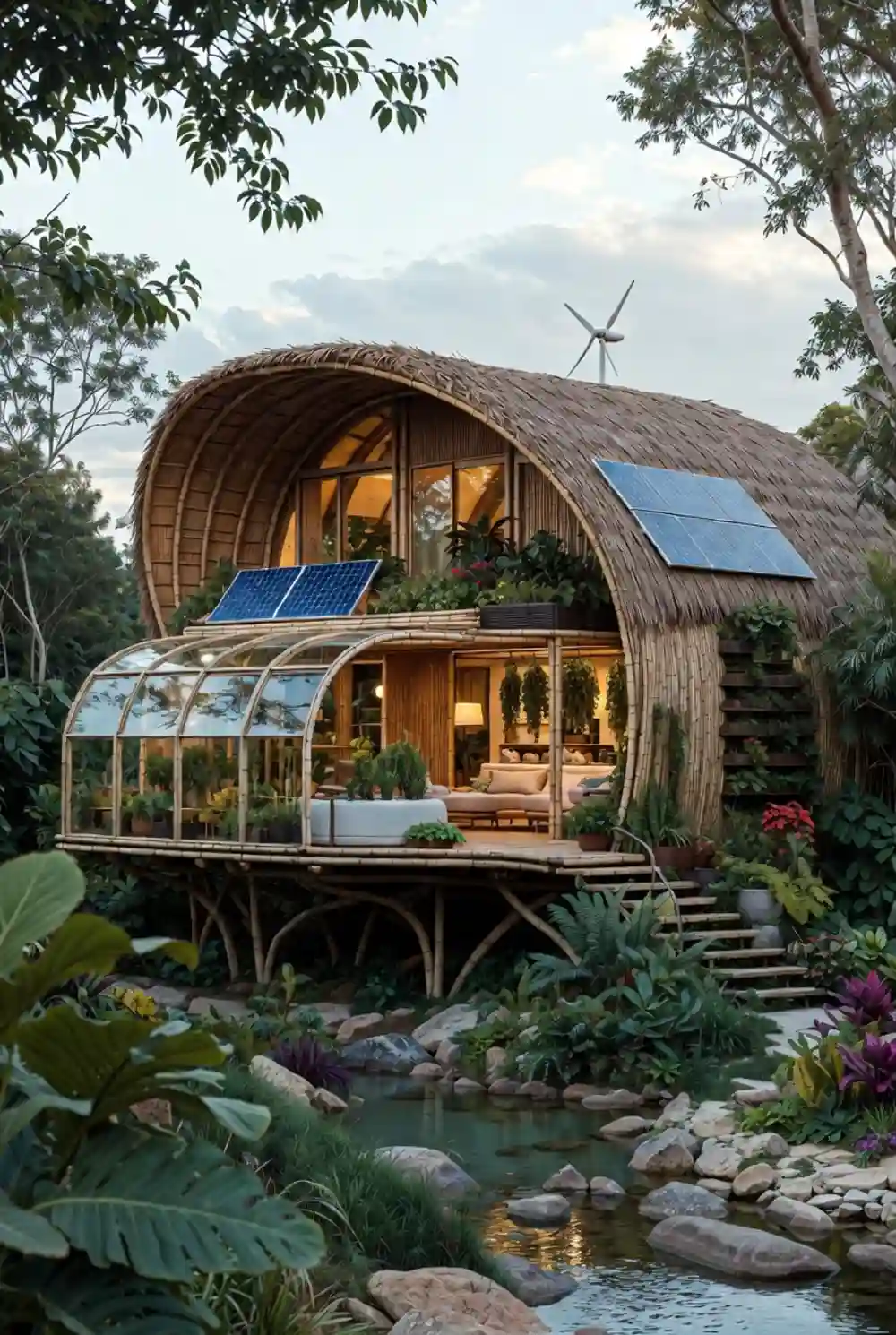
Curved Organic Architecture Arching gracefully over the living space, the bamboo framework mimics the protective shell of a natural organism rather than a rigid box. Using renewable bamboo for the primary structure offers incredible strength while keeping the construction carbon footprint nearly non-existent. It feels less like building on the land and more like growing with it.
Greenhouse-Style Living Glass panels wrap entirely around the front deck, creating a sun-drenched conservatory that floods the interior with daylight while keeping out the elements. Extending the usable square footage with this transparent enclosure allows for year-round indoor gardening or simply enjoying a morning coffee “outside” regardless of the weather. Living in a transparent bubble has never looked so cozy or practical.
Visible Renewable Systems Blue solar panels perched on the textured thatch roof provide a striking modern contrast to the rustic materials, clearly signaling a commitment to off-grid independence. Pairing photovoltaics with that small, white wind turbine ensures the lights stay on even during cloudy days, proving that sustainability can be redundant and reliable. Self-sufficiency serves as the ultimate modern luxury.
Low-Impact Foundation Hovering above the rocky stream bed on sturdy bamboo stilts minimizes the physical impact on the soil and protects the home from potential water level rises. Hearing the gentle trickle of water right beneath the floorboards transforms the home’s atmosphere, turning background noise into a natural stress reliever. Nature isn’t just a view here; it is the literal foundation.
Biophilic Interior Warmth Golden light spilling from the arched upper windows creates an inviting, amber glow that beckons you inside as evening approaches. Filling the high ceilings with hanging greenery and potted ferns blurs the boundary between the lush garden outside and the comfortable lounge inside. Home becomes a restorative sanctuary for both people and plants.
3. Organic Shell Sanctuary with Thatch & Solar – Biophilic Design for Tropical Living
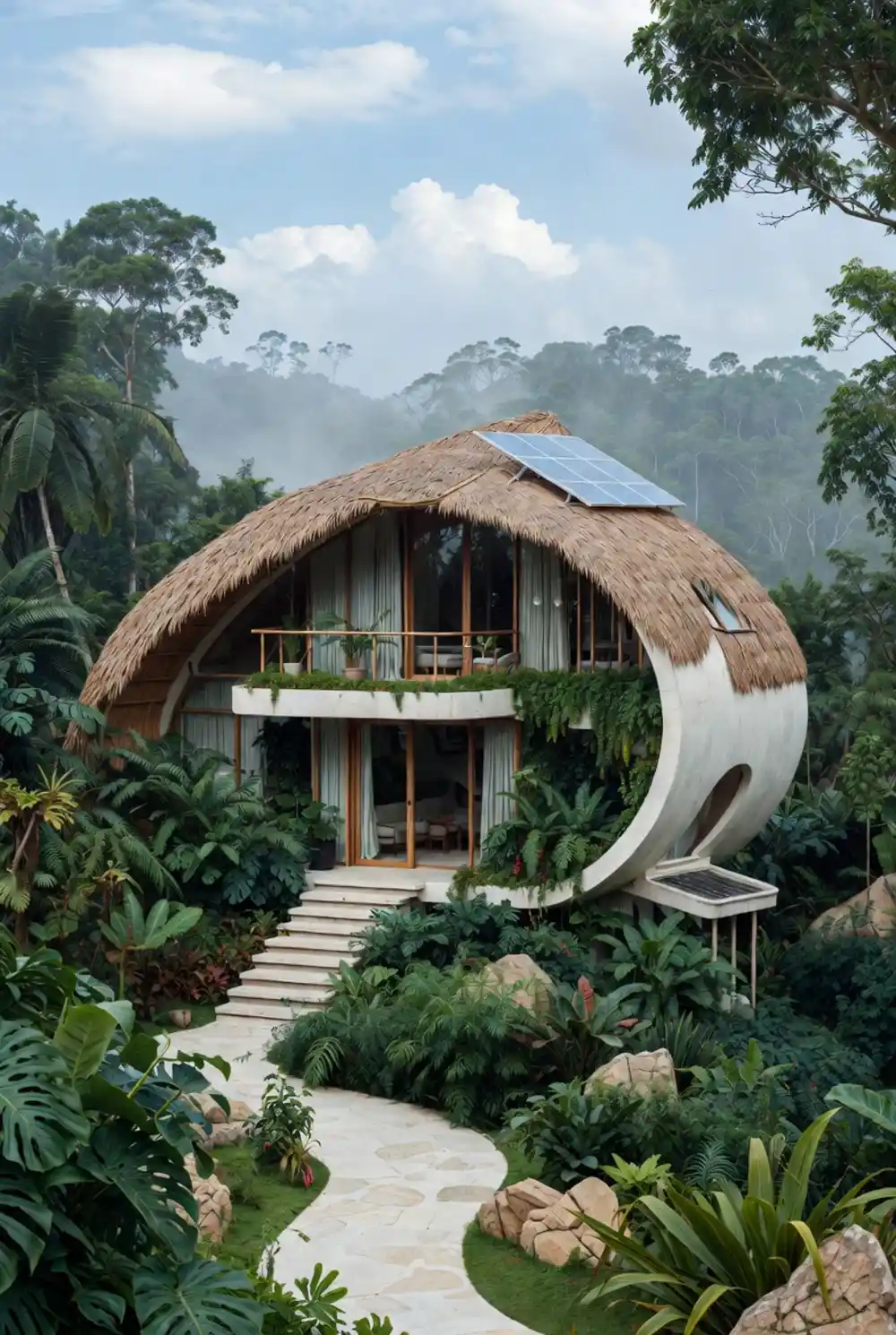
Biomimetic Architecture Curving dramatically against the dense green backdrop, the home’s architecture mimics natural forms like a sea shell or seed pod rather than traditional rigid lines. Adopting these flowing, rounded shapes isn’t just for looks; it often improves natural airflow and helps the structure blend psychologically with the surrounding environment. Nature rarely builds in perfect squares, so why should we?
Material Contrast and Harmony Blending rustic, textured thatch roofing with smooth, modern white concrete creates a fascinating tactile contrast that defines the building’s character. Utilizing indigenous materials like straw for roofing provides excellent, sustainable insulation, while the contemporary supporting structure ensures longevity and a clean aesthetic. It’s a perfect marriage of ancestral building techniques and modern engineering.
Integrated Living Flora Lush vegetation doesn’t just surround the house; it literally spills from the second-story balcony and creeps up the entryway, making the structure feel alive. Integrating flora directly into the building’s facade actively improves air quality and cools the immediate microclimate through evapotranspiration. You aren’t just living near nature here; you are inhabiting it.
Visible Sustainable Tech Perched atop the rustic thatched roof, modern blue solar panels offer a striking visual reminder of the home’s commitment to green energy. Generating power on-site transforms a beautiful retreat into a functional, self-sufficient homestead that reduces reliance on external grids. True luxury today means living comfortably without compromising the future.
Defined Natural Entrance Winding through giant monstera leaves and tropical foliage, a manicured stone pathway provides a deliberate, grounded transition from the wild jungle to the refined sanctuary. Creating such a defined approach heightens the sense of arrival and separates the untamed wilderness from the curated human space. Every step toward the front door feels like entering a secret paradise.
4. Organic Thatch & Timber Villa – Immersion in Biophilic Retreat Design
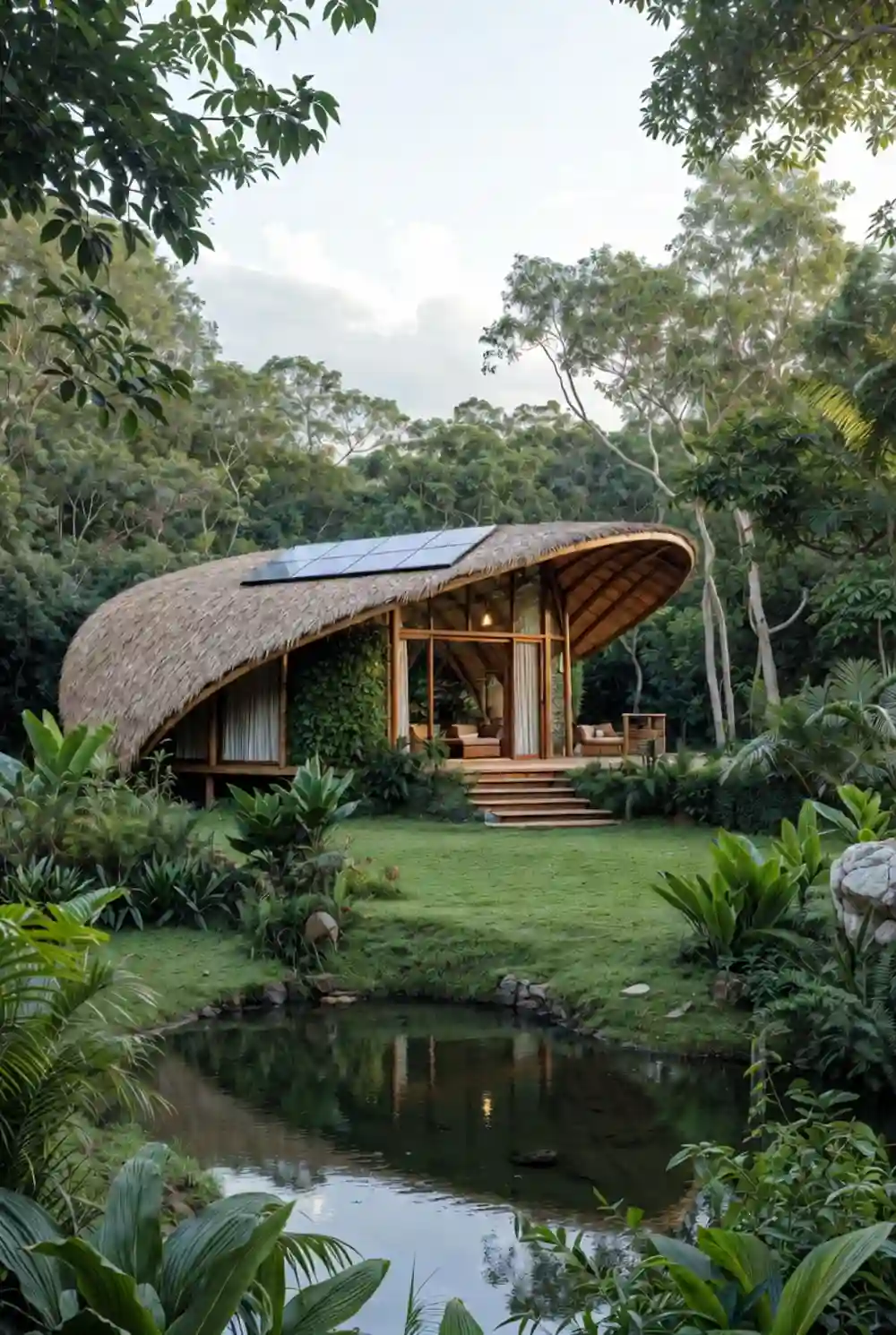
Sweeping Natural Canopy Dominating the visual profile, that massive, curving thatched roof drapes over the structure like a protective organic blanket. Utilizing traditional materials like straw or palm fronds isn’t just an aesthetic choice for that “island vibe”; it offers superior natural insulation against tropical heat, reducing the need for artificial cooling. It is a beautiful example of vernacular architecture meeting modern comfort needs.
Dissolving Boundaries Massive floor-to-ceiling glass walls effectively erase the division between the warm, wooden interior lounge and the lush garden outside. Stepping through those wide doors onto the tiered timber decking creates an immediate, seamless transition from protected sanctuary to open wilderness. True retreat luxury today is defined by how effortlessly you can connect with the surroundings.
Reflective Tranquility Siting the villa directly adjacent to that calm, natural pond creates a stunning mirror effect, doubling the warm glow of the interior lights against the darkening jungle. Having water elements right at your doorstep isn’t just picturesque; it actively lowers stress levels and cools the immediate microclimate through evaporation. A restorative environment requires engaging all the senses, especially sight and sound.
Sustainable Modernity Tucked subtly onto the rustic roofline, a modern array of solar panels signals a commitment to eco-conscious living without compromising style. Generating clean energy on-site ensures that the off-grid experience remains comfortable and reliable for guests expecting modern amenities. Green technology integrates best when it feels like a natural part of the design evolution.
5. Solar-Wrapped Riverfront Pod – Futuristic Sustainable Living in Harmony with Nature
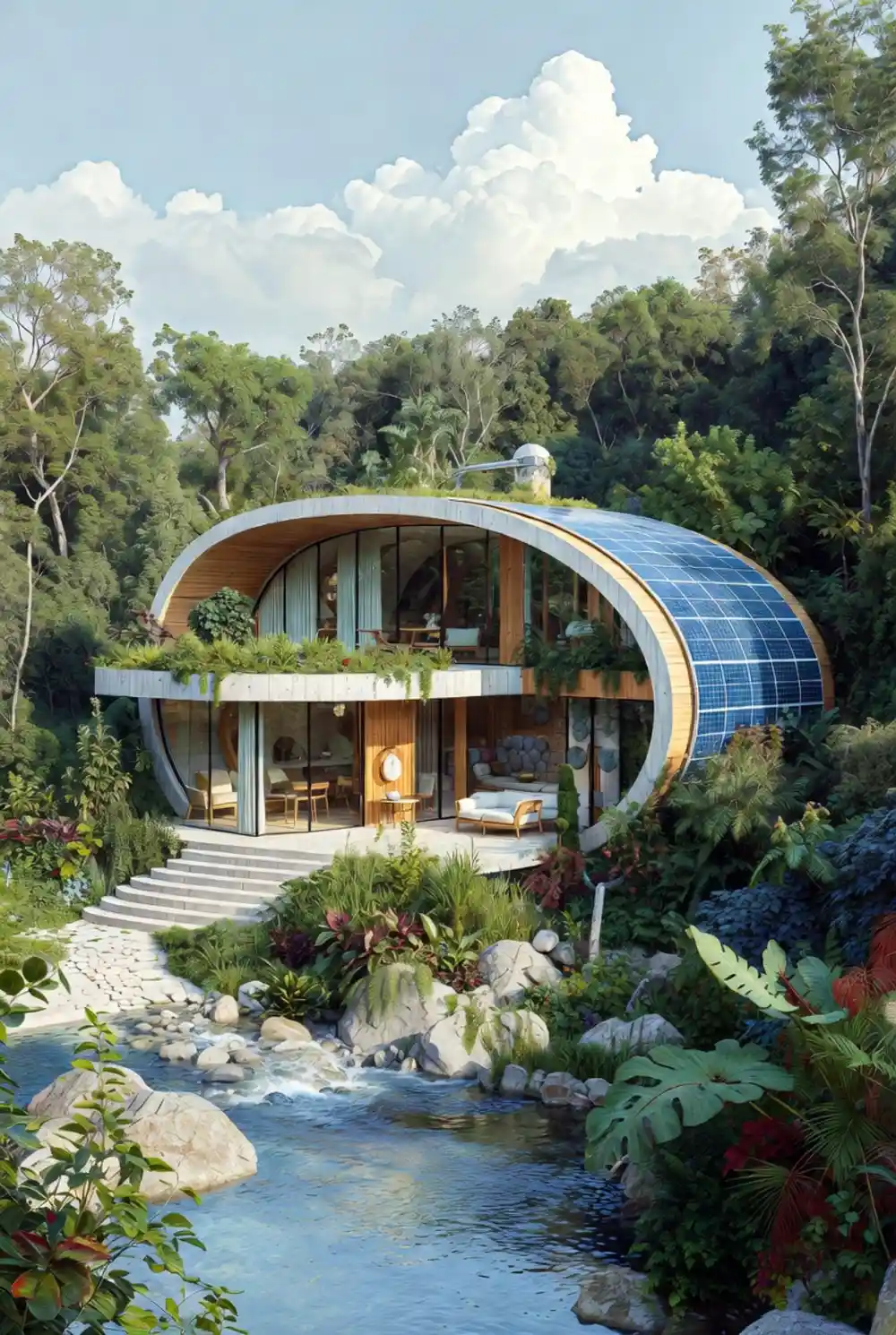
Integrated Solar Architecture Curving dramatically from the roofline down to the foundation, the building’s outer shell functions as a massive, seamless solar array rather than just a covering. Making energy generation the primary aesthetic feature shifts the narrative from simply “housing” to “living machine,” proving that utility can drive beautiful design. Efficiency looks incredibly sleek when it is woven into the very DNA of the structure.
Transparent Boundaries Floor-to-ceiling glazing wraps the entire facade, dissolving the barrier between the modern, warm-toned interior and the dense tropical forest outside. Living with such transparency invites the calming rhythm of nature into daily routines, allowing the sunrise and forest shadows to decorate the living space. Privacy is happily traded here for an immersive connection with the wild.
Living Facades Cascading greenery spills over the concrete edge of the cantilevered second-story terrace, softening the modern industrial lines with vibrant organic textures. Incorporating plant life directly into the building’s exterior helps cool the structure naturally while visually anchoring the futuristic pod to its ancient forest surroundings. It feels like the jungle is reclaiming the home in the most organized, elegant way possible.
Auditory Landscape Rushing water flows over smooth boulders just feet from the front steps, providing natural cooling and a constant, soothing white noise for the residents. Positioning a home this close to a dynamic water source turns the landscape into an active participant in the home’s atmosphere, masking any distant world noise. Nature provides the absolute best soundtrack for modern mental health.
Material Warmth vs. Tech Warm timber paneling lining the interior contrasts sharply with the cool, blue-tech aesthetic of the exterior solar skin and raw concrete steps. Balancing high-tech sustainability with natural, cozy finishes ensures the space feels like a sanctuary rather than a sterile spaceship. Future living can still feel warm, inviting, and unmistakably like home.
6. Living Roof Timber Pod – A Masterclass in Biophilic Forest Design
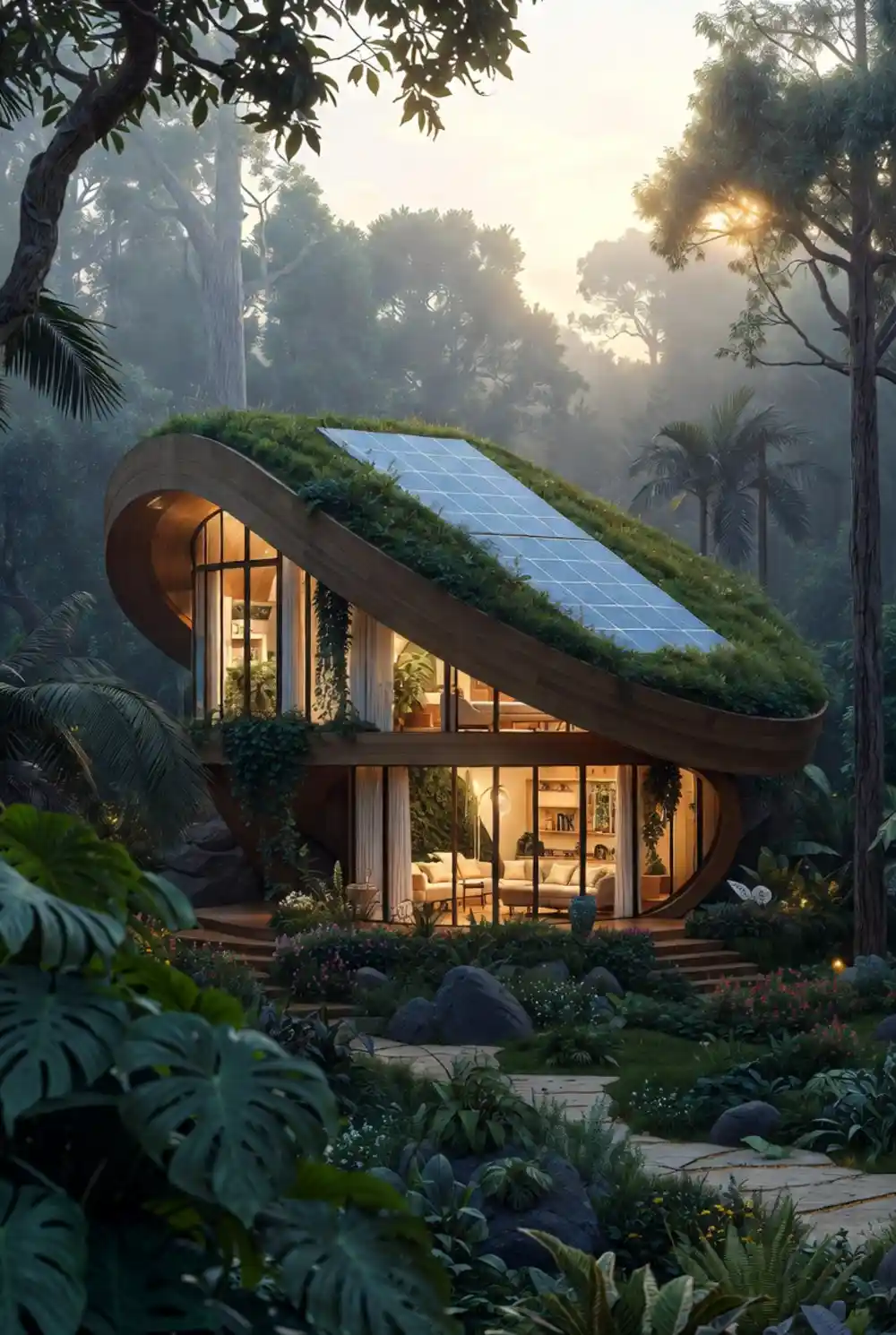
Symbiotic Roofing System Grass growing directly on the curved roof acts as a heavy, natural insulator, keeping the interior cool while visually blending the structure into the canopy above. Pairing this living vegetation layer with sleek, integrated solar panels creates a functional duality where the house generates its own energy while physically merging with the landscape. It is the ultimate expression of giving back to the environment rather than just taking from it.
Curvilinear Timber Frame Sweeping curves of the wooden exterior mimic the organic shapes of the surrounding tree branches, completely avoiding the harshness of sharp corners found in traditional construction. Softening the architectural lines makes the home feel like a natural organism resting on the forest floor rather than a rigid, man-made intruder. Nature thrives on flow and movement, and this design respects that ancient rule.
Lantern-Like Warmth Glowing amber light pouring through the floor-to-ceiling glass walls creates a cozy, inviting beacon that contrasts beautifully against the cool, misty forest backdrop. Living behind such transparent boundaries invites the outdoors in, ensuring that the changing light of sunrise and sunset becomes the primary decor element of the living room. Privacy takes a backseat to an uninhibited connection with the wild.
Grounded Entryway Stone pavers meandering through the dense ferns guide the eye and the visitor gently toward the entrance, forcing a slower pace before one even reaches the door. Surrounding the foundation with lush, low-lying vegetation grounds the structure, making it appear as if it sprouted from the earth over decades rather than being built. A mindful approach to landscaping sets the tone for a slower, more intentional lifestyle.
7. Curved Concrete & Living Roof Villa – A Vision for Sustainable Architecture
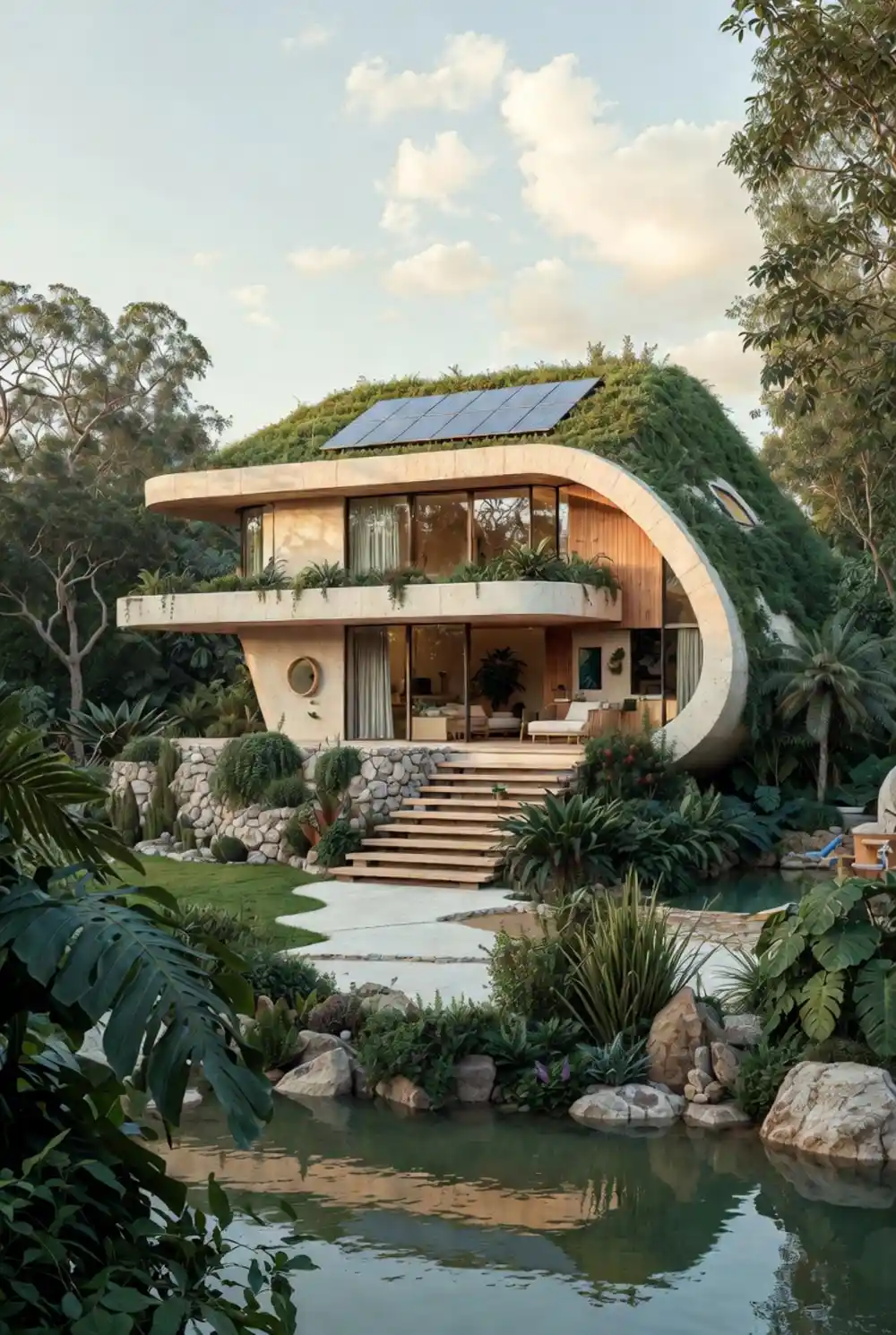
Living Thermal Blanket Carpeting the entire upper curve, a thick layer of living grass acts as a natural insulator that drastically reduces the need for artificial cooling inside. Installing sleek solar panels right amidst that lush greenery demonstrates that high-tech energy independence can coexist beautifully with wild, organic textures. It is the ultimate fusion of biology and technology working to keep a home comfortable.
Fluid Structural Design Sweeping upward in a single, fluid motion, the pale concrete structure mimics a wave cresting over the landscape rather than a rigid box sitting upon it. Softening the hard edges of modern architecture allows the building to dissolve visually into the surrounding trees, making the home feel like a natural extension of the topography. Great design should always feel like it grew out of the ground.
Extended Outdoor Living Deep, cantilevered balconies lined with trailing ferns extend the footprint outward, effectively doubling the usable living space while offering essential shade from the midday sun. Erasing the solid lines between the interior lounge and the exterior world encourages a lifestyle where fresh air and the sounds of the forest are constant daily companions. True luxury is about removing barriers to the outdoors.
Grounded Textural Foundation Rough, stacked stone at the base anchors the smooth, modern upper levels, providing a necessary textural transition from the raw earth to the refined living quarters. Walking down those wide wooden steps to the water’s edge offers a daily ritual of grounding, reminding residents that the best part of a home is often where it meets the soil. A strong foundation connects the resident to the land history.
8. Undulating Concrete & Living Roof Habitat – A Blueprint for the Future of Sustainable
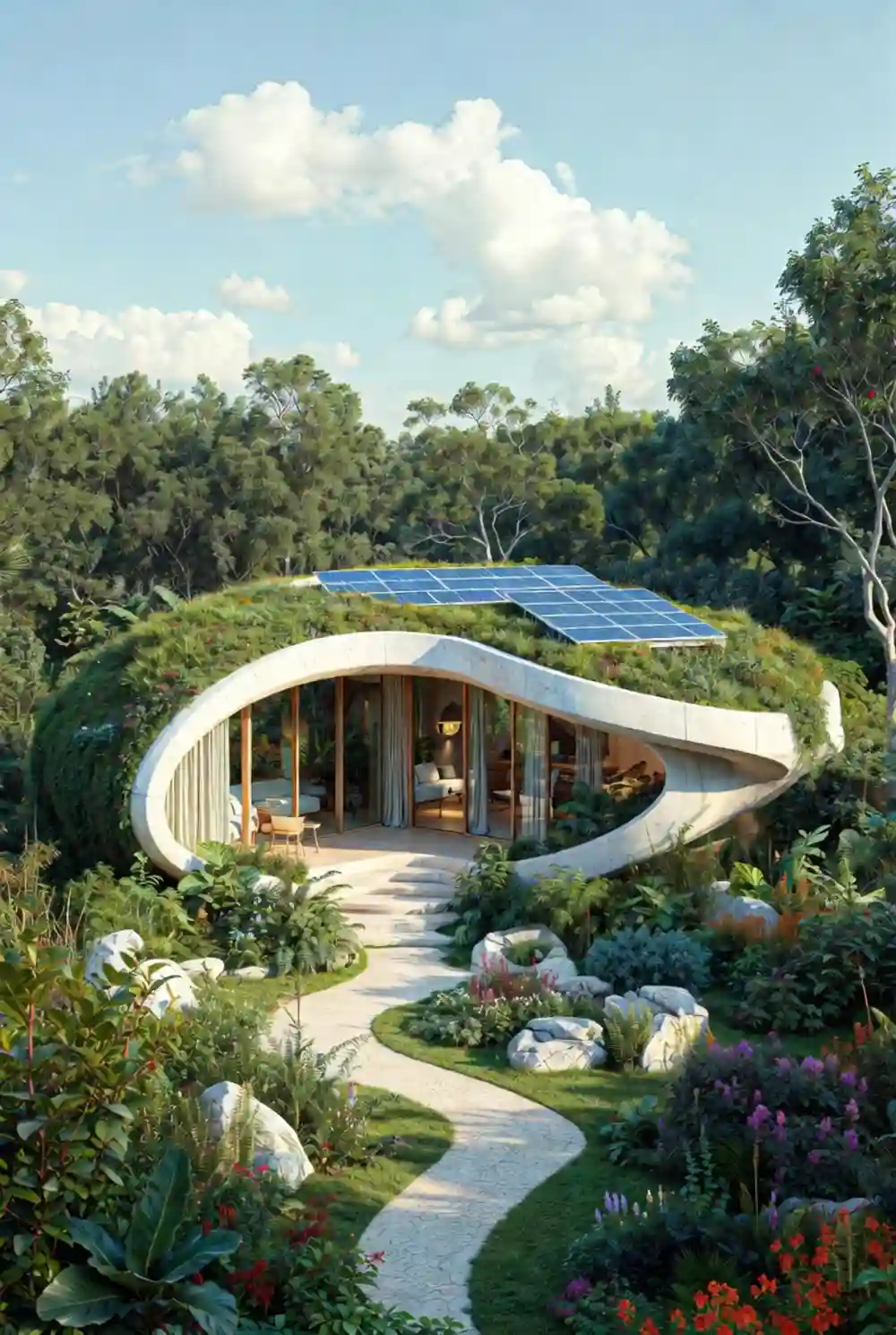
Symbiotic Roofing System Growing a thick layer of grass right over the curving concrete shell acts as incredible natural insulation, keeping the interior cool without forcing air conditioning systems to run constantly. Integrating sleek solar panels directly into that living landscape proves you don’t have to choose between looking natural and being high-tech; they work better together. It’s about smarter, passive climate control dominating future builds.
Organic Architectural Flow Sweeping upward from the ground in a single, fluid motion allows the structure to mimic a rolling hill rather than imposing a rigid, man-made box onto the scenery. Softening hard architectural lines in favor of these biophilic curves makes the residence feel like it evolved organically right there in the garden, rather than being dropped in. We need more homes that hug the landscape instead of fighting it.
Mindful Transition Pathway Meandering through vibrant flower beds and mossy rocks, that curving stone pathway forces a slower, more deliberate pace before you even reach the front door. Creating such a defined transition zone between the wild garden and the constructed sanctuary emphasizes that humans are merely guests in the natural world. A proper entrance should reset your mindset before you step inside.
Transparent Sanctuary Boundaries Massive floor-to-ceiling glass panels tucked deeply under the concrete overhang ensure that the lush surroundings serve as the primary decoration for the living space. Erasing the visual barrier between inside comfort and outside wildness invites natural rhythms and sunlight to dictate the daily mood of the home. Living here means never truly leaving the garden behind.
9. Cascading Timber & Solar Canopy – A Solarpunk Vision for Elevated Living
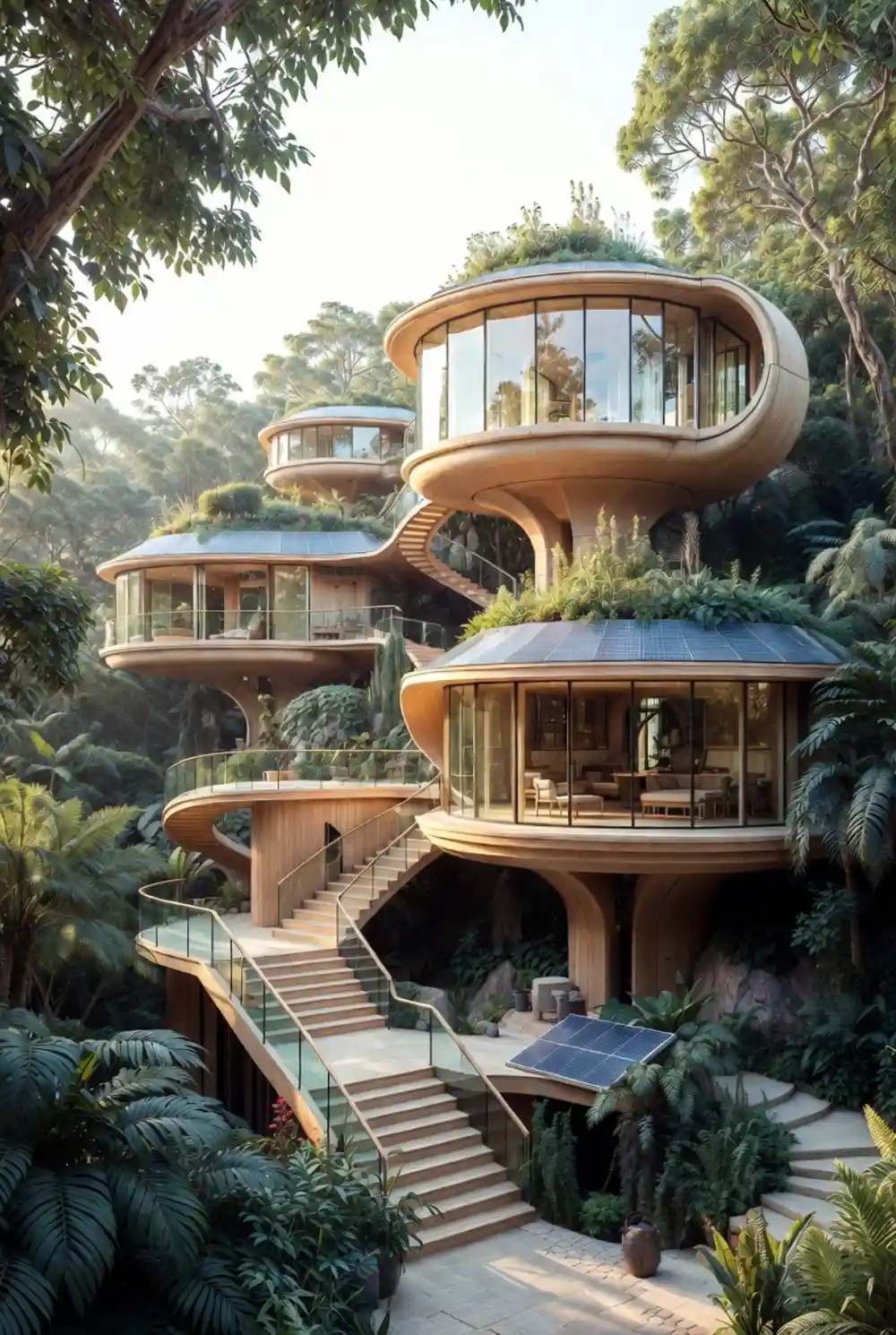
Biomorphic Architectural Forms Rejecting rigid, industrial boxes, these rounded timber pods mimic organic forms like bracket fungi clinging to a hillside tree. Adopting biomorphic shapes isn’t just an aesthetic choice; it psychologically softens the impact of human habitation on a wild landscape. Solarpunk design argues that our future homes should look like they grew in place rather than being dropped from the sky.
Visible & Beautiful Renewables Integrated directly onto the rounded rooflines, sleek solar arrays sit proudly alongside lush rooftop gardens rather than being hidden away as ugly utilities. Showcasing renewable energy generation as a primary design element is a core tenet of the Solarpunk aesthetic, proving that high-tech function and natural beauty can coexist. Clean power doesn’t have to look industrial; it can look like an organic part of the home’s skin.
Immersive Circulation Paths Winding downwards in a graceful ribbon, that expansive timber staircase transforms the simple act of moving between levels into an immersive jungle trek. Prioritizing open-air circulation forces a slower pace of life, encouraging residents to breathe the humid air and engage with the ecosystem daily. A true Solarpunk future values the journey through nature just as much as the destination inside.
Radical Transparency with Warmth Floor-to-ceiling glass wraps around the warm wooden frames, dissolving the boundary between the cozy, amber-lit interiors and the dense canopy outside. Balancing the raw exposure of transparent walls with the comforting, tactile nature of timber ensures the space feels futuristic without becoming sterile or cold. We need our future sanctuaries to feel human, even as they embrace radical openness.
10. Curved Concrete & Green Roof Sanctuary – A Solarpunk Vision for Modern Living
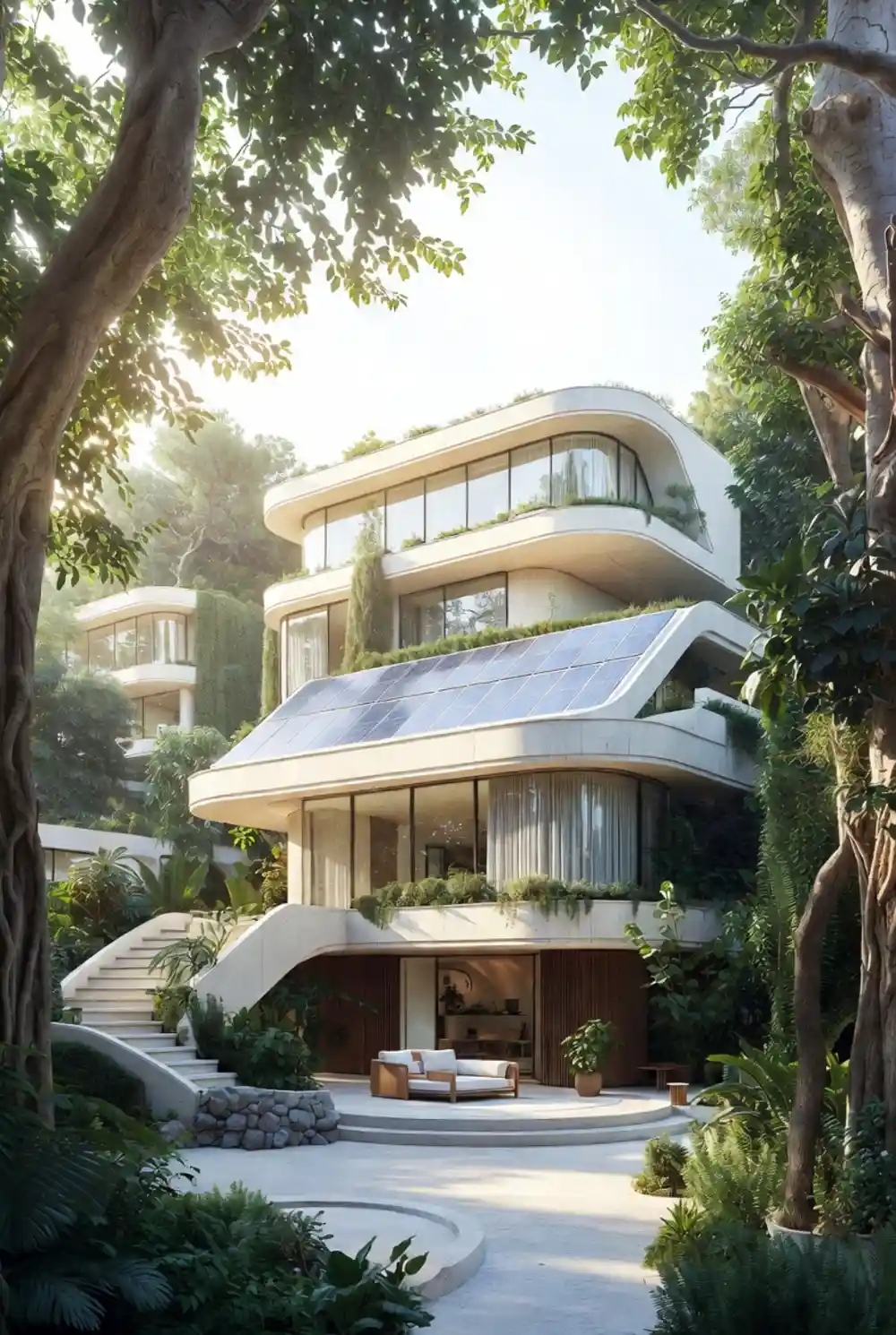
Organic Architectural Flow Sweeping curves of the white concrete facade soften the building’s impact, making the multi-story structure feel like an organic extension of the lush hillside rather than a rigid imposition. Rejecting the sharp angles of traditional modernism allows the home to cooperate visually with the natural environment, proving that futuristic design can be gentle. Solarpunk aesthetics often favor biophilic forms that feel grown rather than built.
Visible & Integrated Renewables Prominently featured solar panels on the angled roof section serve as a proud declaration of clean energy generation, integrated seamlessly alongside vibrant green roofs. Making sustainable technology a key aesthetic feature, rather than hiding it away as ugly utility, is a core Solarpunk principle. Clean power generation becomes a beautiful and essential part of the home’s identity.
Seamless Indoor-Outdoor Living Floor-to-ceiling glass walls and deep, planted balconies on every level effectively erase the boundary between the luxurious interior spaces and the dense jungle canopy. Living with such radical transparency re-establishes a daily connection with nature, allowing sunlight and greenery to become the primary decor. A Solarpunk future isn’t just about surviving; it’s about thriving in harmony with the wild.
11. Bamboo & Glass Solar-Tube Habitats – A Biophilic Solarpunk Vision
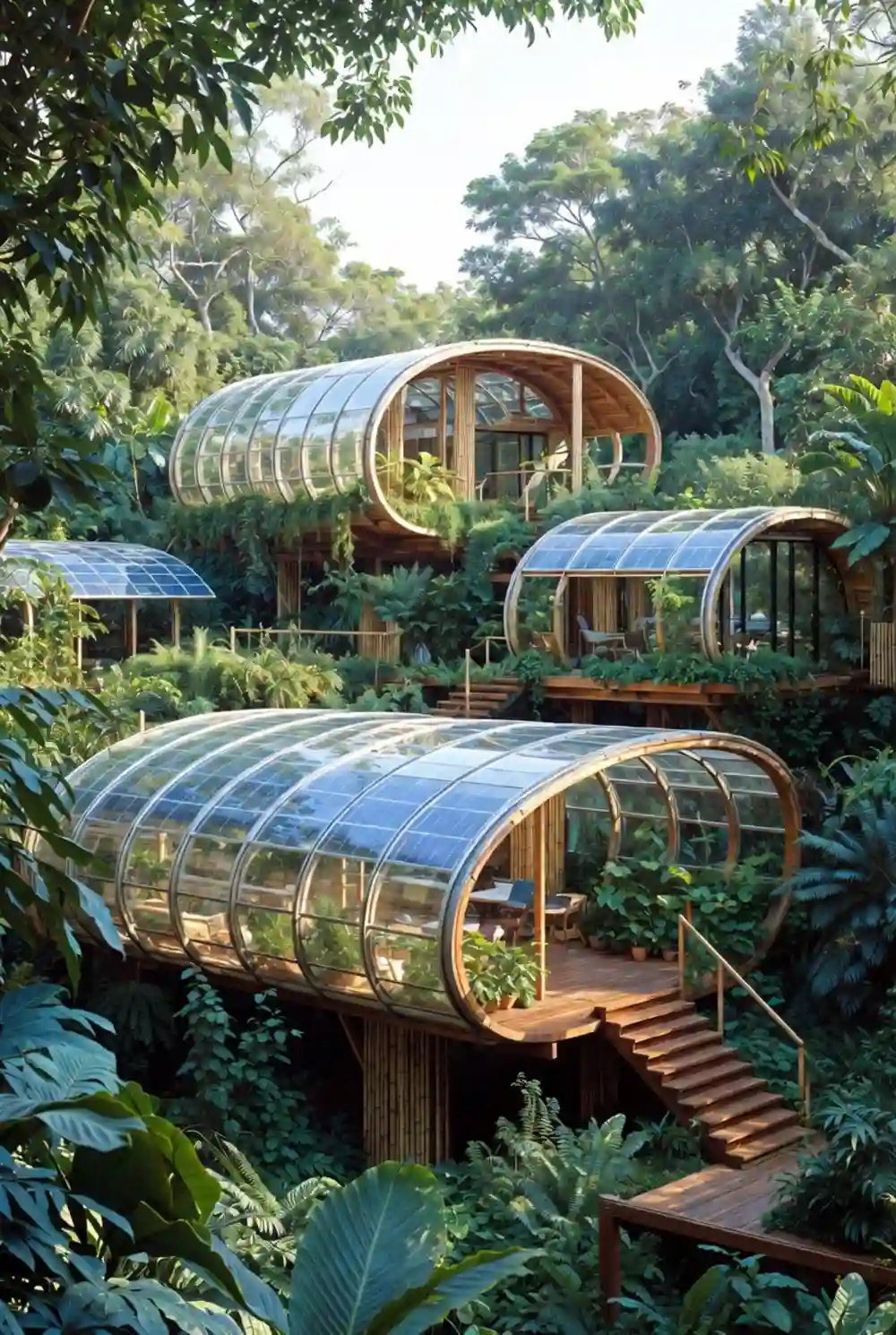
Biomorphic Structural Design Mimicking natural forms, these cylindrical bamboo frames reject the rigid constraints of traditional industrial boxes in favor of organic flow. Adopting curved architecture isn’t just an aesthetic choice; it psychologically softens the impact of human habitation on a wild landscape, making the structures feel like they grew there rather than being dropped in. Solarpunk design argues that our future homes should cooperate with their environment, not dominate it.
Visible & Beautiful Renewables Integrated directly onto the curved rooflines, those custom-fitted solar arrays sit proudly as the primary architectural feature rather than a hidden utility. Showcasing renewable energy generation as a beautiful, essential design element is a core tenet of the Solarpunk aesthetic, proving high-tech function and natural beauty can coexist perfectly. Clean power doesn’t have to look industrial; it can look like an organic skin on the home.
High-Tech/Low-Tech Material Fusion Marrying rapidly renewable bamboo with sleek, modern glazing creates a striking contrast that defines the futuristic yet grounded Solarpunk palette. Utilizing bamboo for the primary structure offers incredible strength with a minimal carbon footprint, while the expansive glass turns the entire living space into a passive solar collector and atrium. It’s the ultimate fusion of ancestral building techniques and futuristic engineering.
Radical Transparency and Immersion Erasing the boundary between indoors and out, the sheer transparency of the tube design allows the lush jungle to become the primary “wallpaper” of the home. Living with such radical openness invites the calming rhythms of nature into daily life, ensuring residents never feel separated from the ecosystem they inhabit. A true Solarpunk future values an uninhibited connection with the wild.
Low-Impact Elevation Perched lightly on timber stilts, the structures hover above the forest floor to minimize physical impact on the delicate undergrowth. Elevating the living spaces is a practical strategy for preserving ground-level biodiversity and allowing natural water runoff to continue unimpeded. Sustainable living means stepping lightly on the earth, leaving room for the rest of the planet’s inhabitants.
12. Cascading Green-Roof Terraces – A Solarpunk Vision for Hillside Living
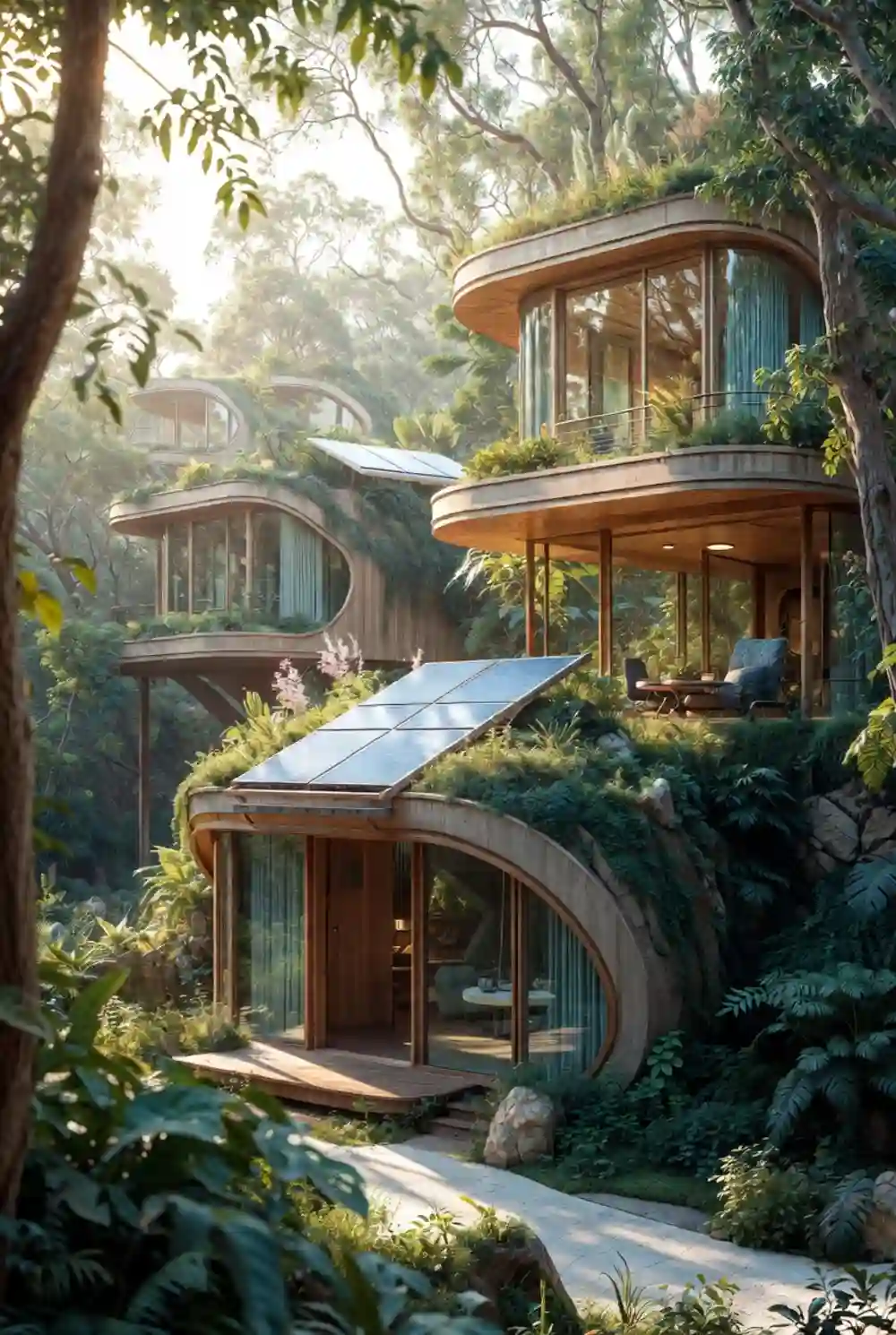
Living Thermal Shield Carpeting the curved rooftops in dense, living vegetation acts as a powerful natural insulator, drastically reducing the energy needed for climate control inside. Utilizing the earth’s own cooling mechanisms turns the home into a carbon sink rather than a carbon emitter, proving that protection from the elements can be beautiful and biological. True sustainability means the building works with the climate, not against it.
Harmonious Tech Integration Prominently mounting sleek solar arrays directly atop those grassy slopes showcases a functional harmony between high-tech energy generation and ancient organic textures. Solarpunk design demands that we stop hiding our power sources and instead celebrate them as the engines of a cleaner, brighter future. Green technology looks best when it is treated as a crown jewel of the architecture.
Biomimetic “Shelf” Architecture Stacking residential units like shelf fungi clinging to a tree trunk allows the architecture to adapt to the hillside’s topography rather than flattening it to fit a box. Mimicking these natural growth patterns creates a psychological sense of belonging, making the structure feel like a native inhabitant of the forest rather than an intruder. Good design should respect the geography it occupies.
Vertical Footprint Reduction Building vertically with cantilevered decks minimizes the physical footprint on the forest floor, leaving the ground level wild and undisturbed for local wildlife and drainage. Preserving the soil health below while living comfortably above strikes the perfect balance for a density-conscious, eco-friendly future. We can have density without destroying the undergrowth.
Radical Transparency Wrapping the living spaces in floor-to-ceiling glass invites the dappled forest sunlight to serve as the primary lighting source throughout the day. Erasing the solid walls reinforces the philosophy that humans are part of the ecosystem, not separate observers looking out from a fortress. Connection to the outside world is the ultimate amenity.
13. Limestone Curves & Kinetic Energy Community – A Solarpunk Village Concept
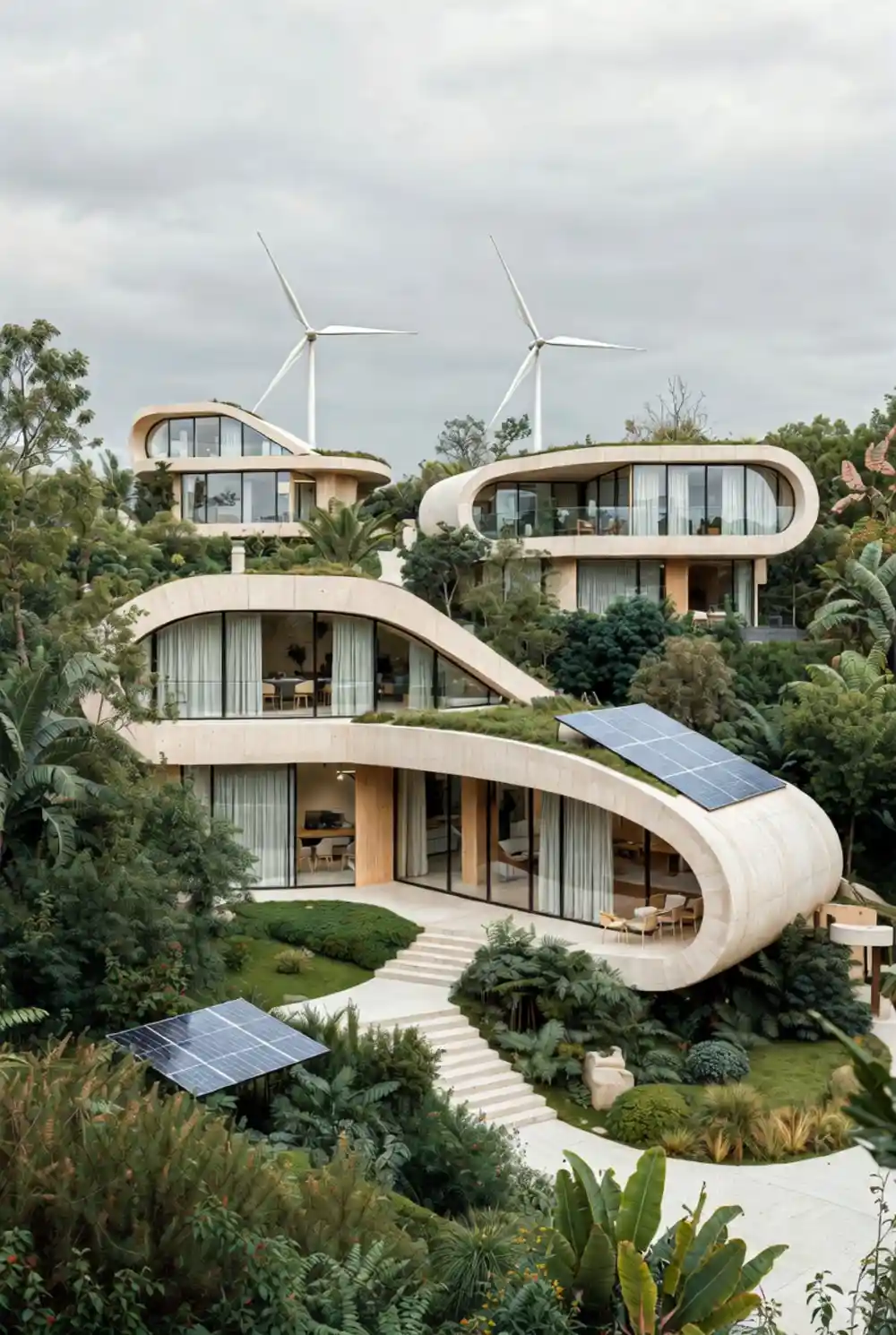
Aerodynamic Architectural Flow Sweeping, beige concrete forms undulate across the hillside, rejecting the rigid geometry of the 20th century in favor of something that feels molded by the wind itself. Adopting these aerodynamic shapes reduces wind resistance and visually softens the human footprint on the land, proving that buildings can look soft while being structurally sound. Rigid lines are out; organic flow is the future.
Visible Kinetic Energy Standing tall against the sky, twin wind turbines act as modern sentinels, silently harvesting the breeze to power the entire community below. Integrating kinetic energy generation directly into the neighborhood layout turns the utility grid into a local, community-owned asset rather than a distant corporate service. Energy independence looks incredibly empowering.
Dual-Purpose Roofing Carpeting the curved rooftops with living grass provides essential thermal mass, while strategically placed solar panels capture the sun’s rays without dominating the view. Balancing biological insulation with photovoltaic technology ensures the homes stay cool naturally while generating the power needed to run modern lives. It is a perfect marriage of botany and engineering.
Tiered Community Density Clustering the residences in a tiered, terraced formation creates a sense of communal living while preserving the density needed to leave the surrounding forest untouched. Living in such close proximity to neighbors, yet separated by lush gardens, fosters a village mindset that is often lost in sprawling suburbs. We thrive when we live together, not apart.
Passive Cooling Palette Utilizing pale, limestone-colored cladding reflects the harsh sunlight, passively keeping the interiors cool and bright without excessive air conditioning. Choosing materials that mimic the color of the earth allows the architecture to recede visually, letting the vibrant greens of the garden take center stage. Smart design starts with color theory.
14. Sun-Dappled Timber & Solar Canopy Residence – A Vision of Optimistic Solarpunk Living
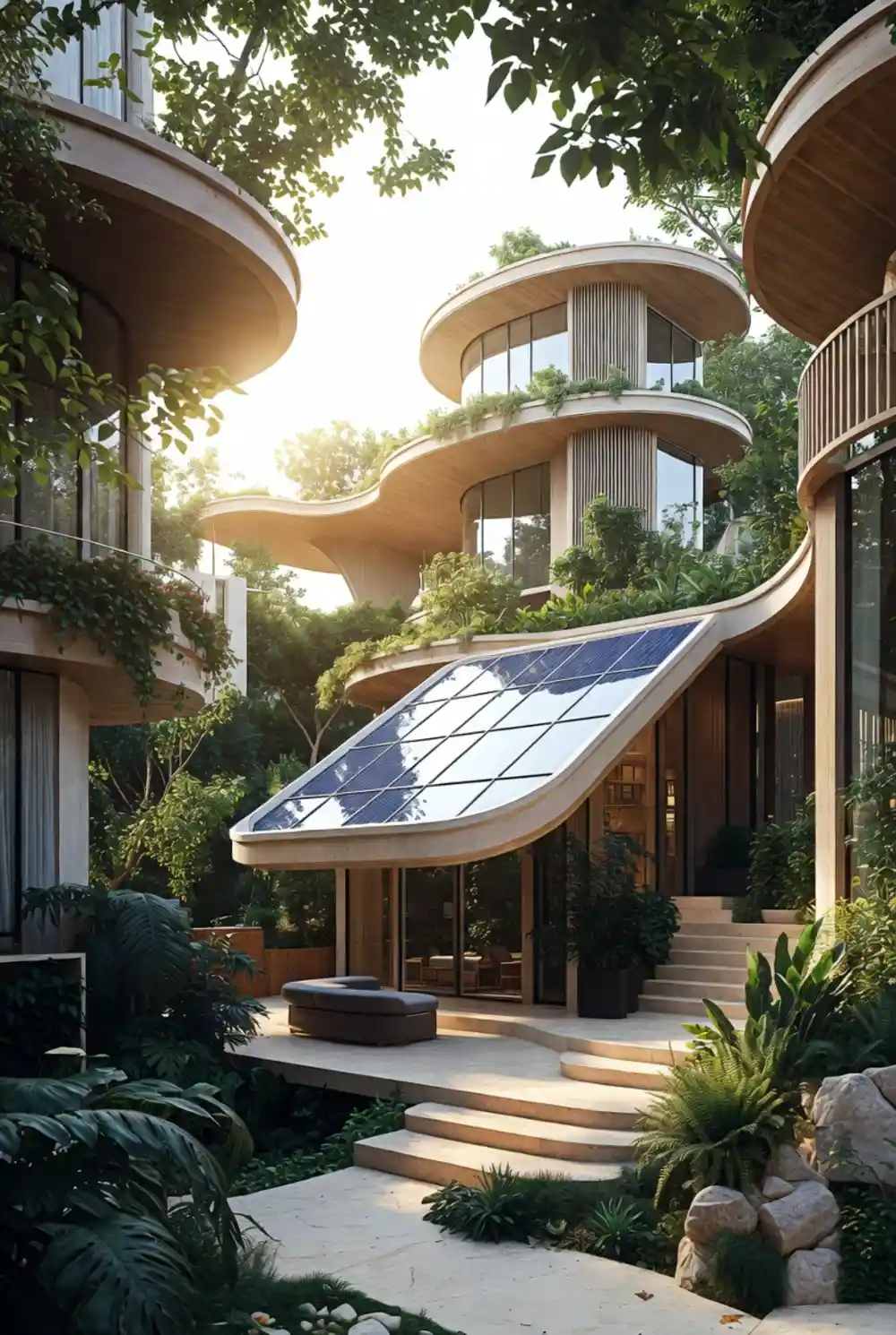
Multifunctional Solar Architecture Curving dramatically over the ground-level patio, that massive solar array doubles as a striking architectural canopy providing essential shade. Solarpunk design demands that we stop hiding our energy sources and instead celebrate them as beautiful, functional elements of the living space. Clean energy generation should be the star of the show, not an backstage extra.
Biophilic Timber Curves Sweeping, rounded forms of the timber-clad buildings mimic the organic shapes of the surrounding forest rather than imposing rigid, industrial boxes onto the landscape. Adopting biophilic geometry helps the structures blend psychologically with the environment, making the home feel like it grew there naturally. Future architecture needs to be softer and more approachable.
Rewilding Vertical Spaces Cascading greenery spilling from the upper balconies and terraced levels actively integrates the jungle back into the built environment. Embedding plant life directly into the facade isn’t just decorative; it helps cool the immediate microclimate through evapotranspiration and cleans the air. A healthy home should be literally alive with plants.
Seamless Indoor-Outdoor Transition Huge floor-to-ceiling glass walls dissolve the barrier between the cozy interior lounge and the sun-drenched stone pathway outside. Living with such transparency encourages a lifestyle that is constantly connected to the natural rhythms of the day and the vibrant ecosystem just inches away. The best room in the house is often the garden itself.
Warm, Optimistic Atmosphere Hazy, golden sunlight filtering through the canopy creates a warm, inviting glow that perfectly embodies the hopeful energy of the Solarpunk aesthetic. Designing spaces to capture and utilize natural light reduces reliance on electricity and aligns daily routines with the sun. We need our future to look as bright as it feels.
15. Cascading Concrete & Verdant Terraces – A Solarpunk Community Blueprint
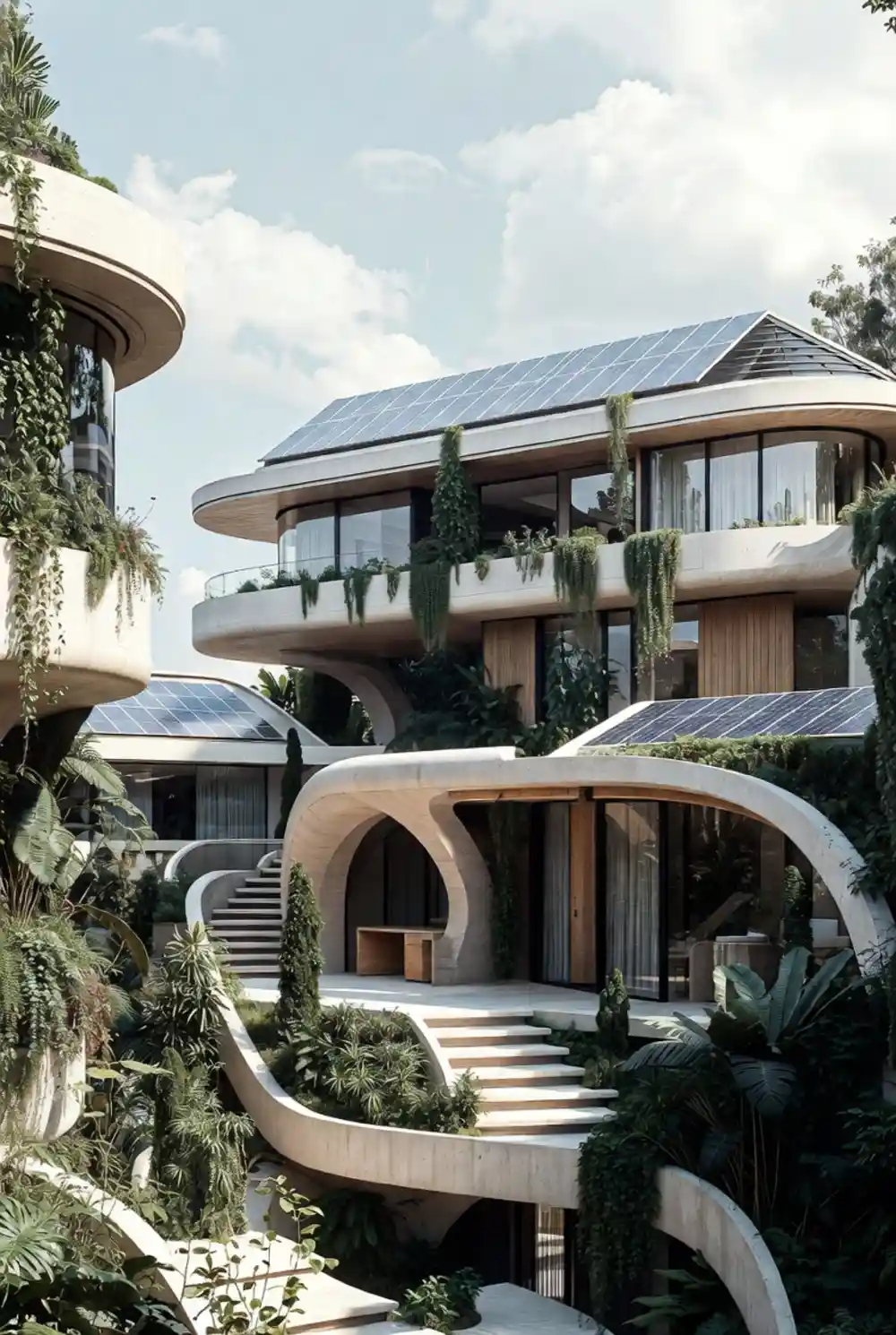
Organic Biophilic Architecture Flowing concrete structures like these reject rigid industrial boxes, mimicking natural geological formations instead of imposing sharp angles. Adopting organic architecture psychologically softens the density of urban living, making the built environment feel like a natural evolution of the landscape rather than an intrusion. Solarpunk is about buildings that hug the earth rather than conquer it.
Integrated Living Facades Hanging gardens draping over every balcony railing transform the pale concrete into a living, breathing ecosystem. Integrating vegetation this heavily into the facade isn’t just for looks; it actively cools the structure through evapotranspiration and cleans the air for residents. A true green building should actually be green.
Celebrated Renewable Energy Prominently displayed solar arrays on multiple roof levels serve as the building’s proudest functional ornament, catching the sun from various angles. Celebrating energy independence aesthetically, rather than hiding utility panels away as if they were ugly, is a core tenet of the Solarpunk philosophy. Clean power generation deserves center stage in future design.
Open-Air Communal Flow Winding, exterior staircases connect the varied terraces, turning the daily commute to your front door into a refreshing walk through a vertical park. Prioritizing exterior circulation over enclosed hallways encourages community interaction and constant engagement with the fresh air and greenery. We need spaces that make moving around feel restorative.
16. White Organic Terraces & Living Roofs – A Solarpunk Habitat for Vertical Living
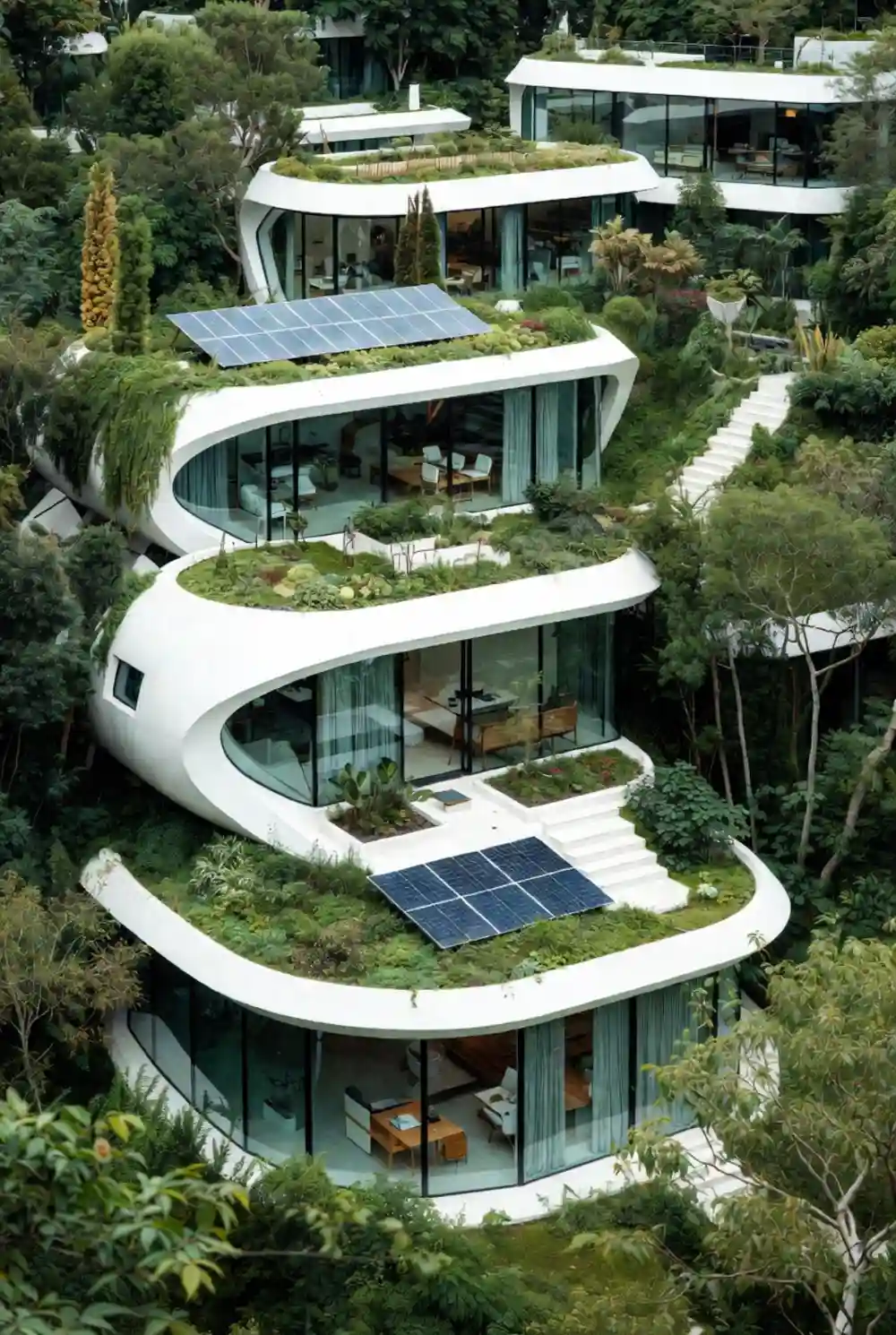
Eco-Functional Rooftops Cultivating thick, mossy gardens on every tier acts as a biological shield against the heat, dramatically lowering the need for air conditioning. Pairing these living layers with blue photovoltaic panels creates a rooftop that works double duty: generating power while cooling the building beneath. True sustainability means every square inch of a surface serves a purpose.
Biomorphic Structure Sweeping white concrete forms stack effortlessly up the hillside, mimicking the growth patterns of shelf fungi rather than asserting dominance with rigid industrial lines. Adopting these fluid, organic shapes helps a high-density structure feel approachable and soft, blending psychologically with the forest. Future cities should look like they grew out of the earth.
Radical Transparency Floor-to-ceiling glass walls wrap the entire perimeter of each unit, turning the surrounding jungle into the living room’s permanent wallpaper. Removing visual barriers between the resident and the ecosystem fosters a deep, daily connection with nature that traditional walled-off housing simply cannot provide. We protect what we see and love every day.
Vertical Community Flow Winding exterior staircases weave through the foliage to connect the different levels, encouraging residents to climb through the canopy rather than taking a dark elevator. Designing circulation as an open-air experience promotes physical health and casual interactions with neighbors in a fresh, green environment. Movement is medicine in a Solarpunk world.
17. Timber Arches & Solar Domes – A Biophilic Solarpunk Community Vision
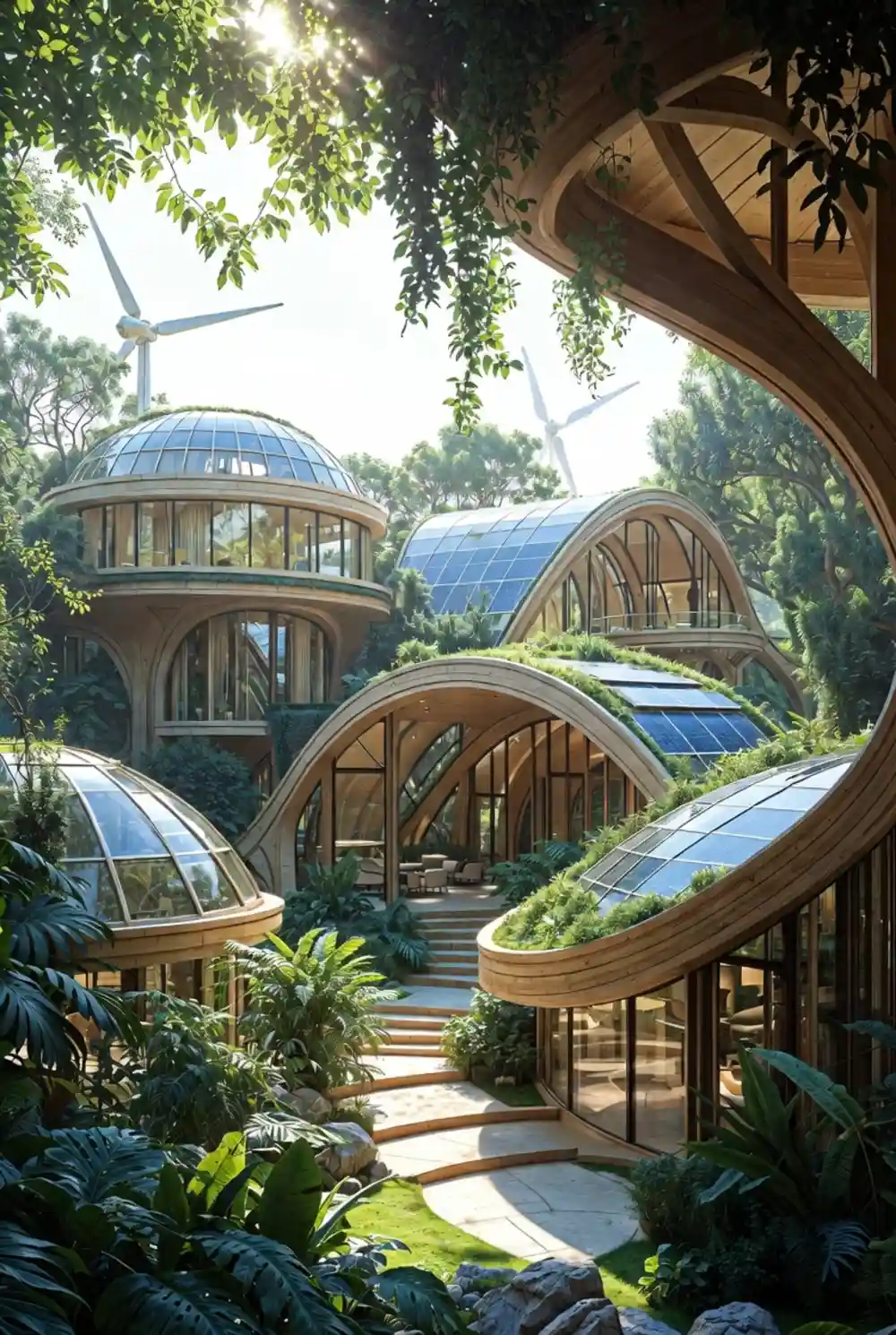
Biomimetic Timber Framing Sweeping, curved timber beams form the structural skeleton of these homes, rejecting rigid industrial boxes in favor of organic flow. Using renewable, warm wood to create futuristic shapes grounds high-tech living in a natural reality, suggesting a future where we grow our architecture rather than mining it. Buildings should feel like they evolved in place.
Integrated Solar Curves Woven directly into the arcing rooflines, the solar panels serve as a functional design element rather than an tacked-on utility. Celebrating clean energy generation as a beautiful part of the home’s aesthetic is a core Solarpunk principle, proving that sustainability doesn’t have to be ugly to be effective. Power generation deserves to be seen.
Geodesic Greenhouse Living Capping the structures with faceted glass domes transforms the upper levels into light-drenched atriums perfect for year-round food production or passive heating. Living under such transparent ceilings blurs the line between a comfortable residence and a functional farm, allowing residents to connect with their food source daily. A true sanctuary feeds both the body and the soul.
Visible Community Infrastructure Standing tall above the canopy in the background, sleek wind turbines act as modern sentinels of decentralized power. Integrating diverse renewable energy sources into the visible landscape shifts the narrative from passive energy consumption to active community resilience. Localized power grids look incredibly empowering.
Active Biophilic Cooling Trailing vines hanging from the upper decks and lush green roof sections aren’t just decorative; they act as a living thermal shield. Wrapping architecture in vegetation actively lowers indoor temperatures through evapotranspiration and cleans the surrounding air. Healthy homes should breathe just like the forests they inhabit.
18. Snowy White & Emerald Green Urban Oasis – Retrofitting the City for a Solarpunk Future
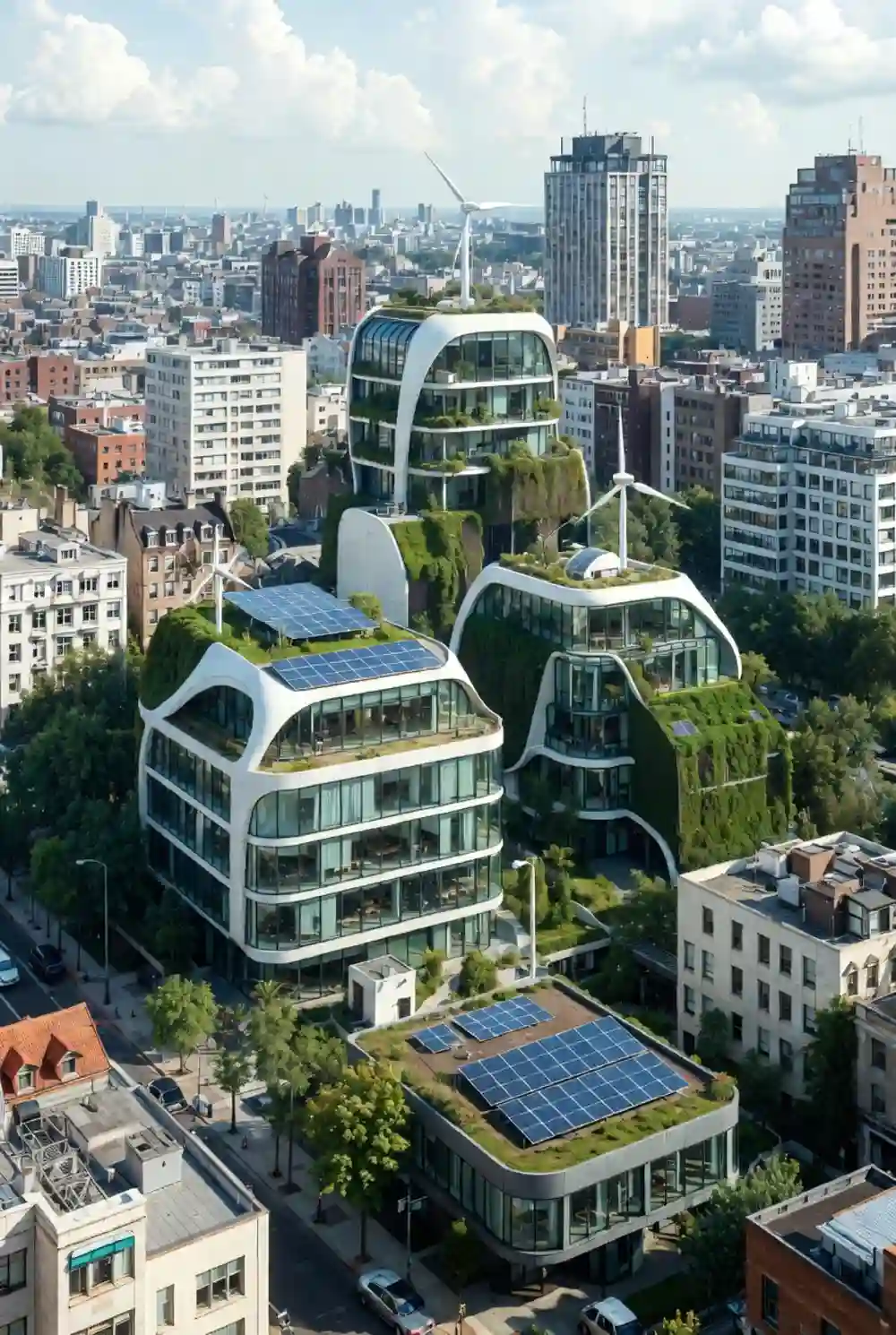
Vertical Living Ecosystems Climbing ivy and dense moss cascading down the curved white facades act as a living thermal blanket for the high-rise structures, drastically reducing the need for artificial cooling. utilizing vertical space for vegetation filters urban pollutants and cools the hot city streets below through natural evapotranspiration. Nature reclaiming the concrete jungle is the ultimate power move for city planners.
Decentralized micro-Grids Perched boldly atop the rounded roofs, white wind turbines and blue solar arrays announce that this building generates its own lifeline rather than depending solely on the city grid. Turning every apartment complex into a functional power plant ensures resilience against blackouts while lowering the collective carbon footprint of the neighborhood. Energy independence is the new urban status symbol.
Softening the Concrete Skyline Fluid, organic curves of these eco-towers stand in stark defiance to the rigid, grey rectangular blocks of the traditional city seen in the background. Introducing biophilic architecture into dense urban centers psychologically breaks the monotony of the grid, offering a visual sigh of relief to stressed commuters. Future skylines should look like clouds, not spreadsheets.
Productive “Fifth Facades” Transforming every square inch of rooftop space into a productive asset—whether for solar capture or community gardens—turns previously dead space into the most valuable real estate in the building. Maximizing utility in crowded metropolises means ensuring that even the roof contributes to the food or energy needs of the residents. We can’t always build out, so we must build smart and up.
18. Rustic Timber & Living Roof Rowhomes – A Solarpunk Suburban Retrofit
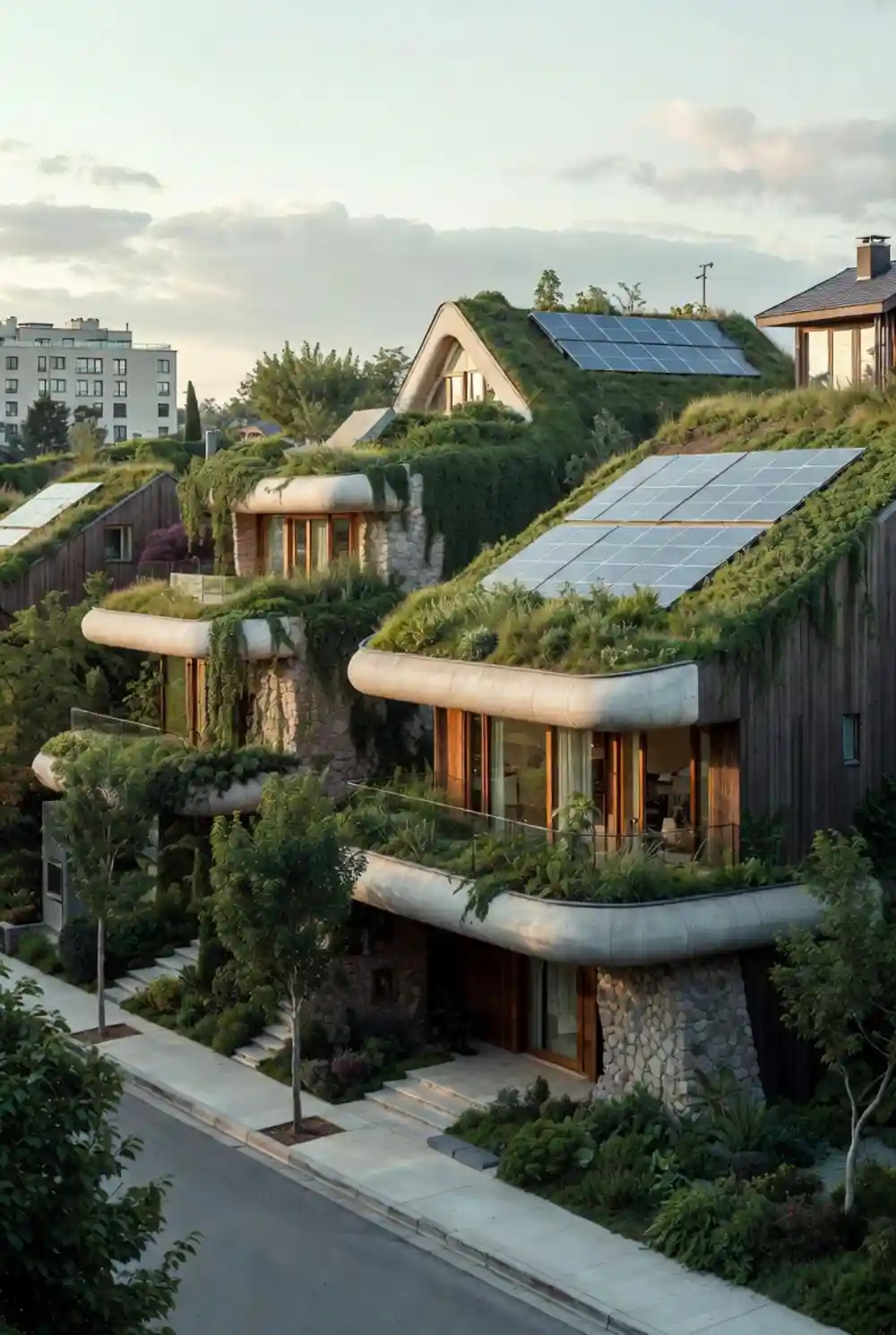
Symbiotic Roofing Layers Cultivating a wild meadow on the roof does more than just look pretty; it acts as a heavy thermal blanket that drastically cuts heating and cooling costs for the residents below. Mounting sleek solar panels directly atop that vegetation creates a dual-purpose system where high-tech energy generation and biological insulation work in tandem. Smart design utilizes every inch of surface area for planetary benefit.
Grounded Material Palette Blending raw, stacked stone foundations with warm vertical timber siding creates a tactile richness that standard vinyl-sided suburbs completely lack. Grounding the home in these natural, rugged materials makes the modern, curved concrete balconies feel supported by the earth itself rather than just bolted on. We crave textures that feel real and permanent in a disposable world.
Vertical Garden Privacy Softening the street view, overflowing planter boxes on every level turn the building’s facade into a vertical garden that actively filters dust and noise from the road. Living behind a curtain of ferns and ivy offers a psychological break from the pavement, effectively expanding the home’s footprint into the ecosystem without using more land. Privacy feels much better when it is green.
Neighborhood Evolution Integrating these eco-villas into a standard street grid proves that we don’t need to leave the city to find a sustainable paradise; we just need to build better right where we are. Replacing the traditional manicured front lawn with a building that literally breathes oxygen back into the neighborhood shifts the definition of curb appeal from cosmetic to functional. True status is contributing to the local air quality.
19. Verdant Rolling Roofs & Stone Villas – A Solarpunk Suburban Revolution
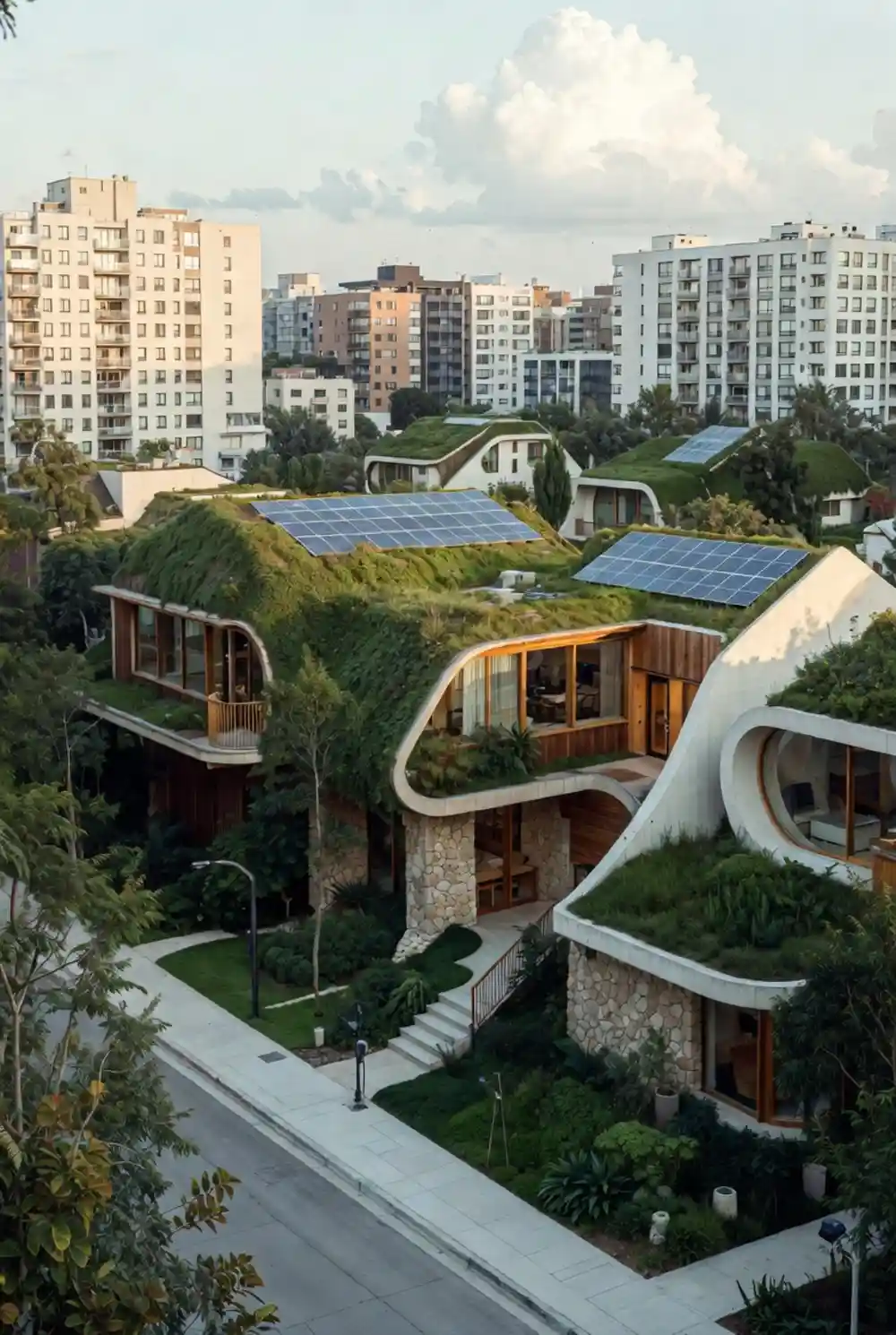
Living Insulation Layers Blanketing the curved architecture in a thick layer of wild grass creates a living insulation system that drastically lowers energy consumption while managing stormwater runoff naturally. Utilizing the roof as a meadow transforms a formerly dead surface into a thriving ecosystem that actively cools the building below. Nature provides the most efficient climate control available.
Tech-Nature Symbiosis Perched confidently atop the verdant slopes, the photovoltaic arrays demonstrate that high-tech energy generation can coexist harmoniously with wild, organic textures. Integrating solar power directly into a living landscape visualizes the core Solarpunk ideal: technology supporting biology rather than replacing it. Clean power looks best when it feels like part of the garden.
Softening the Urban Edge Undulating white concrete forms mimic the rolling hills of a natural landscape, offering a stark, soft contrast to the rigid, grey apartment blocks looming in the background. Adopting organic geometry psychologically re-grounds the neighborhood, making the street feel less like a concrete canyon and more like a valley. Architecture should offer a visual sigh of relief.
Grounded Material Warmth Anchoring the futuristic white curves with rough, stacked stone walls and warm timber window frames prevents the design from feeling too sterile or “sci-fi.” Grounding advanced architecture in ancient, tactile materials ensures the home remains inviting and human-scaled, bridging the gap between ancestral comfort and future needs. We still need homes that feel like shelter.
Suburban Density Evolution Nestled right into a paved street grid, this community proves that Solarpunk isn’t just a fantasy for remote forests but a viable blueprint for densifying and greening existing suburbs. Transforming standard residential lots into carbon-sequestering micro-habitats is the most practical step toward a sustainable future. Change happens on the street level.
20. Meadow-Topped Timber Cottages – A Realistic Solarpunk Suburban Retrofit
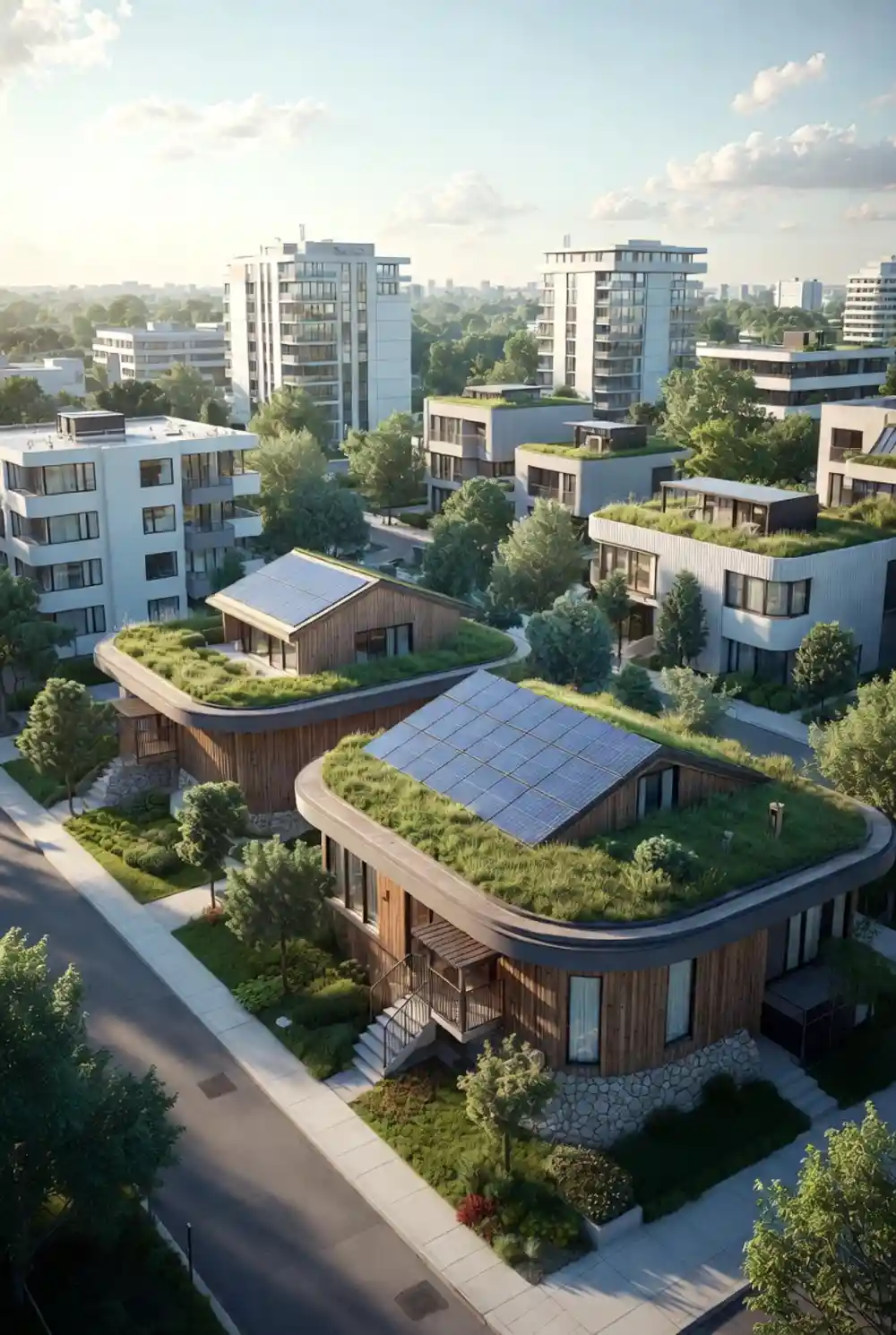
Productive Living Roofs Carpeting the curved rooftops with wild grasses transforms a typically wasted surface into a biological thermal shield that drastically cuts cooling costs. Utilizing this “fifth facade” for vegetation manages stormwater runoff and supports local pollinators, turning the footprint of the house into a net positive for the ecosystem. Nature serves as the most effective insulator available.
Harmonious Energy Harvesting Positioning large photovoltaic arrays directly atop the living meadow demonstrates a functional harmony between high-tech energy harvesting and organic insulation. Clean energy systems sit proudly on the home here, proving that advanced technology looks best when it is supported by a foundation of greenery. Power generation becomes a celebrated architectural feature.
Warm Material Contrast Cladding the exterior in warm, vertical timber and grounding it with rough stone creates a tactile, human-scale contrast to the cold, rigid high-rises looming in the background. Future neighborhoods need to prioritize materials that feel grown rather than poured to create a sense of psychological comfort. We crave textures that connect us to the earth.
Softened Suburban Geometry Rounding the rooflines and structural corners breaks the monotonous, aggressive grid typical of traditional suburban developments. Buildings that mimic organic curves feel less imposing and more welcoming, fostering a gentler atmosphere at the street level. Architecture should flow, not block.
Practical Urban Integration Integrating these eco-cottages into a standard paved street layout proves that a Solarpunk future doesn’t require demolishing cities, but rather retrofitting them one lot at a time. Real change happens when sustainable design meets existing infrastructure, making the green transition accessible rather than utopian. A revolution starts on the sidewalk.