
A dated oak vanity can make an entire bathroom feel older than it really is, and I mean… I’ve stood in front of one wondering why such a small corner holds so much power over the whole room. Maybe you’ve felt it too.
That tug between wanting a fresh, modern space and not wanting to rip out perfectly sturdy cabinets. I am not sure but a simple coat of paint might be the one upgrade that finally bridges that gap. With the right color, those heavy orange tones soften, the grain settles into something intentional, and suddenly the whole room feels lighter.
If you’ve been craving a change without the renovation price tag, these makeover ideas might be exactly what you need.
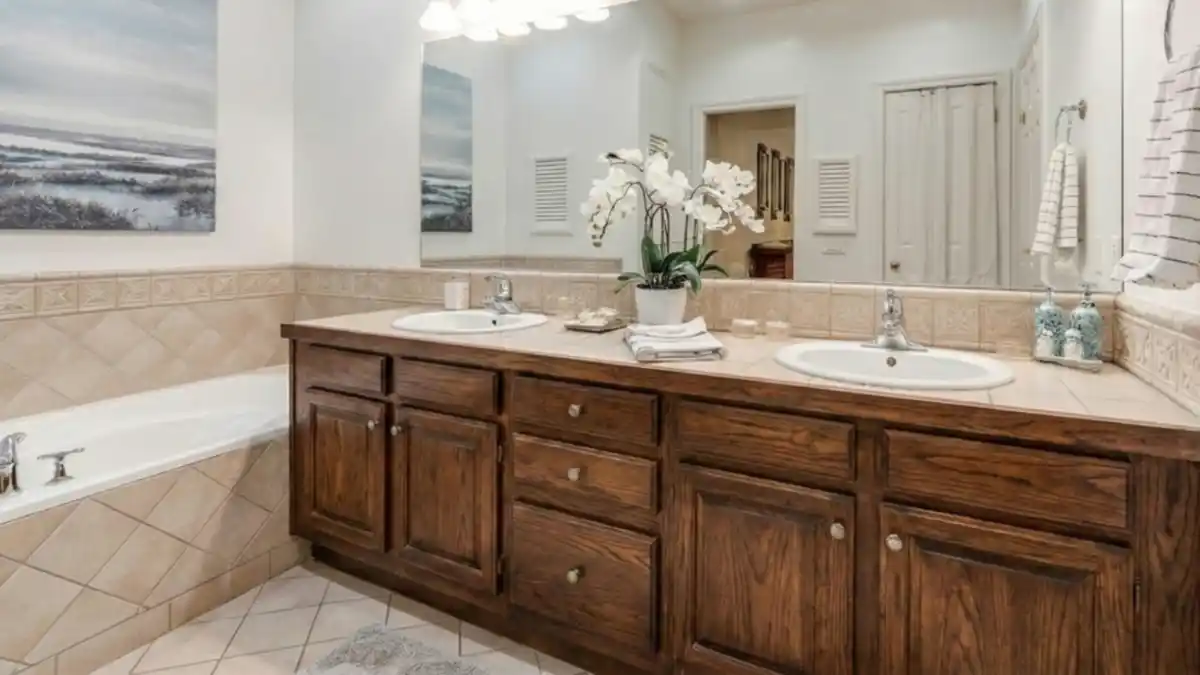
1. Honey-Toned Heritage Bathroom – Embracing Natural Grain Amidst a Painted World
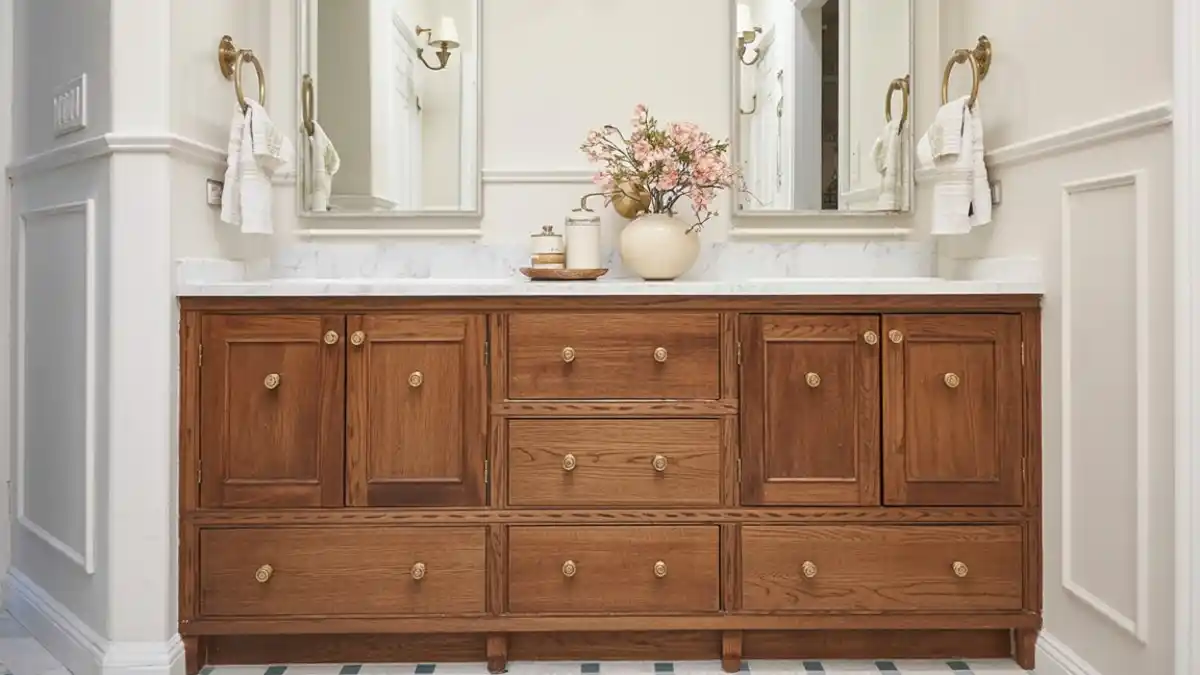
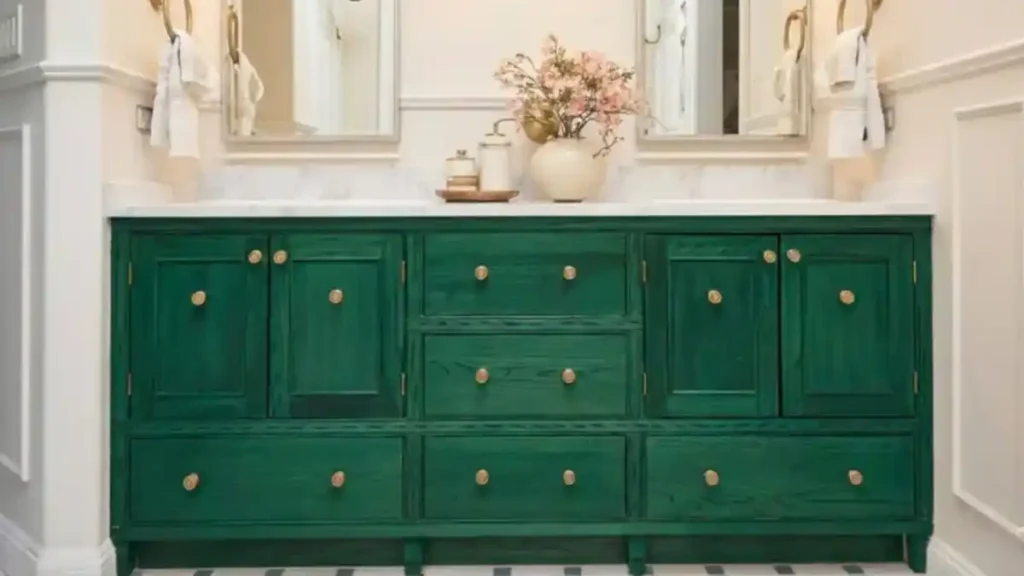
Stripping back layers of old paint or preserving the original integrity of oak allows the natural warmth of the wood to take center stage, offering a cozy, organic counter-argument to the popular matte black and grey trends found in many vanity makeovers.
Golden hues in the cabinetry play beautifully against the cool, crisp white marble countertop, creating a balance that feels both nostalgic and fresh. Polished brass hardware and sconces amplify the luxurious feel, proving that “dated” oak can actually look high-end when paired with the right accessories and a lighter wall color.
Restoring the wood rather than covering it up preserves the soul of the bathroom while updating the surrounding elements for a modern lift.
Warm Wood Grain: Showcases organic texture that instantly warms up the cool white wainscoting and marble surfaces.
Brass Hardware: Vintage-style knobs, towel rings, and sconces add a touch of timeless glamour that highlights the wood’s undertones.
Symmetrical Layout: Twin tall mirrors and dual sinks create a pleasing sense of order and luxury in the space.
Checkered Flooring: Subtle blue and white tile patterns inject a bit of retro personality without overwhelming the cabinetry.
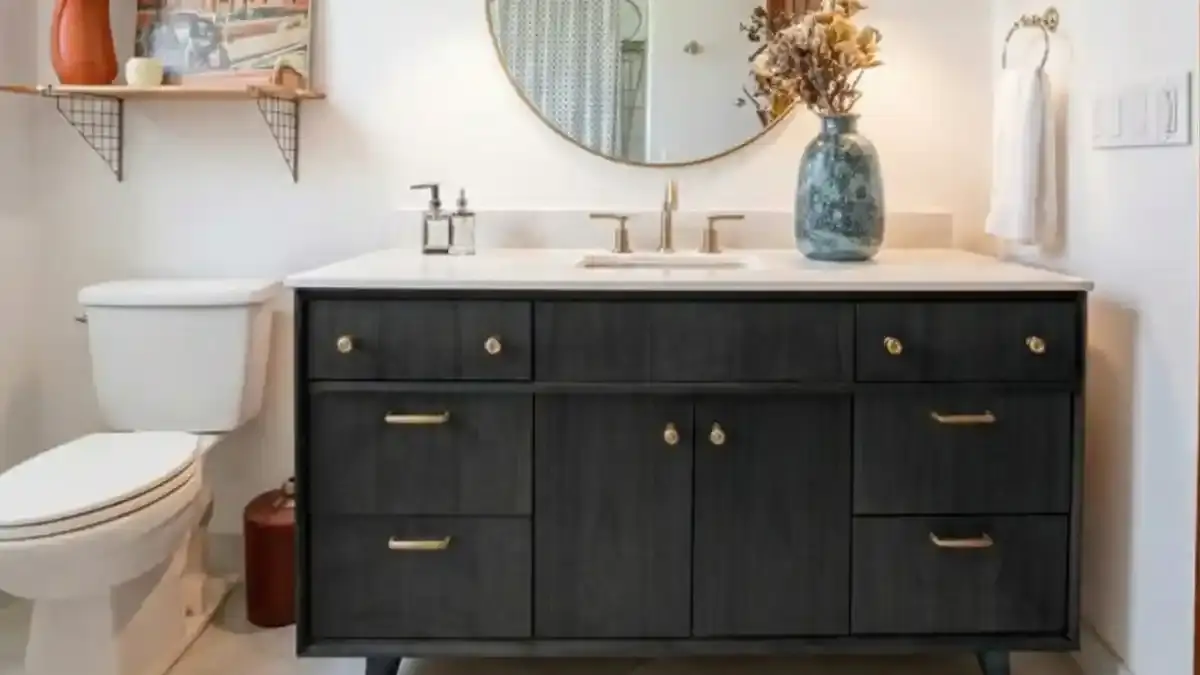
2. Midnight Blue and Gold Revival Bathroom – A Bold Departure from Builder Beige
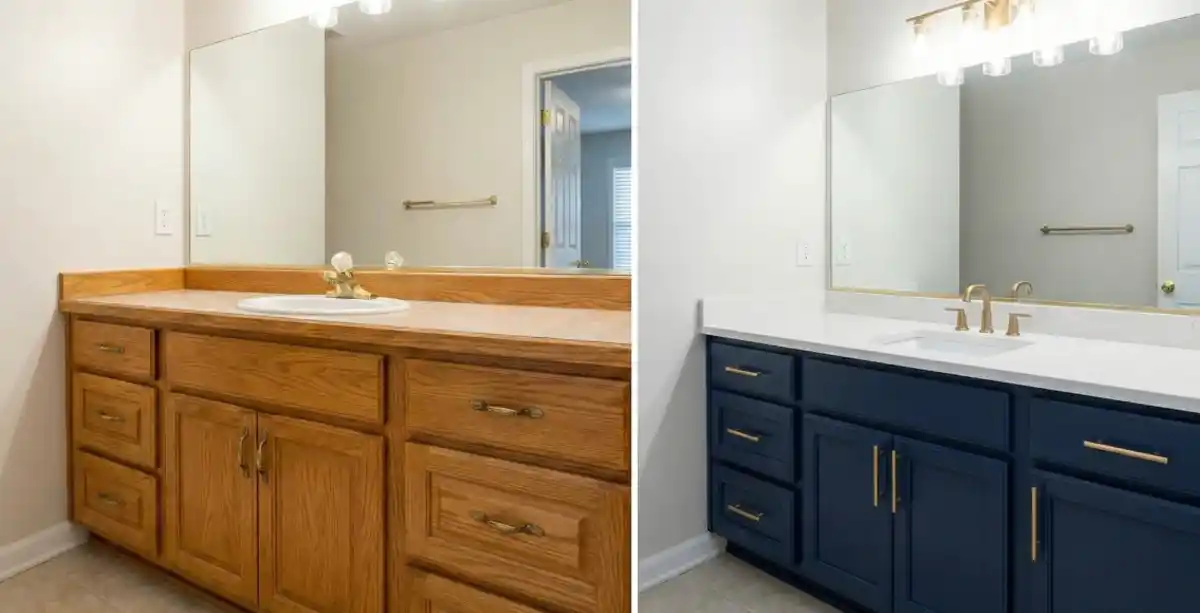
Orange-toned wood cabinets were the default choice for decades, but they often blend into beige tile floors, creating a “wash of tan” that lacks definition and makes a room feel dated.
Coating the vanity in a commanding shade of deep navy immediately disrupts that monotony, establishing a strong focal point that feels intentional and custom-designed rather than standard-issue. Modernizing the color palette shifts the entire atmosphere from a tired rental vibe to a boutique hotel aesthetic without requiring a full demolition.
Stark Contrast: Deep blue cabinetry forces the eye to appreciate the crisp white quartz countertop, whereas the previous beige-on-oak combination looked muddy and washed out.
Hardware Jewelry: Swapping curved, dated handles for sleek, linear gold pulls adds a metallic finish that mirrors the modern faucet and warms up the cool blue tones.
Sink Silhouette: Replacing the standard oval drop-in sink with a rectangular undermount version streamlines the surface, making the vanity top easier to clean and visually less cluttered.
Floor Harmony: Surprisingly, the existing beige tile flooring looks purposeful against the dark blue paint, whereas it previously clashed with the yellow undertones of the oak.
3. Midnight Navy and Gold Revival – A Bold Departure from Builder Beige
Orange-toned wood cabinets were the default choice for decades, but they often blend into beige tile floors, creating a “wash of tan” that lacks definition.
Coating the vanity in a commanding shade of deep navy immediately disrupts that monotony, establishing a strong focal point that feels intentional and custom-designed rather than standard-issue. Modernizing the color palette shifts the entire atmosphere from a tired rental vibe to a boutique hotel aesthetic without requiring a full demolition.
Stark Contrast: Deep blue cabinetry forces the eye to appreciate the crisp white quartz countertop, whereas the previous beige-on-oak combination looked muddy and washed out.
Hardware Jewelry: Swapping curved, dated handles for sleek, linear gold pulls adds a metallic finish that mirrors the modern faucet and warms up the cool blue tones.
Sink Silhouette: Replacing the standard oval drop-in sink with a rectangular undermount version streamlines the surface, making the vanity top easier to clean and visually less cluttered.
Floor Harmony: Surprisingly, the existing beige tile flooring looks purposeful against the dark blue paint, whereas it previously clashed with the yellow undertones of the oak.
4. Sage Green and Botanical Prints – Bringing the Garden Indoors
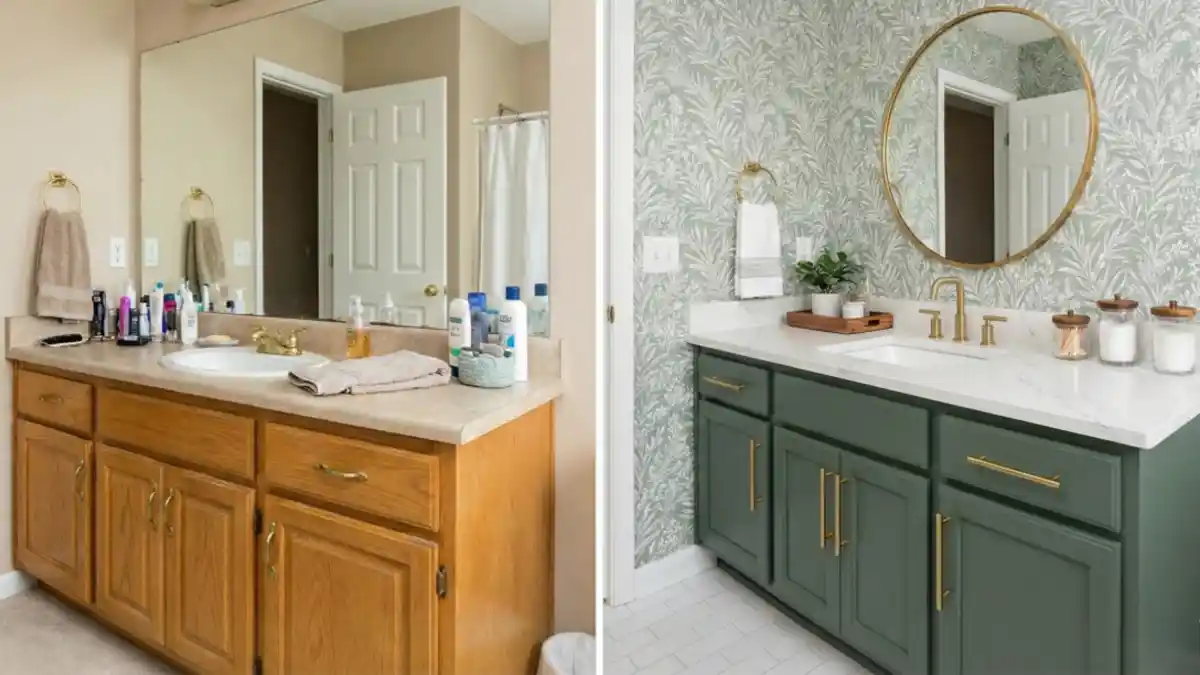
Bathrooms are the perfect place to experiment with bold patterns that might feel overwhelming in a larger room. Pairing a muted sage green vanity with intricate botanical wallpaper blurs the boundaries of a small space, making it feel like a hidden garden retreat.
Brushed gold hardware acts as the jewelry of the room, adding warmth to the cool green tones and elevating the entire aesthetic from basic to bespoke.
Patterned Depth: Leafy wallpaper designs draw the eye upward, distracting from the room’s compact footprint.
Earthy Tones: Green cabinetry anchors the space with a calming, organic vibe that feels grounded and serene.
Luminous Accents: Gold fixtures and a round mirror frame catch the light, adding a necessary sparkle against the matte finishes.
5. Foggy Grey and Crisp White Bathroom – Modern Simplicity for Busy Mornings
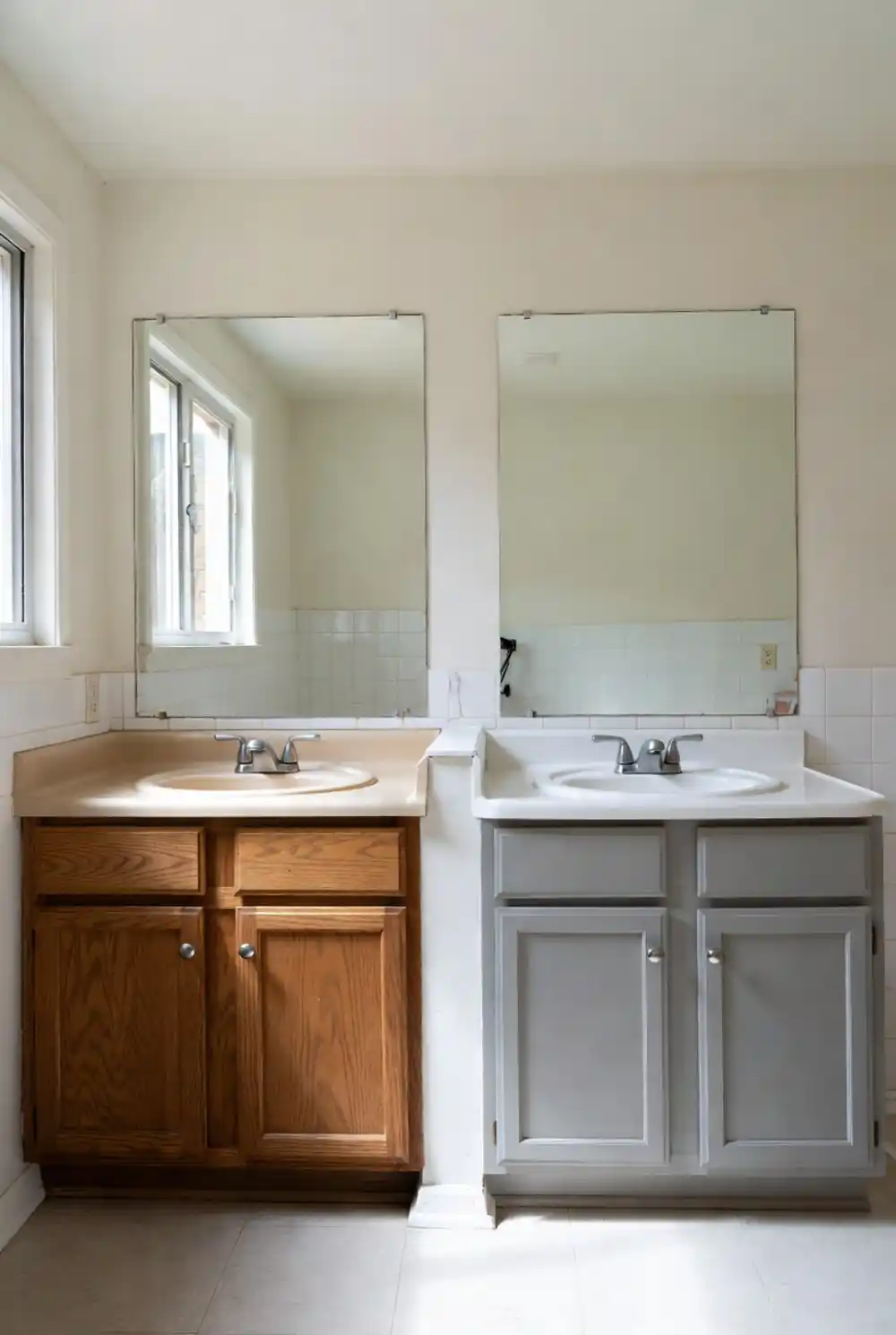
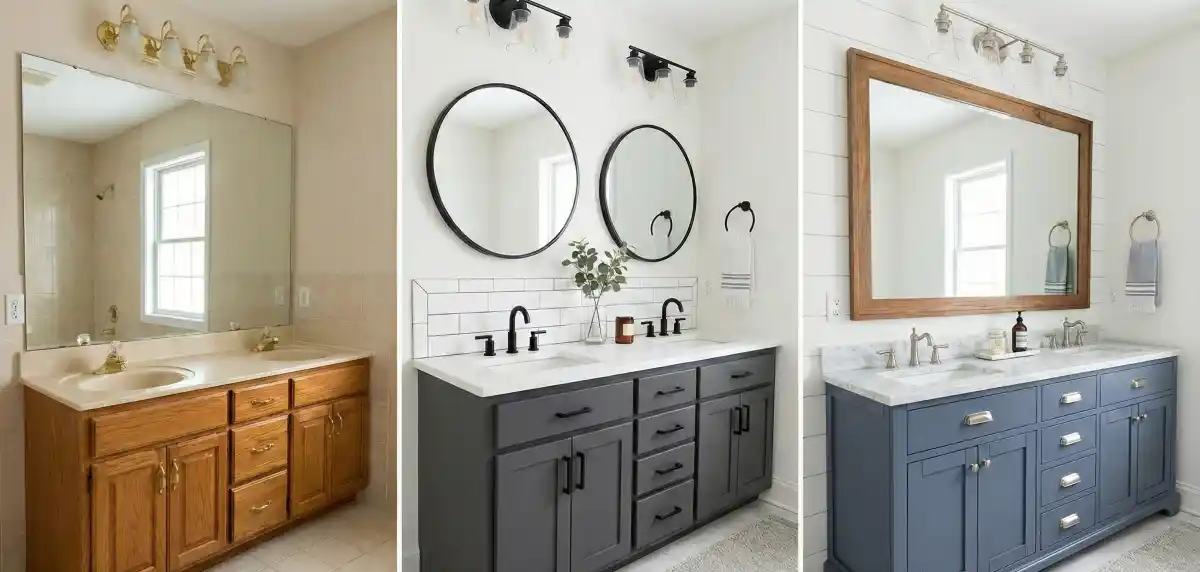
Honey-toned oak has a tendency to dominate a small room, casting a yellow glow that feels stuck in the 90s, but a coat of soft grey immediately cools down the visual temperature.
Swapping the finish to a neutral matte allows the cabinetry to recede, making the bathroom feel more spacious and less cluttered. It is a quiet transformation that prioritizes cleanliness and light over bold statements, perfect for creating a serene backdrop for daily routines.
Cooler Palette: Grey paint neutralizes the warmth of the old wood, creating a fresh canvas that pairs effortlessly with white porcelain.
Hardware Update: Brushed nickel or chrome knobs replace the old pulls, adding a subtle shine that complements the new cool tones.
Unified Surfaces: Painting the vanity base makes the countertop appear brighter and cleaner by removing the jarring contrast of the orange wood.
6. Warm Driftwood & Geometric Drama Bathroom – A Natural Reset for Dated Oak
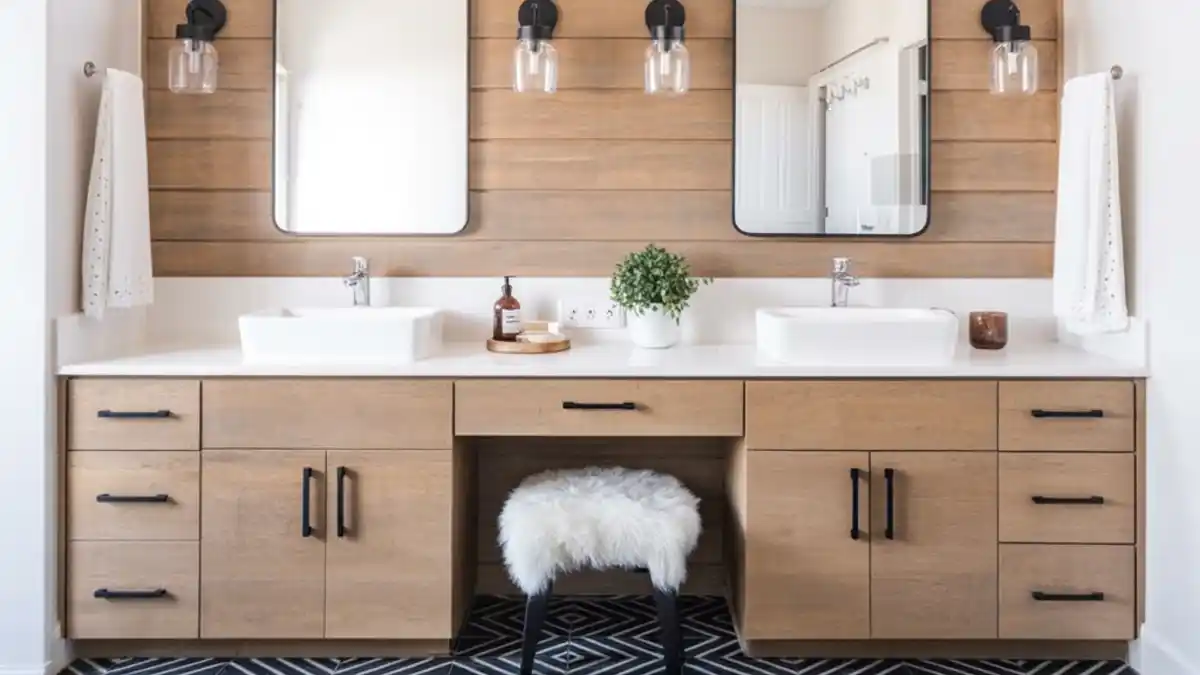
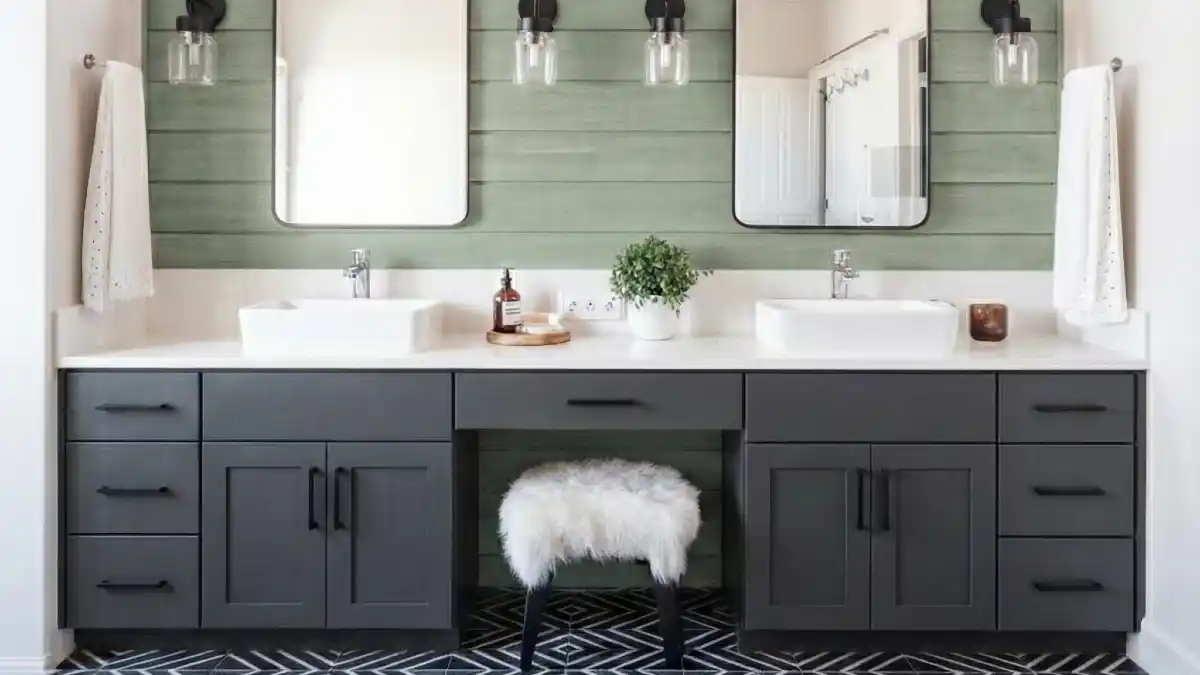
Raw Appeal Over Opaque Paint Stripping down heavy, orange-tinted varnishes to reveal a soft, matte driftwood tone offers a compelling alternative to simply painting over cabinetry. Maintaining the grain visible while neutralizing the yellow undertones creates a spa-like serenity that solid colors often struggle to replicate. Authenticity shines here, proving that sometimes the best color choice is simply revealing the wood’s honest, muted grain.
Modernizing with Matte Black Hardware acts like eyeliner for cabinetry, instantly defining the drawers and doors against the organic timber backdrop. Choosing sleek, linear pulls and matching sconces bridges the gap between rustic warmth and industrial cool, ensuring the look remains sharp. Small metal details do the heavy lifting, ensuring the rustic materials feel intentional and curated rather than farmhouse kitsch.
Grounding with Pattern High-contrast geometric tiling creates a dynamic foundation that prevents the abundance of wood tones from feeling too cabin-like or monotonous. Pairing complex floor patterns with simple, clean-lined joinery strikes a visual balance that keeps the eyes moving happily around the room. Bold flooring choices provide the necessary punch of energy to anchor an airy, neutral vanity setup.
Luxury in the Layout Carving out a dedicated makeup station in the center breaks up the cabinetry run, adding visual breathing room and a distinct touch of luxury. tucking a textured, fluffy stool into the knee space softens the hard lines of the wood and tile, adding a layer of tactile comfort. Function meets form in that center nook, turning a standard morning routine into a pampered ritual.
Vertical Continuity Extending the wood cladding up the wall behind the mirrors creates a seamless vertical flow that draws the eye upward toward the natural light source. mimicking the vanity material on the backsplash area creates an enveloping, cozy atmosphere that tile alone might miss. Wrapping the room in consistent warm tones unifies the space without needing a single drop of wall paint.
7. Electric Coral & Crisp White Bathroom – A Bold Departure from Builder Beige
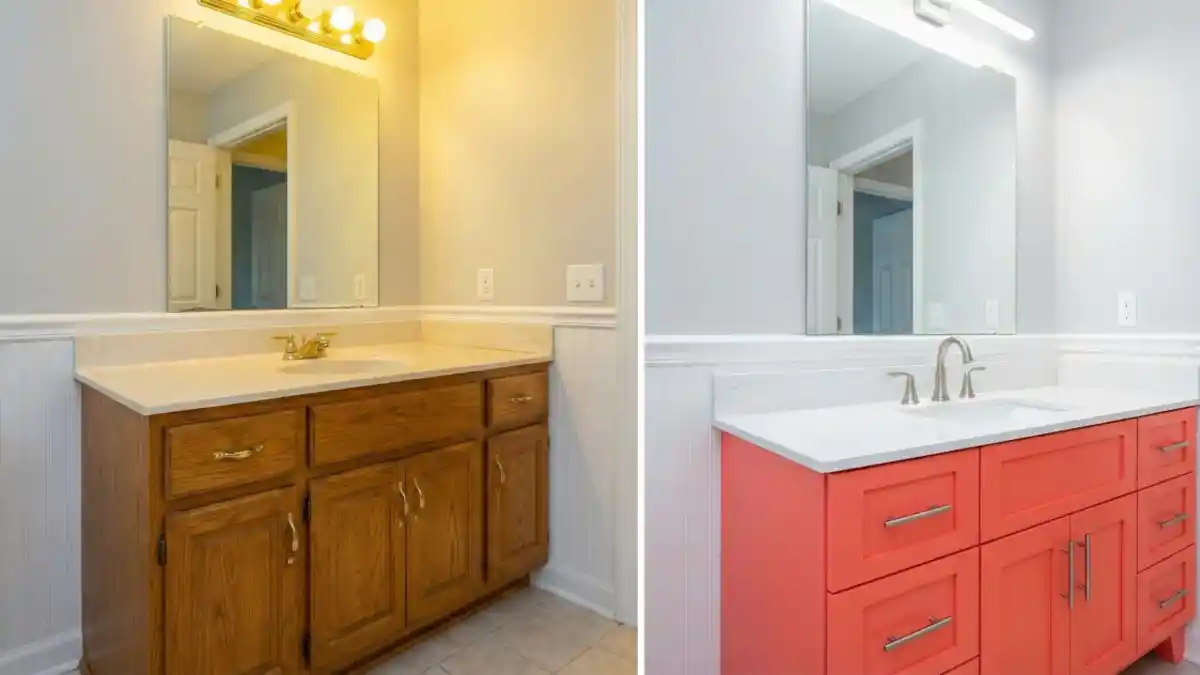
Dopamine Dressing for Furniture Injecting a massive dose of dopamine into the room, painting the vanity a vivid living coral completely obliterates the heavy, dated feeling of standard honey oak. It proves that small spaces don’t always need to be white to feel big; sometimes they just need to be fun and full of personality. Bold choices often yield the highest emotional return on investment.
Lighting Sets the Stage Shifting from the dingy, yellow-cast bulbs of the original setup to crisp, daylight-temperature LEDs clarifies the entire room layout. It stops the room from feeling like a cave and actually allows the fresh paint to read as a true playful pink rather than a muddy orange mixture. Never underestimate the power of a simple bulb swap to instantly modernize a space.
Hardware as Modern Jewelry Replacing those fussy, tarnished brass scrolls with sleek, linear brushed nickel pulls streamlines the cabinetry profile instantly. It bridges the gap between a vintage wooden structure and a contemporary finish, making the drawers look functional and sharp. Modern handles are the quickest way to tell the eye that this piece has been reinvented.
The White Countertop Reset Balancing the visual weight is crucial here; upgrading to a pure white countertop provides a necessary visual break from the intense cabinet color. It creates a clean, crisp dividing line between the colorful cabinetry and the mirror, ensuring the look is intentional and curated rather than chaotic. Crisp white surfaces act as the perfect palate cleanser for adventurous color palettes.
8. Golden Walnut & Vintage Soul Bathroom
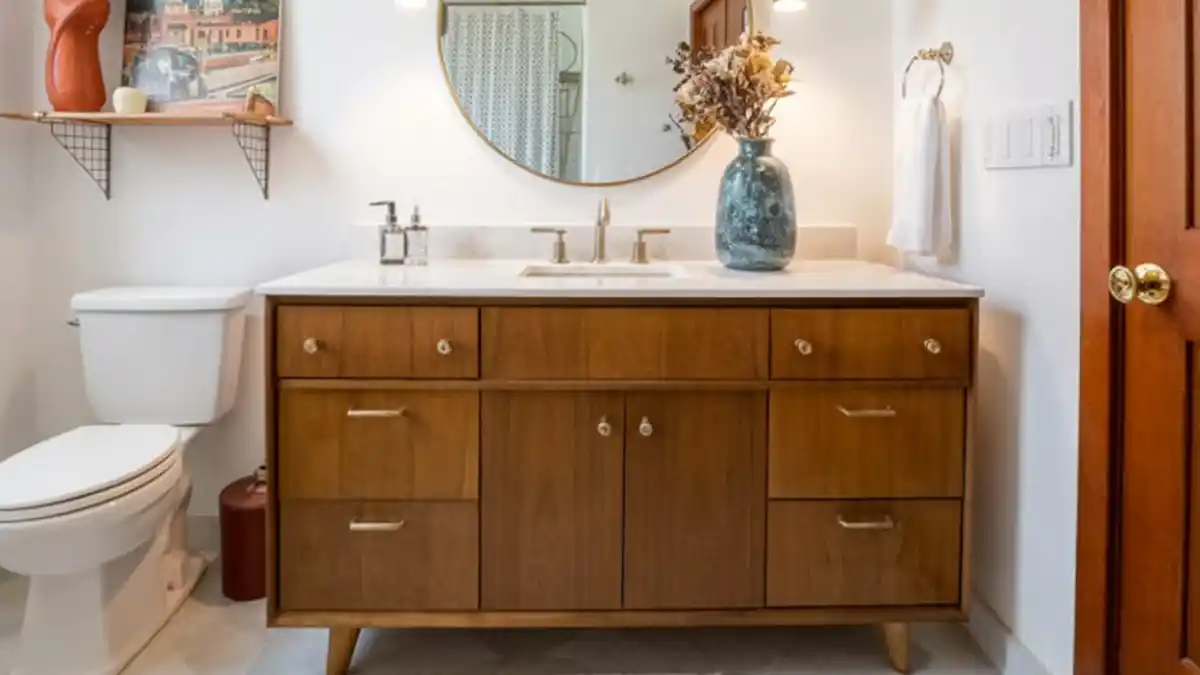
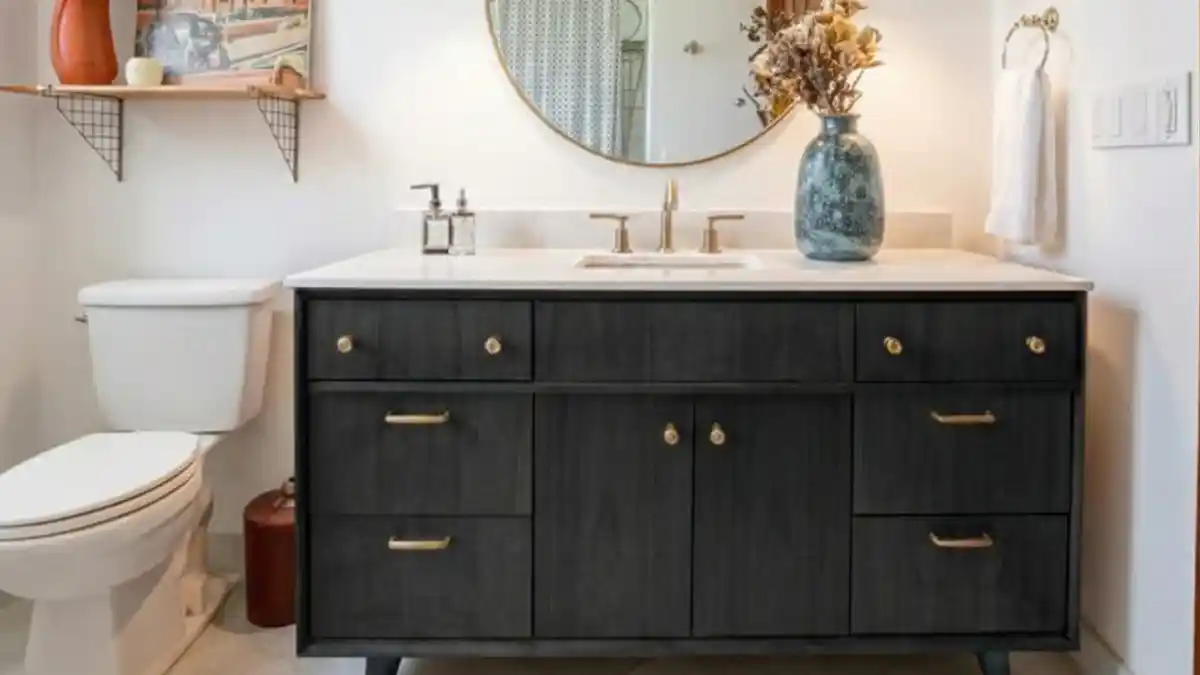
Restoring Over Covering Swapping the paint brush for a rich gel stain allows you to keep the organic texture of the wood while ditching that 90s orange hue for a sophisticated mid-century walnut. It validates the idea that sometimes the best color choice for oak is simply a better version of itself, deep and matte rather than glossy and golden. Nature provides a texture that even the most expensive paint swatch struggles to replicate.
Furniture, Not Just Fixtures Elevating the vanity on tapered legs fundamentally shifts the perception of the piece from a standard built-in box to a curated article of freestanding furniture. It opens up the floor visual, making tight square footage feel significantly airier and more spacious. Giving a heavy cabinet a little lift makes the entire room breathe easier.
Jewelry in the Details Flanking the mirror with drop-pendant lighting instead of the typical overhead bar creates a boutique hotel atmosphere that feels intentional and custom. Brushed gold hardware acts as the perfect warm companion to the dark wood, proving that mixing warm metals with warm timber is a timeless power move. Lighting is the secret weapon that separates a renovation from a simple repair.
Curated Corners Treating the bathroom walls like a gallery by adding vintage art and sculptural ceramics injects personality where sterile tile usually dominates. installing a simple wire shelf offers a stage for these treasures, ensuring the space reflects personal travels and tastes rather than just utility. Bathrooms deserve just as much storytelling and character as the living room.
9. Crisp Alabaster & Bronze Revival Bathroom – A Masterclass in Brightening the Dark
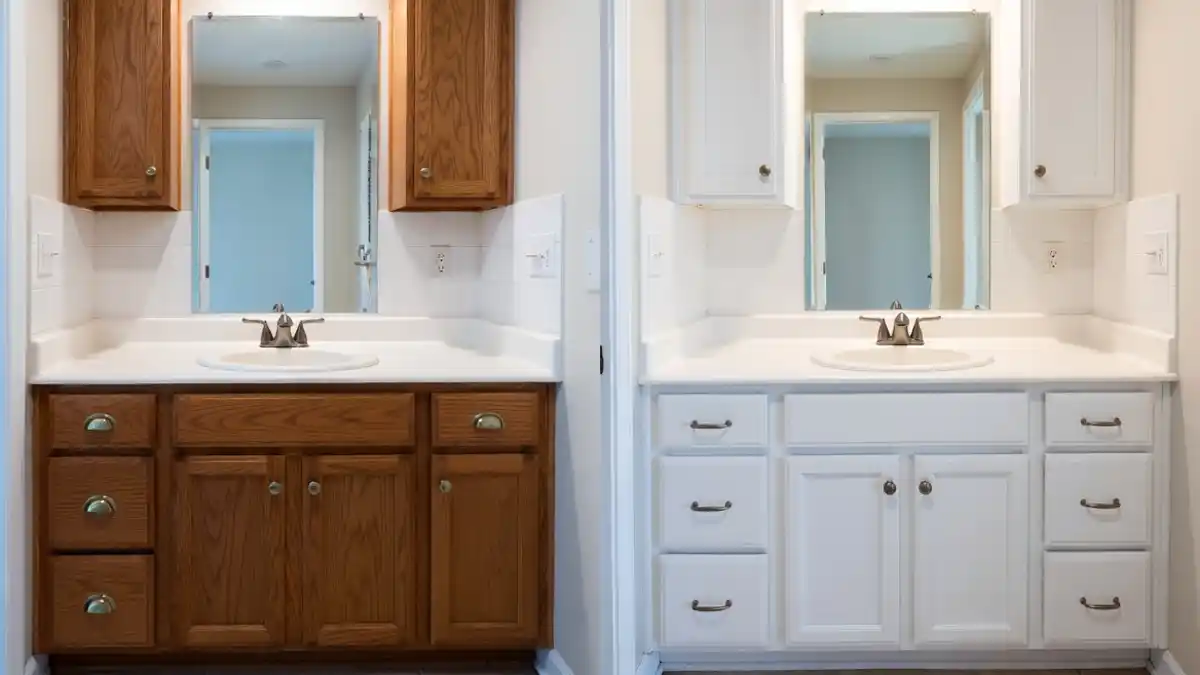
Camouflaging the Bulk Coating those looming tower cabinets in a crisp, clean white instantly neutralizes their heavy visual weight. Instead of feeling like imposing wooden boxes encroaching on the sink, they melt seamlessly into the surroundings, tricking the eye into perceiving more open space than actually exists. Camouflage is the ultimate tool for dealing with necessary but bulky storage in tight quarters.
Contrast Creates Definition Swapping out generic, blend-in knobs for high-contrast, oil-rubbed bronze pulls adds a necessary punch of definition to the new color scheme. Crisp white cabinetry runs the risk of looking sterile or “builder-grade” without these dark, grounding elements to guide the hand and eye. Think of hardware as the punctuation marks in a very clean, minimalist sentence.
Amplifying the Light Reflecting light becomes the room’s new superpower once the light-absorbing dark wood is covered. Every photon from the vanity fixture bounces off the bright surfaces, effectively doubling the perceived brightness of the room without changing a single bulb or rewiring a fixture. You don’t always need more watts to fix a dark room; sometimes you just need more reflective surfaces.
Unifying the Vertical Space Painting the upper and lower cabinets in the exact same shade creates a cohesive, built-in look that feels custom rather than piecemeal. It quiets the visual noise of the original wood grain, allowing the mirror and the routine to be the focal points rather than the cabinetry itself. Cohesion creates calm, turning a disjointed layout into a streamlined wall of function.
10. Golden Oak Blank Canvas Bathroom – A Prime Candidate for a Moody Charcoal Refresh
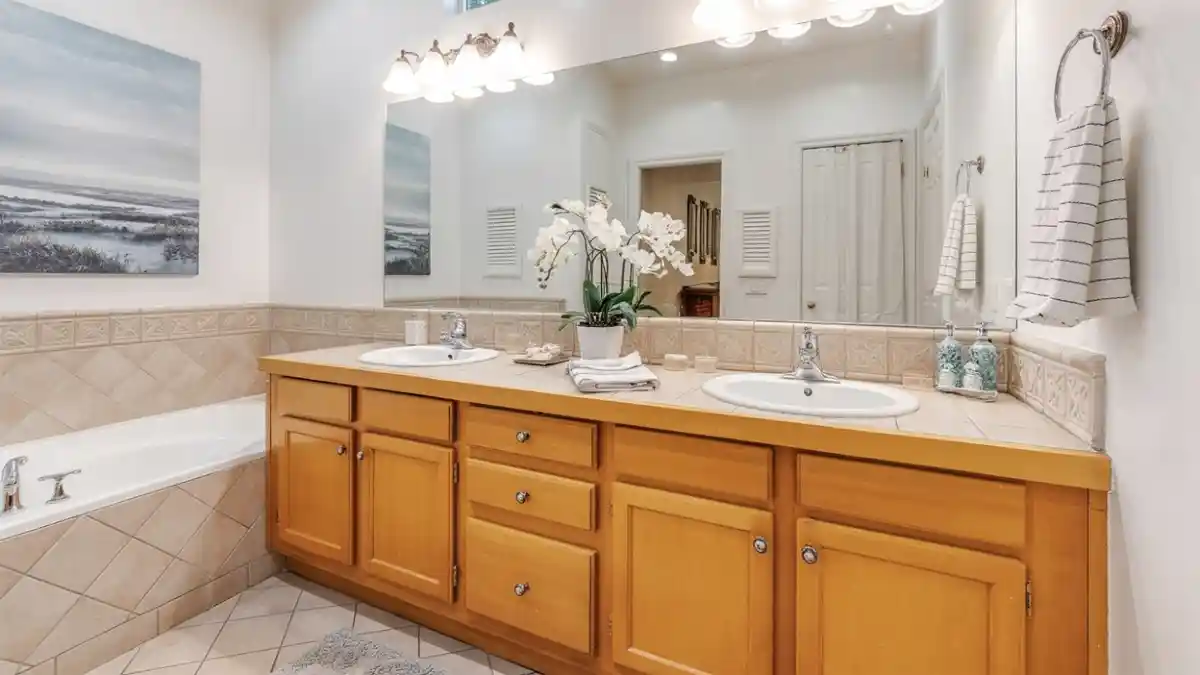
Golden wood tones currently anchor the room in the early 2000s, begging for a sleek coat of matte black or navy to modernize the vibe. Covering the grain with a solid, dark color creates an immediate luxury feel without replacing a single piece of hardware, proving that paint is the most powerful renovation tool.
Sunlight streaming through the clerestory windows provides the necessary brightness to support a daring, high-contrast cabinet makeover. Using a rich espresso or graphite paint here works perfectly because the abundance of natural illumination prevents the space from feeling cave-like.
Existing beige tile work on the backsplash and tub surround often dictates the palette, pushing the design toward warm neutrals like “Revere Pewter” or “Swiss Coffee” for a cohesive look. Harmonizing the vanity color with these fixed elements turns a disjointed “before” into a soft, monochromatic sanctuary.
11. Modern Farmhouse Contrast Bath – Elevating Builder-Grade Basics
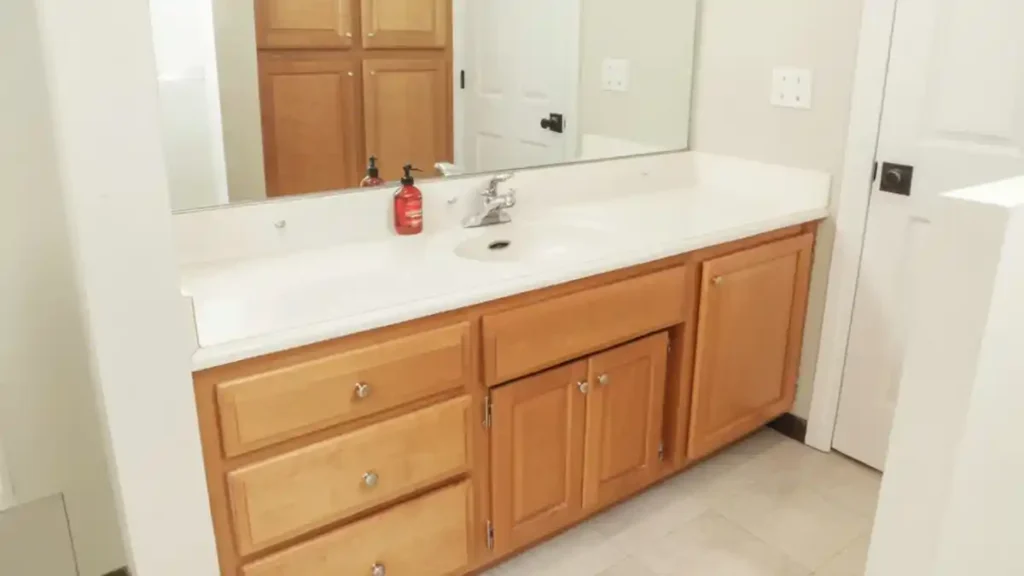
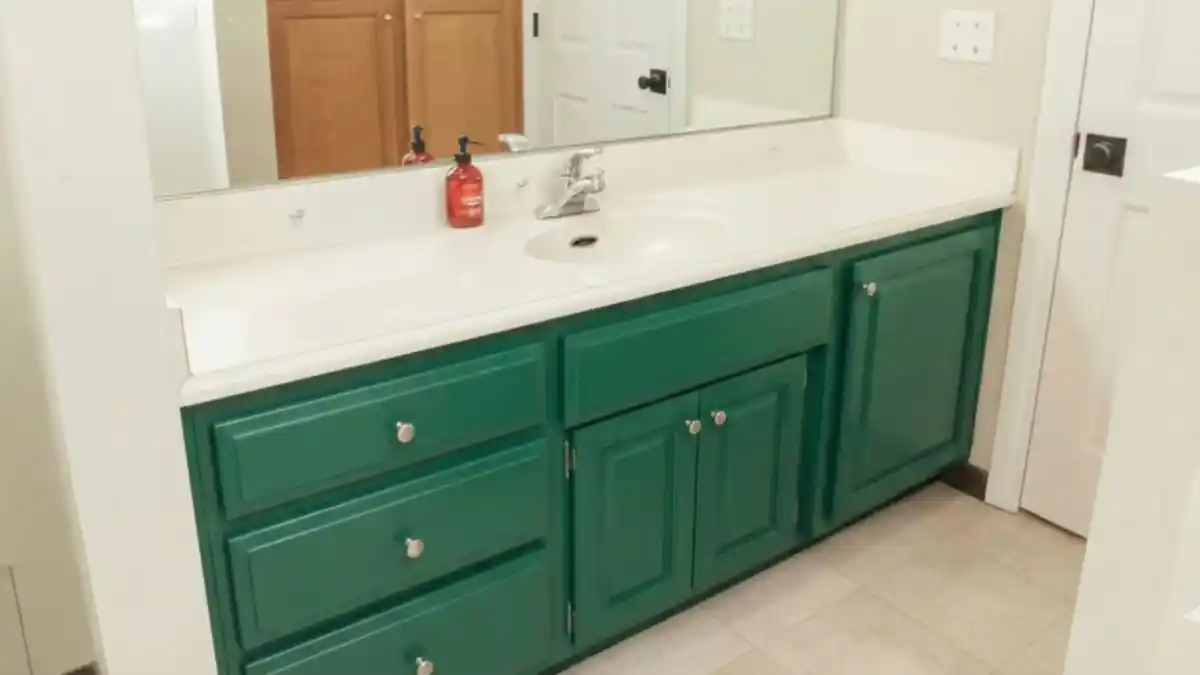
Existing matte black door hardware nearby offers a subtle clue that this space is ready for a high-contrast, industrial transformation. Swapping the overwhelming honey oak for a deep “Charcoal” or “Midnight Blue” would instantly anchor the floating white countertop and tie the vanity to the modern door lever. It is about listening to the modern accents already present in the room to dictate the new color palette.
Integrated sinks and seamless white surfaces often feel sterile when paired with standard wood grain. Softening the cabinetry with a “Sage Green” or “Misty Gray” creates a bridge between the clinical white top and the warm beige floor tiles. Applying a coat of earthy, muted paint turns a purely functional washing station into a spa-like focal point.
Reflections in the expansive, frameless mirror currently double the visual weight of the orange-toned wood, creating a “sauna effect” that shrinks the room. Breaking up this repetitive loop by painting the vanity a clean “Cream” or “Greige” creates necessary visual relief and stops the space from feeling boxed in. Interrupting the reflection with a solid color instantly maximizes the perceived square footage of the bathroom.
12. Organic Driftwood Spa & Moody Slate Revival – Bathroom Vanity Makeovers that Ground the Space
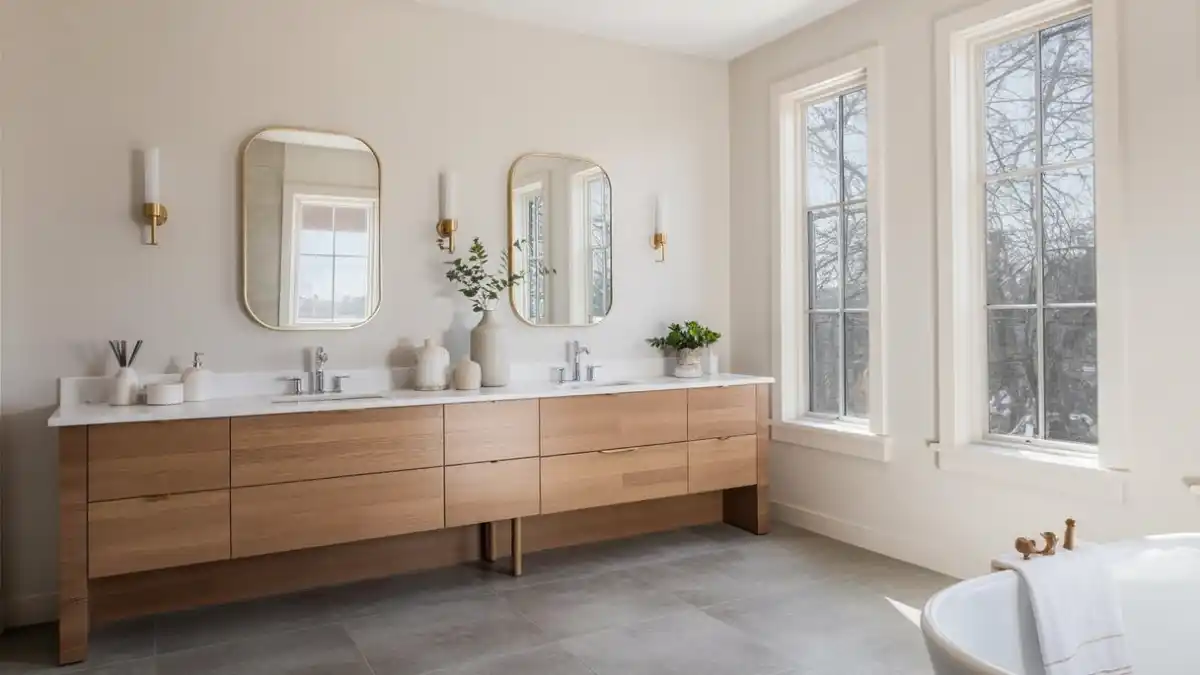
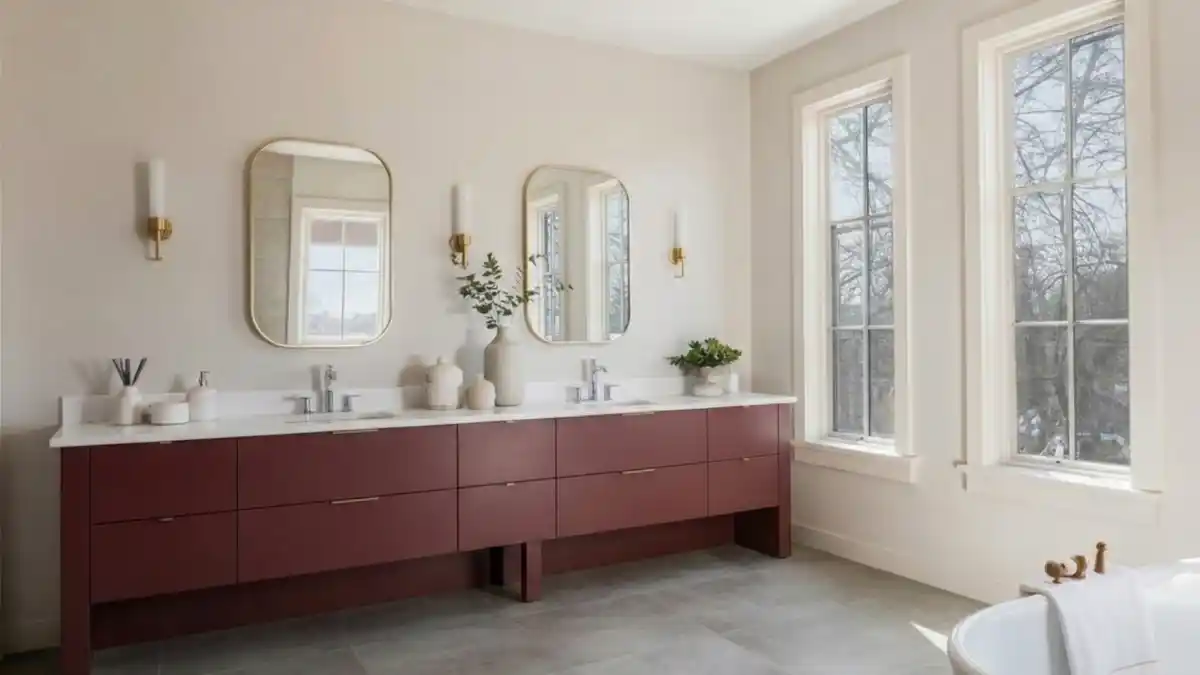
Natural light flooding the room through large windows highlights how a soft, matte “driftwood” or “warm greige” paint finish can successfully mimic the look of high-end, raw white oak. Replicating this airy aesthetic on older cabinets involves using a specialized “wash” technique or a solid putty color to strip away the visual weight of dated finishes.
Gold hardware acts as jewelry against muted, earthy tones, suggesting that painting a vanity a warm “Almond” or “Pale Taupe” instantly elevates standard fixtures to luxury status. Choosing a hardware-forward design approach allows the paint color to serve as a quiet, sophisticated backdrop rather than the loudest element in the room.
Large grey floor tiles ground the airy aesthetic, proving that cabinets do not need to be stark white to feel clean; a soft “Mushroom” hue brings warmth without heaviness. Pairing cool-toned flooring with warm-toned cabinetry creates a balanced, professional interior design look that feels intentional and serene.
13. From Builder Beige to Spa Serenity – Unlocking the Power of Paint on Vanity Makeovers
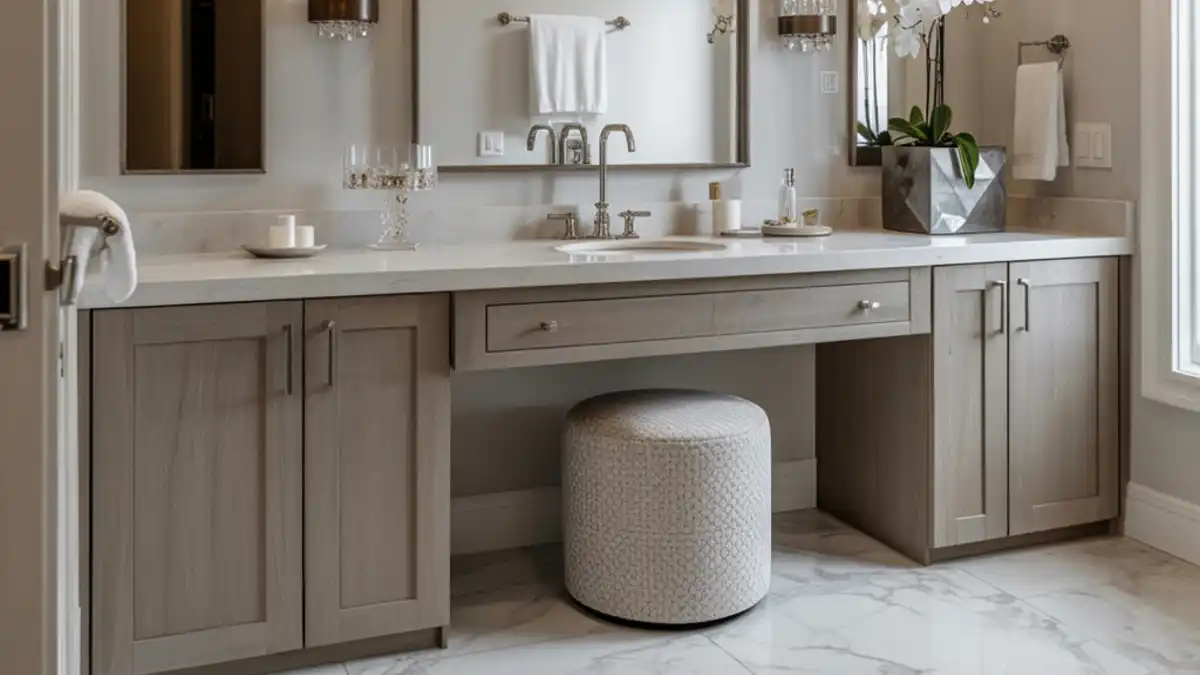
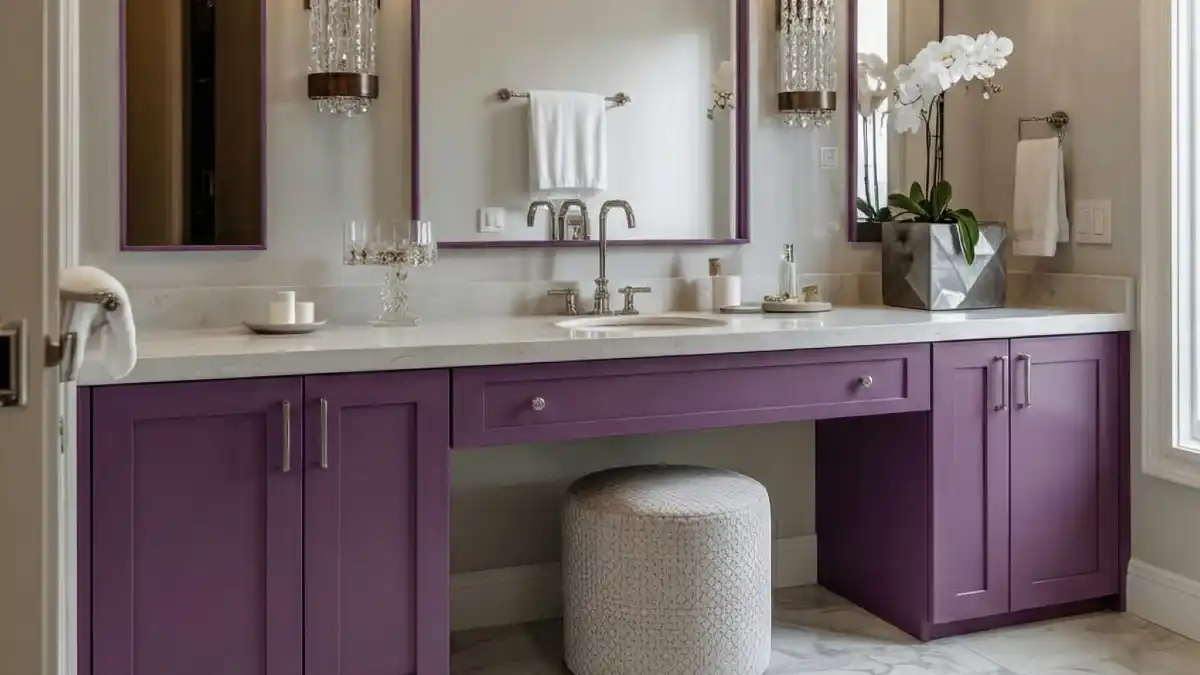
Standard honey oak cabinetry often feels heavy and visually dominates the room, yet it provides a solid structural foundation for a complete color transformation.
Expansive white countertops already present offer the perfect neutral landing zone for bold navy or emerald green paint choices, ensuring the room remains bright despite darker cabinet tones.
Existing chrome faucets and basic mirrors are easily upgraded, but painting the wood first changes the room’s temperature immediately, proving you don’t need to rip out functional storage to get a new look.
14. Serene Bleached Oak Spa Retreat – A Raw Wood Approach to Vanity Makeovers
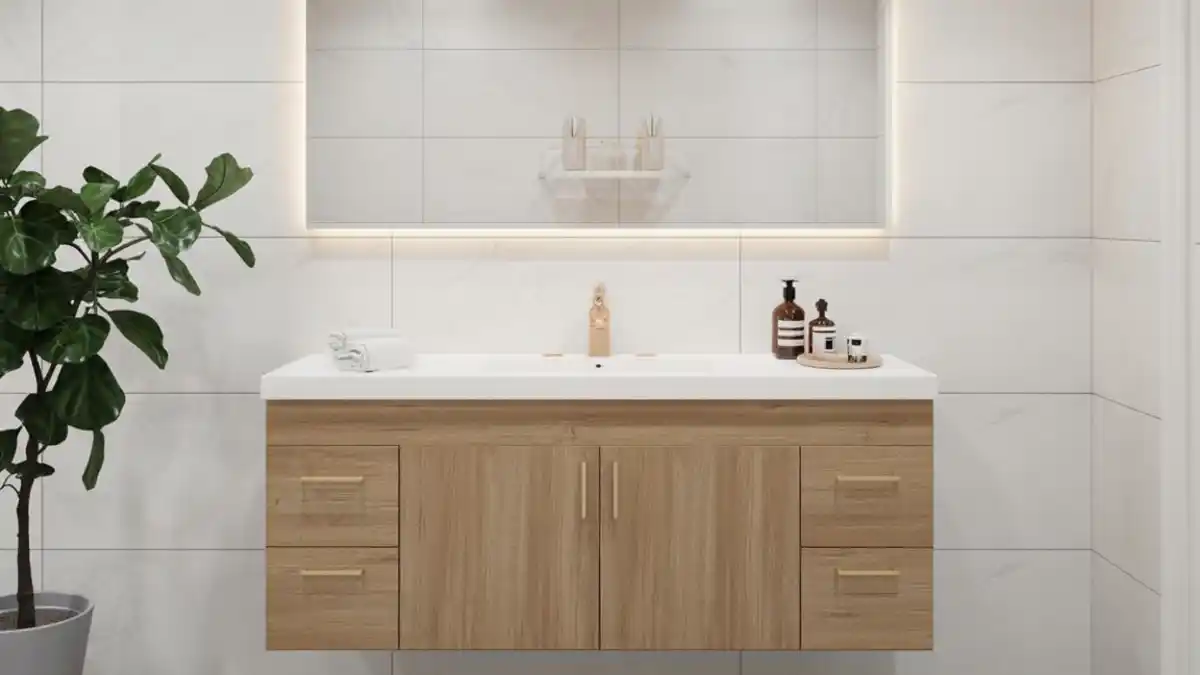
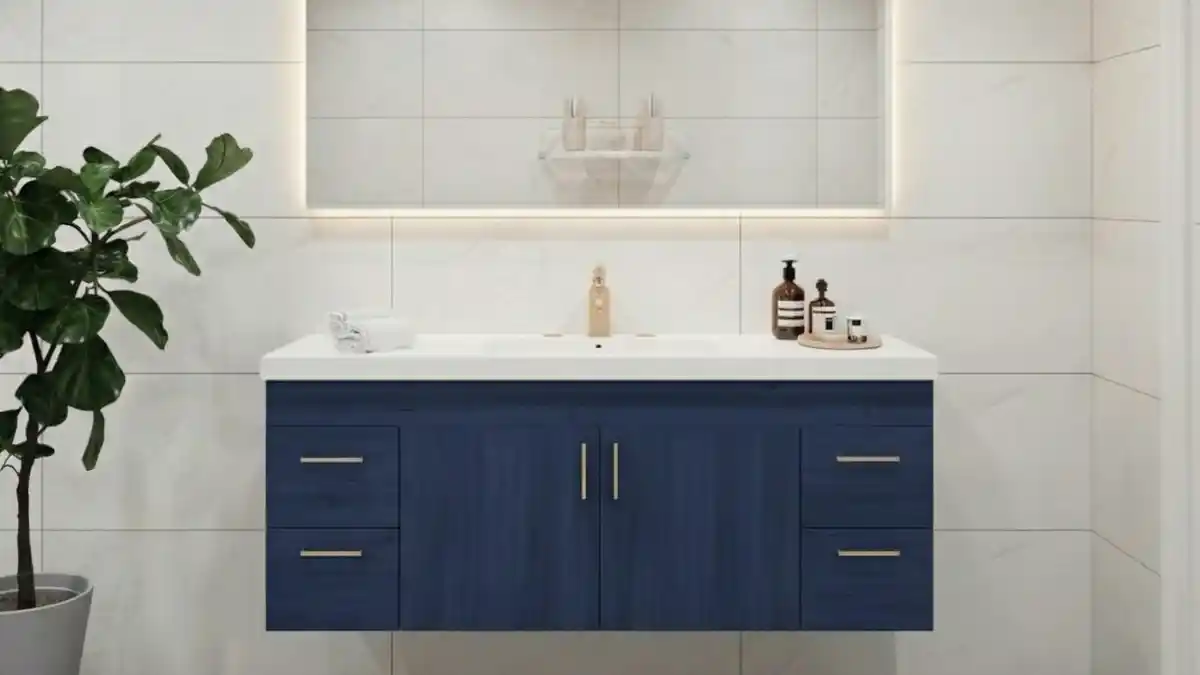
Sometimes the most radical transformation isn’t about covering up the wood, but rather stripping it back to reveal its honest, organic beauty. While browsing through paint swatches for a bathroom refresh, consider that the perfect “color” for dated oak might actually be a matte, bleached finish that leans into the Scandinavian spa aesthetic shown here.
Stripping away the orange glow: Years of oil-based polyurethane often turn oak that distinct shade of amber, but sanding it down to the raw grain and sealing it with a water-based matte topcoat creates this airy, modern driftwood tone. It feels lighter, cleaner, and instantly updates the space without losing the warmth of natural timber.
Pairing warm wood with cool stone: Large-scale white tiles with subtle gray veining provide a crisp, clean backdrop that allows the wood texture to take center stage rather than competing with it. High-contrast materials ensure the vanity looks intentional and high-end rather than rustic or cabin-like.
Elevating with jewelry-like hardware: Slim, brushed brass pulls act as the perfect accessory, adding a touch of glamour that prevents the minimalism from feeling too stark or clinical. Replacing old, bulky knobs with sleek metallic bars is the quickest way to modernize the silhouette of existing cabinetry.
Creating atmosphere with light: Backlighting the mirror casts a soft, diffused glow that highlights the floating nature of the vanity and eliminates harsh shadows often found in older bathrooms. Ambient lighting softens the hard edges of the stone and ceramics, making the room feel like a sanctuary.
Softening lines with greenery: A tall structural plant, like the fiddle leaf fig in the corner, introduces organic curves and a pop of vibrant life that breaks up the grid-like patterns of the tile work. nature helps bridge the gap between the engineered stone floor and the wooden cabinetry.
15. Japandi Driftwood Floating Vanity – Lightening the Mood in Bathroom Renovations
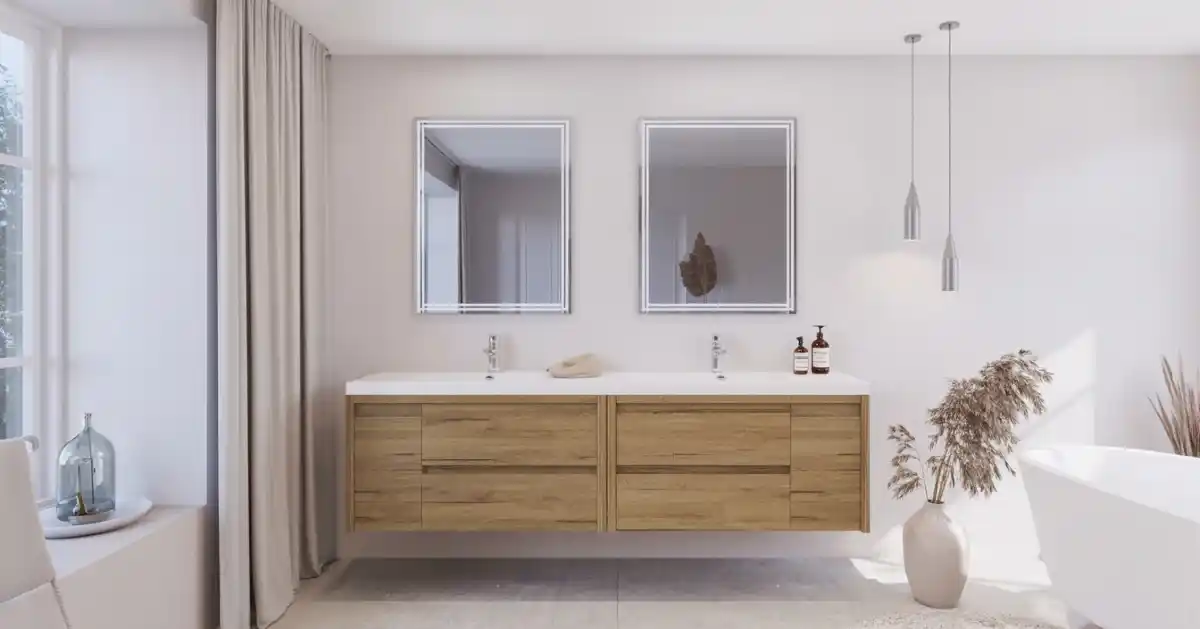
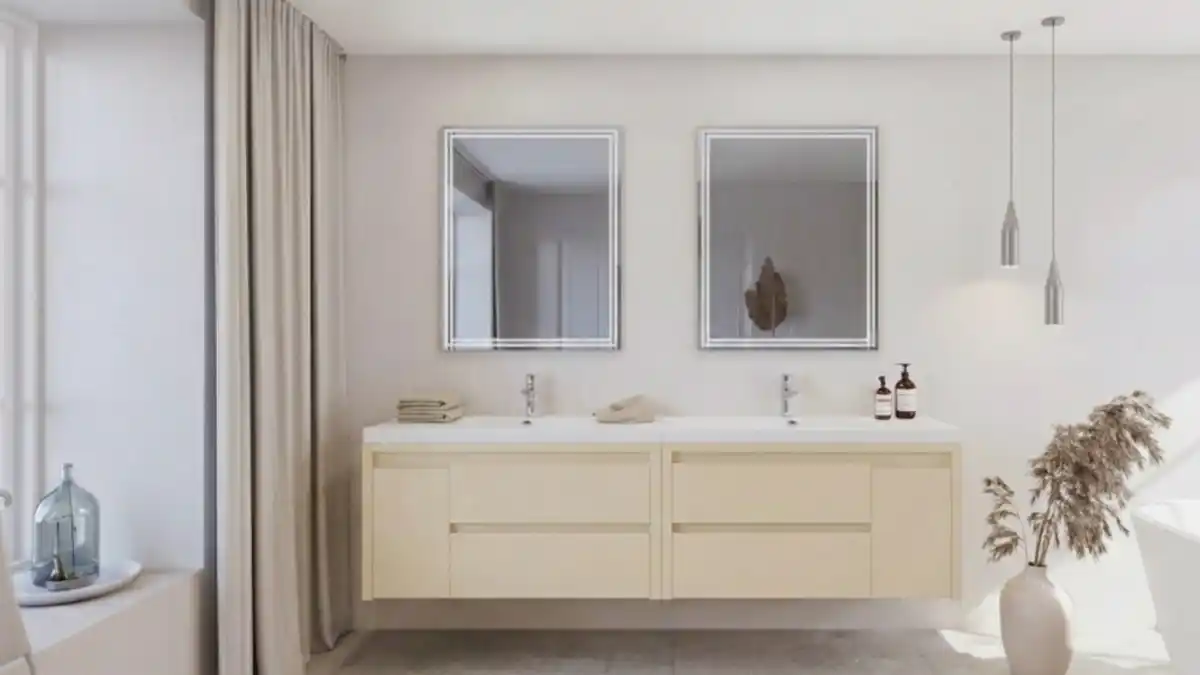
Instead of reaching for a can of dark navy or charcoal paint to hide dated oak, consider the radical approach of undressing the wood completely. “Makeovers” don’t always require covering up the substrate; sometimes, they are about removing years of yellowing varnish to reveal the raw, honest timber underneath, creating a spa-like atmosphere that feels both modern and timeless.
Stripping back to basics: Embracing the “naked” wood trend offers a refreshing alternative to heavy opaque paints often used to mask 1990s cabinetry. Heavy layers of dark, glossy varnish often hide the beautiful grain of standard oak, but sanding it back to a raw, matte finish creates this stunning, sun-bleached driftwood effect. It proves that sometimes the best color choice is actually just a high-quality, clear matte sealant.
Defying gravity for visual space: Elevating the cabinetry off the floor instantly subtracts visual weight from the room, addressing the “heavy” feel that plagues traditional oak vanities. Old vanity renovations often struggle with boxiness, but slicing off the toe-kick and mounting the unit to the wall fools the eye into thinking the bathroom is twice as large. Gravity-defying furniture makes cleaning the tile floors significantly easier, too.
Softening hard surfaces with textiles: Pairing rigid wood lines with billowing fabrics creates a necessary softness in a typically tiled and cold space. Floor-to-ceiling drapery and feathery pampas grass introduce movement and warmth that prevent the minimalist white walls and stone floors from feeling sterile or hospital-like. Texture plays just as big a role as color in making a bathroom feel like a livable sanctuary.
Filtering the mood with lighting: Integrated LED mirrors combined with sleek, silver pendant lights banish the unflattering, harsh shadows of standard builder-grade vanity strips. Proper illumination changes the way wood tones read in the room, keeping them looking airy and neutral rather than pulling out unwanted orange or red undertones. Good lighting acts as a real-life filter for the entire renovation.
16. Bleached White Oak Sanctuary – A Natural Twist on Vanity Makeovers
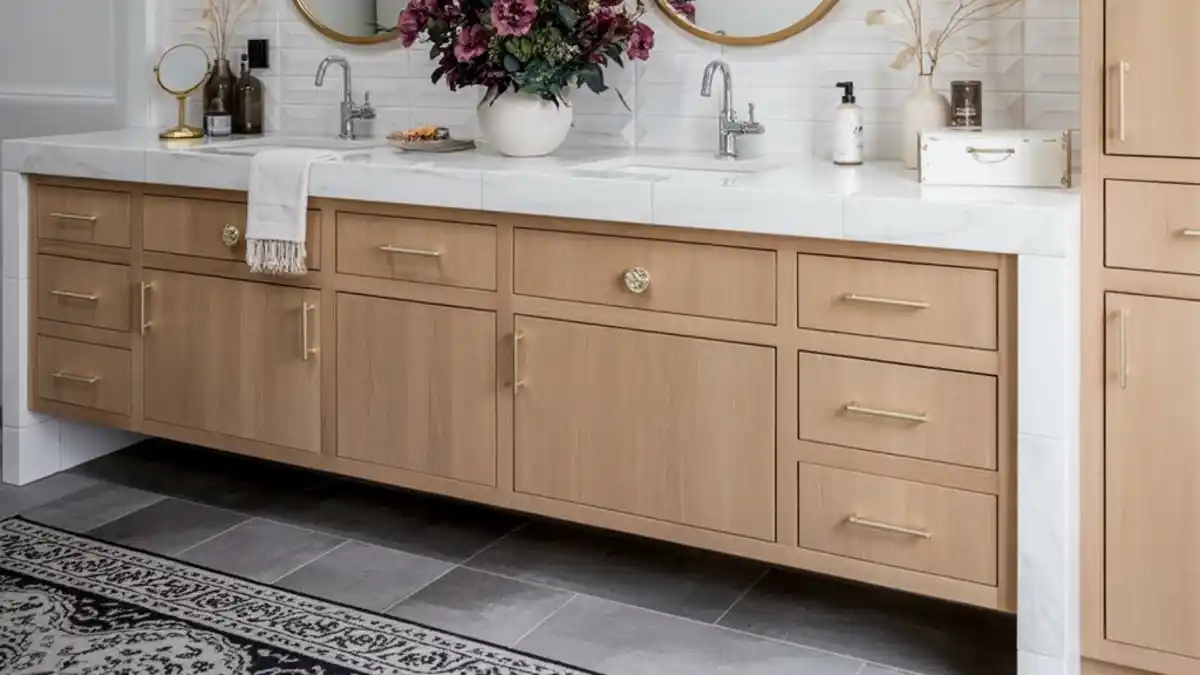
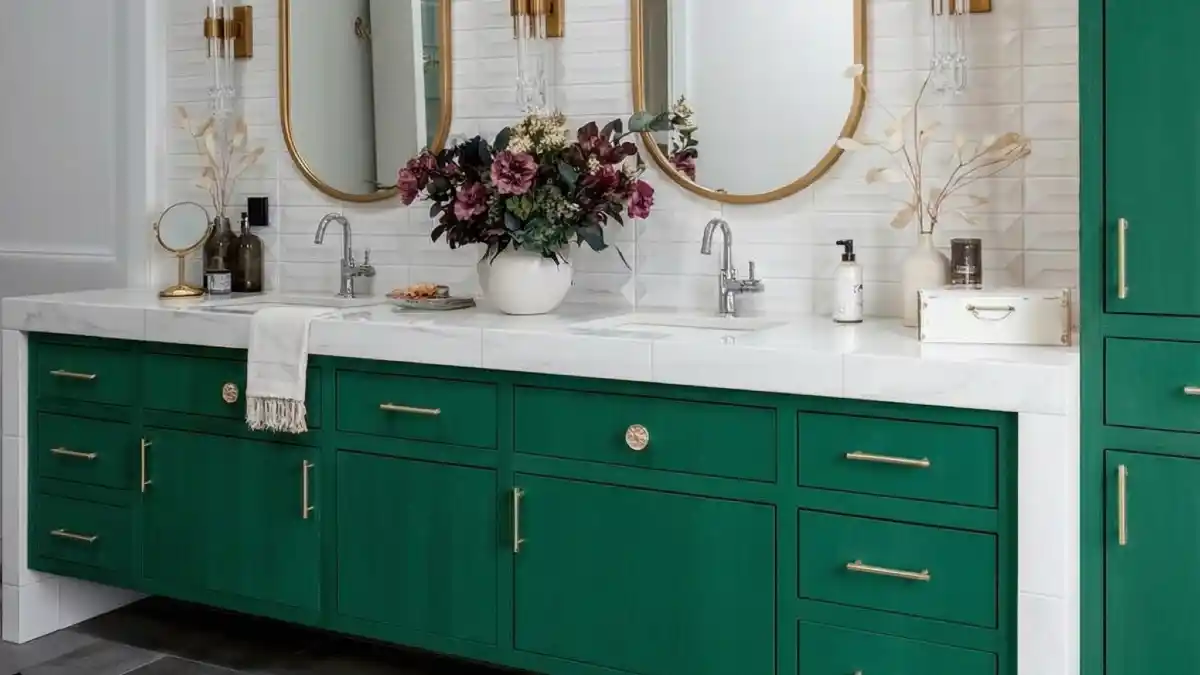
Hiding stunning wood grain under heavy, opaque paint isn’t always the answer when dealing with dated cabinetry. Sanding down orange-toned varnish to reach the raw white oak underneath offers a breath of fresh air and a “color” choice that feels incredibly high-end. Bleaching or applying a whitewash stain neutralizes yellow undertones, creating a soft, matte foundation that rivals any painted finish for modern appeal.
Brushed brass hardware acts as the perfect warm counterpoint to the cool, pale tones of the wood and marble. Swapping out standard knobs for sleek, elongated gold pulls instantly modernizes the silhouette and ties in beautifully with the statement sconces and faucet fixtures. Metals carry just as much visual weight as paint, defining the style as transitional luxury.
White backsplashes often risk looking sterile, but choosing a geometric, 3D textured tile completely changes the narrative. Running the tiles vertically draws the eye upward, making the ceiling feel higher while adding a sophisticated layer of depth that flat paint simply cannot achieve. tactile elements ensure the space feels cozy despite the lack of bold wall color.
Rectangular vanities and blocky countertops need a visual break, which is exactly what the dual oval mirrors provide. Softening the sharp architectural lines with curved reflections adds a sense of flow and movement to the room. moodier, dark floral arrangements act as the final, necessary anchor, preventing the light-and-airy theme from floating away entirely.
17. Stately Wood Vanity Revival – Transforming Traditional Storage with Modern Color
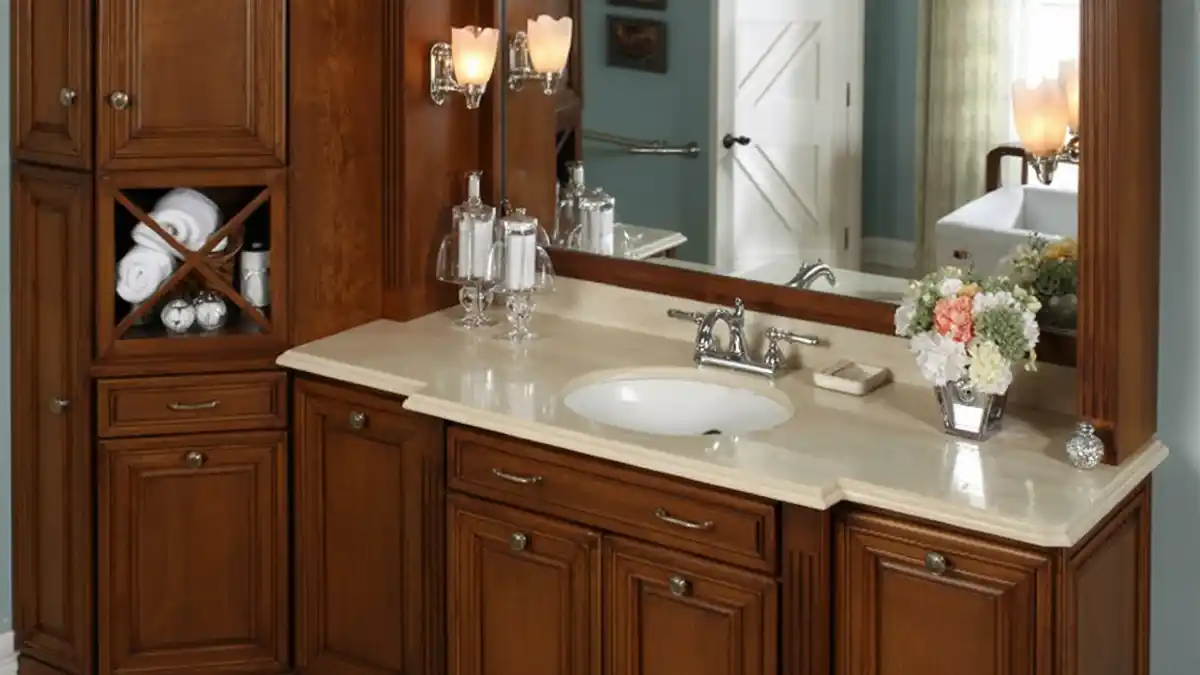
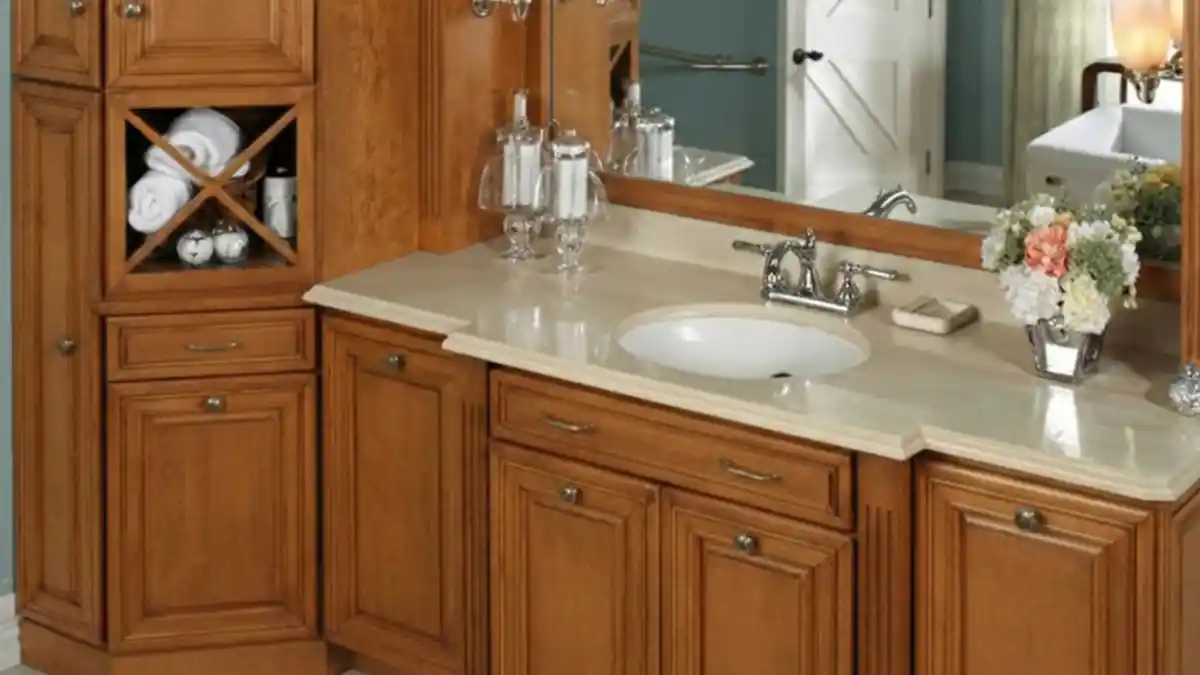
Deep, reddish-brown stains characterize the cabinetry, creating a formal atmosphere that feels distinctively mid-2000s and serves as a prime candidate for a lightening makeover. Covering this dark base requires a high-quality bonding primer to prevent bleed-through, but the payoff is a vanity that looks custom-built rather than builder-grade.
Even though the current finish feels heavy, the solid wood construction underneath is far superior to modern particle board, making it well worth the effort of refinishing. Shift from a dark, enclosed feeling to an airy, spa-like retreat by neutralizing those strong red undertones.
Intricate molding profiles on the door fronts and fluted columns offer the perfect canvas for holding paint, whereas flat slab doors might look too plain after a color change. Shallows and ridges in the woodwork will catch the light beautifully once coated in a trending shade like “Hale Navy” or a soft “Revere Pewter,” adding dimension that stained wood often hides.
Glazing these details after painting can also retain some of that traditional charm while updating the overall palette. Highlight the existing craftsmanship while strictly saying goodbye to the dated orange-wood vibes.
Open shelving features, particularly that clever X-shaped towel insert, provide a fun opportunity to play with dual-tone designs or interior accents. Painting the inside of that cubby a slightly different shade—or lining it with a funky peel-and-stick wallpaper—creates a boutique hotel aesthetic that makes rolling white towels feel like a design choice rather than a chore.
Leaving the X-rack wood while painting the rest is another bold option for those who want to keep a hint of natural texture. Turn functional storage spaces into standout design moments that break up the monotony of a single color.
Creamy beige countertops, currently blending into the warm wood, will suddenly pop and look crisp when contrasted against a cooler cabinet color. Greige or off-white stone surfaces can look muddy next to yellow-toned oak or cherry, but placing them atop a vanity painted in a deep forest green or slate blue changes the visual context entirely.
Keeping the existing countertop saves a massive chunk of the budget, proving that you don’t need a sledgehammer to fix the color palette. Revitalize the existing stone surfaces simply by altering the cabinet color beneath them.
18. Organic Scandi-Spa Bathroom – A Natural Reset for Heavy Oak
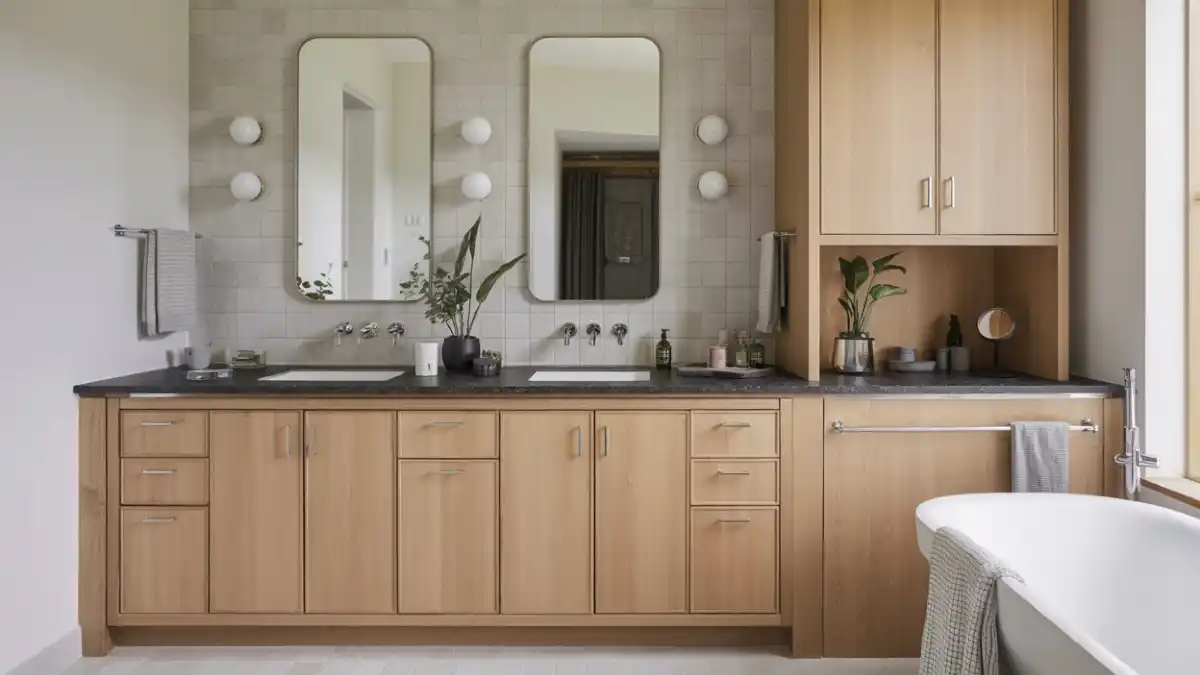
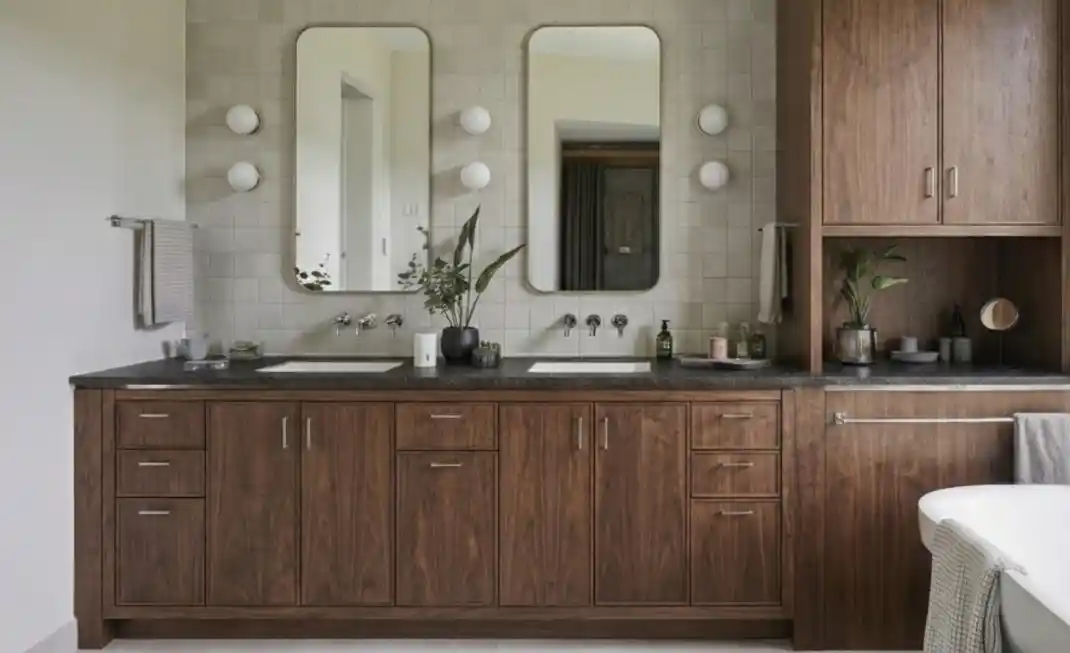
Heavy varnish removal transforms the entire vibe, taking cabinetry from a dated, orange-tinted finish to this serene, raw-wood aesthetic. Achieving this specific “blonde wood” look on existing oak vanities often involves stripping away the old glossy sealants and applying a bleaching treatment or a white-wash glaze to neutralize red undertones.
It serves as a reminder that sometimes the best “paint color” is actually removing the layers to reveal the natural grain in a lighter, matte presentation. Swap the artificial orange glow for a calm, organic matte finish.
High-contrast surfaces act as a modern anchor, specifically how the matte black countertop creates a sharp, defining line against the pale cabinetry.
Dated oak is frequently paired with busy, speckly beige granite, so replacing that surface—or using a countertop refinishing kit in “Charcoal” or “Soapstone”—instantly modernizes the wood underneath. Deep, solid-colored surfaces absorb light and make the lighter wood (or a cabinet painted in a similar “Putty” or “Sandbar” shade) pop with sophistication. Balance airy, light-toned cabinetry with deep, moody horizontal planes.
Texture plays a crucial role in neutral palettes, evident in the shimmering, square tiles that travel from the vanity top to the ceiling. Instead of relying on a bold wall paint color to distract from the cabinets, this design uses tactile, pearlescent tiles to reflect light and add depth without darkening the room.
Adding a textured backsplash or a vertical shiplap element behind a renovated vanity draws the eye upward, making small bathrooms feel significantly taller and more spacious. Elevate the vanity area by extending the design vertically with tactile elements.
Modern hardware acts as the jewelry of the renovation, replacing standard builder-grade knobs with sleek, horizontal bar pulls that emphasize the width of the drawers. Mixing metallic finishes is a pro move shown here; the cool silver tones of the drawer pulls play nicely against the warm brushed gold of the mirrors, proving you don’t have to match everything perfectly.
Globe sconces mounted directly onto the mirror glass add an architectural layer that feels custom and high-end, moving away from the typical “vanity light bar” found in older homes. Mix metallic finishes and lighting styles to create a designer-level layered effect.
19. Earthy Mushroom Vanity Revival – Warm Neutrals for a Timeless Update
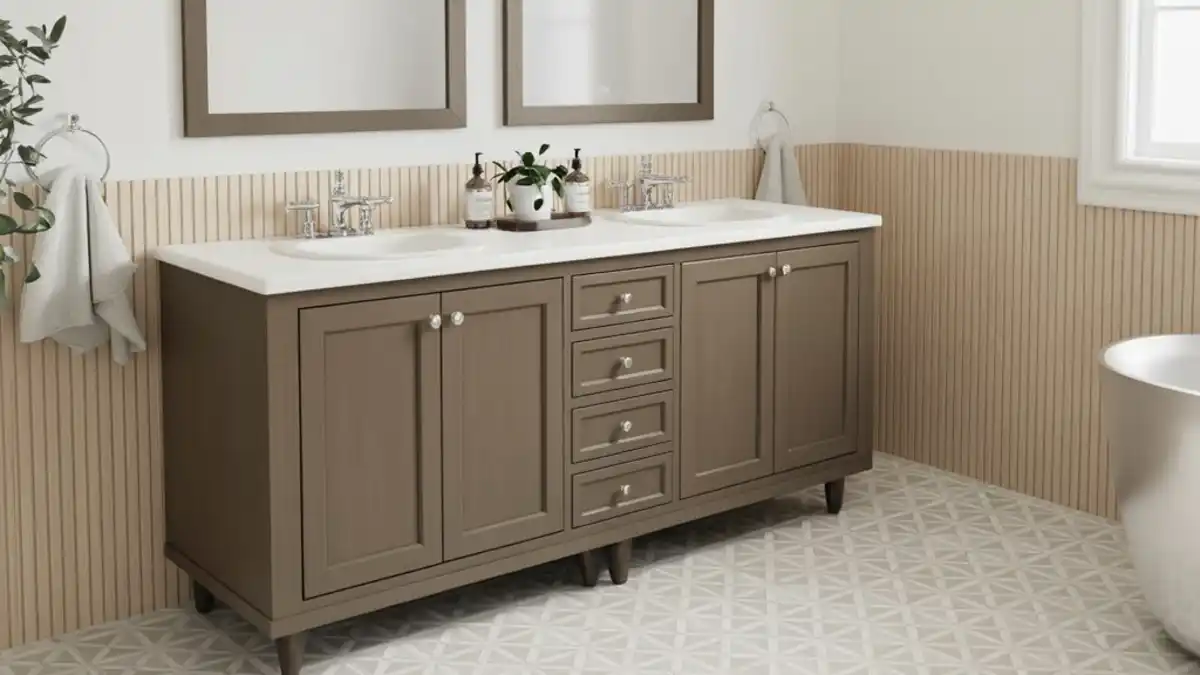
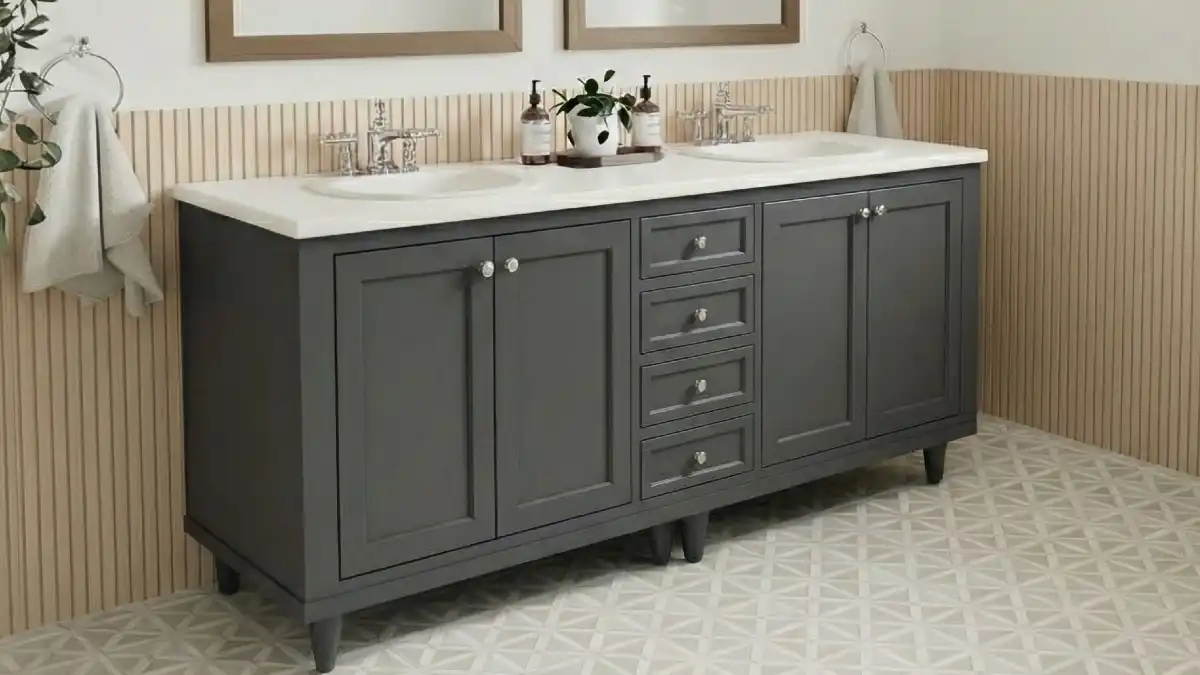
Muddy neutrals like “Mushroom” or “Taupe” completely reinvent the concept of a neutral bathroom, offering a sophisticated alternative to the stark white or cool grey cabinets that dominated the last decade. Selecting a paint color with warm, brown undertones bridges the gap between traditional styling and modern minimalism, making it an excellent choice for updating oak cabinets where you want to suppress the yellow grain but keep the warmth.
It creates a cozy, enveloping atmosphere that feels intentional and designer-led rather than just a quick fix. Embrace earth tones to soften the space while effectively hiding the grain of older wood.
Vertical fluted paneling behind the vanity creates a soft, architectural backdrop that mimics the linearity of beadboard but with a much more contemporary edge. Installing a half-wall of light wood slats adds necessary texture to a room dominated by smooth painted surfaces and porcelain, preventing the “flat” look that often plagues DIY bathroom makeovers.
It serves as a visual bridge, connecting the painted vanity to the organic elements in the room without requiring a full demolition of the drywall. Add depth to your vanity wall with textured wood elements that complement the painted finish.
Dark wood mirror frames anchor the airy space, providing a necessary touch of contrast that keeps the room from floating away in a sea of beige. keeping the mirrors in a deep Espresso or Walnut finish—or even painting existing frames black—creates a sharp focal point that draws the eye up from the vanity, balancing the lighter hues of the cabinetry and wainscoting.
Simple, dark rectangles offer a masculine counterpoint to the softer, rounded edges of the sink and hardware. Ground the floating elements of the design by introducing bold, dark frames at eye level.
Patterned flooring prevents the subdued palette from feeling boring, injecting personality into the room through geometric repetition rather than loud colors. Laying down a dynamic tile pattern in soft greys and whites allows the solid-colored vanity to shine as a calming centerpiece while the floor does the heavy lifting for visual interest.
It proves that you can have a “quiet” cabinet color and still have a bathroom that feels energetic and full of life. Use the floor plane to introduce excitement and movement against a solid-color vanity.
20. Modern Warm Minimalist Sanctuary – Rethinking the “Paint It” Default
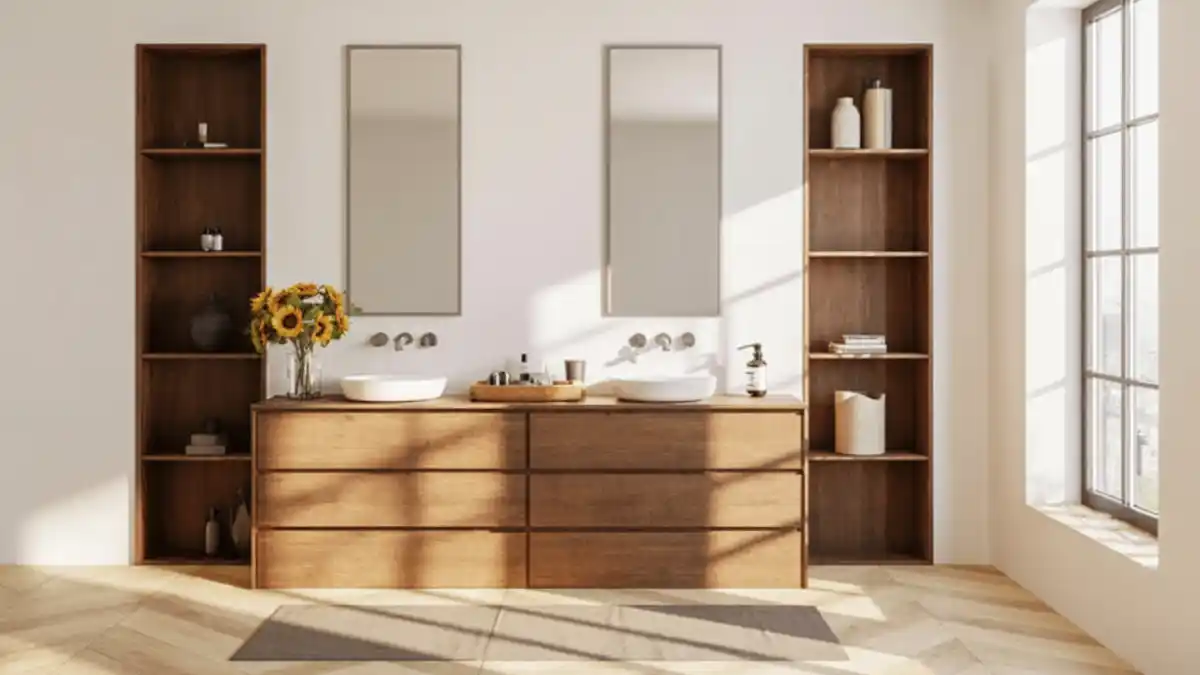
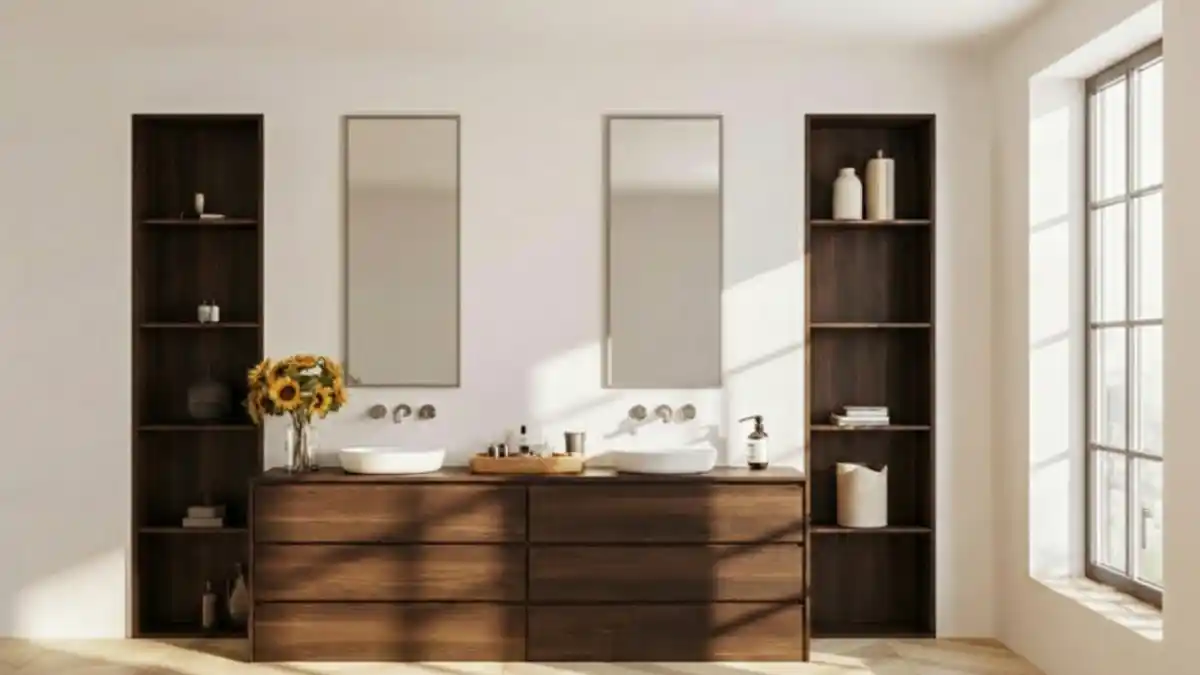
Natural grain takes center stage here, challenging the popular notion that every dated vanity needs a coat of paint to look current. Stripping away thick, glossy yellow varnish from old cabinets to reveal the raw, matte wood underneath can achieve this high-end, organic aesthetic, especially when sealed with a clear, flat poly.
Horizontal grain patterns, as seen on these drawer fronts, elongate the space and trick the eye into seeing a wider, more custom piece of furniture. Consider preserving the wood’s integrity while updating the finish for a sophisticated, spa-like warmth.
Matte black hardware acts as the perfect eyeliner, sharpening the soft, warm tones of the timber without overpowering them. Installing wall-mounted faucets and sleek, thin-framed mirrors creates a deliberate, architectural contrast that makes the wood look intentional rather than accidental.
Pairing black accents with wood tones serves as a masterclass in modernizing traditional materials without losing their cozy appeal. Sharpen the soft edges of natural timber by introducing high-contrast, industrial black elements.
Crisp white vessel sinks break up the heavy wood expanse, sitting like sculptural art pieces atop the warm counter surface. Opting for above-counter basins instead of undermount sinks creates a distinct focal point and reduces the visual “heaviness” of a large wooden cabinet, making the entire unit feel airier.
Clean white porcelain provides the necessary brightness to keep a wood-heavy bathroom from feeling like a dark sauna. Bring a modern lightness to heavy joinery by topping it with bright, sculptural white basins.
Floor-to-ceiling recessed shelving frames the vanity area, turning the washing station into a dedicated alcove rather than just furniture against a wall. Lining these tall niches with the same wood tone as the vanity creates a cohesive, built-in look that maximizes vertical storage while keeping the countertop clutter-free.
Open vertical storage offers a prime opportunity to display rolled towels and ceramics, adding texture that complements the smooth walls. Turn functional storage into a curated display that physically frames your vanity makeover.
21. Velvety Mushroom Retreat – A Warm Neutral Reset for Vanity Cabinets
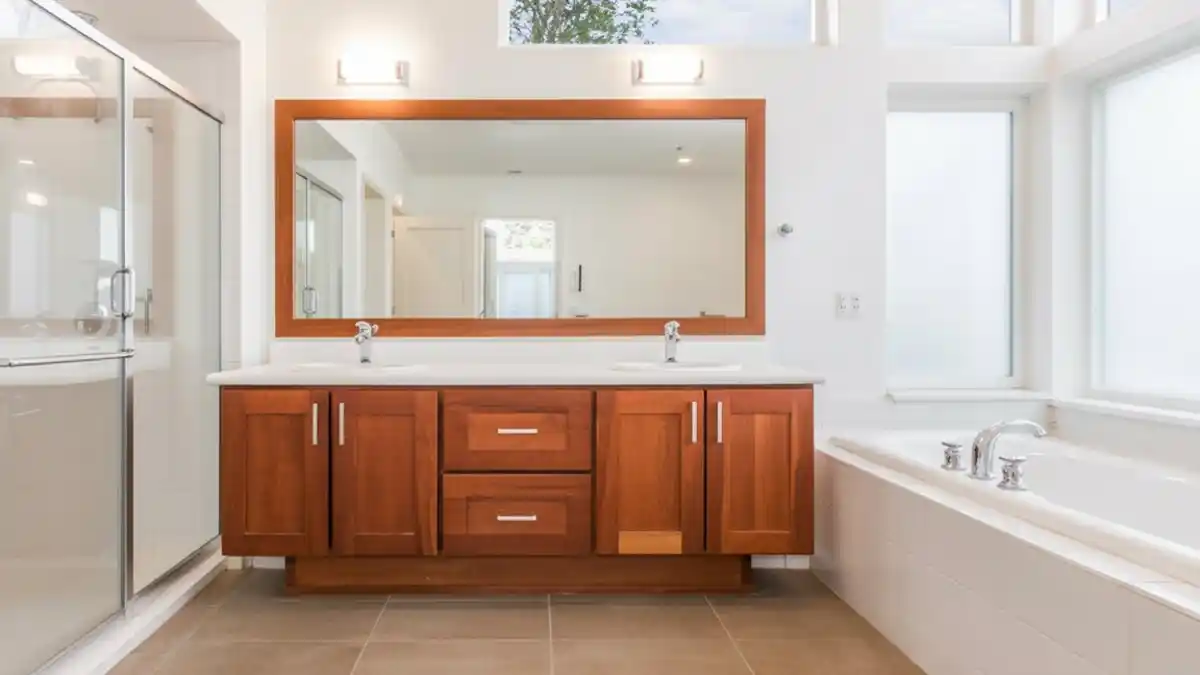
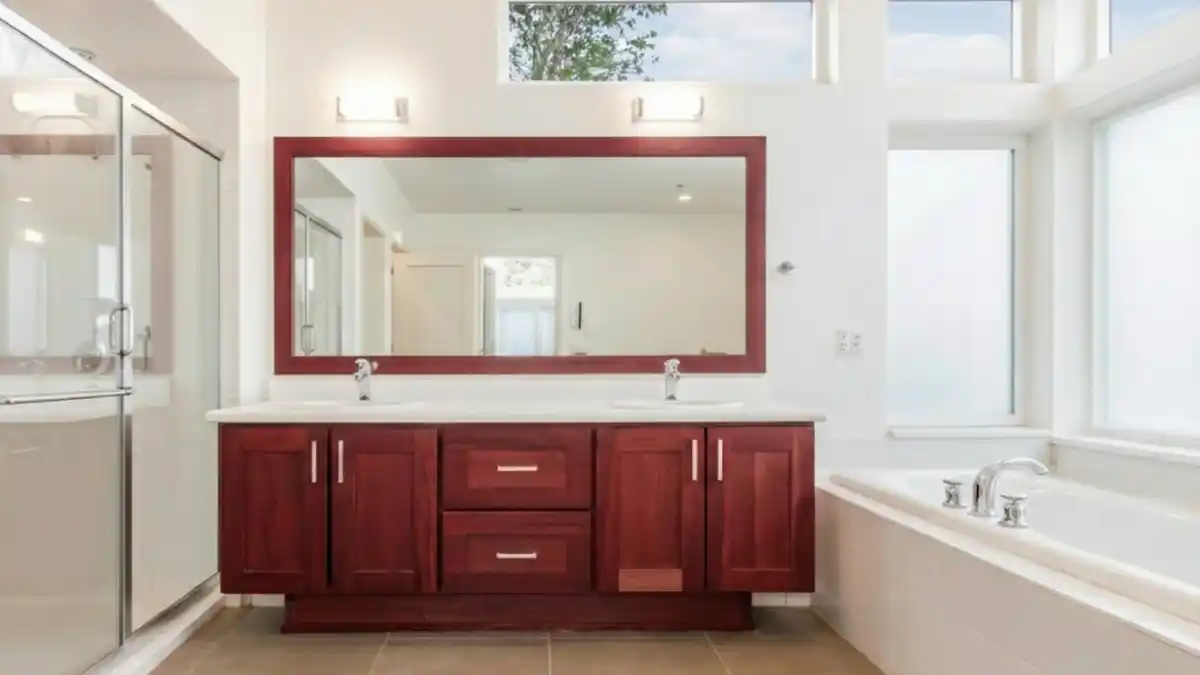
Rich taupe hues redefine the neutral palette, offering a grounding, earthy alternative to the stark white cabinets of the past decade. Saturation is key here; a full-coverage paint in “Mushroom” or “Warm Putty” completely masks the grain of dated oak, instantly modernizing the silhouette while retaining a cozy, organic feel. Swap standard white for a deep, comforting earth tone.
Vertical wood slats introduce essential rhythm, providing a textural counterpoint to the smooth, painted finish of the vanity. Installing fluted paneling or beadboard as a wainscoting breaks up the drywall and mimics the linear details of the cabinetry, creating a high-end, architectural look on a DIY budget. Elevate the vanity wall with tactile, linear texture.
Monochromatic framing unifies the design, seen here where the mirror frames are painted to match the vanity exactly. Treating the mirrors as an extension of the cabinetry rather than a separate accessory makes the entire washing station feel like a custom, built-in piece of furniture. Create a seamless, custom look by color-matching accessories.
Geometric flooring prevents beige fatigue, injecting a pulse of energy into the room with sharp angles and cool grey tones. Laying a patterned tile contrasts beautifully with the solid blocks of color on the wall and vanity, ensuring the warm neutral theme doesn’t feel monotonous or washed out. Use dynamic floor patterns to energize a warm, neutral space.
22. Zen Walnut & Stone Sanctuary – A Textural Approach to Vanity Restoration
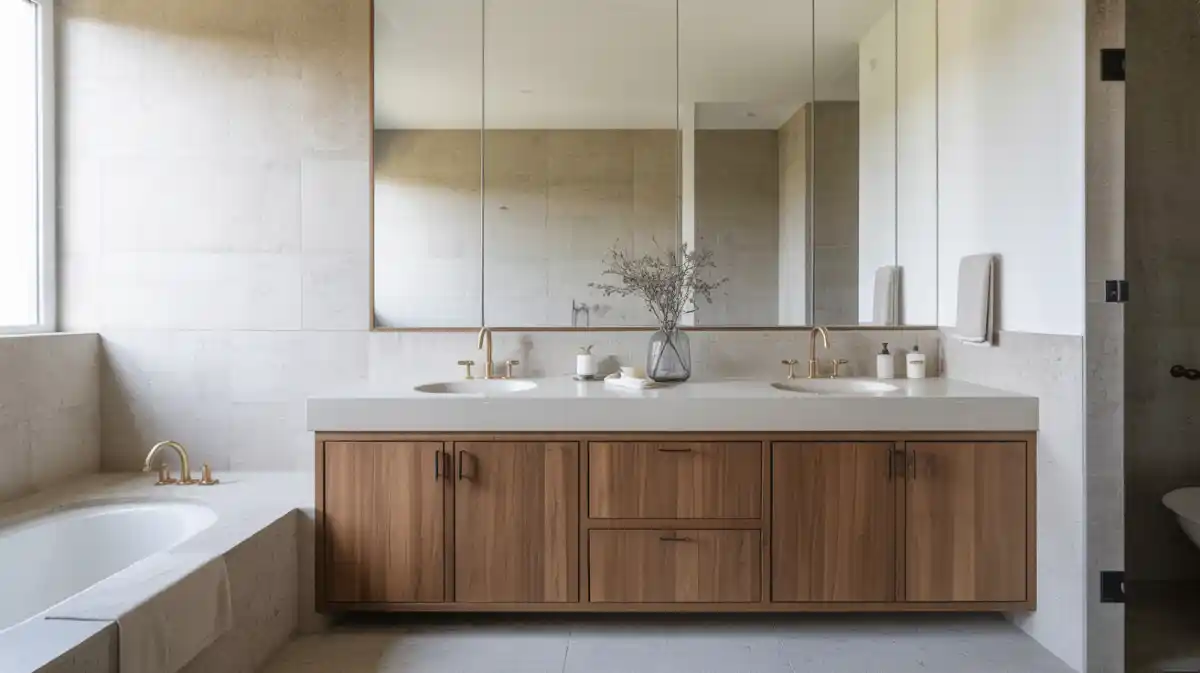
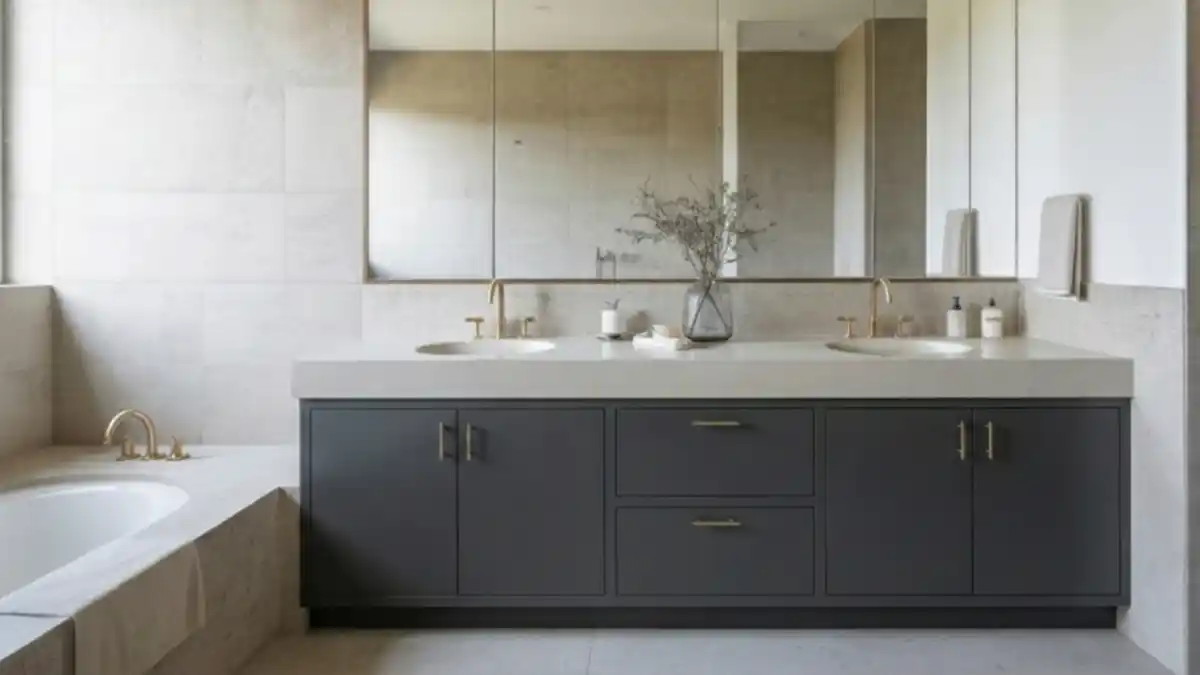
Vertical grain patterns act as the room’s primary art piece, proving that you don’t always need to cover dated wood with opaque paint to make it look modern. Stripping an old oak vanity and applying a matte, neutral walnut stain eliminates the dreaded “honey-orange” glow while preserving the organic warmth that makes a bathroom feel spa-like.
It shifts the narrative from “hiding the wood” to “celebrating the timber” in a way that feels intentional and high-end. Revive the soul of your cabinetry by swapping glossy varnishes for matte, natural stains.
Chunky stone profiles add immediate luxury and weight, specifically the way this thick, concrete-look countertop dominates the design without feeling heavy. Replacing a standard thin laminate or granite top with a substantial slab (or building up the edge of a new quartz top) creates a dramatic architectural feature that instantly upgrades the cabinetry underneath.
It provides a cool, solid counterpoint to the warm wood, balancing the temperature of the room perfectly. Upgrade the vanity’s presence by increasing the visual weight of the countertop edge.
Wall-mounted brass fixtures declutter the surface, allowing the beauty of that thick stone slab to remain uninterrupted by metal plates or grime-catching bases. Moving the plumbing into the wall is a significant renovation step, but it modernizes the entire wash station and pairs beautifully with the clean lines of a restored wood vanity.
Warm brass tones act as a bridge, picking up the honey notes in the walnut wood while contrasting with the cool grey stone. Streamline the daily routine and the visual clutter with elegant, wall-mounted taps.
Elevating the cabinetry off the floor expands the visual footprint, making the bathroom feel significantly larger by revealing the flooring underneath. Converting a standard boxy vanity into a floating unit involves reinforcing the wall, but the payoff is a sleek, airy aesthetic that showcases your floor tile and makes cleaning a breeze.
It creates a “hotel luxury” vibe that makes even a small bathroom feel like a spacious retreat. Create an illusion of more space by modifying the vanity to float above the floor.