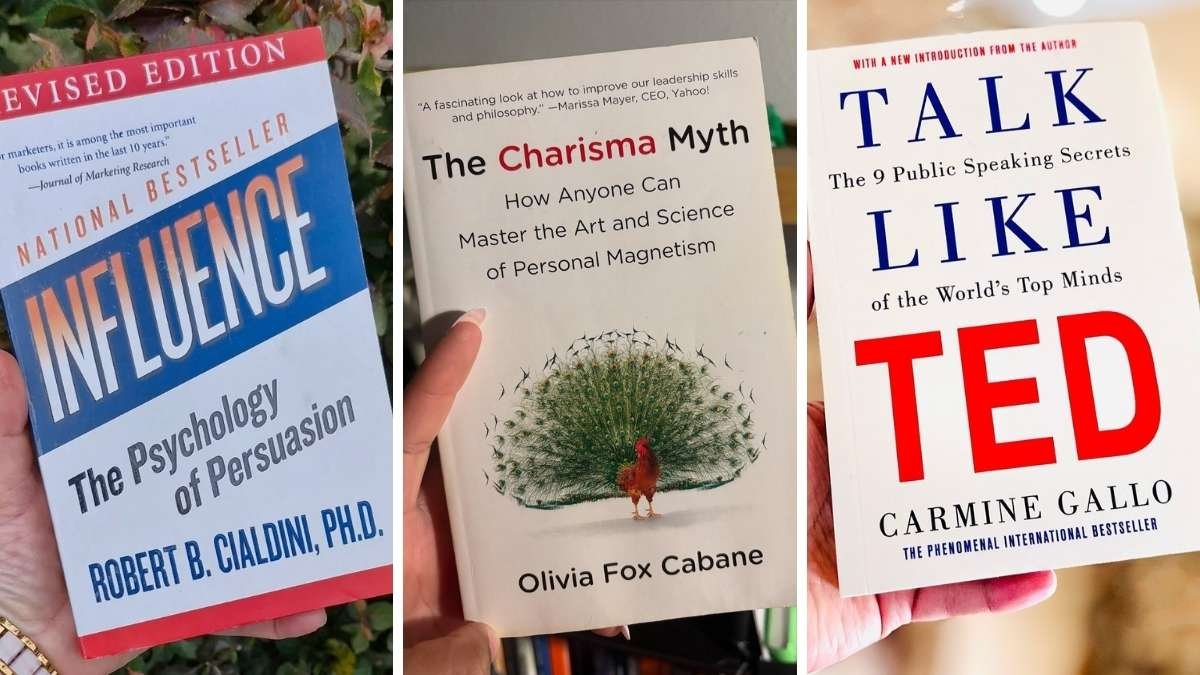


Therapists are humans too—and like any curious mind, they devour books that expand their understanding of human behavior, resilience, and the quirks of the psyche.
But beyond clinical guides, they often slip into the pages of titles that mix psychology with storytelling, philosophy, or even pop culture.
These books aren’t just for “work”; they’re for therapists who want to think deeper, laugh harder, and connect better with their clients.
1. The Body Keeps the Score by Bessel van der Kolk

This isn’t just a trauma textbook—it’s a manifesto. Van der Kolk argues that trauma doesn’t just linger in the mind; it rewires the nervous system and etches itself into muscles, posture, and even cellular memory. Therapists devour this book because it bridges science and humanity. One therapist I spoke with called it a “game-changer” for understanding clients who struggle to articulate pain: “Now I see how someone’s chronic backache or panic attacks might be their body ‘speaking’ when words fail.”
The second half of the book is pure gold for practitioners. Van der Kolk dives into neuroplasticity, proving that the brain isn’t a fossil—it can rewire. Techniques like EMDR, yoga, and art therapy aren’t just “trendy”; they’re evidence-based tools for rewiring the brain. Therapists highlight passages on radical self-compassion, using them to remind clients: “You’re not ‘broken’—you’re adapting.”
2. The Gift of Fear by Gavin de Becker

This book isn’t about horror stories—it’s about listening to yourself. De Becker, a threat assessment expert, argues that our “intuition” is the brain’s ancient survival software. Therapists love it because it normalizes feelings of unease. One counselor shared: “Clients often dismiss their ‘gut feelings’ as paranoia. This book helps them see it’s their brain scanning for danger—a skill worth trusting.”
But therapists also use it to tackle anxiety. By teaching clients to differentiate between survival instincts (“I need to leave this situation”) and anxiety noise (“What if I embarrass myself?”), They help people build an emotional safety net. It’s why this book sits on many therapists’ recommendation lists: it empowers without pathologizing fear.
3. Man’s Search for Meaning by Viktor Frankl

Written by a Holocaust survivor and psychiatrist, this slim volume is a masterclass in existential resilience. Frankl argues that humans can endure any “how” if they have a “why.” Therapists cherish it for reframing suffering: “Instead of asking, ‘Why did this happen to me?’ clients learn to ask, ‘How can I grow from this?’”
The second half introduces logotherapy, a technique therapists adapt to help clients find meaning in pain. One therapist used Frankl’s story of a prisoner who clung to the hope of seeing his child again to help a grieving client: “It’s not about ‘fixing’ grief—it’s about finding a purpose that honors their loss.”
4. Thinking, Fast and Slow by Daniel Kahneman

This Nobel Prize-winning psychologist’s work is a therapist’s secret weapon for understanding why clients make certain choices. Kahneman breaks down our brains into two systems: System 1 (fast, instinctive) and System 2 (slow, logical). Therapists use this framework to help clients untangle cognitive biases like confirmation bias (“I only notice flaws in myself”) or loss aversion (“I stay in a bad relationship because I fear being alone”).
One therapist raved: “It’s like a cheat sheet for how the brain short-circuits.” By teaching clients to “switch to System 2” during high-stakes decisions, they foster critical thinking and fewer regrettable impulses.
5. The Power of Now by Eckhart Tolle

This spiritual-meets-psychology classic is therapists’ go-to for clients stuck in rumination. Tolle argues that suffering comes not from pain itself, but from resisting the present moment. Therapists use his concept of the pain-body—a reservoir of past hurt that hijacks emotions—to help clients recognize when they’re “time traveling” (dwelling on the past or fearing the future).
One therapist shared a poignant example: “A client realized her rage at her partner was actually leftover hurt from her childhood. By staying present, she could respond instead of react.” The book’s mantra—“You are not your thoughts”—becomes a lifeline for those battling anxiety or depression.
6. Hold Me Tight: Seven Conversations for a Lifetime of Love by Sue Johnson

Sue Johnson’s guide to Emotionally Focused Therapy (EFT) isn’t just for couples—it’s a survival manual for anyone navigating relationships. Therapists love it because it distills decades of research into practical dialogues that repair trust. One therapist swears by the “I feel… when… because…” script: “Clients start conversations with, ‘You never listen!’ but by the end of the book, they’re saying, ‘I feel vulnerable when you cancel plans because I worry I’m not a priority.’ It’s transformative.”
The beauty of EFT lies in its simplicity: relationships thrive when partners become an emotional haven for each other. Johnson’s emphasis on vulnerability (“Showing your soft spots isn’t weakness-it’s courage”) helps therapists reframe love as a team sport, not a performance. Whether mending a fractured marriage or teaching teens to communicate, this book is a therapist’s playbook for connection.
7. Microaggressions in Everyday Life: Race, Gender, and Sexual Orientation by Derald Wing Sue

This book is a therapist’s toolkit for spotting the invisible slings and arrows of bias. Derald Wing Sue defines microaggressions as “brief, everyday exchanges that send denigrating messages to people of color, women, LGBTQ+ individuals, etc.” Therapists use it to help clients decode comments like “You’re so articulate!” (to a Black colleague) or “You don’t look transgender” as subtle wounds of prejudice.
But it’s not just for marginalized clients. Therapists also use it to help well-meaning people confront their blind spots. One counselor shared: “A client realized she’d been avoiding her Asian neighbor because she assumed they were ‘too quiet.’ Reading this book helped her see how small assumptions fuel big divides.” The goal? Cultural humility—acknowledging that no one is free of bias, but everyone can unlearn.
8. The Anatomy of Melancholy by Robert Burton

This 17th-century tome might seem like an odd choice for modern therapists, but its sprawling exploration of melancholy offers unexpected insights. Burton’s dense, meandering text covers everything from the physical causes of depression to spiritual interpretations, all while weaving in countless anecdotes and observations.
Therapists appreciate how this book reminds them that struggles with mood and meaning are nothing new. One therapist shared: “When clients feel like their depression is a personal failure, I point to Burton’s descriptions of how people have wrestled with similar feelings for centuries. It normalizes their experience in a way that modern texts sometimes can’t.”
9. Nonviolent Communication: A Language of Life by Marshall Rosenberg

This book is a therapist’s toolkit for turning conflicts into connections. Rosenberg’s Nonviolent Communication (NVC) framework teaches us to express ourselves without blame and hear others without judgment. It’s based on a simple idea: all humans act to meet needs (like safety, love, or autonomy), and conflicts arise when needs clash. One therapist uses NVC to help couples argue better: “Instead of ‘You never listen!’ a client learns to say, ‘I feel lonely when we don’t talk at dinner because I need connection.’ It’s like magic for de-escalating fights.”
The book’s genius lies in its four-step process: observations (“You came home late three times this week”), feelings (“I felt anxious”), needs (“because I need reassurance”), and requests (“Would you tell me your schedule in the morning?”). Therapists use this to help clients articulate their inner worlds and decode others’. Whether addressing workplace toxicity or family feuds, NVC turns conversations from battlegrounds into bridges.
10. The Things You Can See Only When You Slow Down: How to Be Calm in a Busy World by Haemin Sunim

This Buddhist monk’s guide to mindfulness is a therapist’s antidote to clients’ “I’m too busy” excuses. Sunim argues that burnout isn’t just stress—it’s unprocessed grief over lost time, love, or purpose. One therapist uses his metaphor of “drinking poison and expecting it to taste like medicine” to help clients see how hustle culture harms them. “Clients who thought mindfulness was ‘woo-woo’ suddenly get it when he says, ‘Slowing down isn’t lazy—it’s how you become full of life.’”
Sunim’s advice—like writing a letter to your future self or spending 30 seconds savoring a meal—resonates because it’s actionable. Therapists highlight his idea that small rituals create big healing: “A client started taking five mindful breaths before answering emails. Now she says, ‘I’m not reacting to my inbox—I’m responding.’”
11. When Things Fall Apart: Heart Advice for Difficult Times by Pema Chödrön

This Buddhist classic is a therapist’s go-to for clients drowning in anxiety or stuck in “what-if” spirals. Chödrön teaches that uncertainty isn’t the enemy—it’s the growth path. Therapists use her concept of making friends with fear to help clients stop pushing away discomfort. One therapist shared: “A client would panic before every presentation. After reading this, she started asking, ‘What if I welcome the butterflies instead of fighting them?’ Her anxiety halved.”
The book’s radical idea? Turning toward pain isn’t masochism—it’s liberation. Chödrön writes, “We think the point is to pass the test or to overcome the problem, but the true point is to wake up.” Therapists highlight this to help clients stop chasing “fixes” and start finding wisdom in their struggles. Think of it as a gentle push to dance with discomfort instead of running from it.
12. The Four Agreements: A Practical Guide to Personal Freedom by Don Miguel Ruiz

This modern spiritual manual is a therapist’s shortcut to teaching boundaries and self-worth. The four agreements—be impeccable with your word, don’t take anything personally, don’t make assumptions, and always do your best—offer a framework for clients to untangle guilt, resentment, and people-pleasing. One therapist raves: “Clients love the ‘don’t take it personally’ rule. It’s like a shield against emotional vampires.”
Ruiz’s concept of the dream of the planet—the shared stories and beliefs that trap us—helps therapists explain how societal conditioning shapes behavior. For example, a client obsessed with perfectionism might see it as part of a cultural “dream” that equates self-worth with achievement. The book’s power lies in its simplicity: “It’s not about overhauling your life—it’s about tweaking your mindset.”
13. The Drama of the Gifted Child: The Search for the True Self by Alice Miller

This psychological deep dive is a therapist’s secret weapon for clients grappling with people-pleasing or identity confusion. Miller explores how children from emotionally neglectful families learn to suppress their true selves to “serve” their parents’ needs. Therapists use her concept of emotional incest—when a child becomes a parent’s confidant or emotional crutch—to help clients understand why they feel drained by relationships.
One therapist explained: “Clients often say, ‘I feel like I’m living someone else’s life.’ Miller’s work helps them trace that back to childhood patterns. It’s the first step toward reclaiming the true self.” The book’s raw honesty about familial pain makes it a catalyst for clients to set boundaries and rediscover their authentic voice.
14. The Mindful Self-Compassion Workbook by Kristin Neff and Christopher Germer

Therapists are obsessed with this workbook because it flips the script on the “be harder on yourself” mentality. Neff and Germer argue that self-compassion isn’t selfish—it’s a radical act of resilience. One therapist shared: “Clients who beat themselves up for ‘failing’ find relief here. The workbook teaches them to treat themselves like they’d treat a friend: with kindness, not a clipboard.”
The exercises shine where talk therapy sometimes stalls. Clients practice writing a “self-compassion letter” to their inner critic or try the common humanity exercise—recognizing that suffering is part of being human, not a personal flaw. Therapists love the mindful self-compassion break, a 5-minute ritual to short-circuit shame spirals. As one client put it: “Instead of ‘I’m such an idiot,’ I now say, ‘This is tough, but I’m not alone in messing up.’ It’s tiny but transformative.”