
I keep coming back to how oddly freeing it feels when you stop trying to control every plant and just let things grow a bit wild. I mean, small patios already come with rules: limited sunlight, cramped corners, not much time for pruning or fussing. Adding strict garden layouts on top of that just makes everything feel harder.
Chaos gardening does the opposite. It leans into layered pots, self-seeding herbs, “happy accidents,” and plants that actually thrive on a bit of neglect. I’m not sure but once you see how low-effort containers can turn into a high-yield, jungle-like nook, you might never want a neat little row of petunias again.
1. Rustic Industrial Courtyard Oasis – Maximum Yield in Minimal Square Footage
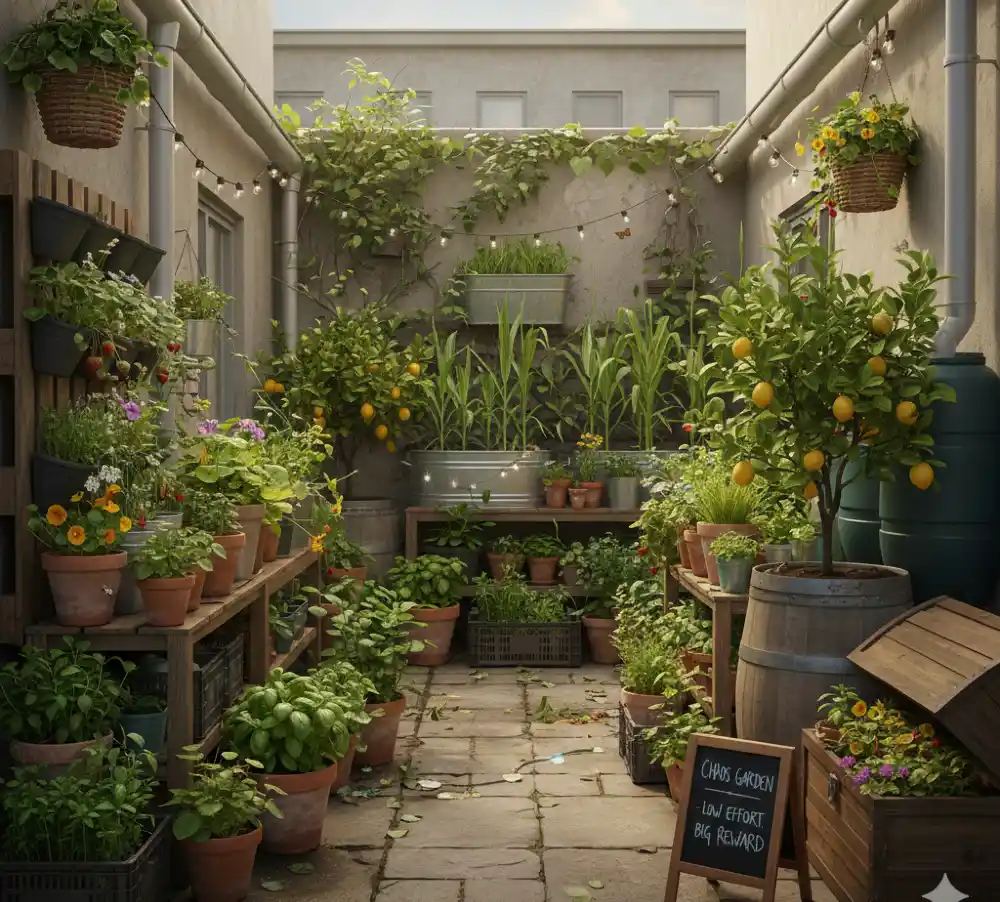
Concrete walls usually signal limits, but here they act as a canvas for an explosion of life, proving that narrow spaces are perfect candidates for a “chaos gardening” approach. Verticality becomes your best friend in tight quarters; galvanized tubs lift tall greenery high toward the sunlight while terracotta pots crowd every inch of shelving with basil, flowers, and lush foliage. Embracing a lack of strict order allows you to pack in more variety, letting edibles and ornamentals jostle for space in a way that mimics nature rather than a rigid farm.
Vertical Layering: Shelves packed with pots and hanging baskets maximize the footprint, turning bare walls into a productive green screen.
Productive Decor: Potted lemon trees and corn stalks serve as architectural focal points while providing fresh produce right outside the door.
Eclectic Charm: Mixing materials like wood, metal, and clay creates a warm, lived-in vibe that feels effortless and intentionally uncurated.
2. Cascading Tomato and Nasturtium Retreat – High-Yield Chaos Gardening with a Vertical Twist
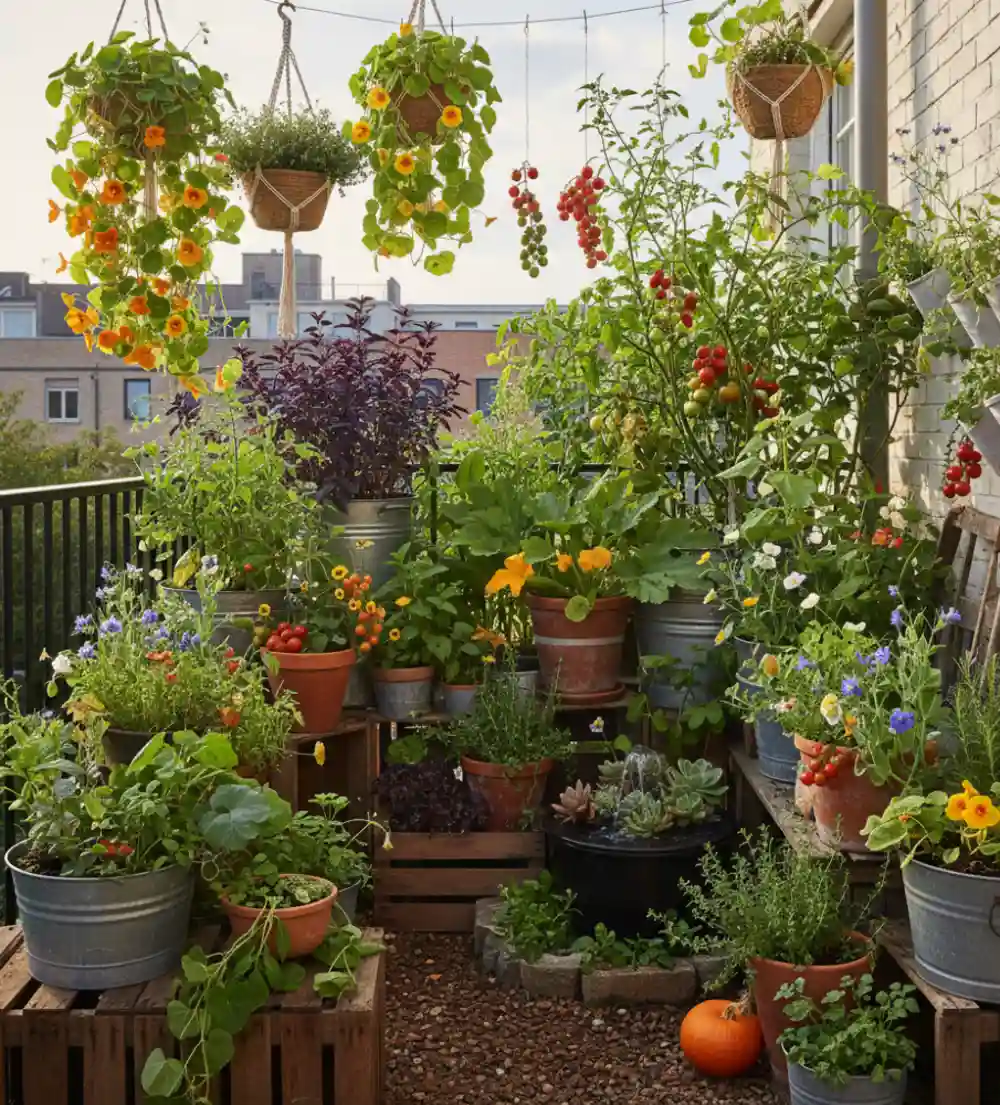
Gravity acts as a partner in this setup, pulling vines of ripe red tomatoes and bright orange blooms downward to create a living curtain that offers privacy and produce simultaneously. Stacking simple wooden crates creates an impromptu amphitheater of greenery, allowing leafy vegetables and herbs to thrive at different levels without fighting for sunlight. Metal buckets and soft fabric planters sit side-by-side, breaking the rules of traditional design to prioritize abundance and accessibility over rigid symmetry.
Edible Canopy: Suspended planters utilize overhead space for vining crops like tomatoes and nasturtiums, freeing up the floor for larger pots.
Crate Risers: Repurposed wooden crates offer a modular, budget-friendly way to create vertical tiers, maximizing sun exposure for every plant.
Texture Mixing: Combining galvanized steel, terracotta, and soft fabric wall planters adds visual depth and utilitarian charm to the chaotic mix.
3. Sun-Soaked Pallet Herb Wall – Vertical Chaos Meets Ground-Level Abundance
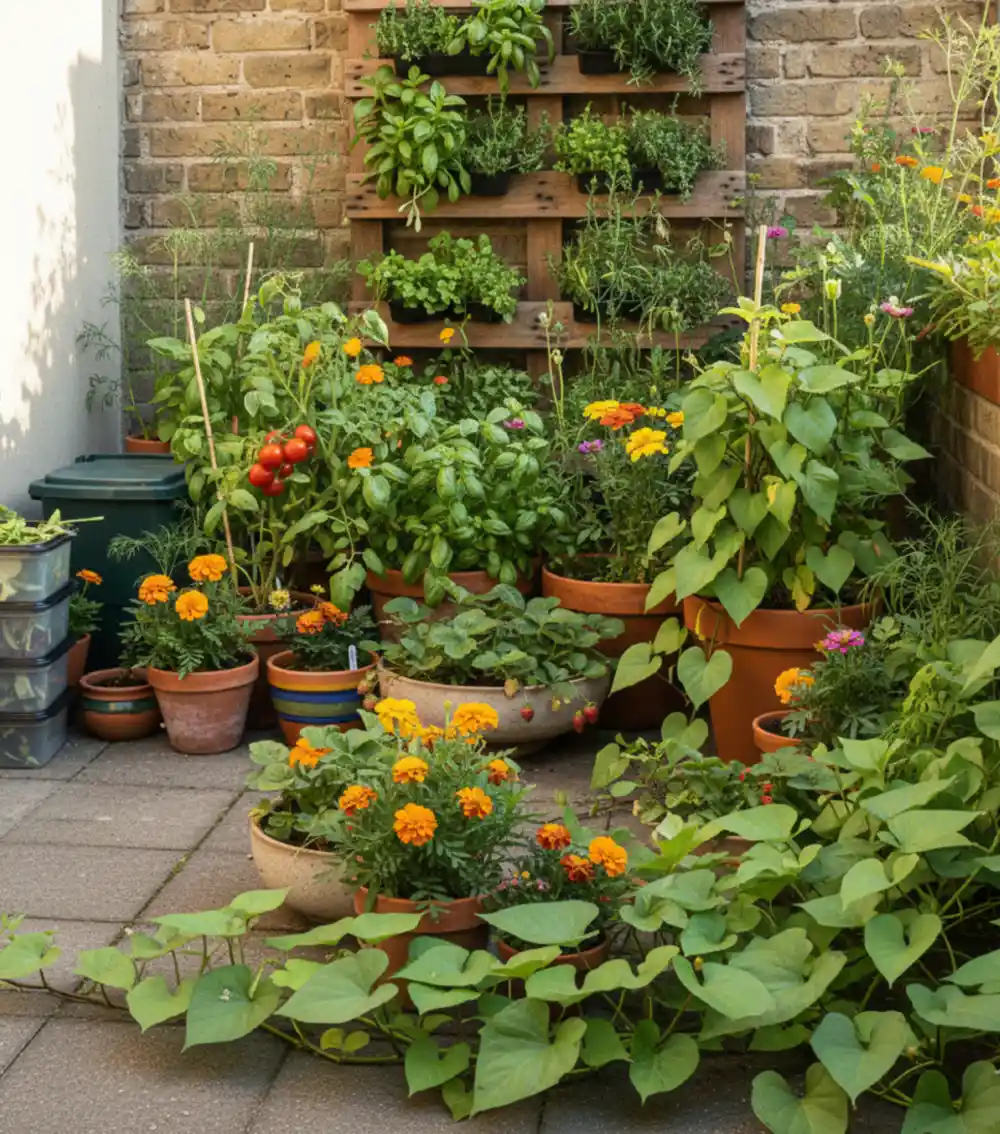
Square footage matters less when you unlock the potential of your walls and floor simultaneously to create a dense, productive corner. A simple wooden pallet attached to the brick transforms from industrial waste into a high-rise apartment for basil, thyme, and rosemary, keeping your most-used herbs within arm’s reach.
Below, the patio floor disappears under a sprawl of heart-shaped sweet potato vines and vibrant marigolds that act as natural pest control for the ripening tomatoes. Even the tightest corner works hard here, housing stacked vermicompost bins that quietly turn kitchen scraps into nutrient-rich gold for next season’s pots.
Upcycled Verticality: Mounting a pallet allows for tiered herb gardening without sacrificing the precious floor space needed for larger fruiting plants.
Living Mulch: Letting vines trail freely across the pavers cools the ground and softens the hardscape while adding a lush, untamed aesthetic.
Smart Companioning: Interplanting bright orange marigolds with edible crops brings necessary pollinators in and keeps unwanted insects out.
4. Secret Rose Garden Patio – Blending Relaxation with Unseen Edible Potential
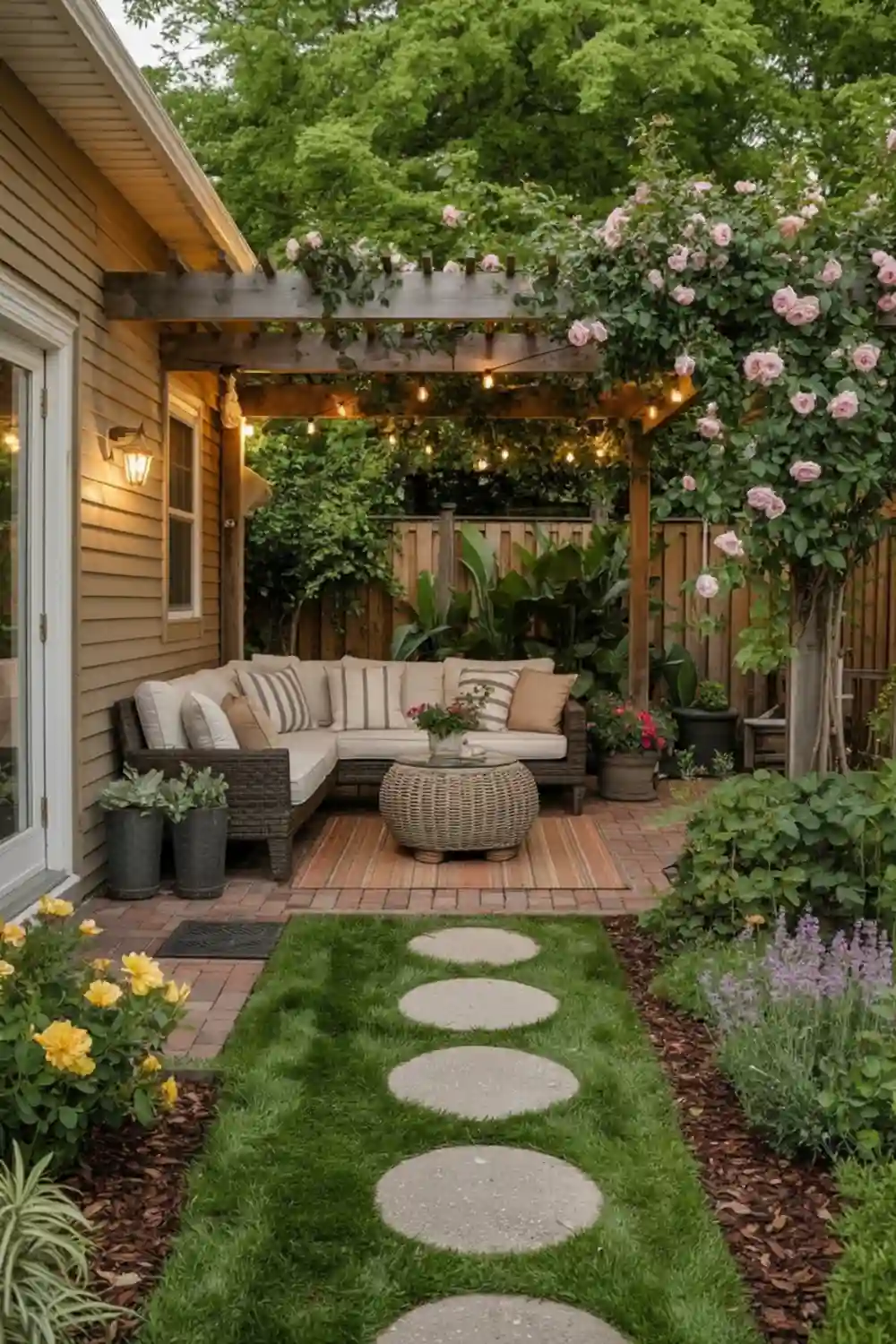
The focus is undeniably on luxurious relaxation, with the sprawling sectional and charming string lights creating an inviting outdoor living room. However, under the cloak of fragrant climbing roses and lush greenery, a savvy “chaos gardener” sees ample opportunities for discreet, high-yield edibles.
Imagine fragrant herbs nestled among the lavender, or a compact blueberry bush tucked into the corner, its berries blending seamlessly with the rose petals. Even the path of stepping stones, while elegant, offers pockets for low-growing thyme or chamomile, turning beauty into a delicious double-duty asset.
Edible Underplanting: While not immediately visible, the generous flower beds can easily host culinary herbs like thyme, oregano, or even groundcover strawberries beneath the ornamental plants.
Vertical Foodscaping: The robust pergola, currently adorned with roses, could also support climbing beans, small vining cucumbers, or even mini-kiwis for a hidden harvest.
Layered Hiding Spots: The varying heights of the lush foliage around the patio offer perfect camoflage for a few strategic containers of leafy greens or radishes, harvested stealthily for immediate use.
5. Blushing Rose and Wicker Pergola Retreat – Embracing Floral Abundance in Small Spaces
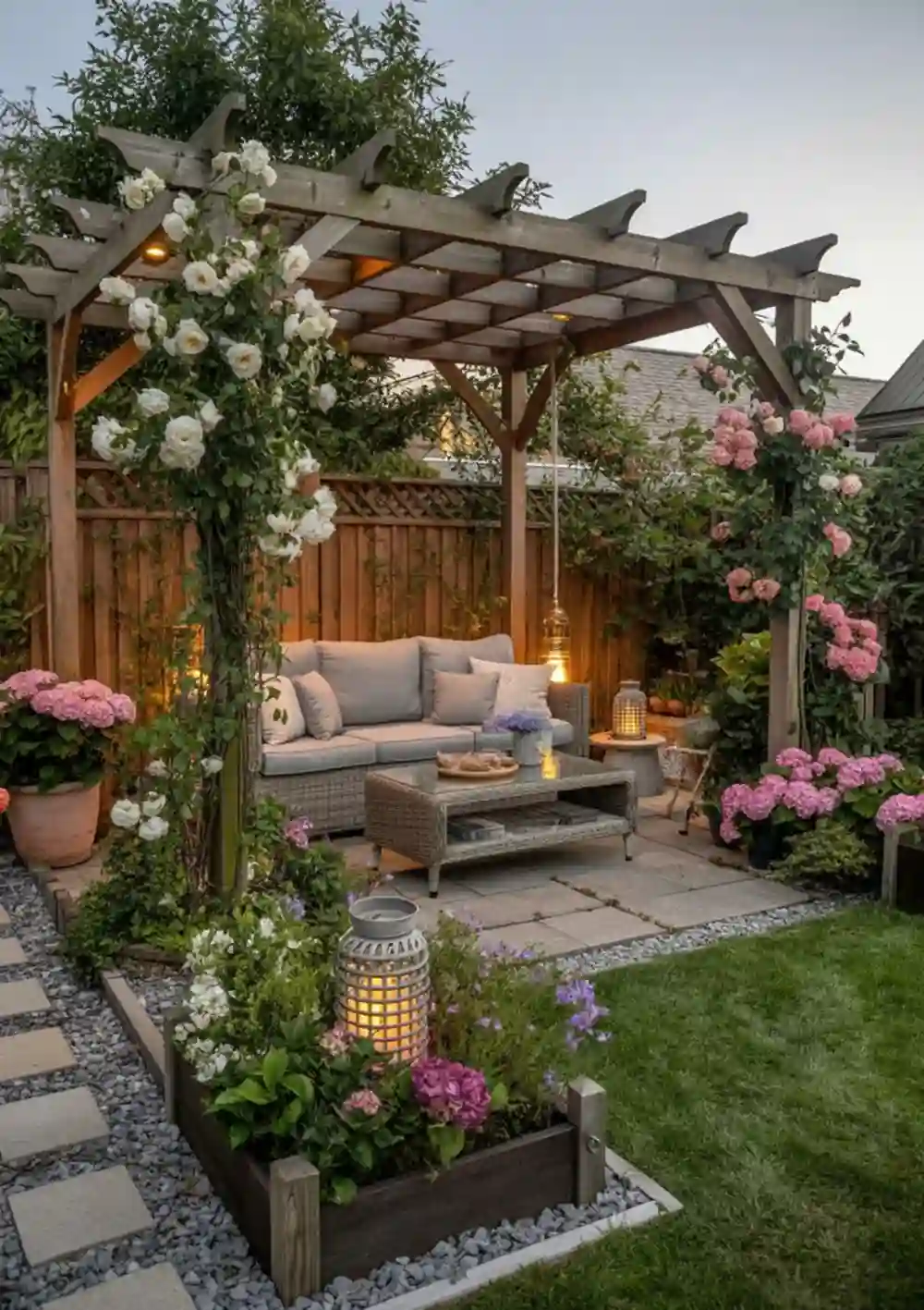
Generous applications of nature can soften even the most structured hardscapes, proving that “chaos gardening” isn’t about mess, but about volume and vitality. Letting plants dictate the boundaries creates a sanctuary that feels miles away from the neighbors, even on a small patio.
Vertical Takeover: Climbing white roses seizing the wooden beams transform a rigid structure into a living canopy, utilizing vertical space to maximize floral yield without sacrificing square footage. Allowing vines to wander freely over the pergola creates dappled natural shade that feels far more organic and soothing than a store-bought umbrella.
Perennial Power: Pink hydrangeas exploding from containers soften the ground level and prove that low maintenance can still mean high impact. Relying on hardy perennials that return larger every year reduces the need for constant replanting, letting the garden establish its own wild rhythm over time.
Immersive Seating: Grey wicker furniture tucked deep into the greenery makes it feel like the garden is hugging the living space rather than just bordering it. Placing seating right against the flower beds invites interaction with the scents and textures, blurring the line between indoor comfort and outdoor wildness.
Warm Illumination: Soft lantern light creates a golden hour glow that highlights the textures of the stone pavers and the gravel mulch. Lighting placed low to the ground emphasizes the “chaos” of the lower foliage, turning the garden into a cozy, glowing nest after sunset.
6. Earthy Olive & Pergola Lounge – Cultivating Serenity with Purposeful Wildness
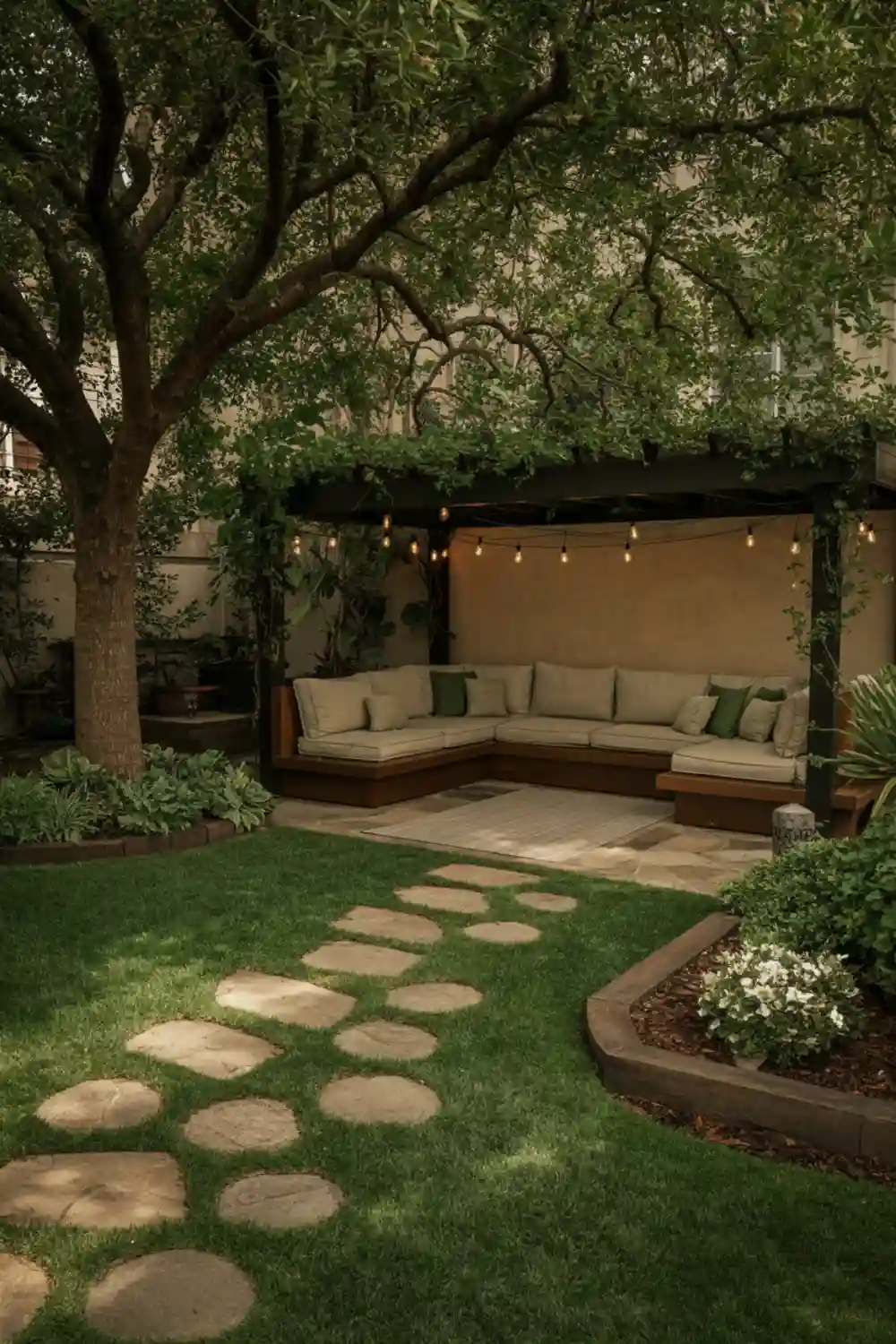
A well-designed patio can still lean into “chaos gardening” by layering different textures and allowing key elements to soften the structured lines, making maintenance a breeze while maximizing visual impact. It’s about creating moments of calm within a lush embrace.
Organic Path: Stepping stones meandering through the lawn invite exploration and break up the expanse of green. Letting the grass grow slightly around the edges of the pavers enhances the natural, untamed feel, making the path feel less rigid and more integrated into the garden’s gentle wildness.
Built-in Greenery: Integrated planting beds around the perimeter of the lounge area bring the garden right to your fingertips. Planting low-maintenance ground covers and shrubs here ensures continuous greenery and visual fullness without demanding constant attention, allowing them to naturally spill over for a softer look.
Overhead Ambiance: String lights draped across the pergola add warmth and sparkle, extending the patio’s usability into the evening. While the pergola provides structure, allowing a creeping vine to eventually weave through it would add a living element, creating natural shade and a “high-yield” of cool comfort.
Comfort in Nature: A spacious L-shaped sofa with soft, earthy tones provides an inviting spot for relaxation, harmonizing with the surrounding greenery. Surrounding the seating with a variety of plant heights and textures creates an immersive, “chaos-gardening” cocoon that feels incredibly private and tranquil.
7. Terra Cotta & Wicker Bistro – Maximizing Greenery in Compact Urban Havens
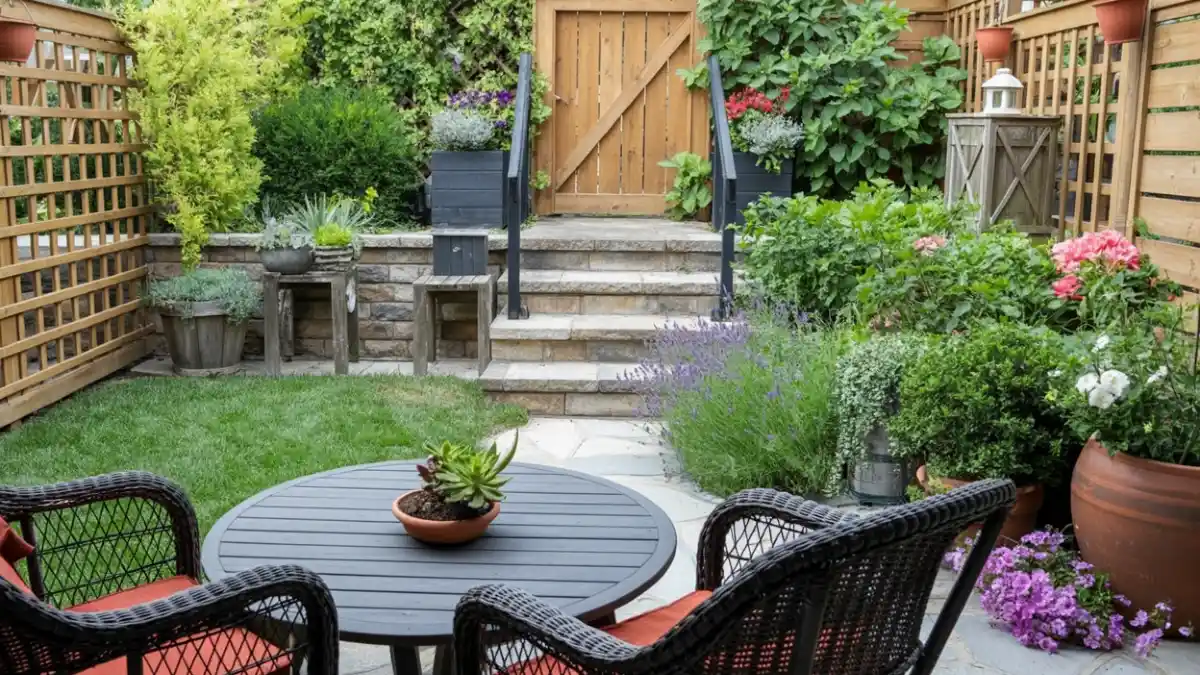
Even a small urban patio can become a vibrant “chaos garden” by leveraging every available surface for lush planting. This approach creates a high-yield visual feast without demanding extensive upkeep, transforming tight spaces into natural sanctuaries.
Layered Greenery: Various shrubs and vines climb and cascade, filling every corner and softening the wooden fences. Allowing different plant types to intermingle and grow vigorously creates a dense, natural screen, providing privacy and a high visual yield of foliage without precise pruning.
Container Abundance: An assortment of terracotta pots, raised planters, and even a rustic wooden bucket hold a variety of flowers and herbs. Utilizing a diverse collection of containers for “chaos gardening” allows for easy rearrangement and experimentation, ensuring continuous blooms and interest with minimal ground disturbance.
Vertical Volume: The lattice fence on the left provides an ideal support for climbing plants, extending the garden upwards. Training vines to cover vertical surfaces maximizes planting potential in a small footprint, turning bare fences into vibrant, living walls that contribute to the overall lushness.
Stairway Surround: Plantings flank the stone steps leading to the wooden gate, integrating the transition point into the garden’s flow. Letting hardy ground covers and perennials spill over the edges of the steps helps to blur the lines between hardscape and softscape, creating a cohesive, low-maintenance green pathway.
8. Electric Lime & Living Walls – Structured Chaos for Urban Retreats
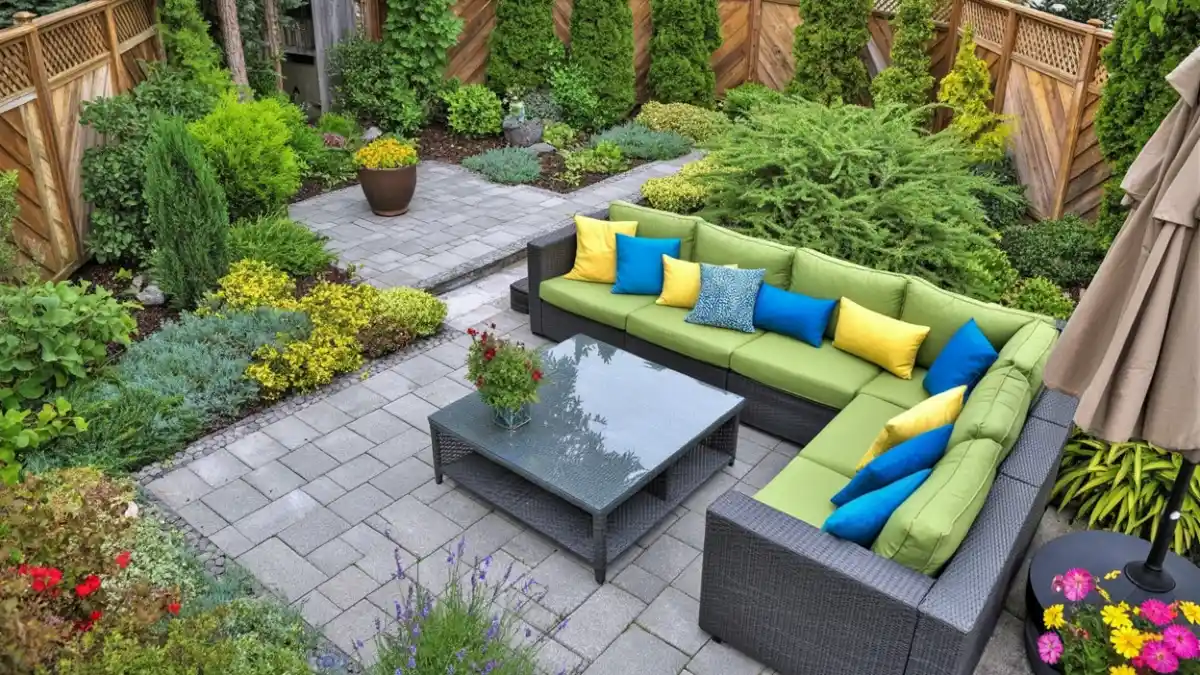
High-contrast design meets dense botanical layering here, demonstrating that “chaos gardening” can look surprisingly polished when framed correctly. Allowing plants to crowd the perimeter creates a lush “green room” effect that feels cozy rather than claustrophobic.
Vertical Green Screen: Tall arborvitae trees planted tightly along the fence line act as a living fortress, effectively blocking out the neighbors and the alleyway. Letting these evergreens merge into a single, dense wall maximizes privacy and air filtration without requiring the meticulous spacing of a traditional formal garden.
Living Mulch Layers: Creeping ground covers and wildflowers filling the beds serve a dual purpose: explosive color and weed suppression. Crowding the soil with desired plants leaves no room for invaders, meaning you spend less time pulling weeds and more time enjoying the riot of purple and yellow blooms.
Bold Focal Anchors: Neon green and electric blue cushions on the sectional provide a sharp, modern counterpoint to the organic disarray of the flower beds. Using bright, solid colors in the furniture centers the eye, making the surrounding wild growth feel like a deliberate design choice rather than a lack of maintenance.
Textural Biodiversity: Red-leafed shrubs mixing with feathery grasses and broad-leafed perennials create a micro-ecosystem that thrives on variety. Encouraging different leaf shapes and plant heights to compete for space results in a resilient garden that stays visually interesting through multiple seasons.
9. Rustic Spool & Secret Garden – Embracing Untamed Beauty with Found Objects
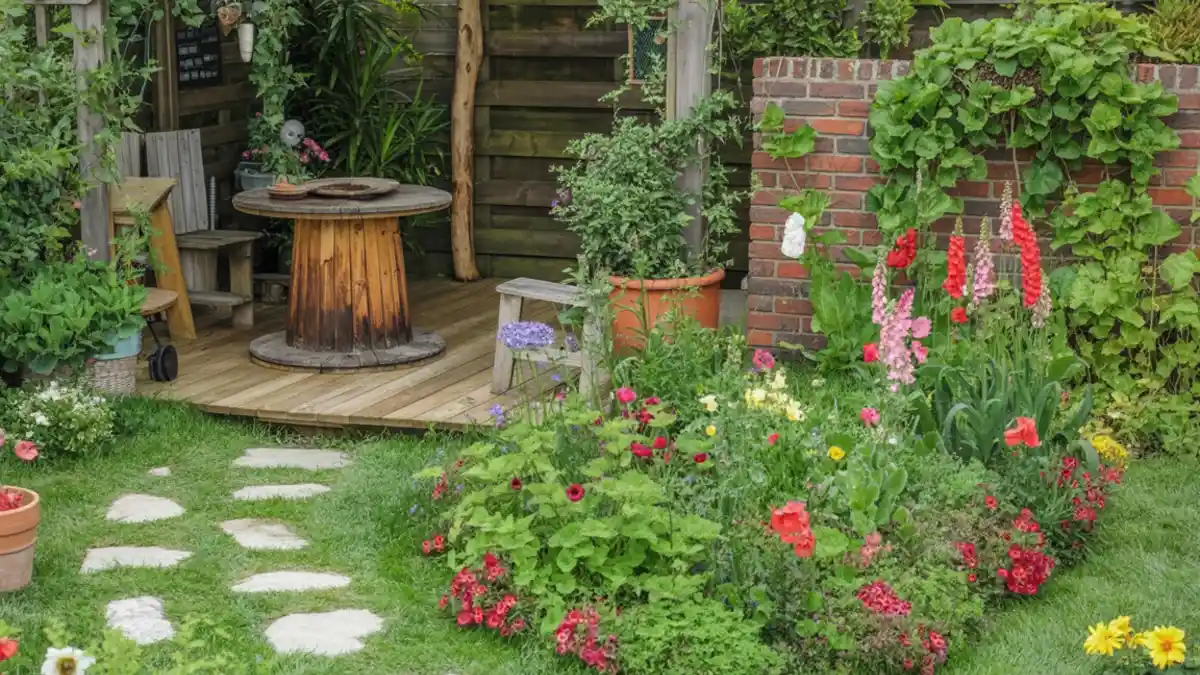
This garden perfectly embodies “chaos gardening” by blending a rich tapestry of plants with repurposed elements, proving that high visual yield doesn’t require high-cost landscaping. It’s a delightful example of how wildness and charm can coexist in small, intimate spaces.
Upcycled Furniture: A wooden spool transformed into a patio table adds character and a sense of history to the small deck area. Repurposing objects like this into functional outdoor furniture instantly creates a unique, low-cost seating area that blends seamlessly with a natural, “chaos garden” aesthetic.
Layered Beds: A dense mix of ferns, flowering perennials, and annuals creates a lush, multi-level central bed. Allowing a variety of plants to grow closely together mimics natural ecosystems, reducing bare soil and creating a vibrant, self-sustaining micro-habitat that’s visually rich and requires less weeding.
Path of Discovery: Irregular stepping stones winding through the vibrant green lawn invite a leisurely stroll through the garden’s heart. These informal pathways encourage exploration of the densely planted areas, creating an experience of discovery even in a compact space and minimizing formal lawn maintenance.
Vertical Greenery Walls: Vines and climbing plants enthusiastically cover the rustic wooden fence and brick column, blurring the lines between structure and nature. Encouraging aggressive vertical growth on boundaries maximizes the “green wall” effect, enhancing privacy and creating a feeling of being enveloped by nature, a high yield of natural beauty for minimal effort.
10. Wildflower Riot & Rustic Bench – Uncurated Beauty for Tiny Spaces
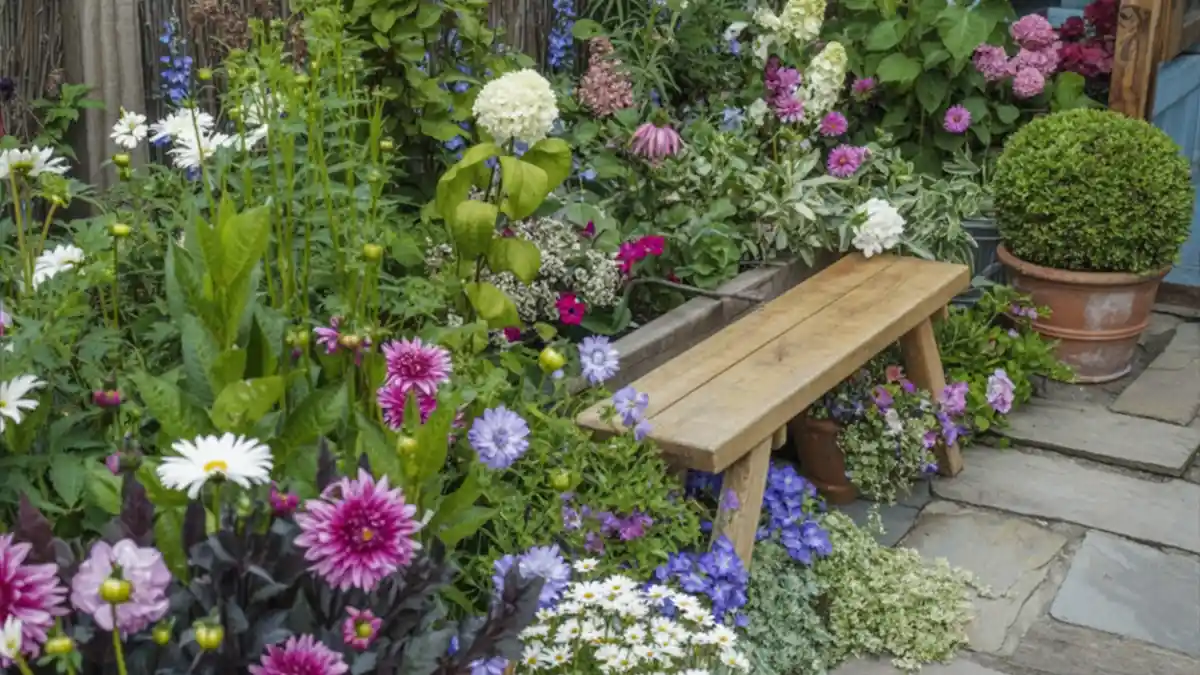
True “chaos gardening” embraces a zero-vacancy policy for soil, creating a tapestry so dense that it becomes its own ecosystem. It transforms a cramped corner into a vibrant jungle where color reigns supreme and maintenance drops simply because there is no room for weeds to invade.
Crowded Canopy: Cramming plants together acts as the ultimate low-maintenance hack. Dahlias, daisies, and hydrangeas jostle for sunlight, covering every inch of soil so weeds simply don’t have the real estate to take root. Let the flowers win the turf war.
Immersive Perch: Sitting here feels less like observing a garden and more like sinking into a living bouquet. Placing a modest wooden bench right in the splash zone of the foliage creates an intimate, immersive spot where the scent of the blooms wraps right around you. Surrender your seating to the floral invasion.
Vertical Drama: Vertical interest explodes from the back layers with tall hydrangeas and dark-leaved dahlias reaching for the sky. Layering plants by height creates a wall of color that hides the fence and makes a shallow border feel like a deep, unending forest. Build a wall of petals, not bricks.
Mobile Color: Terracotta pots play a game of hide-and-seek among the ground cover. Tucking potted plants into the gaps of a permanent bed allows for instant color correction and lets you swap out faded blooms for fresh ones without digging up the whole plot. Keep your garden mobile and ever-changing.
11. Lavender & Lime Driftwood Lounge – Softening Hardscapes with Floral Chaos
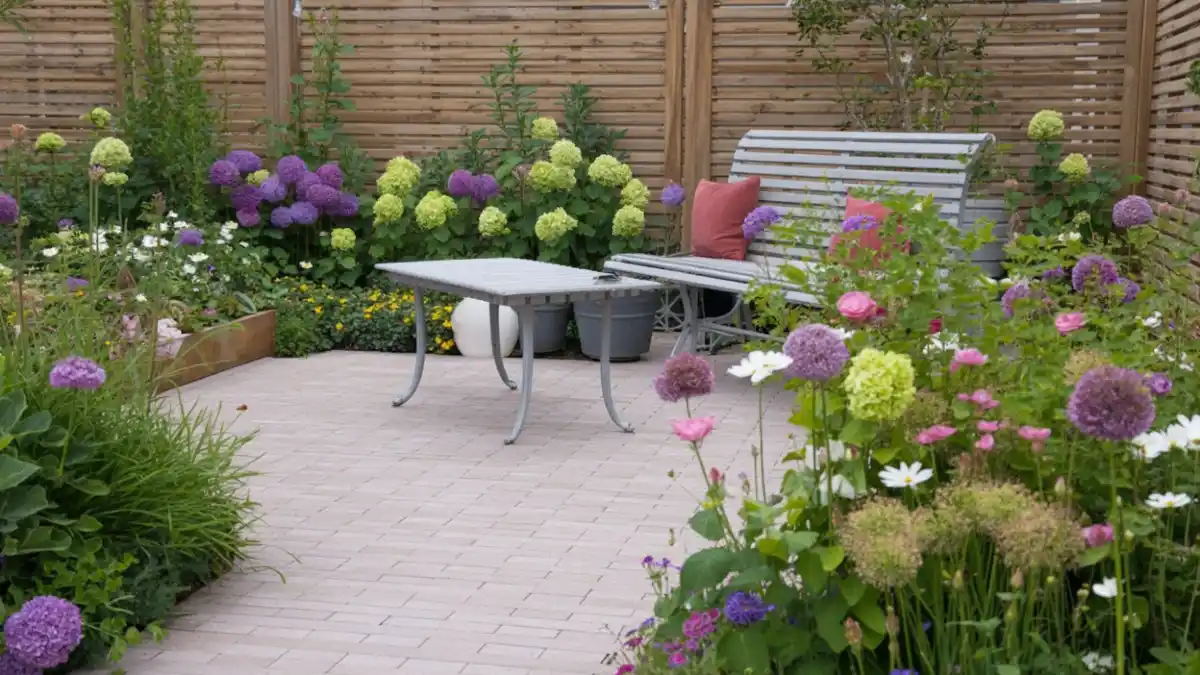
Pastel tones don’t have to be polite; here they create a vibrant, shouting match of color that brings life to a paved courtyard. “Chaos gardening” in this space means selecting structural, high-drama plants that fill the space with architectural shapes, providing a massive visual payoff that distracts from the limited square footage.
Structural Pops: Exploding purple spheres and lime-green clouds dominate the borders, proving that “chaos” can still have a cohesive color scheme. Planting high-impact, structural blooms like alliums and hydrangeas gives you maximum drama for minimum effort, as these perennials return bigger and bolder every season without needing constant replanting.
Softened Edges: Spilling foliage blurs the harsh lines of the pale brick pavers, making the patio feel like it grew out of the earth rather than being paved over it. Letting plants flop loosely over the edges cuts down on the need for precise edging or trimming, embracing a relaxed, lived-in vibe that feels far more welcoming.
Neutral Canvas: Weathered grey furniture acts as a quiet, grounding canvas for the riot of color surrounding it. Keeping the hardscape and seating tones muted and natural allows the “chaos” of the pink and purple blooms to take center stage without overwhelming the eye or making the small space feel cluttered.
Vertical embrace: Tall wooden slats provide a structured backdrop that contrasts beautifully with the organic, unruly shapes of the wildflowers and cosmos. Using the fence as a support for taller stems and eventual climbers turns the perimeter into a vertical garden, maximizing your floral yield without eating up valuable floor space.
12. Sun-Dappled Fern & Timber Retreat – High-Yield Privacy in a Pocket Garden
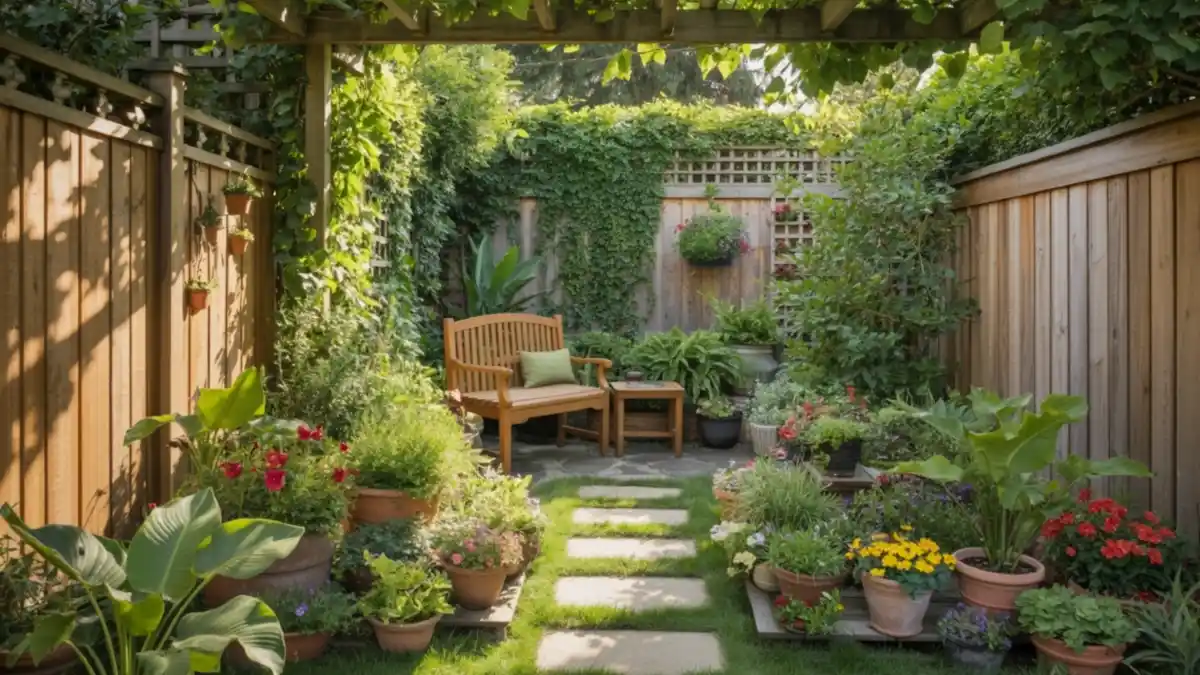
Even the boxiest backyard can feel like a limitless forest when you let the greenery dictate the boundaries. This space proves that “chaos gardening” is just a fancy term for letting life fill every available inch, turning a small footprint into a high-yield oxygen factory.
Living Floor: Strict stone paths get a soft makeover with thick ribbons of grass growing freely between the pavers. Interspersing hardscape with durable ground cover reduces the need for sweeping and softens the acoustic echo of the space, making the ground itself part of the garden’s yield. Step onto a path that feels alive.
Vertical Takeover: Aggressive vines consume the back fencing and overhead trellis, effectively erasing the harsh lines of the property. Surrendering vertical surfaces to climbing plants creates a cooling canopy that blocks prying eyes better than any privacy screen ever could. Let your walls breathe and grow.
Container Crowding: Mismatched vessels, from rustic clay pots to galvanized metal tubs, huddle together to create dense islands of color. Packing containers tight prevents soil from drying out as quickly and creates a high-impact floral display that can be shuffled around whenever the mood strikes. Build a garden that moves with you.
Nook Immersion: A warm wooden bench tucks quietly into the corner, almost swallowed by the surrounding foliage. Positioning seating right against the plant life invites you to sit in the garden rather than just look at it, maximizing the sensory experience of your “chaos” oasis. Hide away in plain sight.
13. Fuchsia Overflow & Slate Stone Terrace – Container Chaos for Clean Lines
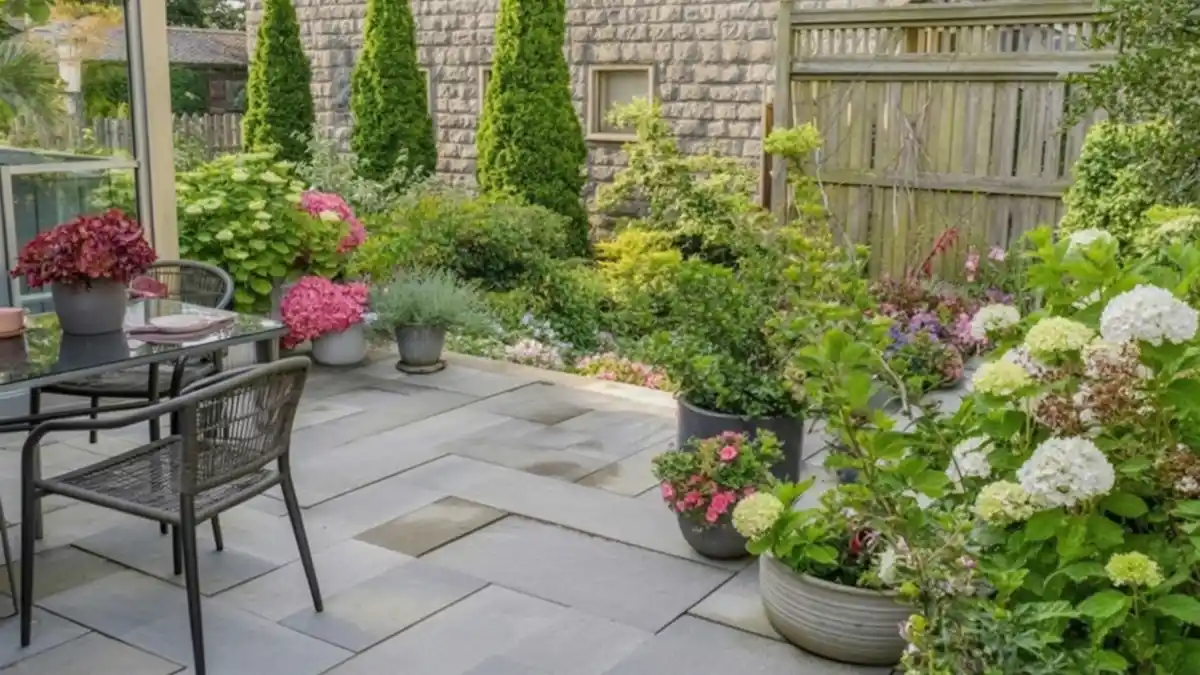
“Chaos gardening” usually implies digging in the dirt, but on a paved patio, it means letting your containers do the heavy lifting. By grouping overflowing pots against established borders, you create a sense of wild abundance that softens the hard, cold feel of stone pavers. It is high-yield color with zero lawn to mow.
Mobile Flower Beds: Giant grey pots bursting with bright pink flowers act like mobile garden beds, letting you change the layout whenever you get bored. Keeping the “mess” contained in vessels means you get high-impact color without ever putting a shovel in the ground.
Softening the Hardscape: Dense green shrubs and white hydrangeas crowd the back edge, softening the rough texture of the stone wall and wooden fence behind them. Letting these border plants grow thick creates a cozy green hug that blocks out the rest of the world.
Vertical Sentinels: Tall, cone-shaped evergreens stand guard in the back, adding necessary height to an otherwise flat space. Using vertical trees draws the eye up and makes a small patio feel grander without taking up much precious floor space.
Clean Slate Comfort: Wicker dining chairs sit right in the center of the action, offering a front-row seat to the blooming show. Placing your furniture on clean slate pavers while the garden explodes around the edges gives you the best of both worlds: a tidy floor and a wild view.
14. Sun-Ripened Tomato & Pallet Crate Jungle – Edible Chaos for Urban Harvesters
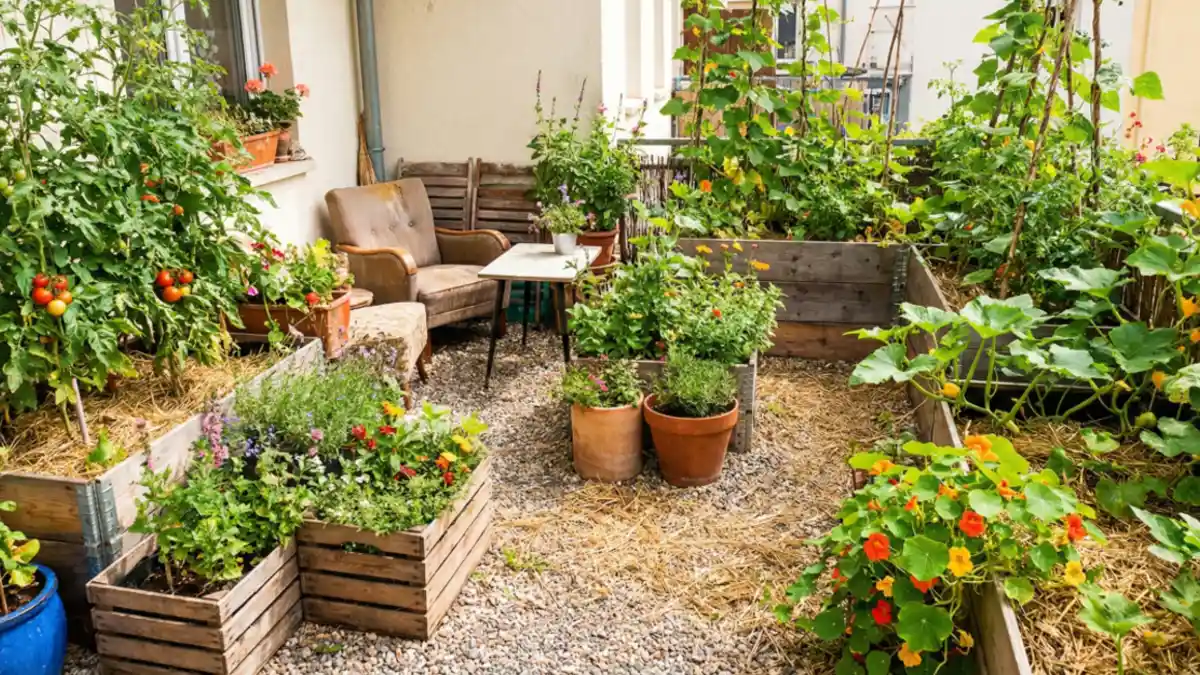
“Chaos gardening” finds its most productive form here, where function dictates form and every square inch works hard to put food on the table. It is messy, vibrant, and incredibly alive, proving that you don’t need a sprawling backyard to grow a significant amount of your own produce.
Boxed Abundance: Rough wooden crates define the planting zones, turning a flat concrete slab into a deep-soil farm without any permanent construction. Grouping these deep containers allows root systems to sprawl and thrive, offering maximum vegetable yield in a rented or temporary space.
Vertical Harvest: Climbing vines and heavy tomato plants scramble up simple twine supports, creating a wall of food that blocks the view of the neighbors. Training heavy feeders to grow upward rather than outward multiplies your growing area, turning empty air into a salad bar.
Mulch Moisture: Straw mulch thickly covers the soil in every box, trapping water and stopping weeds before they can even think about sprouting. Layering organic matter like this cuts down on watering chores significantly, letting the “chaos” take care of itself while you relax.
Homestead Comfort: Soft, worn furniture sits right amidst the gravel, blurring the line between a cozy living room and a working farm. Placing a comfy chair within arm’s reach of the cherry tomatoes invites you to snack while you sit, making the harvest part of your daily downtime.
15. Rusty Steel & Rooftop Bounty – Industrial Edible Chaos
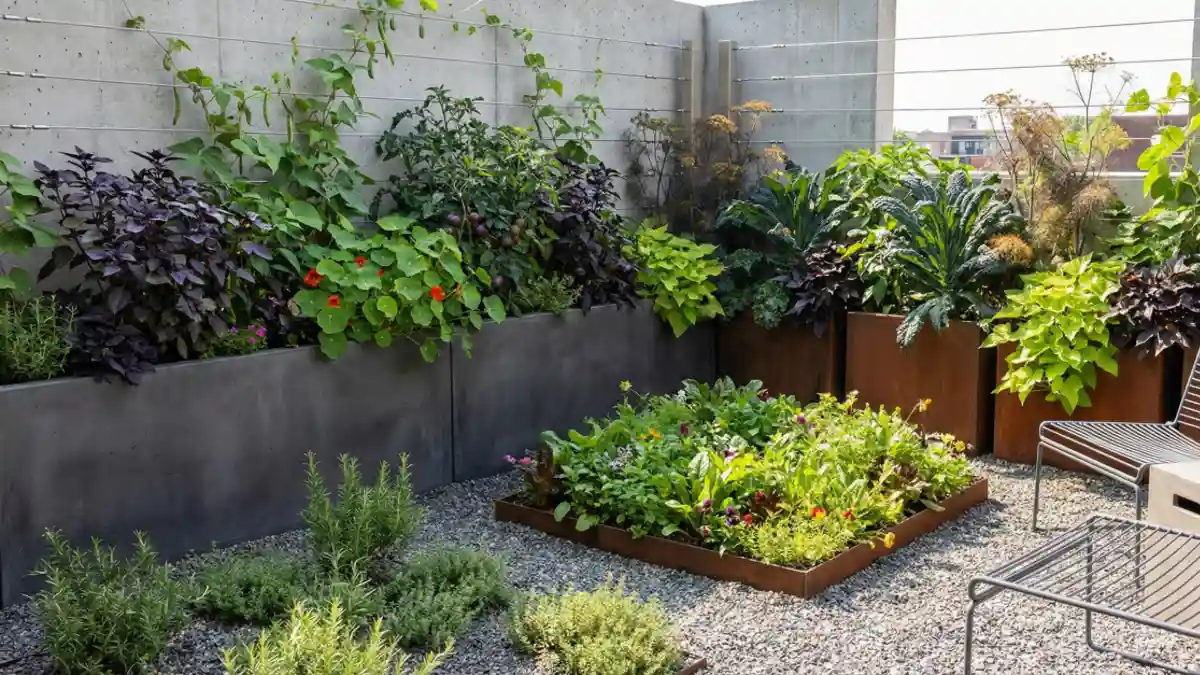
Modern, industrial materials provide the perfect foil for a riotous, productive garden. This rooftop space shows that “chaos gardening” doesn’t have to look rustic; it can be sleek and sophisticated by using architectural containers to frame the wild, high-yield polyculture within.
Contained Wildness: Sleek, industrial planters made of dark metal and weathering steel act as rigid frames for the botanical explosion inside. Containing the “chaos” within these sharp lines creates a sophisticated look that requires zero edging, letting the plants spill over without looking messy.
Edible Intermingling: Edibles like dark leafy kale and sprawling tomato plants jostle for space alongside ornamental sweet potato vines and bright nasturtiums in a dense, productive tangle. Interplanting vegetables with flowers not only looks fantastic with contrasting foliage colors but also confuses pests and maximizes the harvest from every square foot of soil.
Zero-Mow Flooring: A floor of crushed gravel replaces a high-maintenance lawn, completely eliminating the need for mowing or watering the ground level. This permeable surface allows rain to soak through, reduces weeds, and provides a crunchy, satisfying texture underfoot that complements the modern aesthetic.
Vertical softening: Vines are encouraged to scramble up the tall concrete wall and along the cable railing, softening the harsh, cold architecture with lush green life. Utilizing vertical space is a key “chaos gardening” tactic for small patios, turning a blank wall into a productive, living backdrop that draws the eye upward.
16. Concrete Chic & Veggie Tangle – Modern “Chaos” for Maximum Harvest
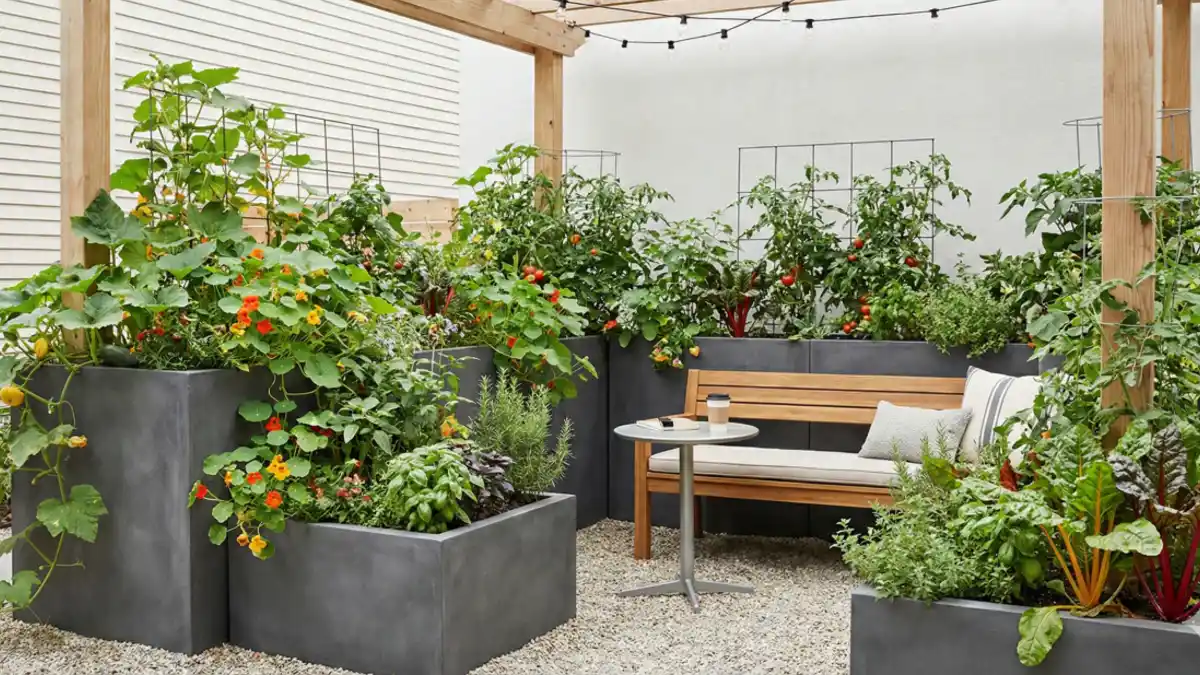
Clean architectural lines don’t have to mean sparse planting; here, they provide the perfect foil for agricultural exuberance. This patio demonstrates that a small footprint can host a high-yield farm without looking like a messy allotment by letting vegetables and flowers tangle together in oversized, stylish containers, creating a lush look that requires far less weeding than in-ground beds.
Structured Abundance: Massive, sleek planters in varying heights act as rigid frames for the botanical explosion inside, allowing you to pack plants in tightly for a dense, productive look that still feels intentional. Containing the “chaos” within these sharp, modern lines creates a sophisticated aesthetic that requires virtually zero edging, letting the plants spill over the sides in a controlled explosion of food.
Polyculture Productivity: Mixing edibles like sprawling squash, tall tomatoes, colorful Swiss chard, and trailing nasturtiums in the same pot isn’t just messy; it’s a smart strategy to maximize your harvest in limited space. Letting different plant types jostle for sunlight creates a dense, self-mulching ecosystem where foliage shades the soil, keeping roots cool and reducing evaporation.
Zero-Mow Flooring: Trading traditional lawn for a gravel floor completely eliminates the weekly chore of mowing and edging in a tight urban space. A permeable aggregate surface like this allows rain to soak right through and significantly suppresses weeds, meaning you spend less time maintaining the ground level and more time enjoying the crops.
Vertical Ambition: Encouraging plants to grow up instead of just out is crucial for maximizing yield in small-space “chaos gardening.” Utilizing tall wire cages for heavy tomato vines and the wooden pergola structure itself for future climbers turns the air above the seating area into valuable growing space, doubling your potential harvest.
17. Silver Trough & Edible Confetti – The One-Pot Permaculture Patio
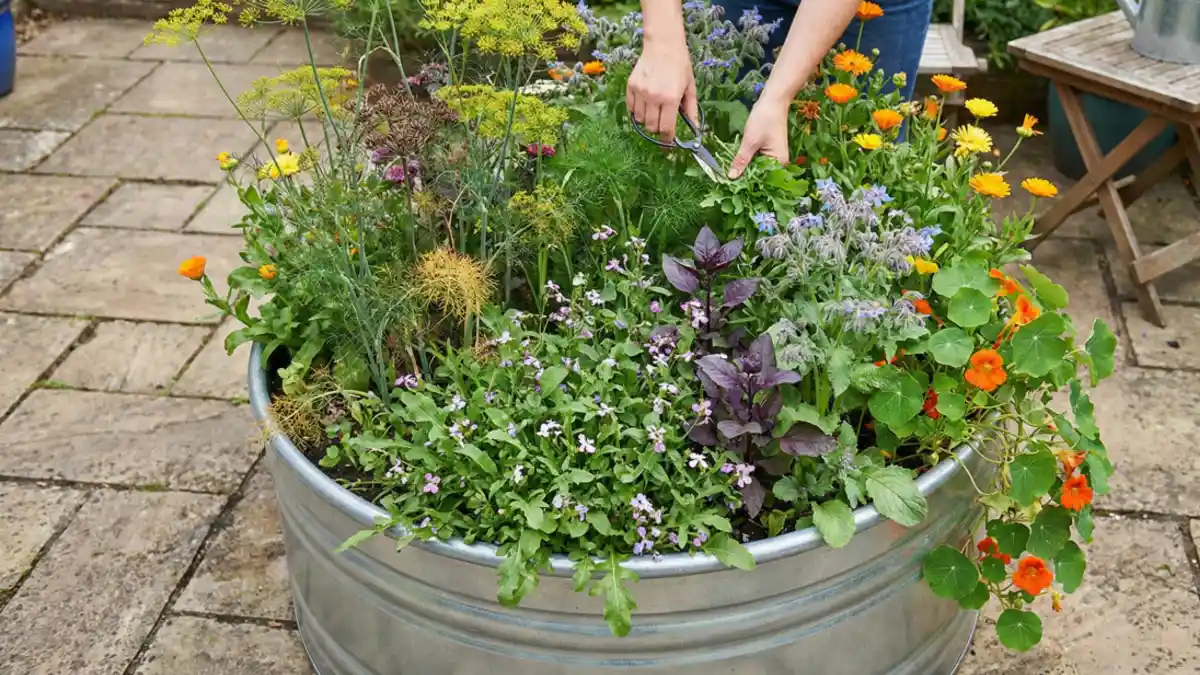
“Chaos gardening” shrinks down perfectly into a single, massive vessel, creating a micro-meadow that is as productive as it is messy. A galvanized tub filled to the brim proves that you don’t need rows or raised beds to grow a serious amount of food; you just need deep soil and a willingness to let plants elbow each other for room.
Industrial Durability: A galvanized stock tank acts as an indestructible fortress for your plants. Unlike plastic pots that crack in the sun, this silver beast holds enough soil to support a mini-ecosystem, keeping roots cool and moist even on the hottest patio days.
Flavorful Tangles: Feathery dill, purple basil, and crunchy nasturtiums fight for space in a delicious free-for-all. Mixing herbs with edible flowers isn’t just pretty; it confuses bugs looking for a mono-crop feast, meaning you get a higher yield without using sprays.
Pollinator Magnets: Bright orange calendula and star-shaped blue borage act as neon signs for bees. Inviting pollinators right into your seating area ensures that every vegetable flower gets visited, boosting your harvest while adding a splash of “wild meadow” color to the grey stones.
Snip-and-Sit Convenience: Harvesting dinner becomes a matter of leaning over your chair rather than trekking to a backyard plot. Keeping the chaos contained in a waist-high vessel saves your back and puts fresh greens within arm’s reach every time you step outside.
18. Terracotta & Tomato Tango – A Balcony’s Productive Chaos
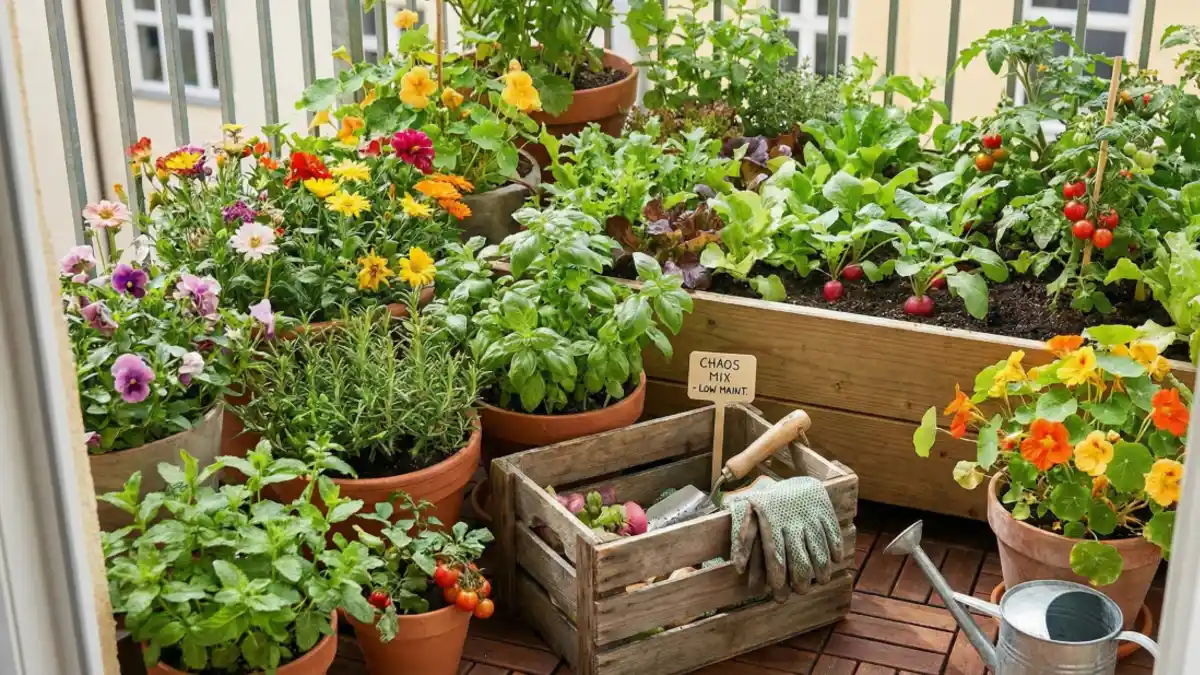
Who says you need a sprawling backyard to have a bountiful harvest? This balcony proves that a little bit of intentional “chaos” can lead to a serious yield, even in the smallest of spaces. By mixing edibles and ornamentals in a riot of containers, you create a vibrant, low-maintenance ecosystem that’s as beautiful as it is delicious.
Container Cacophony: Terracotta pots of all sizes jostle for space alongside a large wooden planter box and a rustic crate. Using a variety of containers allows you to tuck plants into every available nook, maximizing your growing area and creating a charming, lived-in look that’s far more interesting than uniform rows.
Edible & Ornamental Fusion: Bright red tomatoes and leafy radishes share real estate with cheerful yellow nasturtiums and multi-colored zinnias. Interplanting vegetables with flowers not only looks fantastic but also helps confuse pests and attracts pollinators, ensuring a better harvest with less effort.
Labeled Liberally: A handwritten “CHAOS MIX – LOW MAINT.” sign stuck in a wooden crate perfectly captures the spirit of the garden. It’s a playful acknowledgment that the garden’s “messy” appearance is a deliberate, low-stress strategy for high productivity.
Dense & Diverse: Every inch of soil is working hard, with herbs like basil and rosemary filling the gaps between larger plants. Crowding plants together like this shades the soil, reducing evaporation and keeping roots cool, which means less watering for you.
19. Rustic Wood & Climbing Bean Hideaway – Seating Inside the Harvest
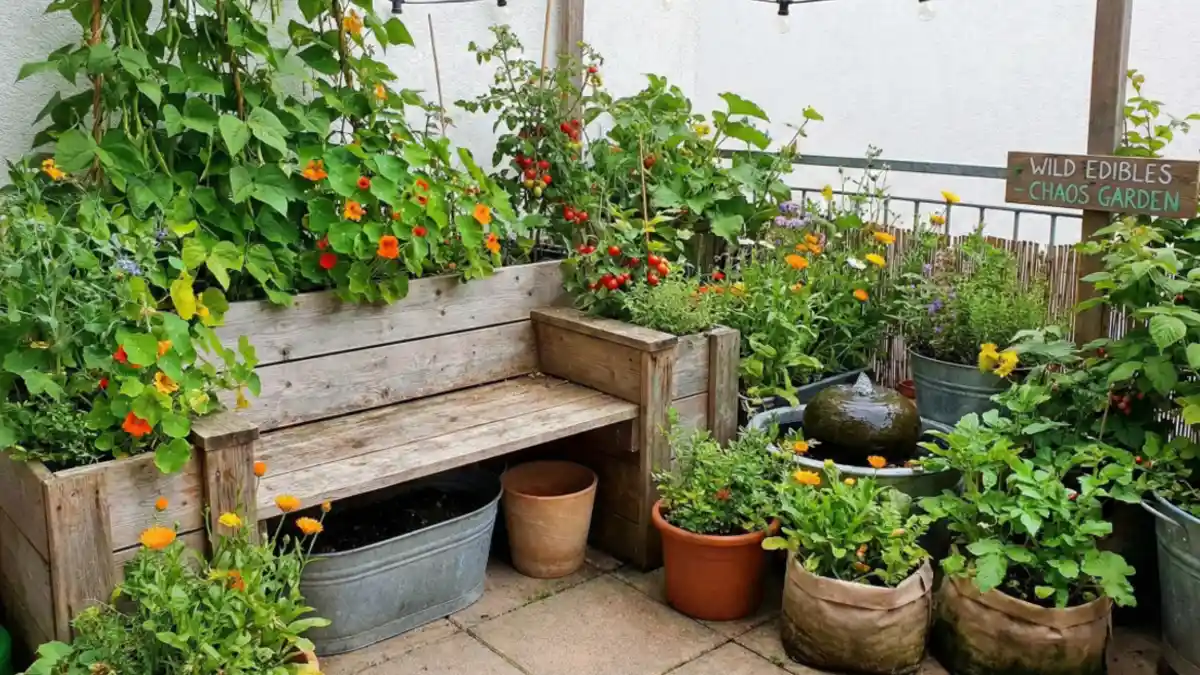
High-yield gardening often feels like work, but this setup proves it can just be a part of your furniture. Merging the planter boxes directly with a bench turns a small patio into an immersive green room where the snacks are literally within arm’s reach, defining “chaos gardening” as a lifestyle rather than a chore.
Integrated Immersion: Rough-hewn wooden planks form a bench that physically connects two large planters, placing the gardener right in the center of the action. Sitting here means the climbing beans and spilling nasturtiums serve as living armrests, blurring the line between where the garden ends and the living space begins.
Vertical Calories: Tall bamboo stakes guide bean vines and tomatoes up toward the string lights, maximizing the square footage by growing skyward. Exploiting vertical space creates a lush green privacy screen that produces pounds of food without taking up precious floor area.
Fabric Flexibility: Brown grow bags and galvanized buckets scattered on the pavers offer a lightweight, breathable home for peppers and herbs. Using portable fabric containers prevents root rot and allows for easy rearranging, so you can chase the sunlight or clear space for guests instantly.
Auditory Calm: A small, bubbling fountain tucked among the pots adds a layer of sound that masks city noise. Adding water to a “chaos garden” introduces movement and attracts thirsty pollinators, ensuring the dense vegetation gets the fertilization it needs to thrive.
20. Teal & Terracotta Courtyard – Perimeter Power for Low-Effort Lushness
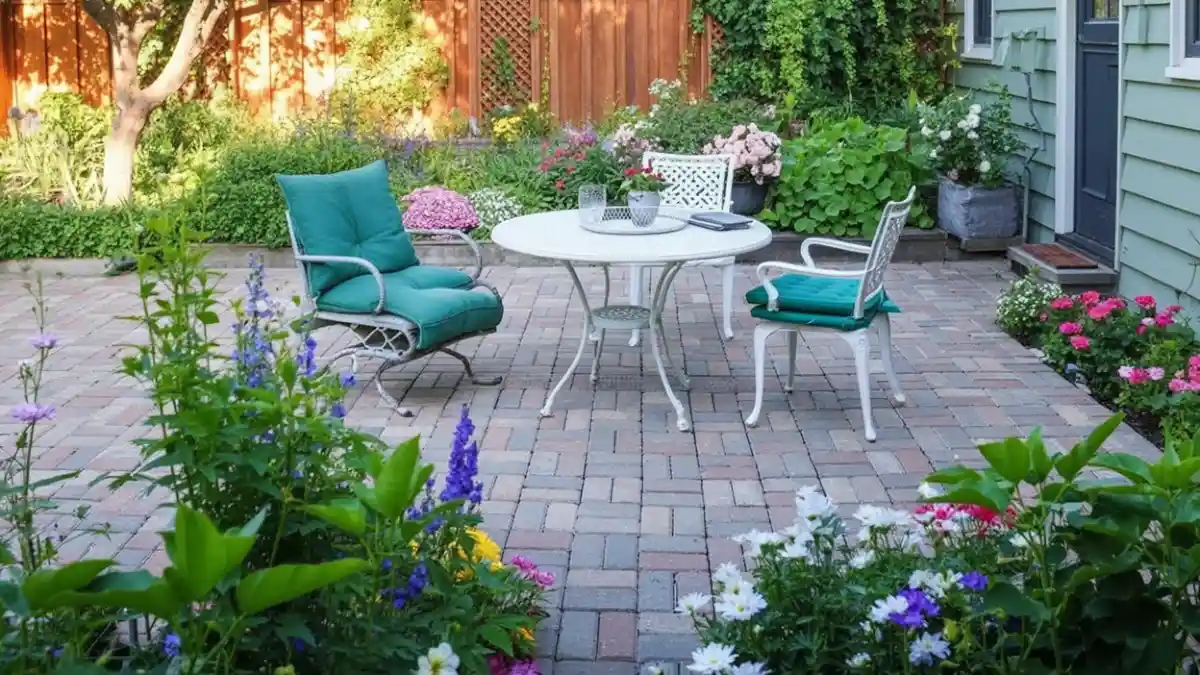
Hard edges meet soft, unruly borders here to create a space that feels managed yet wild. It proves that you can keep a functional, paved floor while letting the garden riot around the edges for a “high yield” of color without losing usable square footage.
Spilling Softness: Flowers creeping onto the brick pavers blur the boundary between the hardscape and the garden beds. Allowing plants to escape their designated zones and wander onto the patio creates a relaxed, organic feel that rigid edging simply cannot match. Let the garden break the rules.
Color Anchors: Vibrant teal cushions on the vintage white metal chairs provide a solid visual resting point amidst the floral texture. Using bold, solid colors for furniture centers the design, preventing the surrounding “chaos” from feeling messy or overwhelming. Anchor your wildness with bold comfort.
Dense Defense: Packed borders filled with purple salvia and pink blooms act as a living mulch that blocks out weeds. Crowding plants together so tightly that they touch ensures the soil stays shaded and moist, drastically cutting down on maintenance chores like weeding and watering. Plant thick to work less.
Living Backdrop: Vines and shrubs aggressively climbing the wooden fence transform a simple boundary into a lush green wall. Surrendering the perimeter to vertical growth creates a high-yield privacy screen that feels like a natural forest edge rather than a suburban barrier. Wrap your patio in living green.
21. Rusty Steel & Purple Haze – Industrial Chic Meets Meadow Chaos
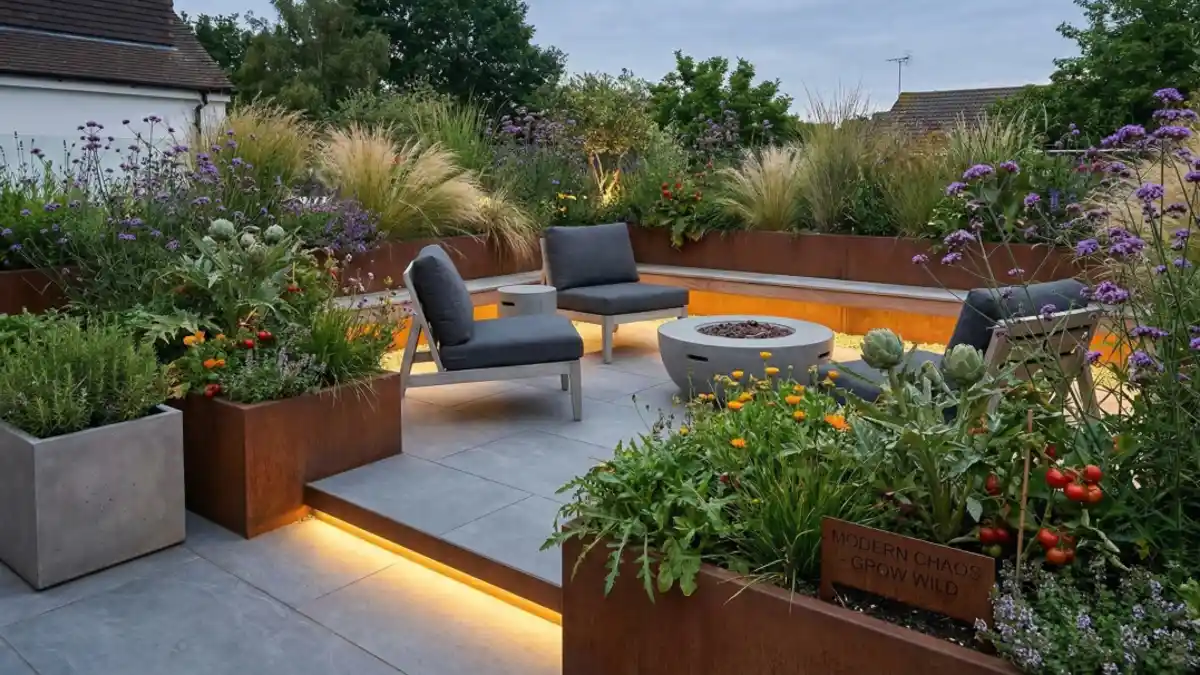
Modern design often loves straight lines, but nature prefers a mess. This rooftop bridges that gap by using sharp, rusty steel boxes to contain a wild explosion of life. It proves that “chaos gardening” can look incredibly expensive and sophisticated just by framing the unruly growth with clean, industrial edges.
Weathered Warmth: Corten steel planters provide a warm, orange contrast to the cool grey tiles and vibrant green foliage. using deep metal troughs allows for massive root systems, meaning you can grow giant artichokes and tall grasses that usually need open fields, giving you a high yield of drama in a tiny footprint. Let the rust frame the riot.
Edible Architecture: Artichokes and cherry tomatoes mix freely with tall purple verbena, treating food crops like beautiful sculptures. Interplanting these sculptural edibles with wildflowers creates a dense, productive tapestry that looks good even when you are waiting for the harvest. Eat your view.
Underglow Drama: Hidden LED strips under the floating benches cast a warm, golden light across the patio floor. Lighting from below highlights the texture of the spilling plants and makes the “chaos” look intentional and artistic rather than just overgrown after the sun goes down. Light up the wildness.
Declared Intent: A simple sign staking the claim “Modern Chaos – Grow Wild” sets the tone for the whole space. Labeling your messy garden changes the perception from “neglected” to “curated,” giving you permission to let things seed where they fall without apology. Wear your chaos like a badge of honor.