
Cramped studio, overflowing closets, couch doing double duty as bed again… I get how exhausting small-space living feels. Storage runs out, floors disappear, yet somehow new stuff keeps showing up.
I mean, I’m not sure but maybe you’re not actually short on square footage. Maybe furniture still acts like it lives in a big suburban house. That’s where Murphy beds, folding desks, hidden tables, and transformer sofas start to feel less like fancy gimmicks and more like sanity savers.
I’ll walk through smart, real-life Murphy bed setups and clever transformer furniture ideas that turn awkward corners into hard-working zones, create breathing room for guests, and finally give you space to move, create, rest, and actually enjoy home again.
1. Warm Oak & Minimalist Transformer Suite – Maximizing Square Footage with Hidden Functionality
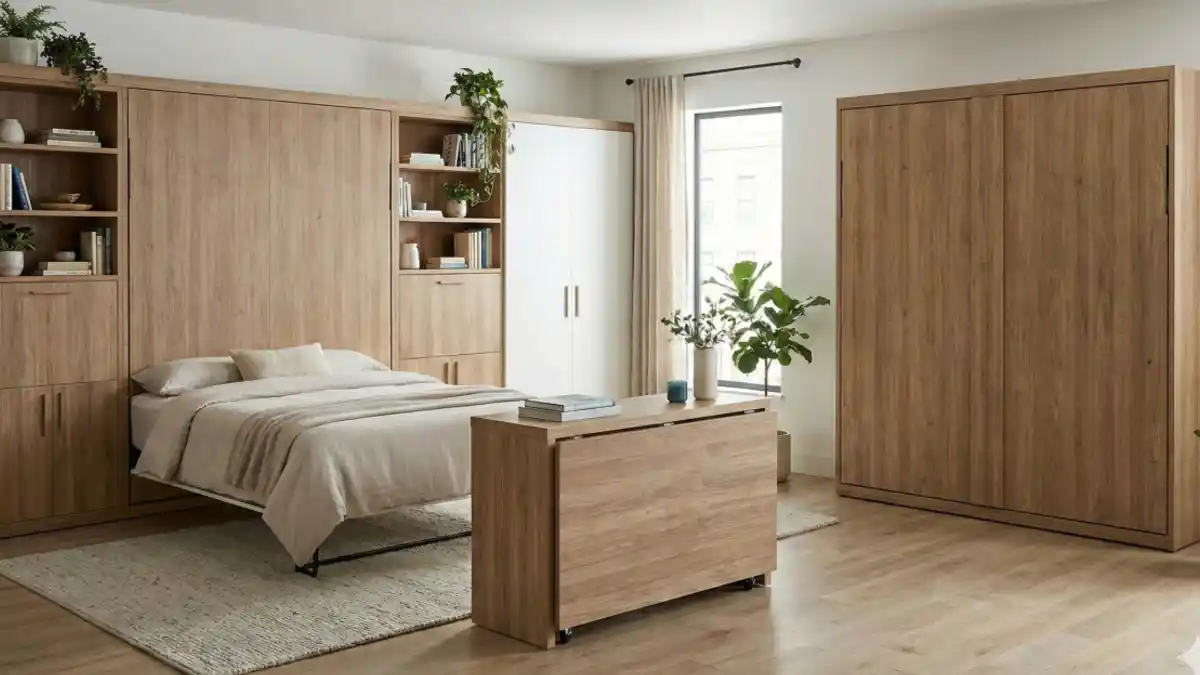
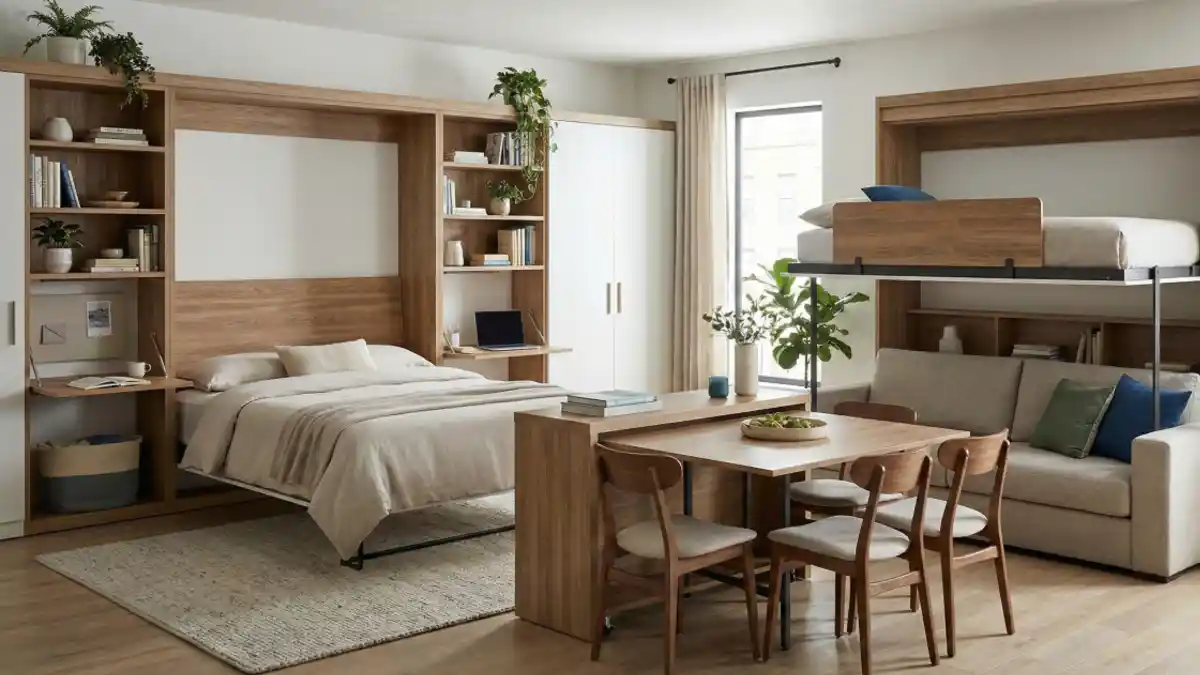
Living in a compact studio often feels like a constant game of Tetris, but clever joinery changes the rules entirely. Honey-toned wood paneling wraps around the room, creating a cohesive look that feels more like a high-end boutique hotel than a cramped apartment.
Built-in shelving units flank the fold-down sleeper, offering essential vertical storage for books and greenery while keeping the floor clear. That innocent-looking console table in the foreground likely expands into a full workspace or dining area, embodying the true spirit of dual-purpose living.
White cabinet accents break up the wood grain, adding a crisp, modern touch that bounces natural light from the window deep into the room.
Seamless Camouflage: When the bed is tucked away, the wall unit looks like a sophisticated wardrobe system rather than a sleeping quarter.
Vertical Utility: High shelving draws the eye upward, making the ceiling feel higher while providing display space for personal treasures.
Mobile Flexibility: Casters on the transformer console allow for effortless reconfiguration depending on whether you are hosting dinner or finishing a project.
2. Sleek Walnut & White Convertible Studio – A Masterclass in Dual-Purpose Living
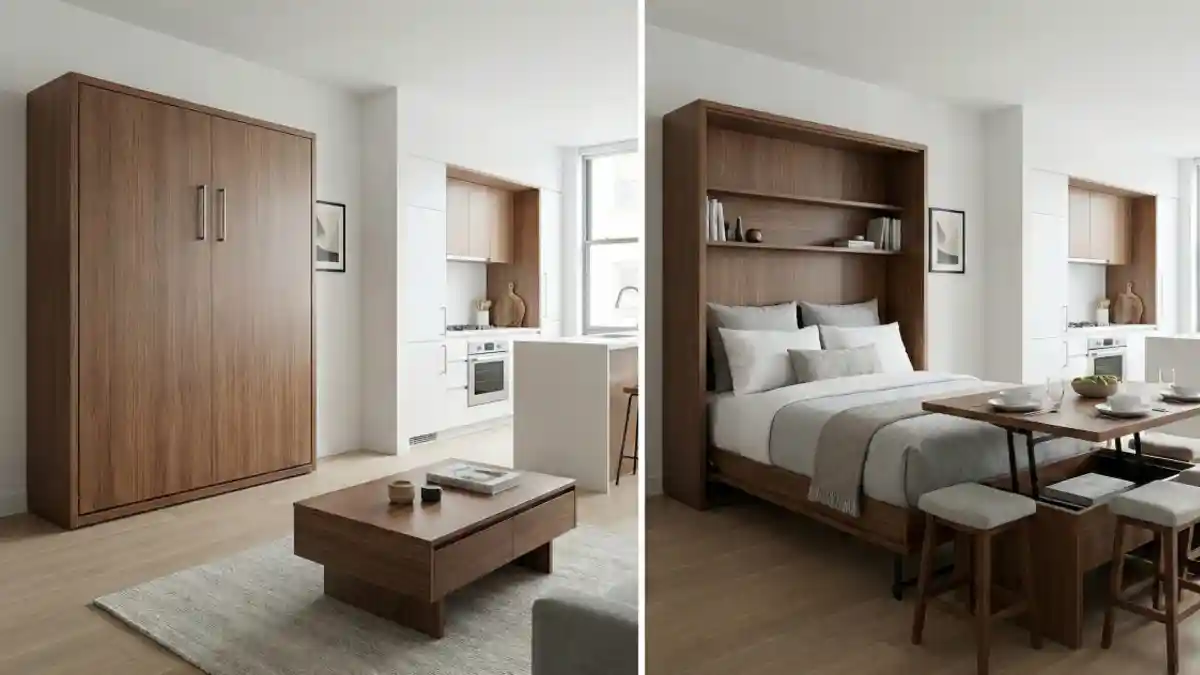
Studio living often forces a choice between a proper dining area and a comfortable lounge, but this design proves you can have both without compromise. Rich walnut textures anchor the space, providing a warm contrast against the sterile white walls and kitchenette, effectively zoning the sleeping area without building a single wall.
Transforming furniture takes center stage here as the low-profile coffee table elevates—literally—into a four-seater dining surface, meaning date night doesn’t have to happen on the sofa. Integrated shelving above the headboard offers a clever spot for nightly reads or decor, eliminating the need for bulky nightstands that would clutter the walkway.
Coffee-to-Dining Lift: A specialized mechanism raises the coffee table to standard dining height, instantly creating a hosting space where there was once just a lounge area.
Hidden Nightstand Storage: Recessed shelves inside the Murphy bed frame provide essential storage for books and alarms that completely disappears when the bed is folded up.
Visual Continuity: Matching the wood grain across the bed cabinet, table, and kitchen backsplash creates a seamless flow that tricks the eye into seeing a larger, more unified room.
3. Rich Walnut & Navy Velvet Bunk System – The Ultimate Dual-Function Home Office Hack
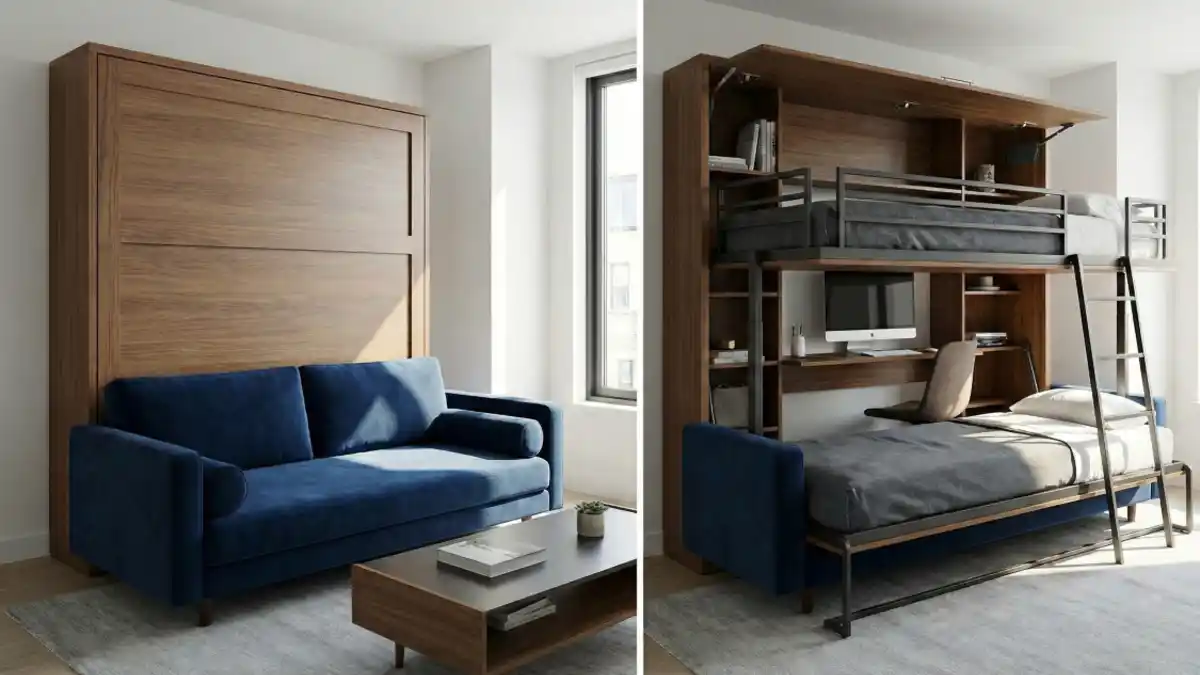
Urban living often means sacrificing a guest room or a dedicated home office, but this clever piece refuses to compromise on either style or utility. Warm walnut cabinetry provides a sophisticated, upscale backdrop for a plush navy velvet sofa in its dormant state, looking for all the world like a standard, stylish lounge area meant for coffee and conversation.
Hidden mechanisms work serious magic here, revealing not just one, but two sleeping berths and a functional workspace integrated seamlessly into the structure. It’s a brilliant solution for roommates splitting a studio or families needing extra beds without losing their primary daytime living space to permanent bedroom furniture.
Vertical Expansion: Clever engineering allows a sturdy upper bunk complete with contemporary metal safety rails and a ladder to fold down from the cabinet face, utilizing ceiling height rather than valuable floor area.
Textural Contrast: Deep blue velvet upholstery on the sofa offers a luxurious, soft textural contrast to the smooth, warm wood grain, proving that highly functional furniture doesn’t have to look utilitarian or cheap.
Instant Office: Built-in nooks inside the unit provide essential shelving and a compact desk surface perfect for a monitor and laptop, instantly creating a pop-up work zone that vanishes when work hours are over.
4. Warm Walnut Slatted Oasis – A Mid-Century Modern Transformer Living Room
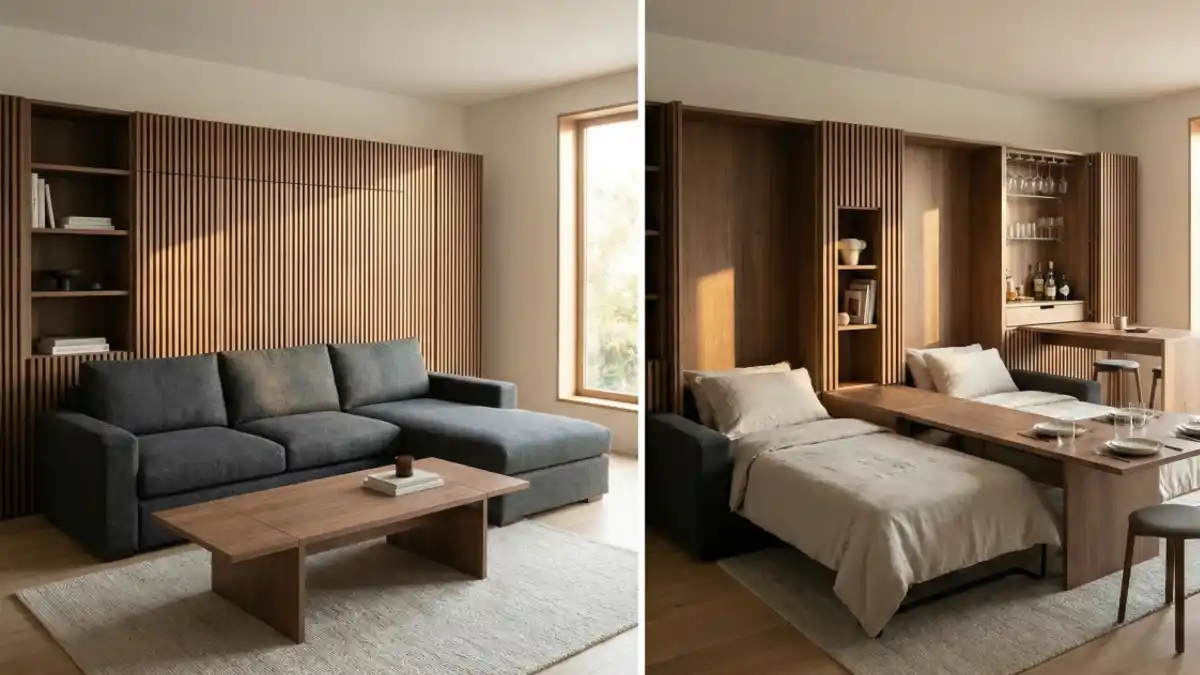
Nobody expects a stunning architectural feature to double as a bedroom entryway, but here we are. Vertical walnut slats create a sophisticated, textured backdrop that feels incredibly high-end, completely masking the mechanisms hidden behind them.
It’s Japandi style at its finest, offering a calm, minimalist vibe during the day that feels intentionally designed, not like a temporary fix for lacking space.
Camouflaged Seams: Warm walnut timber slats provide texture and rhythm across the entire back wall, making the fold-down panel joints virtually invisible.
Integrated Display: Open shelving on the far left remains functional and display-ready in both configurations, holding books and decor stead fast.
Hidden Hospitality: A fully stocked glassware cabinet and bar reveal themselves only when the wall panels open, turning the sleeping area into an entertainment zone.
5. Espresso Wood & Cozy Neutrals Convertible Lounge – The Urban Transformer Apartment
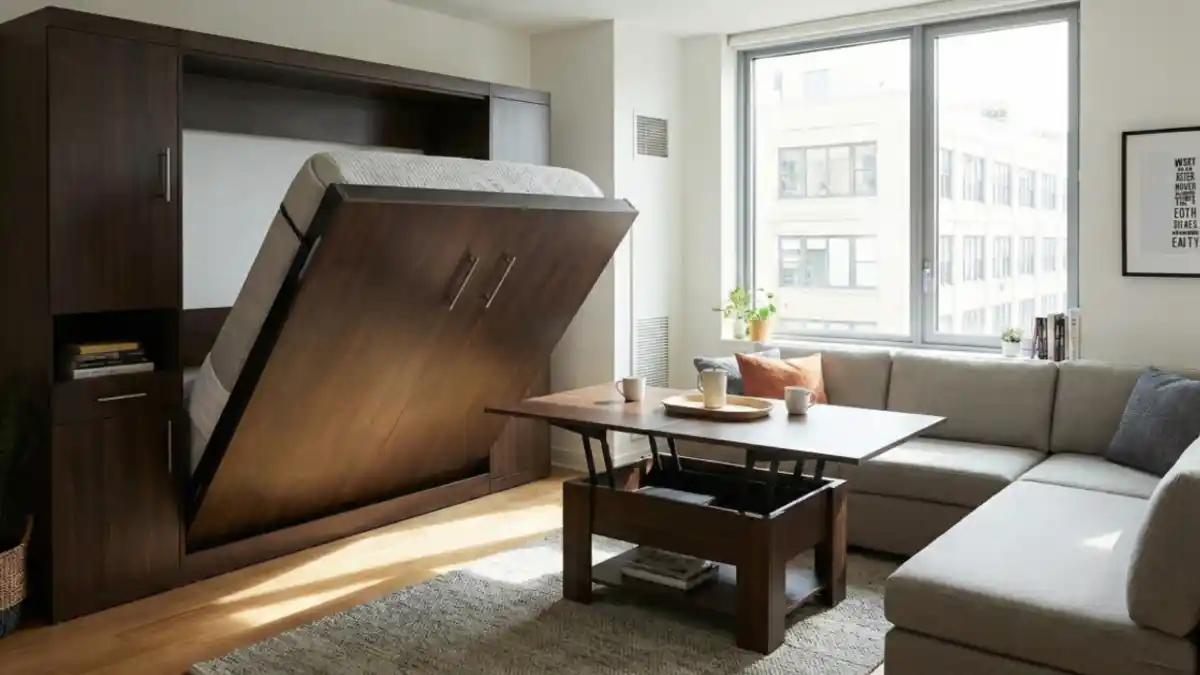
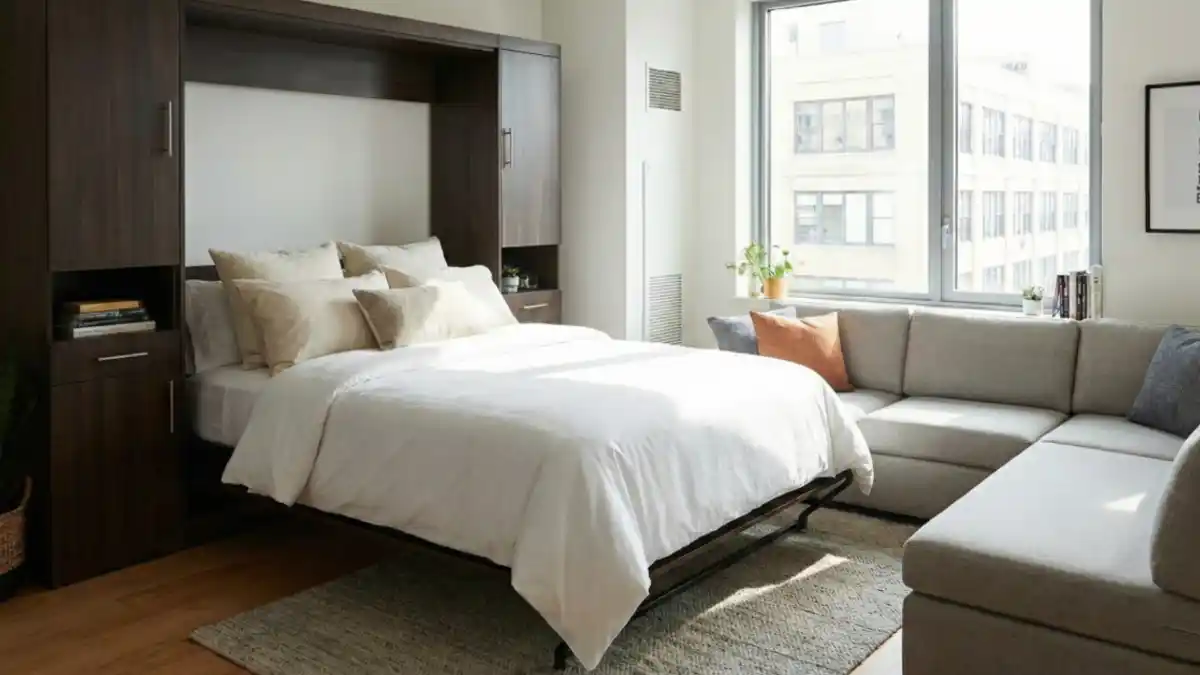
A massive wall of dark, rich cabinetry anchors the far wall, looking for all the world like a high-end wardrobe or entertainment center until you notice the mattress descending. It’s a brilliant execution of hidden function, where the substantial visual weight of the piece makes the room feel furnished and complete, rather than empty and waiting for a bed to appear.
Rich Materiality: Espresso-toned wood grain gives the unit gravitas, making it feel like permanent architecture rather than temporary, fold-away furniture.
Integrated Storage: Tall side cabinets frame the bed mechanism, offering crucial vertical space for clothes or linens that would otherwise clutter the limited floor area.
Mid-Motion Reveal: Catching the bed partially deployed shows the sturdy metal frame and thick mattress, proving that sleeping small doesn’t have to mean sacrificing support or comfort.
6. Minimalist White & Walnut Convertible Studio – The Ultimate “Sleep-to-Work” Transition Hack
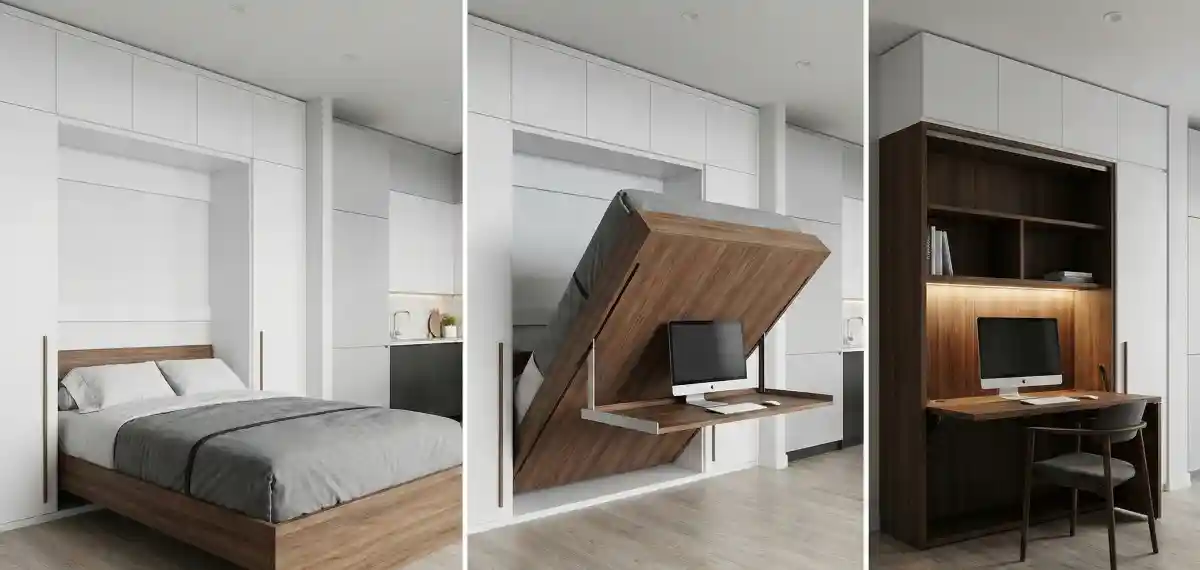
Waking up in a studio apartment usually means staring at your kitchen appliances, but this design creates a distinct, serene sleeping zone that feels permanent until it isn’t. Crisp white floor-to-ceiling millwork acts as a calm architectural backdrop, extending the kitchen cabinetry and completely masking the room’s dual function.
Warm walnut timber on the bed frame grounds the space, adding a necessary touch of organic warmth and luxury to the minimalist environment.
Seamless Integration: The bed frame tucks perfectly into the wall unit recess when down, creating smooth lines and eliminating awkward gaps.
High-Contrast Aesthetics: Deep wood tones pop against the sterile white surrounding cabinetry, making the bed the sophisticated focal point when deployed.
Vertical Storage Maximization: Above-bed cabinetry utilizes every inch of vertical space right up to the ceiling for seasonal items or bulky linens.
7. Rich Walnut Library Wall & Hidden Suite – Sophistication Meets Secret Utility
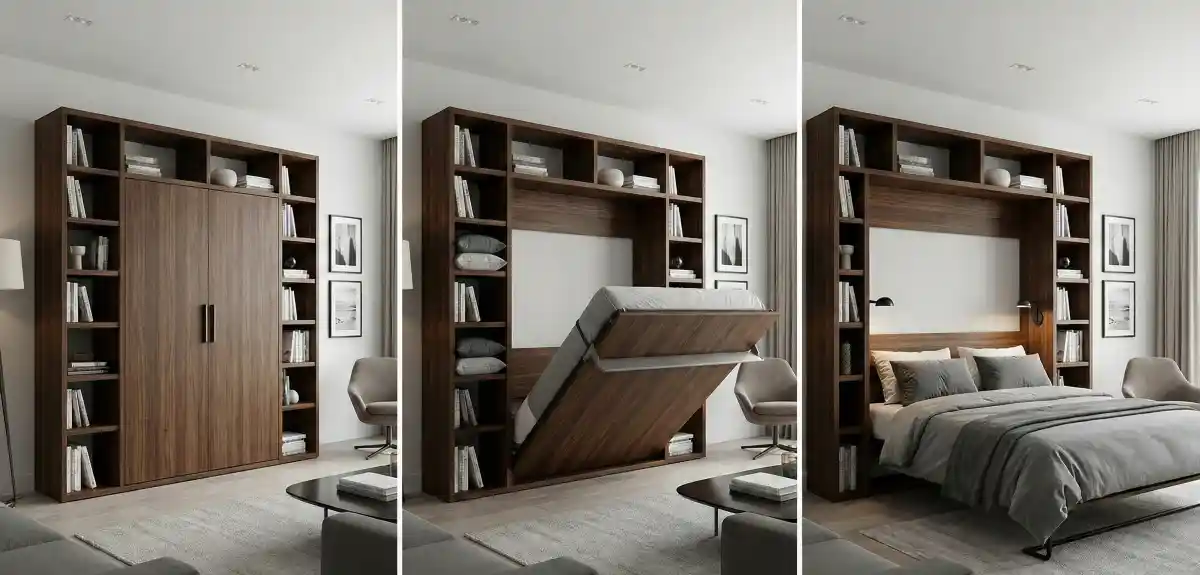
Guests walking into your living room will assume you spent a fortune on custom joinery, completely oblivious to the sleeping quarters hidden in plain sight.
Rich, dark walnut tones dominate the massive floor-to-ceiling structure, providing immense warmth and a serious, intellectual vibe to the lounge area. Open shelving flanking the central panel offers ample space to curate your favorite reads and art objects, ensuring the piece serves a primary decorative function during daylight hours.
Camouflaged Functionality: Vertical wood grain on the massive central doors perfectly matches the surrounding shelves, creating a seamless facade that betrays no hint of a mattress underneath.
Substantial Architecture: Extending right to the ceiling makes the unit feel like a permanent, built-in architectural feature rather than a piece of movable furniture.
Curated Storage: Deep shelves provide essential display space that draws the eye away from the hidden mechanism, focusing attention on your personal style instead.
8. Scandi-White Horizontal Sideboard Bed – Low-Profile Minimalist Magic
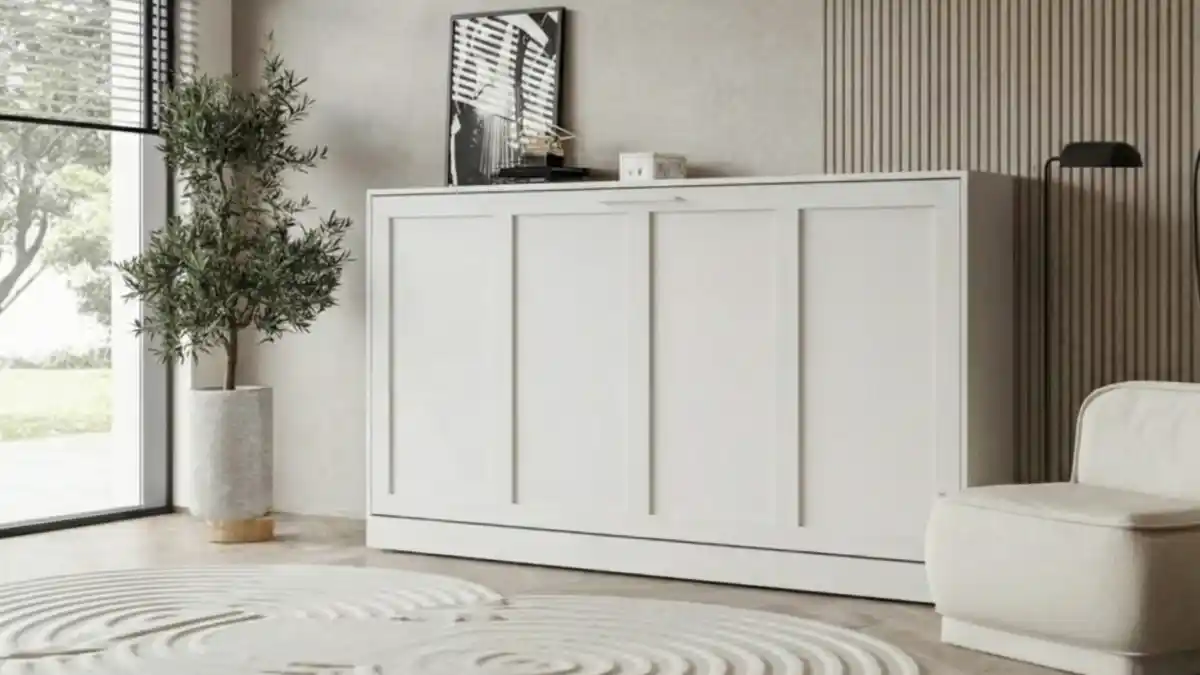
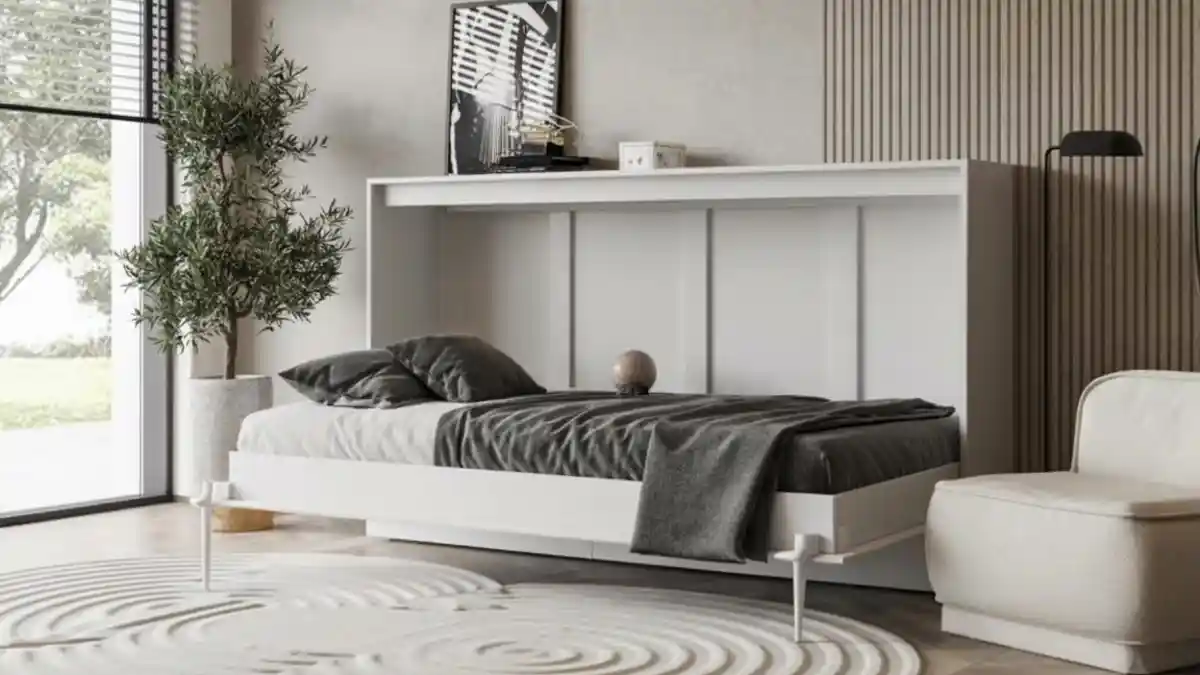
Standard vertical wall beds can sometimes feel imposing, like a monolith looming over your sofa, but this horizontal design flips the script entirely. Oriented sideways, the cabinet keeps a low profile, preserving the airy feel of the room and leaving the upper walls free for breathing room or decor.
It essentially masquerades as a chic, white sideboard during the day, blending effortlessly into the modern oak flooring and slat-wall accents without demanding attention.
Narrow Room Hero: Folding out sideways means the bed projects less into the center of the room, saving precious walkway space in tight corridors or home offices.
Stationary Display: Unlike vertical units, the top of this cabinet serves as a permanent shelf for your favorite prints or decor, so you never have to declutter just to go to bed.
Softened Edges: Textured elements like the concentric circle rug and boucle chair soften the clean, architectural lines of the bed frame, balancing modern utility with cozy comfort.
9. Pastel Teal & Peach Cottage Retreat – The Ultimate Home Office Guest Combo
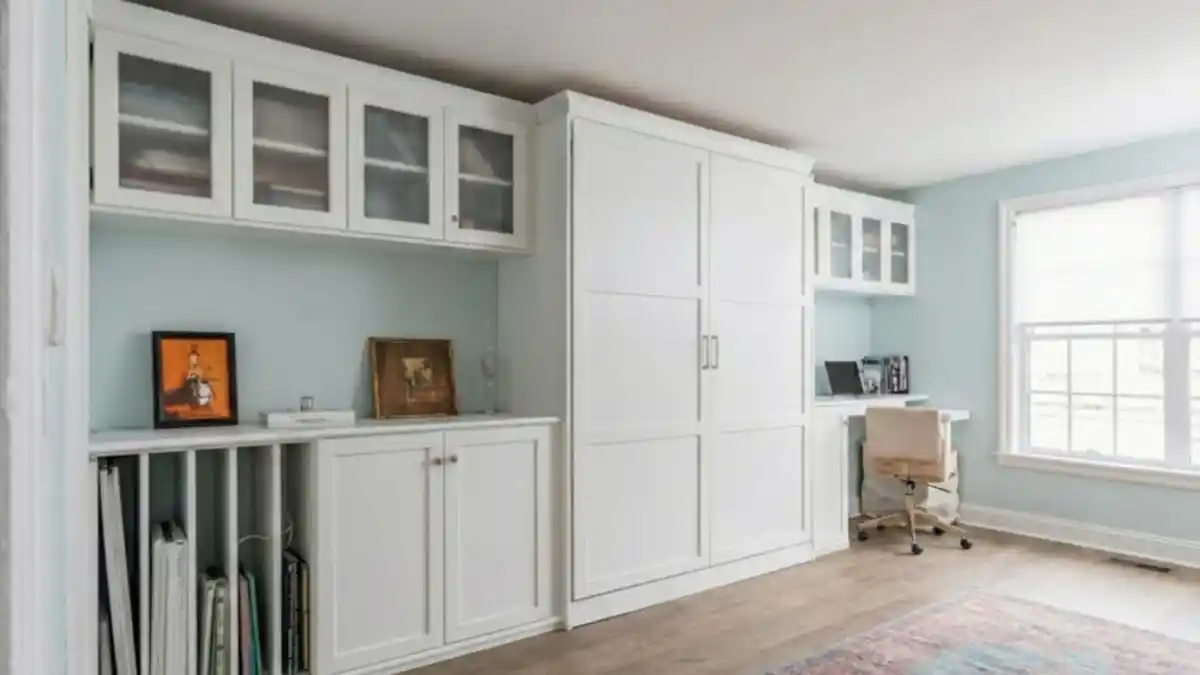
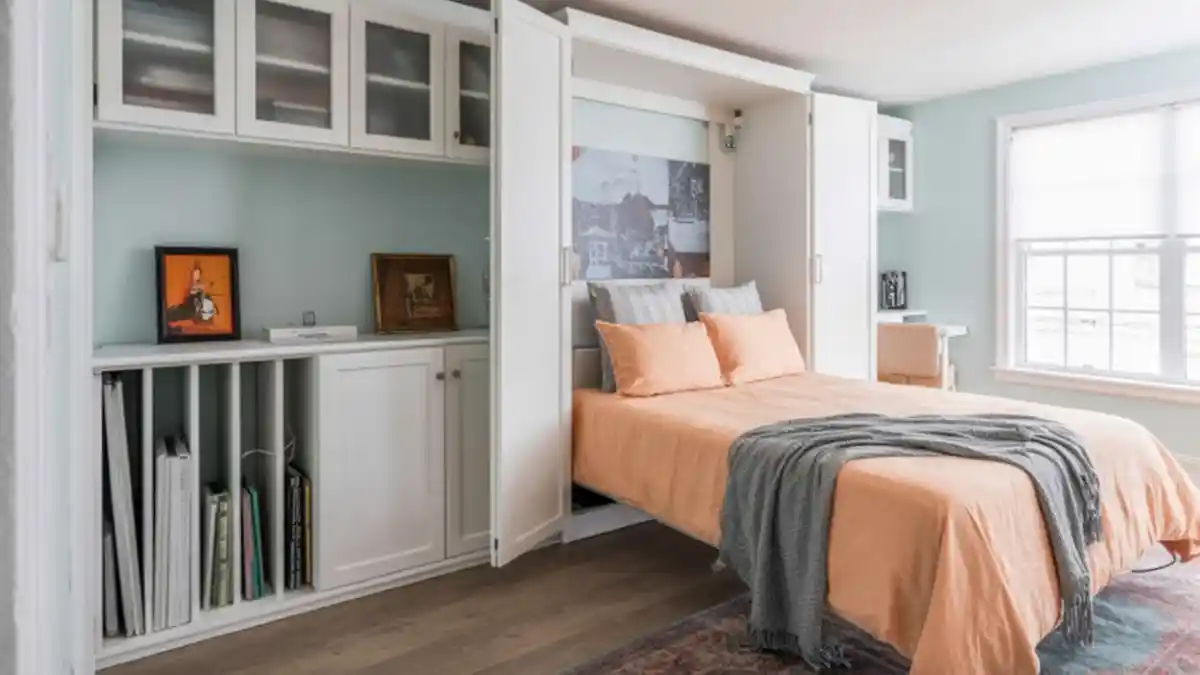
Standard spare rooms often suffer from an identity crisis, trying to be a dump zone and a guest suite simultaneously, but this renovation picks a lane and owns it. Soft teal walls and crisp white joinery create a calming, traditional backdrop that feels lived-in and cozy, rather than mechanically futuristic.
Custom cabinetry flanking the sleeping unit steals the show here, offering specialized storage that goes way beyond a simple wardrobe. Vertical slots on the lower left serve as a brilliant hack for stashing vinyl records, oversized art portfolios, or architectural plans, proving that a transformer room can actually cater to specific hobbies or careers without looking cluttered.
Curated Clutter Control: Frosted glass upper cabinets allow for storage of messy paperwork or office supplies while keeping the visual noise dampened and the room feeling tidy.
Hidden Personality: Opening the bed reveals a large-scale art print inside the cavity, adding a splash of deliberate design where you usually see a blank, boring wall.
Warm Palette: Peach bedding and soft blue walls create a cheerful, inviting contrast that feels sunny and welcoming for guests, avoiding the sterile “hotel” look often found in convertible spaces.
10. Espresso & Terracotta Executive Corner – The “9-to-5” Meets “5-to-9” Hybrid
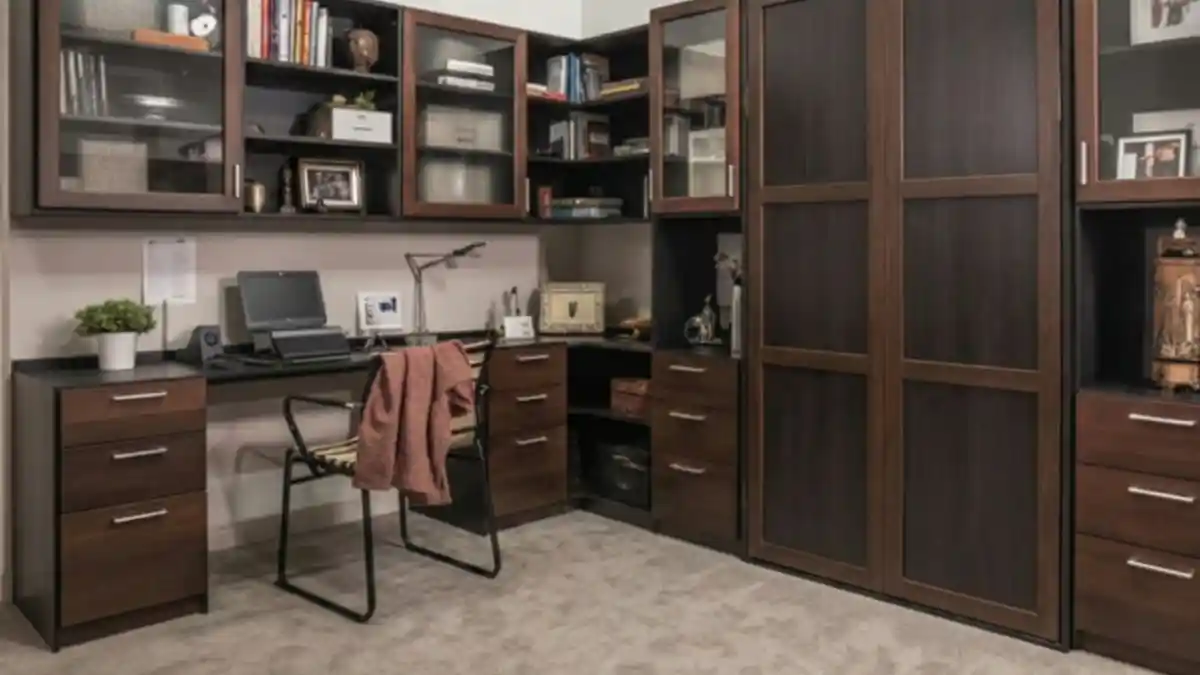
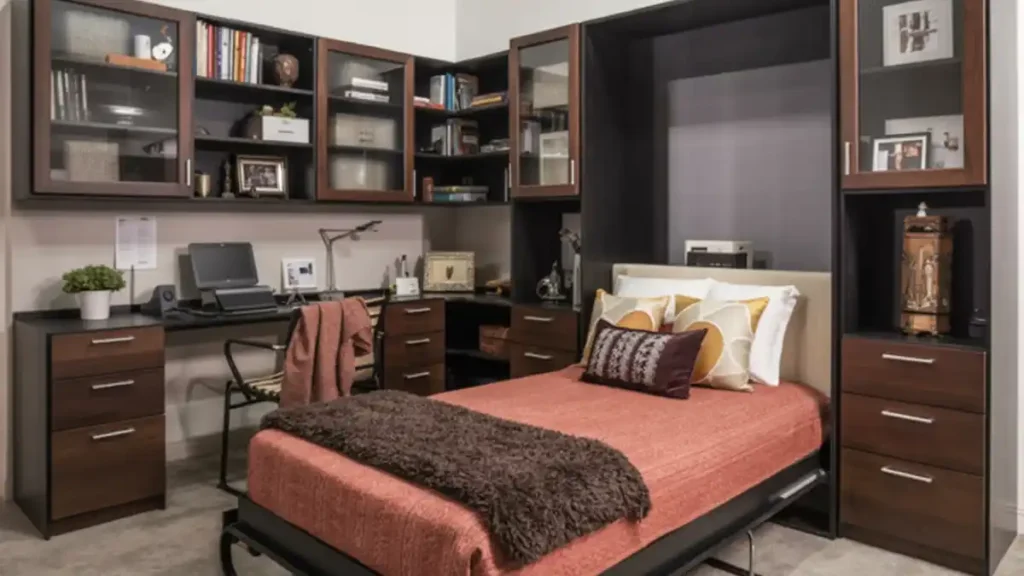
Executive decisions require a clear head and a clear desk, and this wraparound configuration delivers both by capitalizing on the room’s corner. Dark espresso finishes signal a serious workspace suitable for client video calls, distinguishing this setup from the typical makeshift “laptop on a dining table” situation.
Generous shelving and glass-fronted cabinetry ensure that while the bed is the secret weapon, storage remains the primary function, keeping the daily clutter of work life organized and out of the way.
Simultaneous Functionality: unlike many transformer designs that require clearing the desk to lower the mattress, this layout allows the workspace to remain fully active and messy even when the bed is deployed.
Corner Optimization: Wraparound joinery seizes the often-wasted corner space, creating a distinct “cockpit” for productivity that feels separate from the sleeping zone.
Visual Balance: Frosted glazing on upper cabinets prevents the dark wood from feeling too heavy or oppressive, adding a touch of lightness to the substantial unit.
11. Honey Oak & Sky Blue Integrated Suite – The Bedroom That Doubles as a Wardrobe
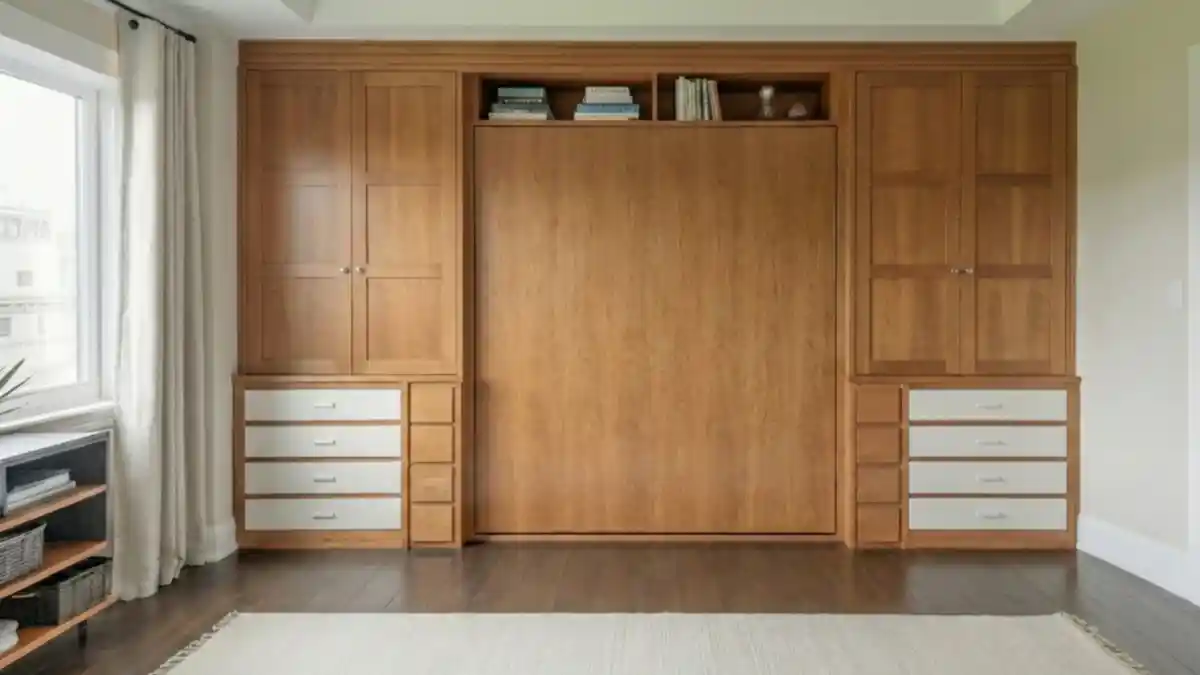
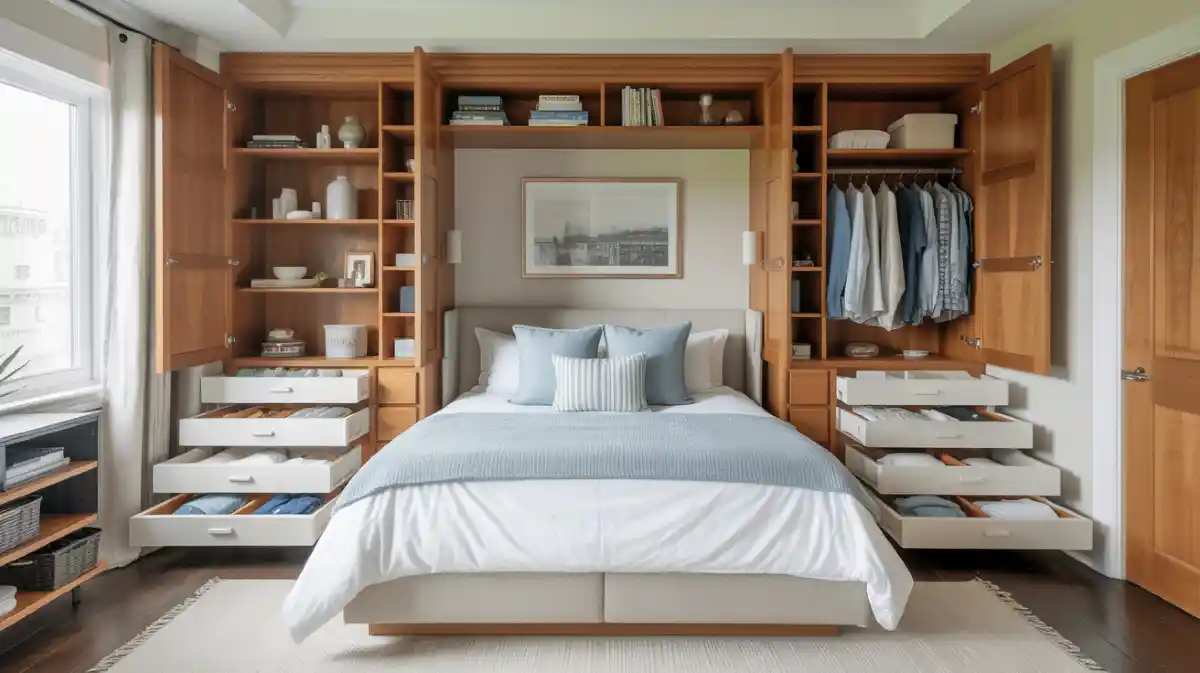
Maximizing storage in a small footprint often means sacrificing aesthetics for plastic bins, but this built-in solution offers a masterclass in elegant efficiency.
Honey-colored joinery wraps the entire wall, effectively bringing the utility of a walk-in closet right to the bedside without cluttering the visual field. It transforms the bed from a simple piece of furniture into the anchor of a complete dressing system, where every shirt and sock has a dedicated home behind those beautiful shaker-style doors.
Vertical Dressing Room: Tall cabinets flanking the headboard swing open to reveal full hanging space, replacing the need for a bulky standalone armoire.
Drawer Density: Stacks of smooth-gliding drawers built into the base provide immense volume for folded clothes, eliminating the need for a dresser on the opposite wall.
Balanced Warmth: Cool, powder-blue throw pillows and crisp white bedding cut through the richness of the wood, keeping the atmosphere airy despite the massive amount of furniture.
12. Scandi Birch & Cool Grey Dual Sleeper – The Ultimate Shared Room Hack
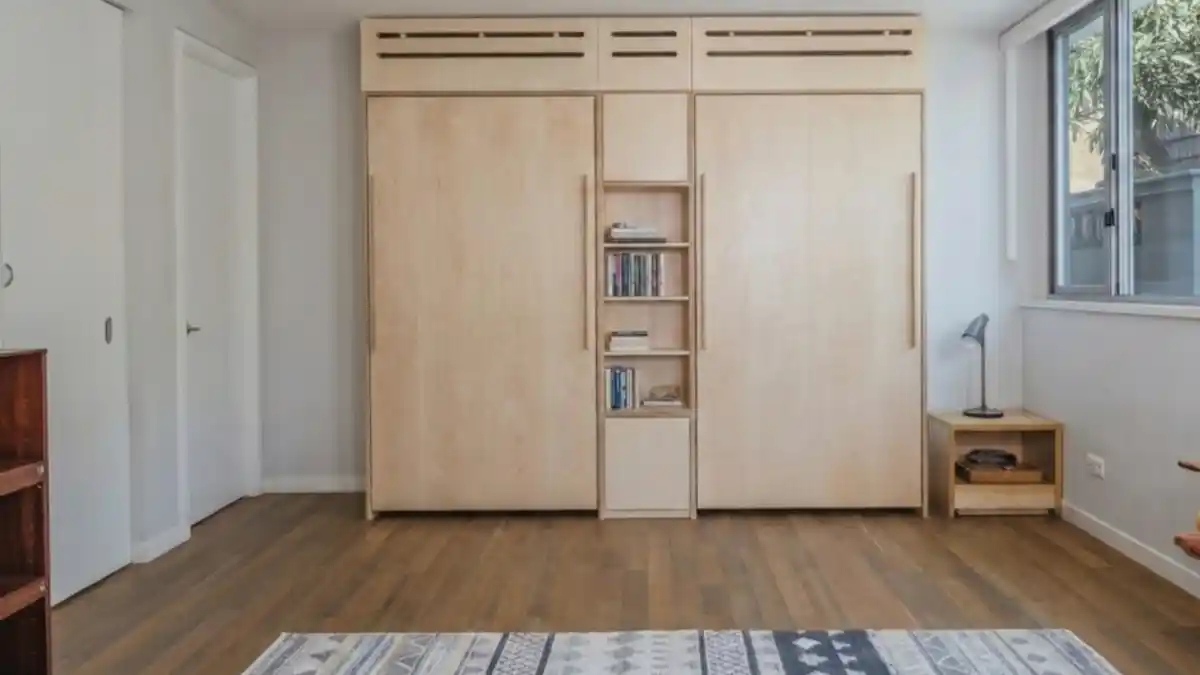
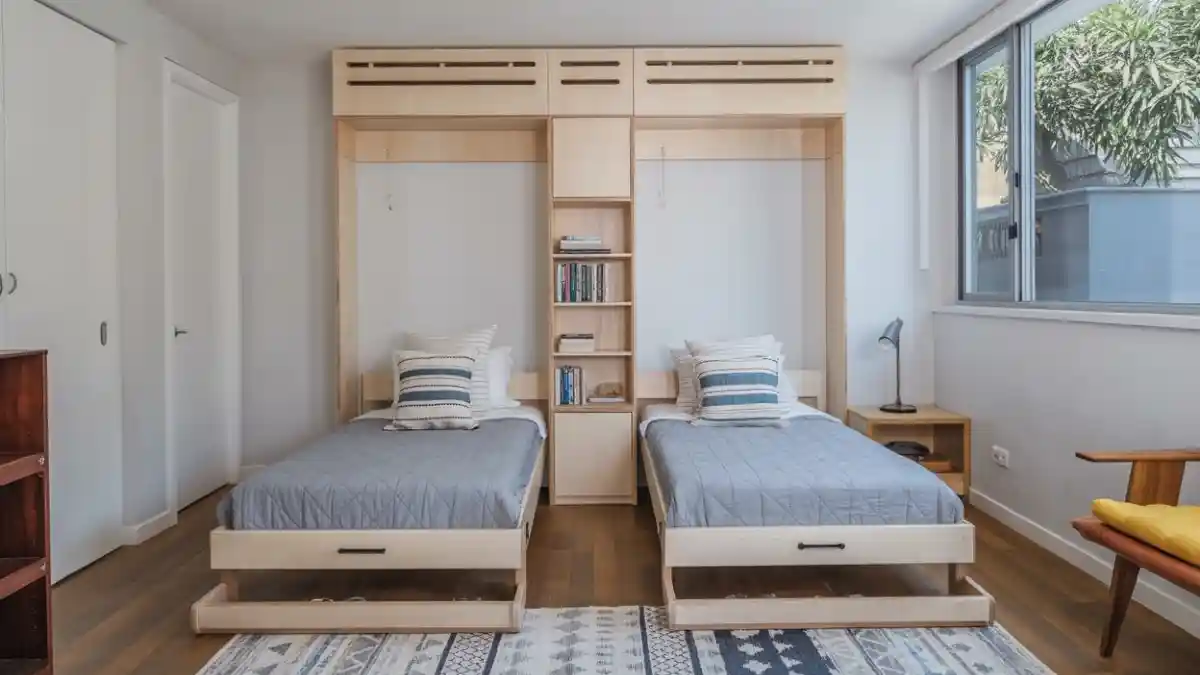
Raw birch plywood isn’t just for construction sites anymore; here, it takes center stage as a sophisticated, modern finish that feels incredibly airy. Utilizing such a light timber tone for a massive wall-to-wall structure prevents it from dominating the room, keeping the vibe bright and open even when the beds are down. It’s a smart choice for smaller spaces where dark wood might feel claustrophobic.
Visual Lightness: Pale wood grain reflects natural light from the large window, enhancing the sense of spaciousness.
Architectural Detail: Slotted accents along the top pediment add visual interest and ventilation, breaking up the expanse of plain wood.
Warm Contrast: Cool grey bedding provides a calming, soft counterpoint to the warm, structured timber frames.
13. Organic Oak & Cream Sanctuary – A Masterclass in Peaceful Zoning
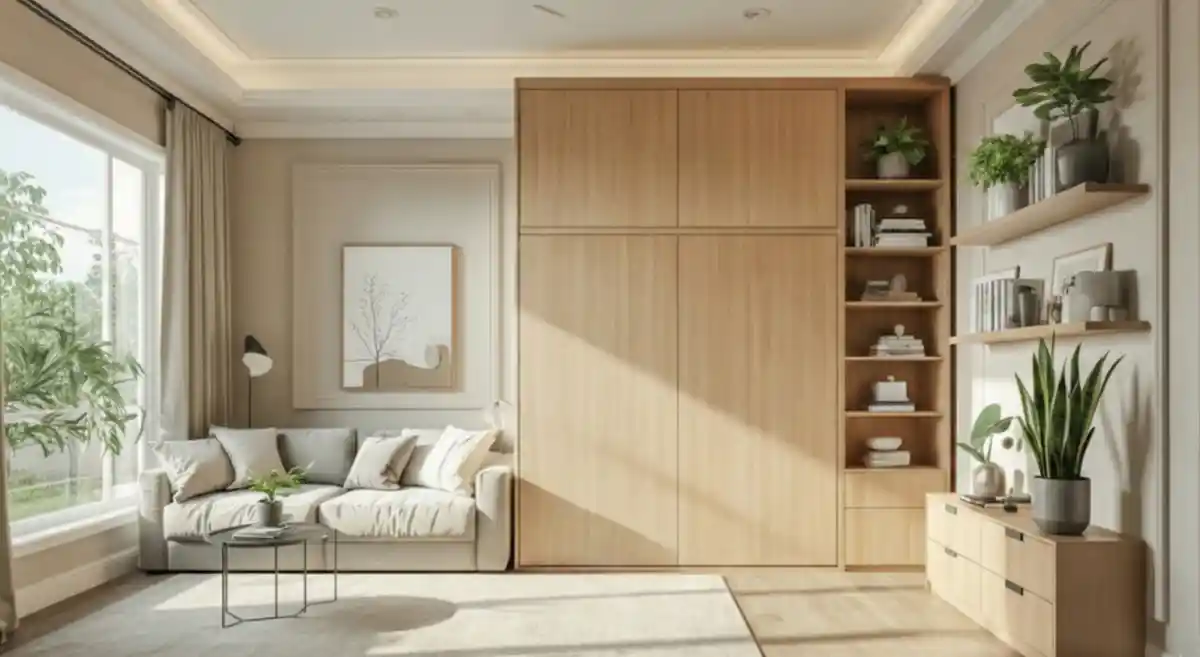
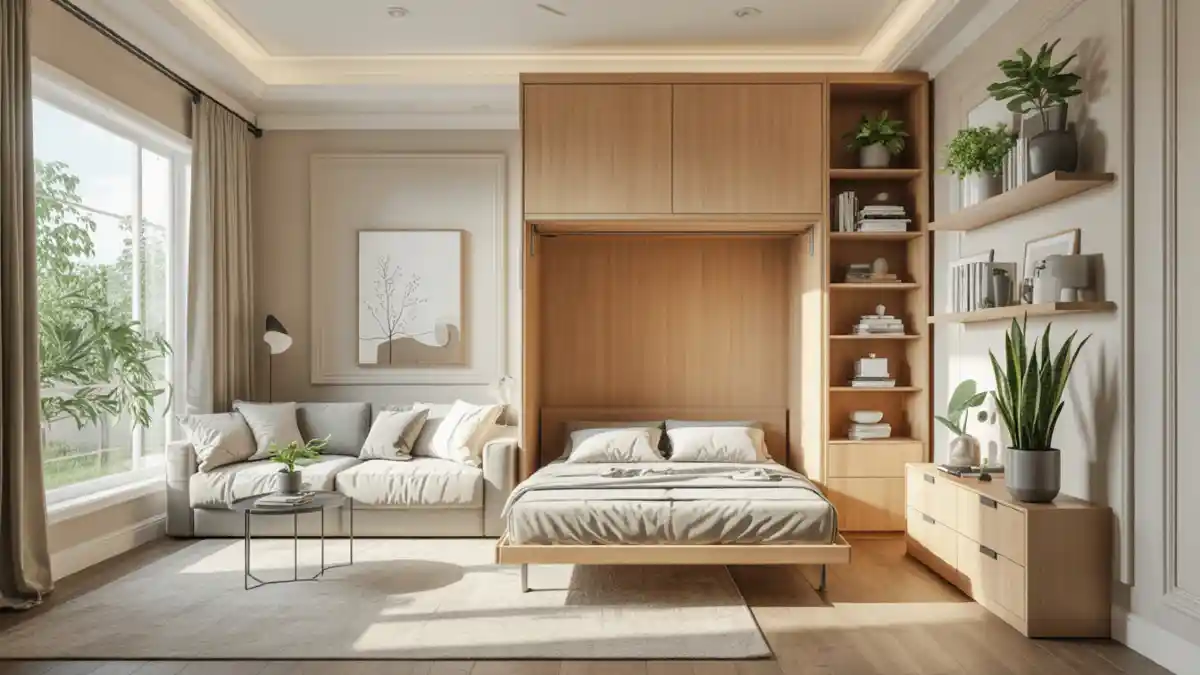
Most people fear that installing a wall bed means sacrificing style for mechanism, but this setup leans hard into organic warmth to prove otherwise. Blonde oak cabinetry melts right into the creamy wall tones and flooring, creating a soft, cohesive look that feels more like a high-end spa than a micro-apartment. Utilizing natural wood tones alongside traditional wall molding adds a layer of permanent elegance, ensuring the bed unit feels like a deliberate architectural choice rather than a space-saving afterthought.
Material Harmony: Continuous light wood grain draws the eye upward, expanding the perceived height of the room while keeping the palette grounded.
Greenery Integration: Floating shelves adorned with trailing plants soften the hard edges of the storage tower, bringing life and texture to the vertical space.
Soft Lighting: Cove lighting in the ceiling tray complements the natural light from the large window, ensuring the sleeping nook never feels dark or enclosed.
14. Warm Sunset Boho Studio – The Horizontal Murphy Bed Solution for Narrow Footprints
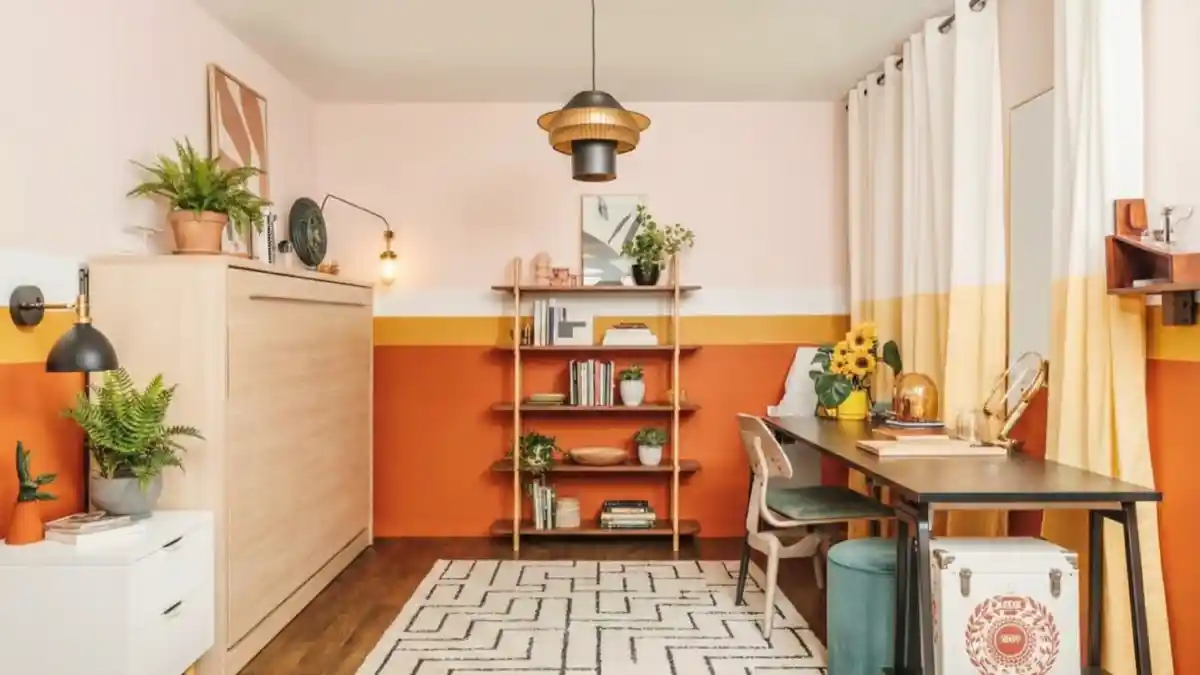
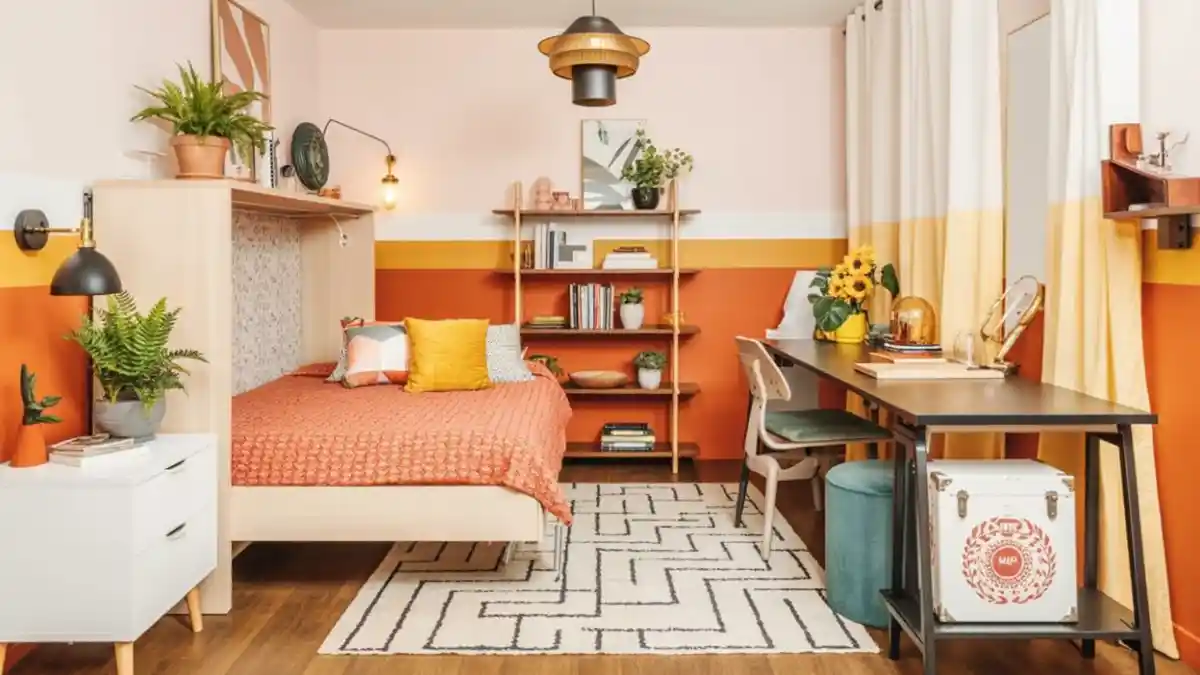
Narrow rooms often feel like awkward corridors where traditional furniture placement is nearly impossible, but this layout offers a brilliant workaround.
Utilizing a horizontal Murphy bed changes the game entirely, as it uses the length of the wall rather than projecting deep into the limited floor space. It allows for a genuinely comfortable sleeping zone without blocking the room’s flow or requiring you to hurdle over the foot of the mattress to get to the desk area.
Sideways Orientation: Folding down horizontally is crucial for rooms lacking the depth required for a standard vertical Murphy bed to deploy fully.
Flow Maintenance: The shallow footprint of the bed when down ensures a clear walkway remains between the sleeping area and the workspace opposite it.
Low Profile: Because the cabinetry is significantly shorter than vertical models, it leaves valuable wall space above for art or shelving, preventing the room from feeling boxed in.
15. Sculptural White & Charcoal Floating Suite – The Levitating Sleep Revolution
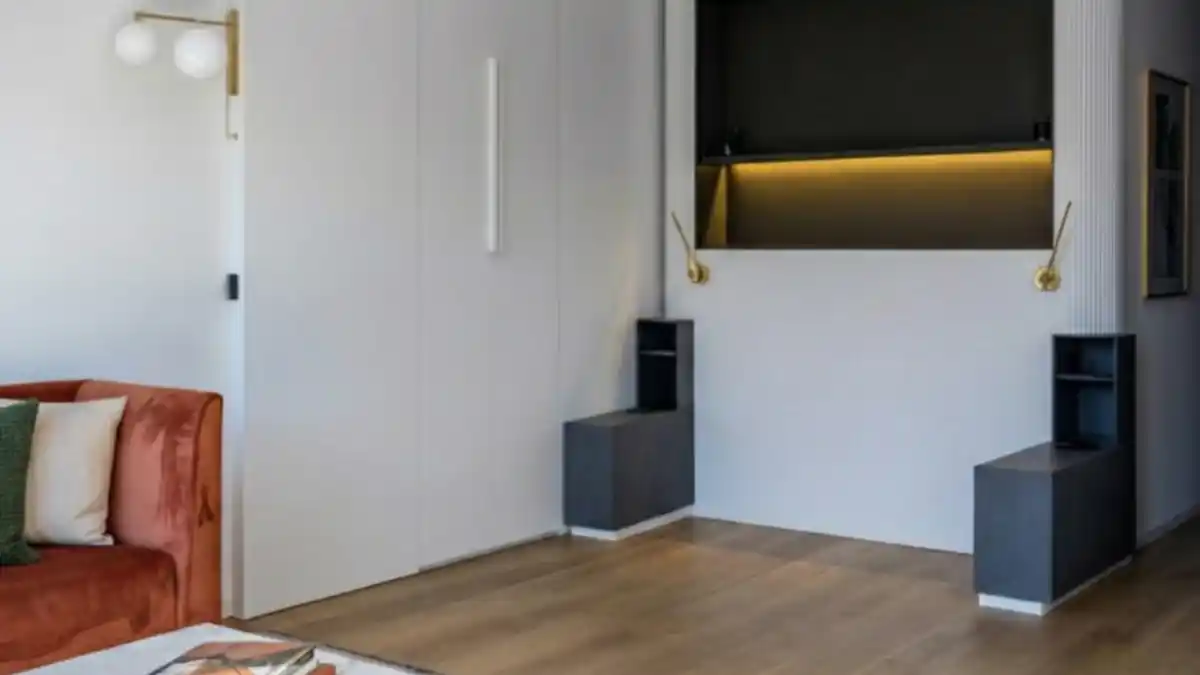
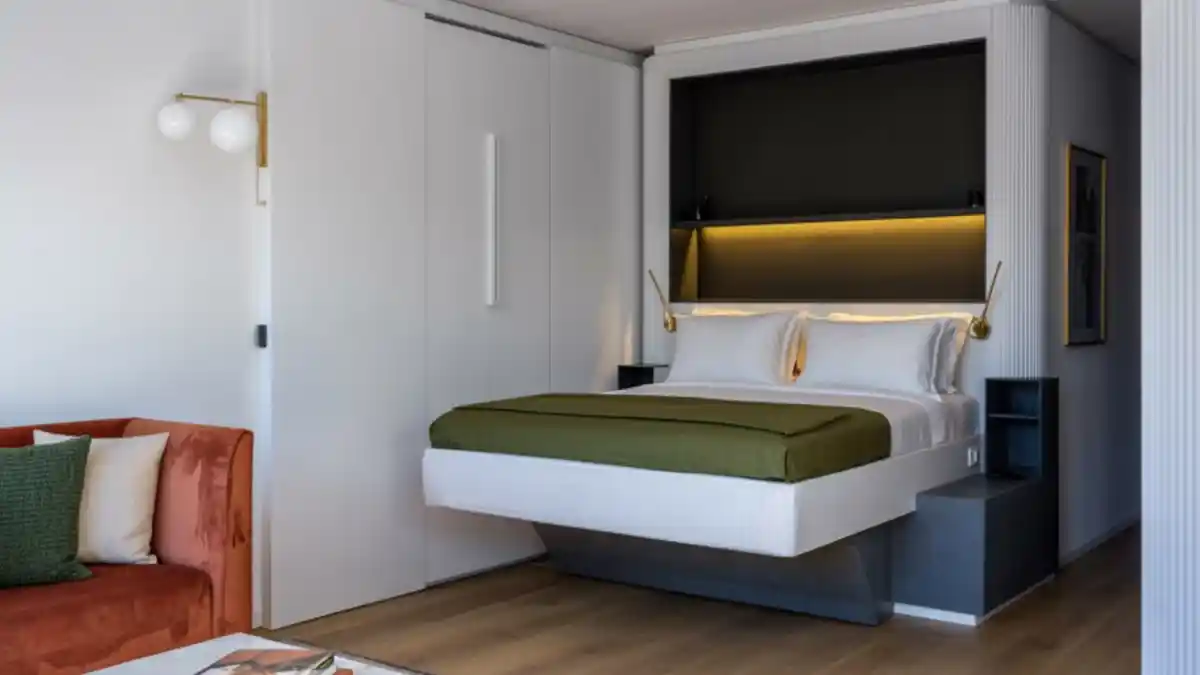
Gravity appears to be optional in this layout, where the sleeping platform rests on a recessed central plinth rather than four standard legs. Traditional fold-down beds often feel heavy and boxy, but this design uses a cantilevered effect to keep the floor underneath completely visible, tricking the brain into perceiving more open floor space than actually exists. It acts less like a piece of furniture and more like a floating architectural element that slides effortlessly out of the cabinetry.
Pedestal Support: Hiding the bed’s support structure in the center eliminates toe-stubbing bed legs and enhances the “floating” illusion.
Olive Accent: A simple olive green runner breaks up the crisp white bedding, adding an earthy, organic touch to the ultra-modern structure.
Unbroken Sightlines: Keeping the floor visible underneath the bed corners ensures the room’s footprint feels uninterrupted wall-to-wall.
16. Classic Greige & Terracotta Library Lounge – Hiding a Guest Suite in Plain Sight
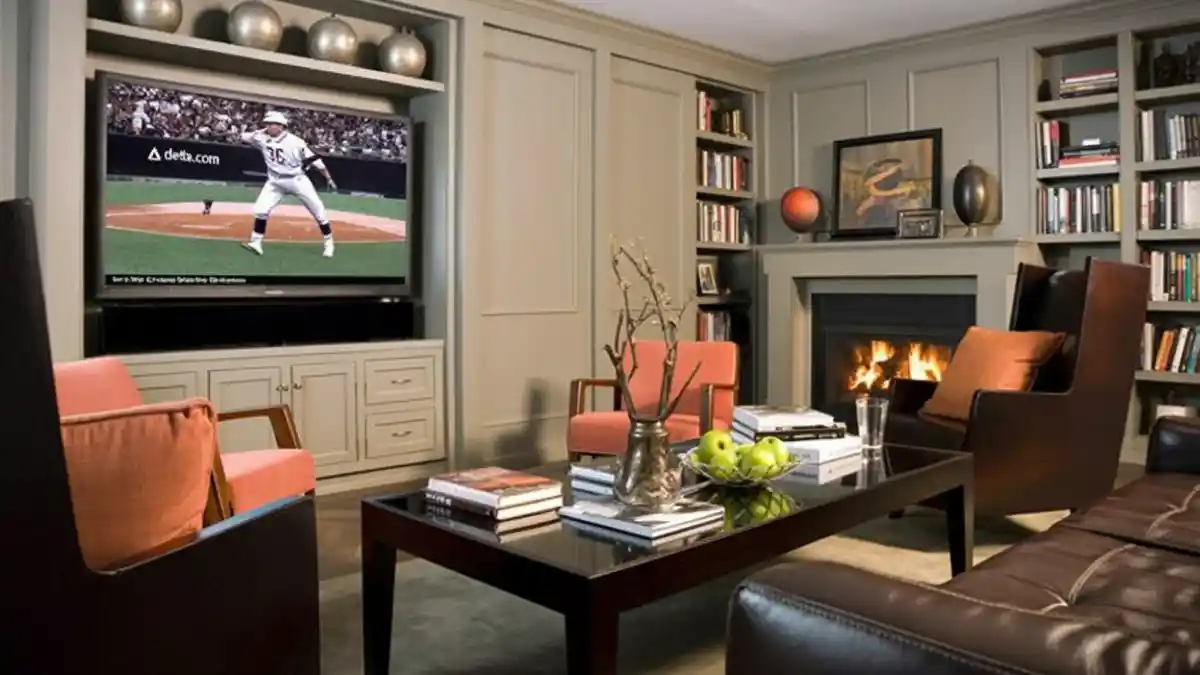
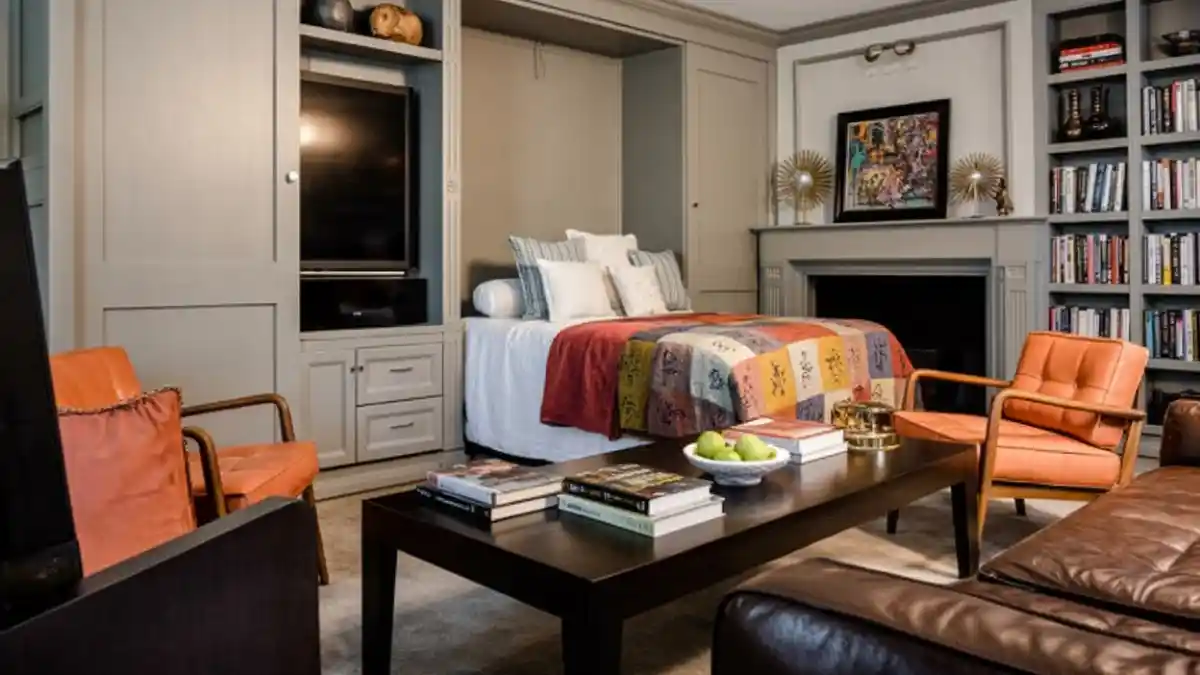
Wall-to-wall joinery does the heavy lifting here, turning a standard living room wall into a multi-functional powerhouse without sacrificing elegance. Instead of a standalone box, the bed is concealed behind shaker-style panels that perfectly match the adjacent media center and bookshelves, creating a continuous architectural flow.
It creates a space that feels undeniably like a “living room” first, avoiding the makeshift vibe that often plagues convertible spaces.
Unified Architecture: Painting the TV cabinet, bed housing, and bookshelves in the same soft greige creates a continuous visual line that effectively masks the bulk of the Murphy mechanism.
Entertainment Access: Guests enjoying the fold-down bed have front-row seats to the television, turning the living area into a private cinema suite at night.
Seamless Transition: Crown molding runs uninterrupted across the top of the unit, reinforcing the look of permanent, high-end cabinetry rather than temporary furniture.
17. Crisp White & Cherry Red Work-Sleep Hub – The Horizontal Layout for Narrow Rooms
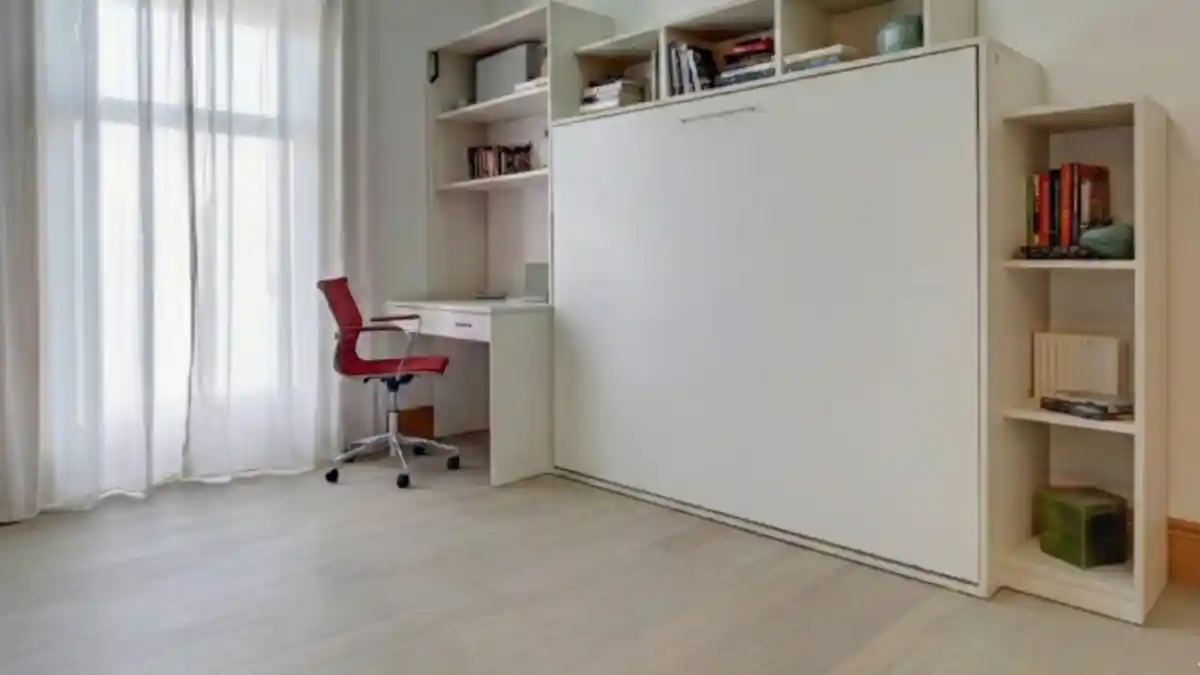
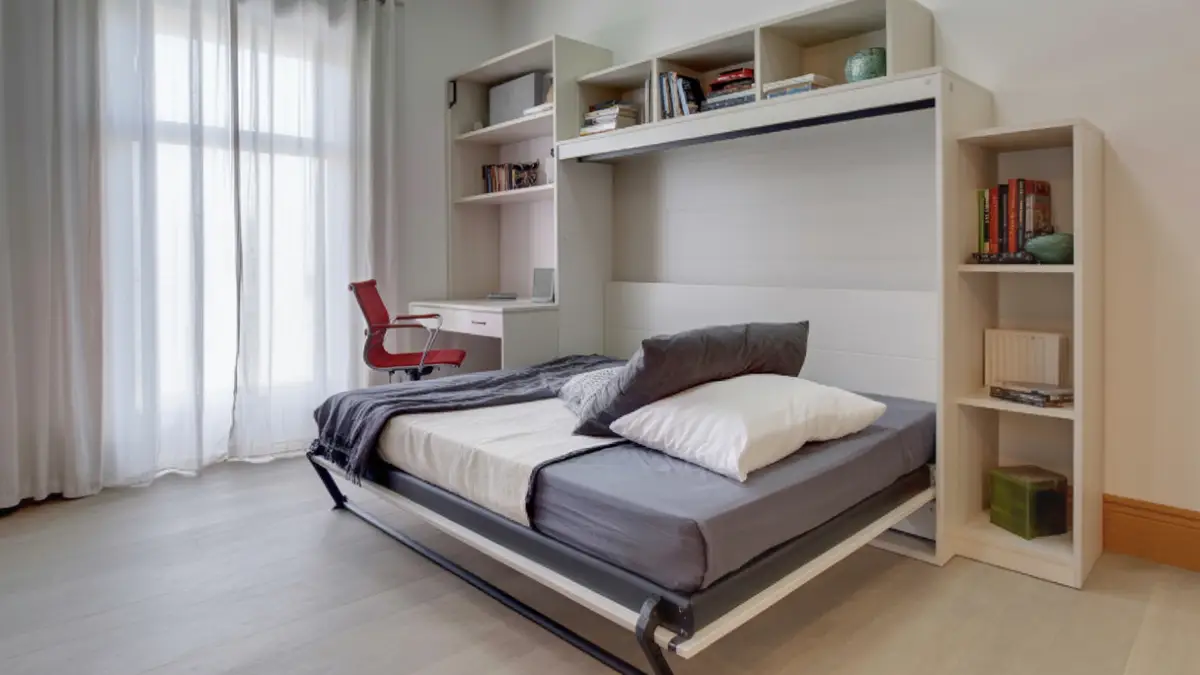
Standard vertical beds can sometimes feel like a drawbridge lowering into your living space, blocking flow and dominating the room, but this horizontal orientation offers a far less intrusive footprint. Folding out sideways keeps the center of the room open, making it an ideal choice for narrow guest rooms or home offices where floor depth is a luxury you don’t have. It feels significantly airier than its vertical counterparts, leaving plenty of wall space above for art or additional shelving.
Side-to-Side Deployment: Occupies the length of the wall rather than projecting deep into the room, preserving the walkway even when the bed is in use.
Low Center of Gravity: The lower profile feels less imposing than a towering vertical cabinet, keeping the room feeling spacious and uncrowded.
Sturdy Metal Frame: Visible dark metal framing provides robust support and a modern industrial touch without the visual bulk of a solid wooden footboard.