
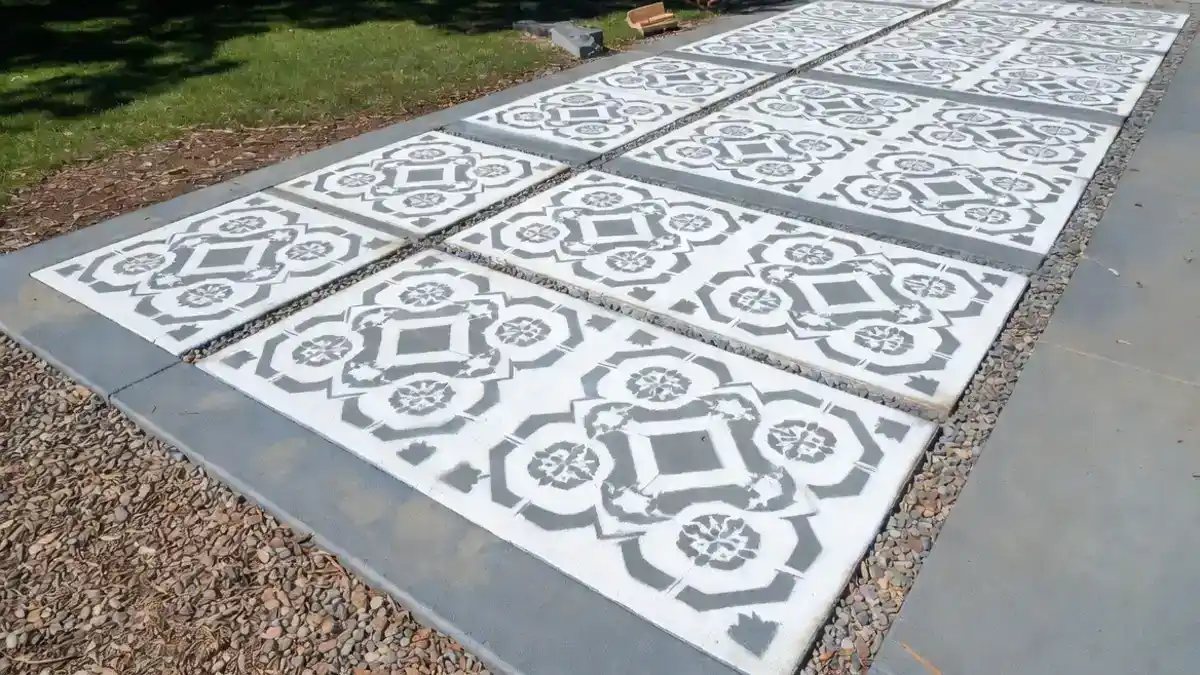
A plain concrete slab can feel a little soul-draining, especially when you keep thinking it should be the cozy outdoor spot everyone gravitates toward. I mean… I’ve stood on my own patio wondering why it felt more like a leftover construction step than a space to enjoy.
I am not sure but something shifts when a bold stencil pattern lands on that surface. Suddenly there is personality, contrast, even a hint of charm you didn’t realize you were missing. If you’ve been itching to transform your patio without a costly makeover, painted concrete might be the upgrade that finally makes it feel alive.
1. Retro-Mod Monochrome Courtyard – High-Contrast Stencil Makeover
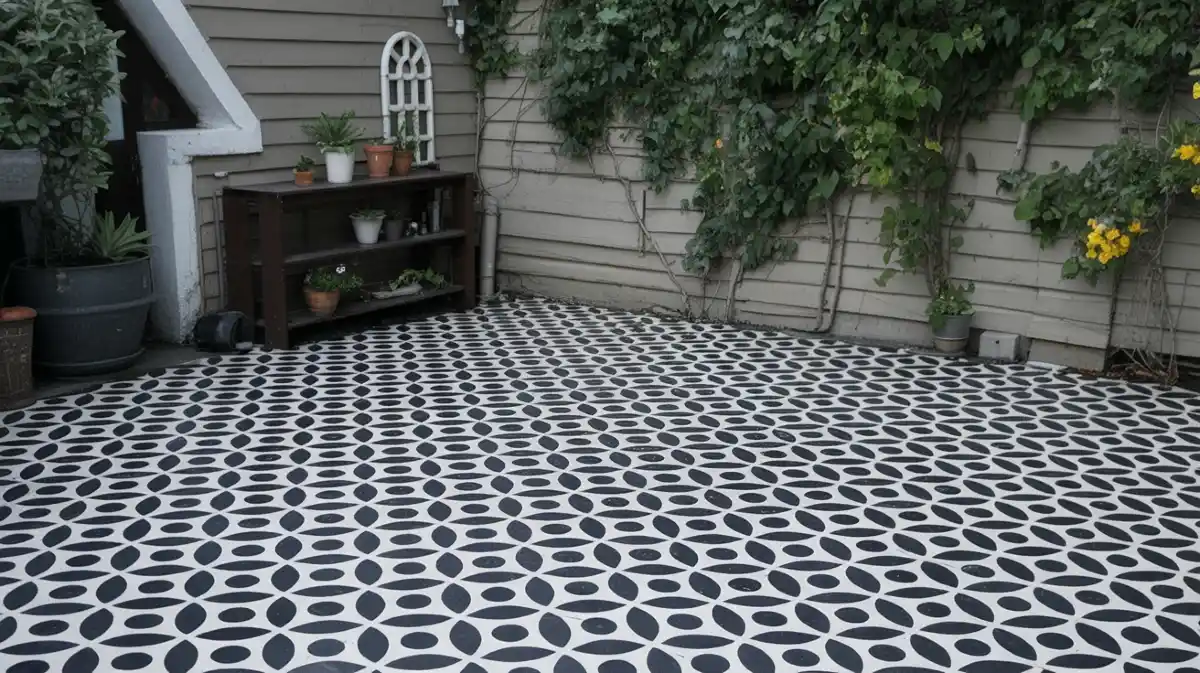
High-contrast design choices turn a standard outdoor area into a visual centerpiece. Instead of letting a plain grey foundation dictate the vibe, that mesmerizing black-and-white geometric pattern creates an immediate focal point that rivals expensive tile installations.
Layers of texture work hard here, where the crisp, painted lines on the floor balance beautifully against the wild, organic climbing vines and the rustic wooden shelving unit in the corner. Updating a space often comes down to tricking the eye, and this seamless motif expands the perceived square footage while hiding any imperfections in the original cement.
Palette Power: Sharp black paint over a white base coat offers maximum impact and creates a clean, modern foundation.
Pattern Play: Mid-century modern inspired circles and petals provide a rhythmic, flowing look that distracts from the home’s standard siding.
Organic Balance: Lush greenery and climbing ivy soften the strict geometry of the floor, preventing the space from feeling too sterile.
2. Mediterranean Cobalt Courtyard – A Faux-Tile Escape for Urban Patios
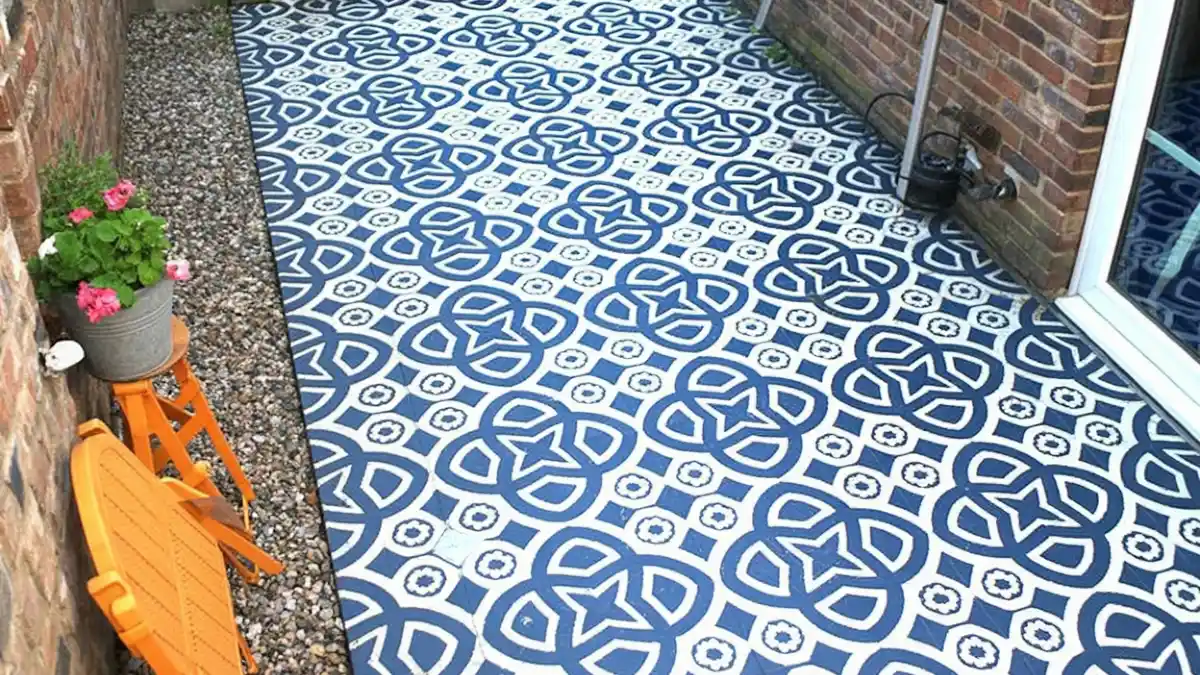
Bold choices often yield the biggest rewards in compact outdoor footprints. Transforming a cramped side yard requires a clever distraction, and that stunning blue-and-white floor provides exactly that by drawing the eye downward. High-impact colors like deep cobalt make the limited square footage feel intentional rather than accidental, effectively turning a forgotten alley into a destination.
Instead of ripping out old pavement, a simple overlay of paint mimics the luxury of hand-poured encaustic cement tiles without the heavy construction. Warm brick walls and a punchy orange folding chair create a vibrant, eclectic contrast that feels sunny and welcoming.
Faux-Tile Effect: Crisp white lines against the blue base trick the brain into seeing individual tiles rather than a solid slab, adding sophisticated architectural interest.
Color Theory: Complementary colors shine here; the cool blue floor makes the warm orange furniture and red brick pop intensely.
Texture Management: Gravel borders add a necessary drainage element while visually framing the painted “rug” to keep the edges neat.
3. Monochrome Starburst Faux Rug – Stenciling a Permanent Outdoor Feature
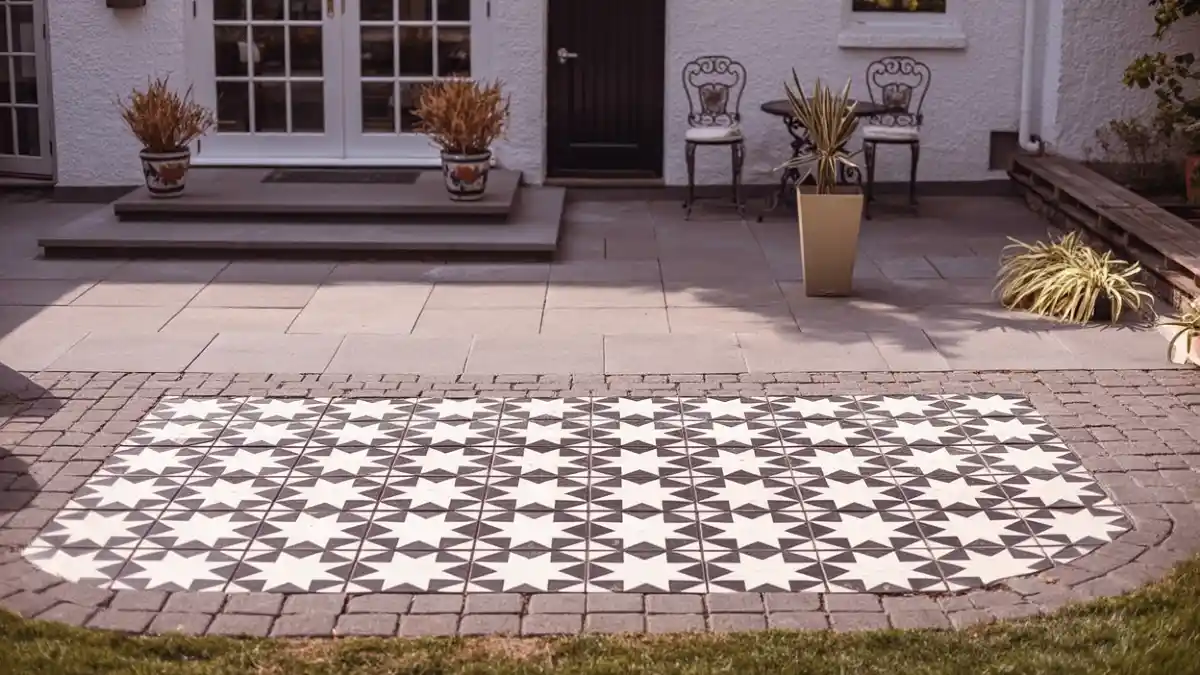
Transforming a disjointed backyard into a cohesive retreat often starts from the ground up, specifically by redefining how we view standard paving. Stenciling a bold, geometric “rug” directly onto existing pavers provides an immediate focal point that anchors the space without the need for actual textiles.
Crisp lines of the starburst pattern mirror the structured elegance of the white exterior and French doors, creating a seamless flow from indoors to out. Instead of dealing with soggy outdoor carpets that trap moisture, this paint-based solution offers the sophisticated look of a high-end woven mat with zero maintenance.
Geometric Precision: Sharp, repeating star and diamond shapes create a visual rhythm that distracts from uneven texture in the underlying stone.
High-Contrast Palette: utilizing a strict black-and-white color scheme ensures the design pops against the muted grey of the surrounding patio slabs.
Defined Zoning: Painting a specific rectangular section creates a designated “room” for entertainment, distinct from the walkway and garden beds.
Architectural Harmony: The design complements the classic lines of the home’s windows and dark accent door rather than competing with them.
4. Earthy Mediterranean Motif Patio – Stenciling Warmth onto Plain Concrete
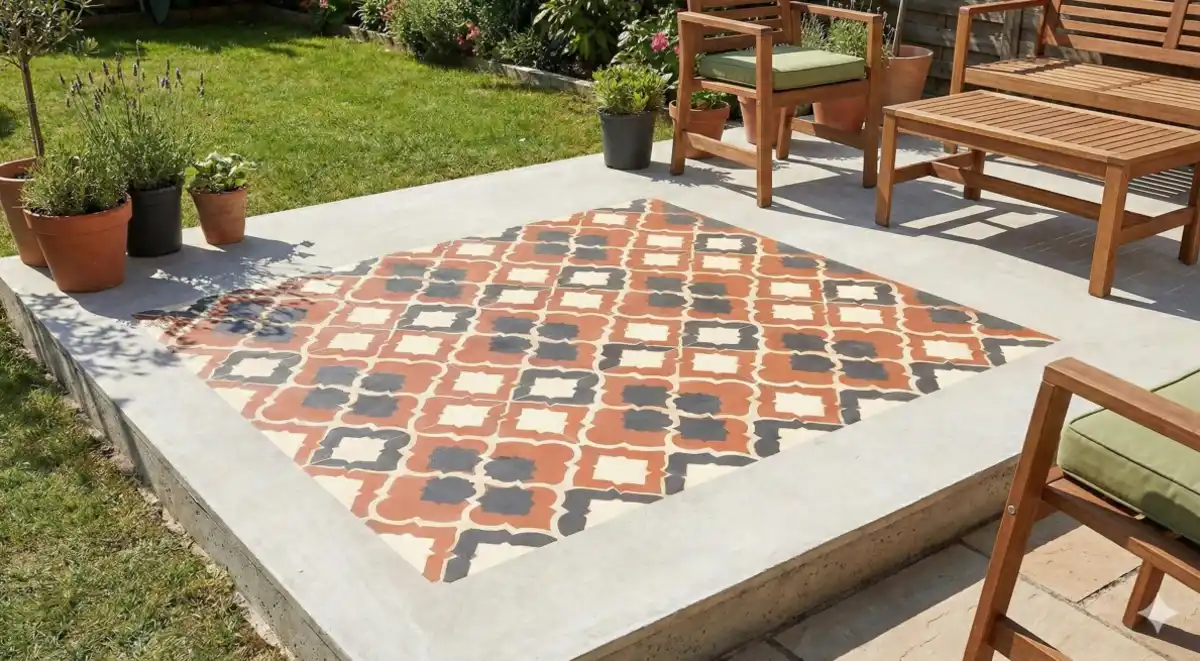
Concrete can feel stark against soft grass, yet a splash of stencil work bridges that gap beautifully by injecting personality into the hardscape. Infusing the slab with a Mediterranean vibe turns a basic foundation into a stylish focal point without requiring any demolition.
Bold rust and deep charcoal hues play off the natural wood furniture and clay pots, making the entire setup feel intentional and curated rather than just a place to sit. Creating this visual anchor effectively zones the area, suggesting a defined outdoor living room that invites conversation.
Warm Color Harmony: Terracotta orange and soft cream tones mimic natural clay, effectively warming up the cool, industrial grey base of the slab.
Faux-Tile Illusion: Interlocking geometric shapes and quatrefoil-style patterns fool the eye into seeing expensive, hand-laid tiles instead of paint.
Cohesive Styling: Pulling colors from surrounding elements, like the clay planters and wooden bench frames, ties the “rug” directly to the rest of the garden decor.
Weather-Proof Decor: Opting for a painted surface eliminates the hassle of dragging soggy fabric rugs inside during rainstorms while maintaining that cozy textile look.
5. Sun-Washed Terracotta Grid – Geometric Stencils for a Boho Vibe
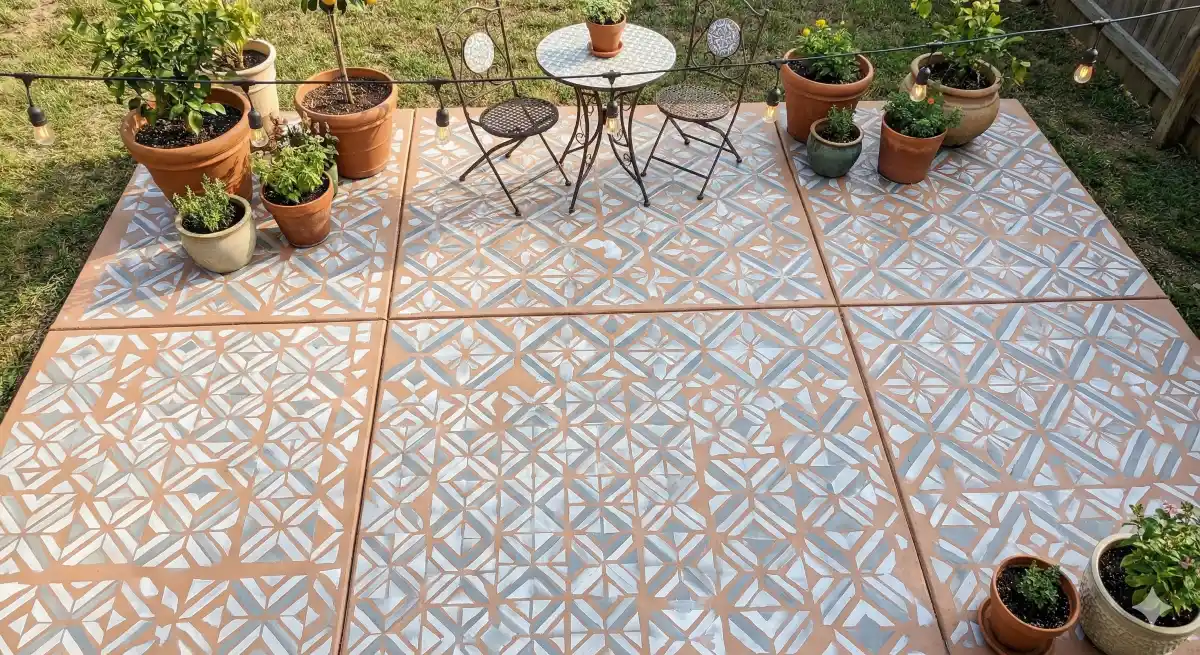
Infusing a backyard with the warmth of a Spanish courtyard starts by ditching the standard grey for a sun-baked terracotta base color. White geometric stencils applied over the clay-colored pavers create a bright, inviting contrast that mimics expensive encaustic tiles found in warmer climates.
Sticking to a consistent pattern across the individual slabs unifies the space, making the small patio feel expansive and cohesive rather than segmented. Adding string lights and potted citrus trees enhances the sensation of sitting in a private, walled garden rather than a typical suburban lawn.
Warm Base Coat: Painting the concrete a rich clay or rust color first immediately eliminates the “industrial” feel of raw cement.
Bright Contrast: Using a crisp white for the stencil design ensures the pattern stands out clearly against the darker, warm background.
Seamless Integration: Continuing the pattern across the grid lines helps disguise the separate pavers, creating the illusion of a single, continuous tiled floor.
Small Space Zoning: The busy pattern draws the eye inward, creating an intimate “room” perfect for a small bistro set.
6. Mediterranean Mosaic Magic – Stenciled Concrete Pavers for a Vibrant Outdoor Escape
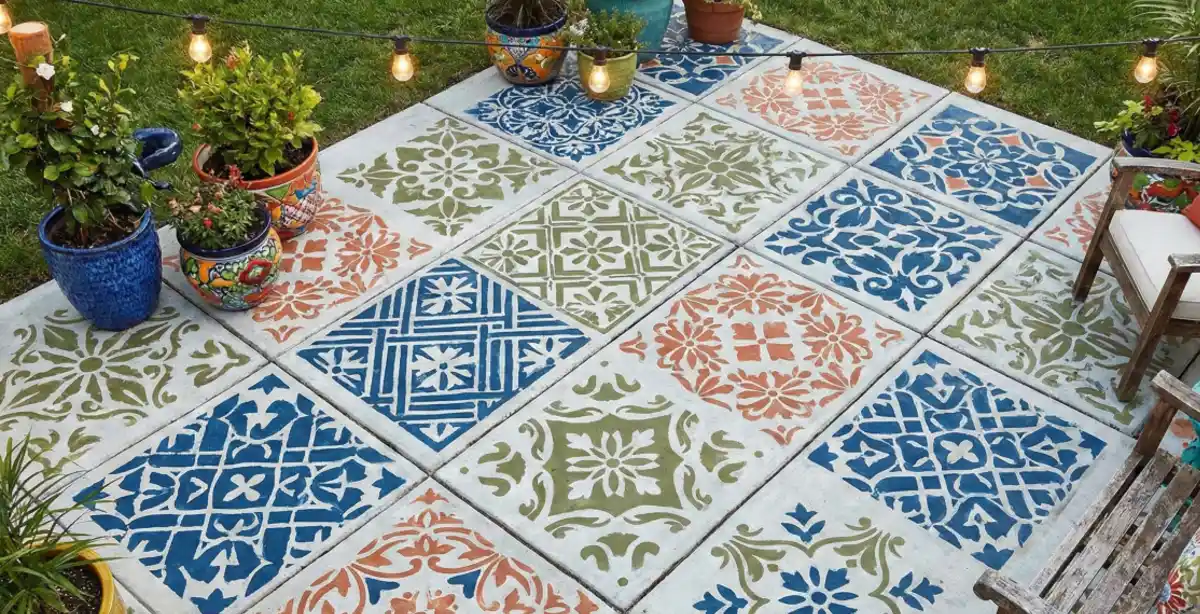
Boring gray slabs get a total personality transplant with this lively mix-and-match approach to outdoor flooring. Large concrete pavers serve as individual canvases here, alternating between cool indigo, earthy terracotta, and calming sage green to mimic the look of high-end encaustic cement tiles.
What makes this arrangement work so well is the variety of patterns—some squares feature rigid geometric lattice work while others show off organic floral medallions—unified by a cohesive color palette. Hanging bistro lights and mismatched glazed planters reinforce the eclectic, traveled-soul vibe, turning a flat backyard corner into a dedicated destination.
Color Palette: A balanced trio of Rust Orange, Indigo Blue, and Sage Green against a clean white base.
Pattern Play: Alternating motifs including geometric trellis lines and blooming floral medallions.
Styling Elements: Warm bistro string lights and colorful ceramic pots (cobalt and yellow) frame the seating area.
7. Rustic Terracotta and Slate Faux-Tile Patio – A Mediterranean Escape for Plain Slabs
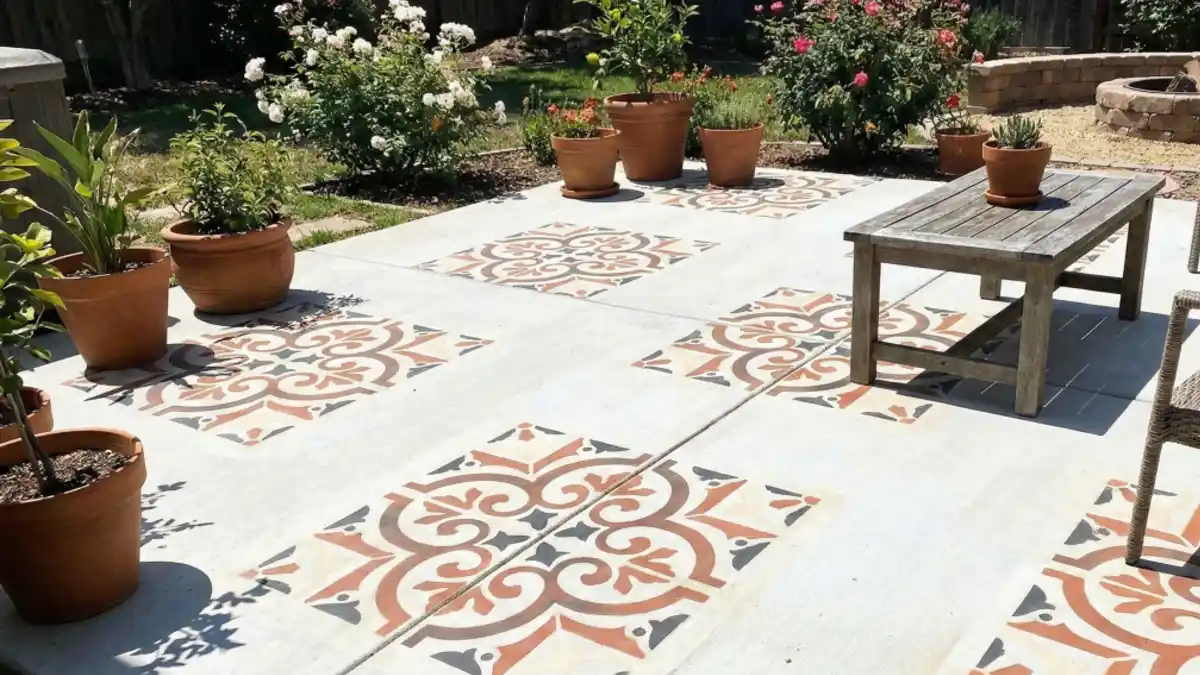
Breathing new life into a monochromatic backyard often starts right underfoot. Large-scale stencils break up the visual monotony of expansive concrete by introducing rhythm and color that mimics artisanal tile work.
Warm terracotta and deep slate blue paint colors were chosen here to anchor the seating area, creating a cozy, defined “outdoor room” that feels intentional rather than like a construction afterthought. It creates a brilliant optical illusion; visitors might assume expensive ceramic pavers were installed until they take a closer look.
Oversized Medallion Patterns: Large, intricate stencil motifs cover significant surface area quickly, reducing the number of repetitions needed while making a bold visual statement.
Earthy Color Palette: utilizing rust, cream, and charcoal paints complements the natural clay pots and wooden furniture, grounding the space in organic warmth.
Strategic Spacing: Leaving negative space between the stencil squares mimics grout lines, enhancing the realistic appearance of individual tiles.
Weather-Resistant Finish: Outdoor concrete paint and a quality sealer ensure the design withstands UV rays and foot traffic during summer gatherings.
8. Bohemian Indigo Mandala Patio – Centering Your Outdoor Space with Statement Stencils
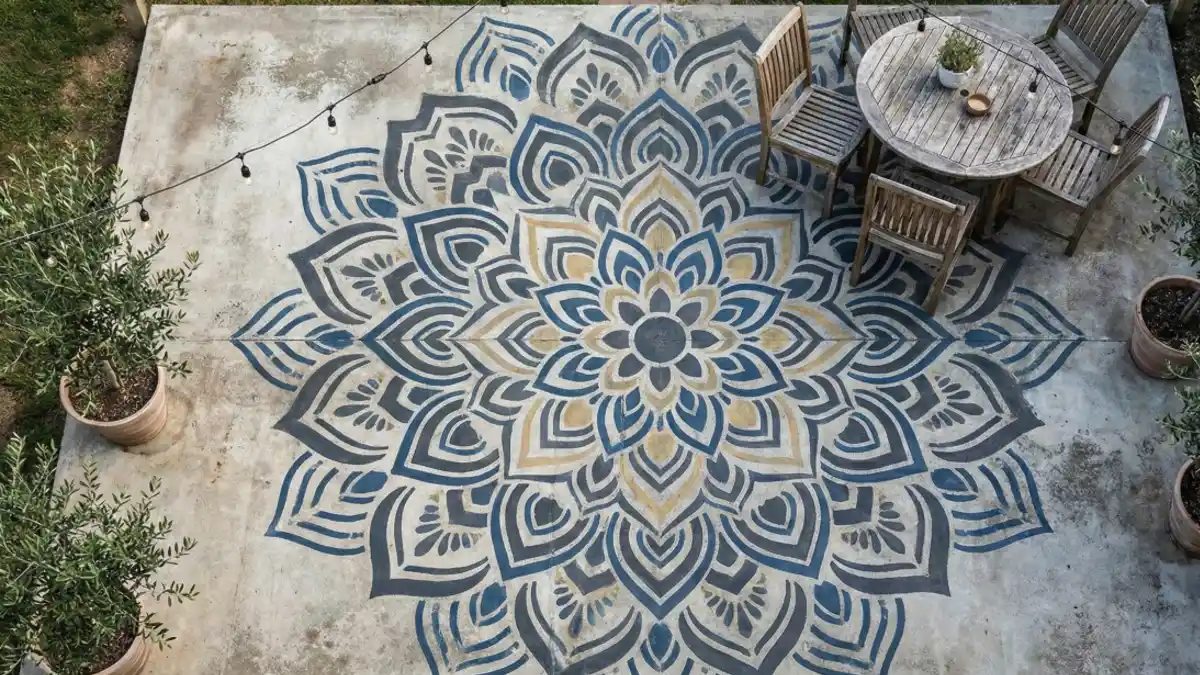
Anchoring an entire backyard design often requires a single, bold focal point to draw the eye away from concrete imperfections and fence lines. A massive, radial mandala painted directly onto the slab transforms a standard gray foundation into a meditative art installation, effectively functioning as a permanent rug that never gets soggy in the rain.
Opting for one giant, centralized motif instead of a repeating small pattern creates an immediate “wow” factor and defines the lounging zone without the need for physical barriers.
Radial Symmetry: Spreading outward from the center, the lotus-inspired geometry creates a natural gathering spot that feels harmonious and balanced, guiding guests into the space.
Cool and Warm Tones: Deep indigo and slate blue layers interact with hints of muted gold, creating a palette that feels both regal and grounded against the weathered concrete texture.
Offset Furniture Layout: Placing the weathered wood dining set slightly to the side allows the artwork to remain the hero of the space rather than hiding it under table legs.
Organic Perimeters: Potted olive trees frame the hardscape, softening the harsh edges of the slab and enhancing the Mediterranean, bohemian atmosphere established by the paint work.
9. Bohemian Terracotta & Navy Faux-Rug Patio – Stenciled Sophistication for Outdoor Living
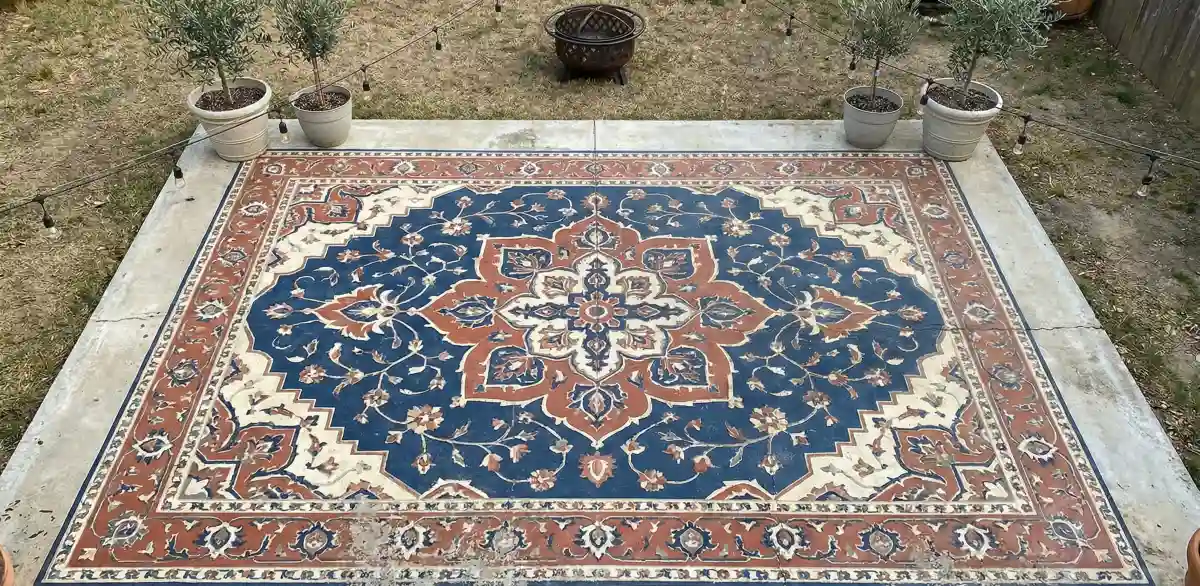
Outdoor living areas often suffer from “concrete fatigue,” but treating the ground like a canvas changes the entire atmosphere. Rich tones of rust and deep navy swirl together in a classic medallion pattern, effectively mimicking the warmth of a woven Persian carpet without the maintenance of fabric.
Imperfections in the surface, such as small cracks or uneven texture, only add to the charm, giving the piece an antique, heir-loomed appearance right from the start. Flanking the painted “rug” with potted olive trees and hanging bistro lights creates an immediate sense of enclosure and intimacy.
Design Highlight: Uses a high-contrast tri-color scheme (Rust, Navy, Cream) to make the stencil details pop against the gray surroundings.
Practical Benefit: Eliminates the need to drag rugs inside during rainstorms while still defining the space.
Styling Tip: Keep the surrounding furniture neutral to let the floor pattern serve as the main focal point.
10. Terracotta and Navy Geometric Patio – Mediterranean Charm for Plain Concrete
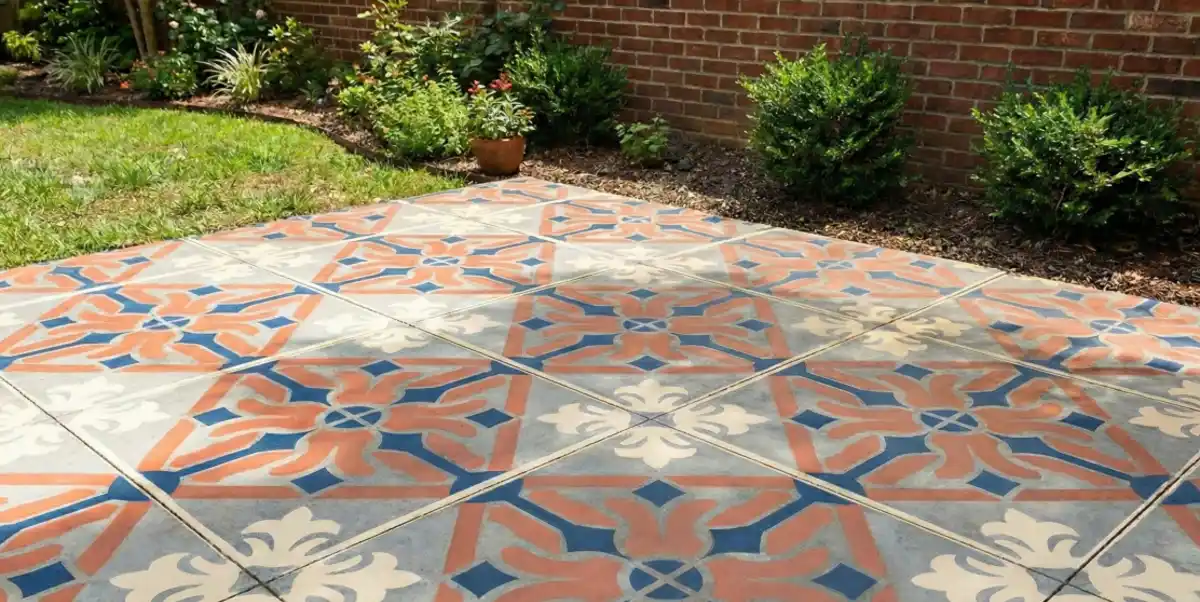
Mimicking the charm of expensive encaustic cement tiles doesn’t require a demolition crew, just a steady hand and a bold color palette. Deep slate blue intersects with warm, earthy terracotta tones here to create a sprawling mosaic effect that instantly warms up the cool grey of the original slab.
Coordination is key in this design; the burnt orange hues in the stencil work harmoniously with the existing red brick wall, tying the hardscaping together with the architecture. Creamy white accents act as a highlighter, making the intricate flourishes pop against the darker background while hiding minor imperfections in the concrete surface.
Color Palette: Slate blue, burnt orange, and cream.
Style: Mediterranean/Spanish Revival.
Design Feature: Large-scale symmetrical medallions.
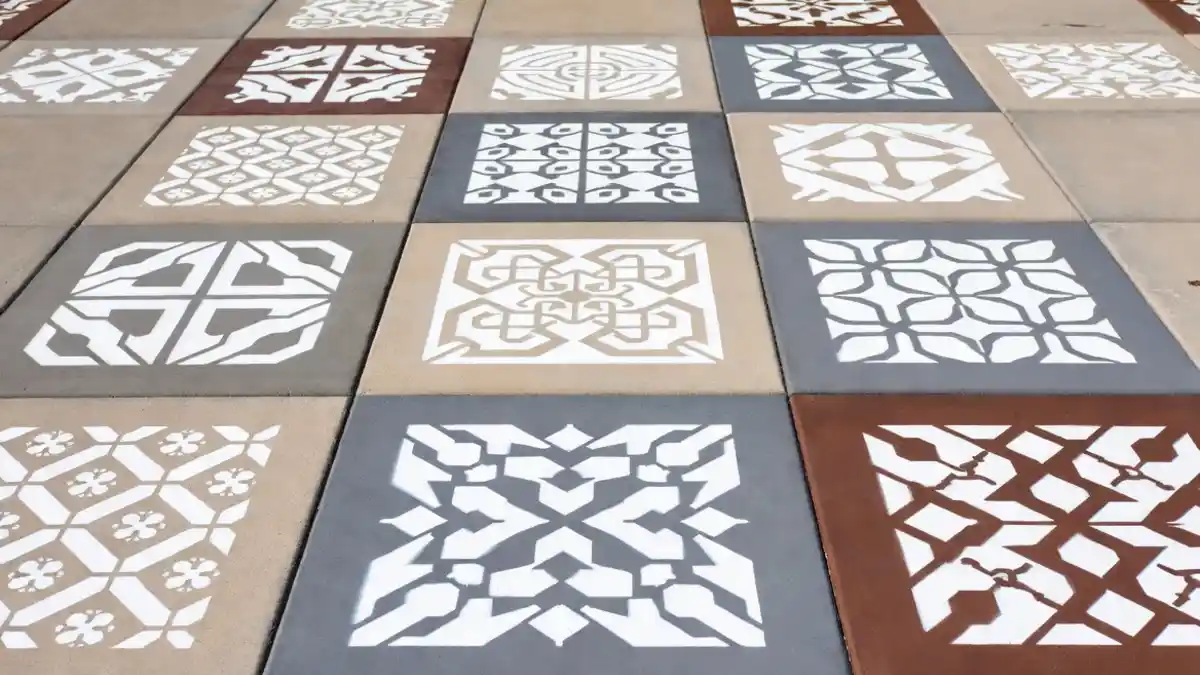
11. Earthy Geometric Quilt Patio – A Stencil Sampler for Creative Slabs
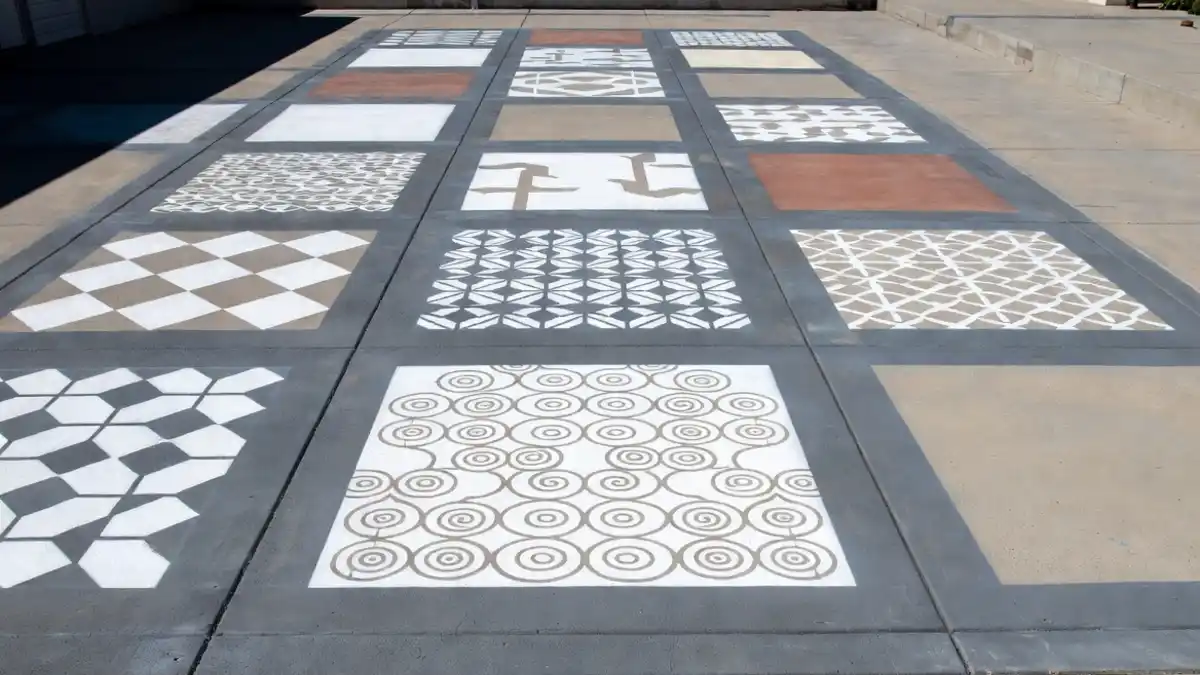
Why settle for a single design when you can turn your backyard into an artistic sampler? Grid lines painted in deep charcoal act as frames for individual experiments, ranging from hypnotic spirals to classic diamond argyle patterns.
Warm tones of tan and rust balance out the stark white geometric shapes, preventing the mix-and-match approach from looking messy. It’s a brilliant way to test drive different stencils or simply embrace an eclectic, patchwork aesthetic that hides stains and wear incredibly well.
Diverse Pattern Mix: Features a ‘quilt’ layout utilizing various stencils including spirals, diamonds, trellis work, and checkers within a unified grid.
Grounded Palette: Utilizes a cohesive color scheme of terra-cotta, beige, slate grey, and white to tie distinct designs together.
Defined Borders: Dark grey painted grout lines separate each ’tile,’ giving the illusion of individually laid pavers rather than a continuous pour.
12. Floating Mandala and Slate Walkway – Stencil Patterns Using Negative Space
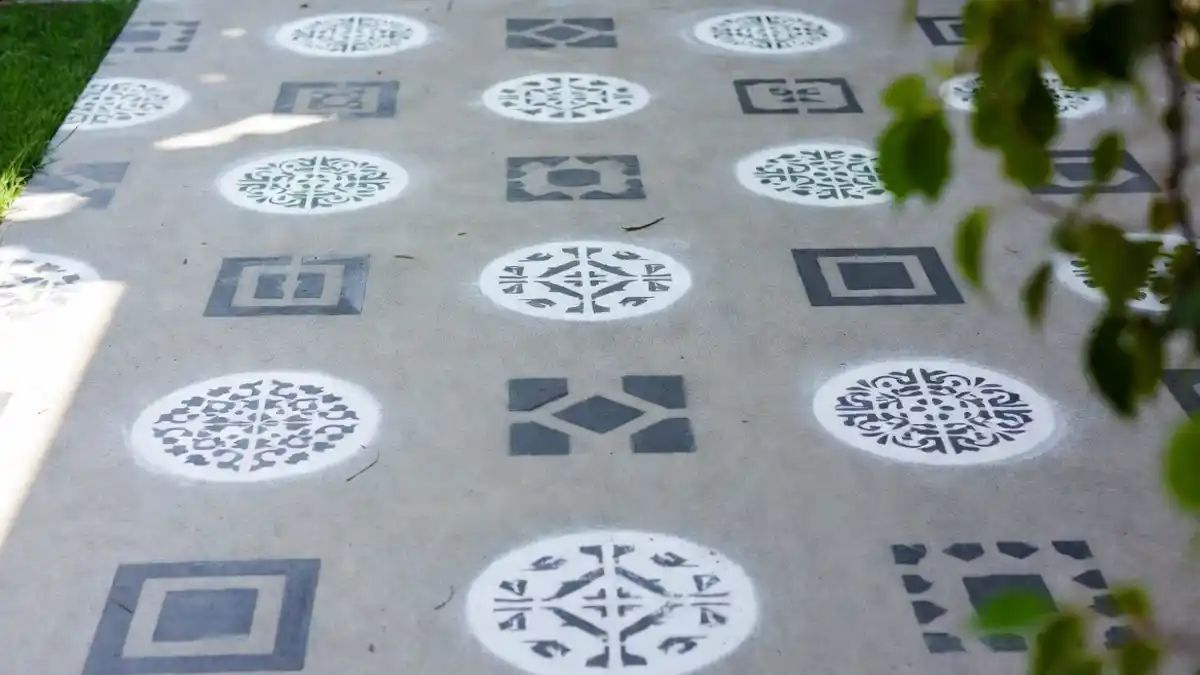
Painting the entire surface isn’t always necessary to make a bold statement on a dull slab. Alternating bright white medallions with sharp, slate-grey geometric squares allows the natural concrete to serve as a neutral backdrop, creating a sophisticated “floating” effect.
Sun-drenched garden paths benefit immensely from this “less is more” approach because it blends the hardscape seamlessly with the surrounding greenery without overwhelming the eye with too much color.
Negative Space Technique: Uses the existing concrete color as the primary background, which creates an airy feel and significantly cuts down on paint and prep time.
Shape Contrast: Balances soft, intricate circular floral patterns with rigid, masculine square blocks to keep the look dynamic.
High-Contrast Stenciling: Crisp white and dark grey paint ensure the designs remain visible and distinct against the mid-tone grey slab.
13. Classic Estate Pavers – Upscale Faux-Tile Walkway
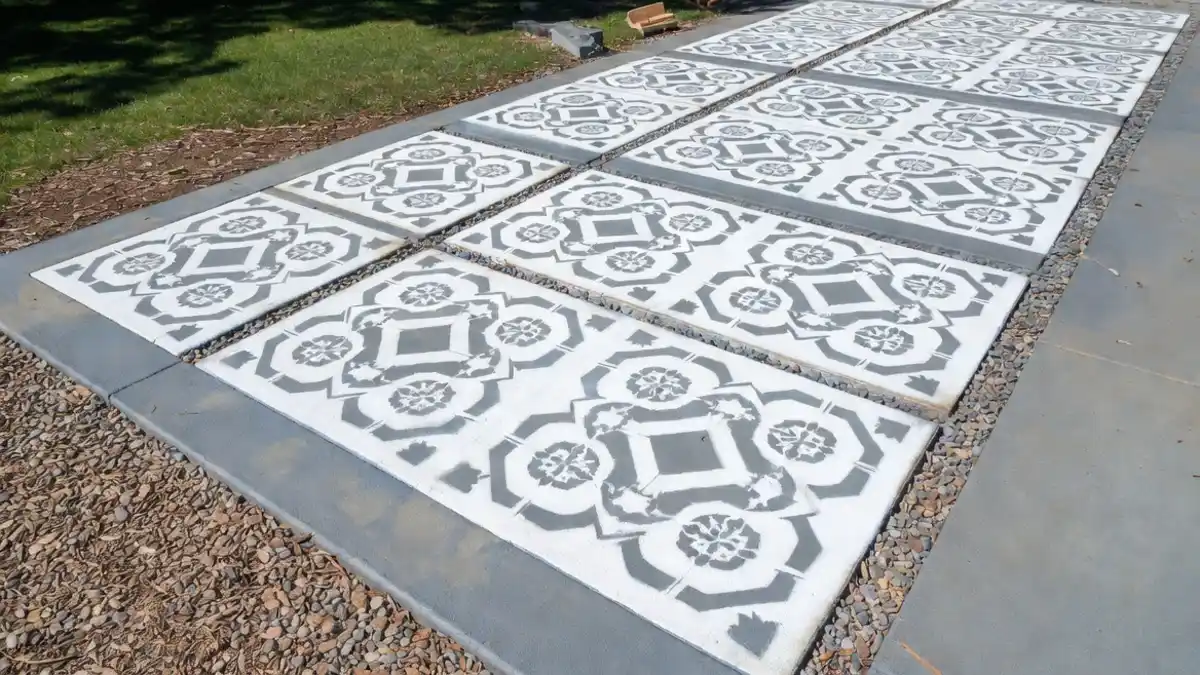
Turning standard concrete rectangles into a statement piece requires nothing more than high-contrast paint and a steady hand. Expansive white backgrounds amplify the intricate grey scrollwork, mimicking the look of expensive handcrafted tiles found in historic estates.
Gravel gaps between the stones serve as a rustic frame, ensuring the pattern feels intentional and grounded rather than chaotic. It’s an elegant solution for breaking up long stretches of walkway without managing a complex, continuous pattern.
Individual Framing: Treats each concrete slab as a separate canvas, framed by loose stones for texture and drainage.
Timeless Motif: Uses a traditional floral-geometric hybrid pattern that adds sophistication to simple hardscaping.
Crisp Two-Tone: Relies on a clean white and cool grey pairing to maintain a fresh, tidy appearance amidst the garden greenery.
14. Manor House Garden Path – Elegant Faux-Tile Walkway
Transforming disjointed concrete pads into a cohesive, high-end feature is easier than pouring a whole new slab. Crisp white base coats maximize the sunlight, making the grey ornate scrollwork pop with a distinct, Mediterranean flair.
Gravel borders framing each square add texture and drainage, preventing the look from feeling too heavy or industrial. It creates a defined, sophisticated journey through the yard rather than just a utilitarian place to walk.
Separated Slabs: Individual concrete squares are framed by loose river rocks or gravel for texture.
High-Contrast Motif: Intricate grey floral-geometric patterns sit boldly against a stark white background.
Estate Aesthetic: Mimics the appearance of expensive, hand-painted ceramic tiles found in historic courtyards.
15. Monochrome Geometric Zen Patio – Stenciled Concrete Slab Transformation
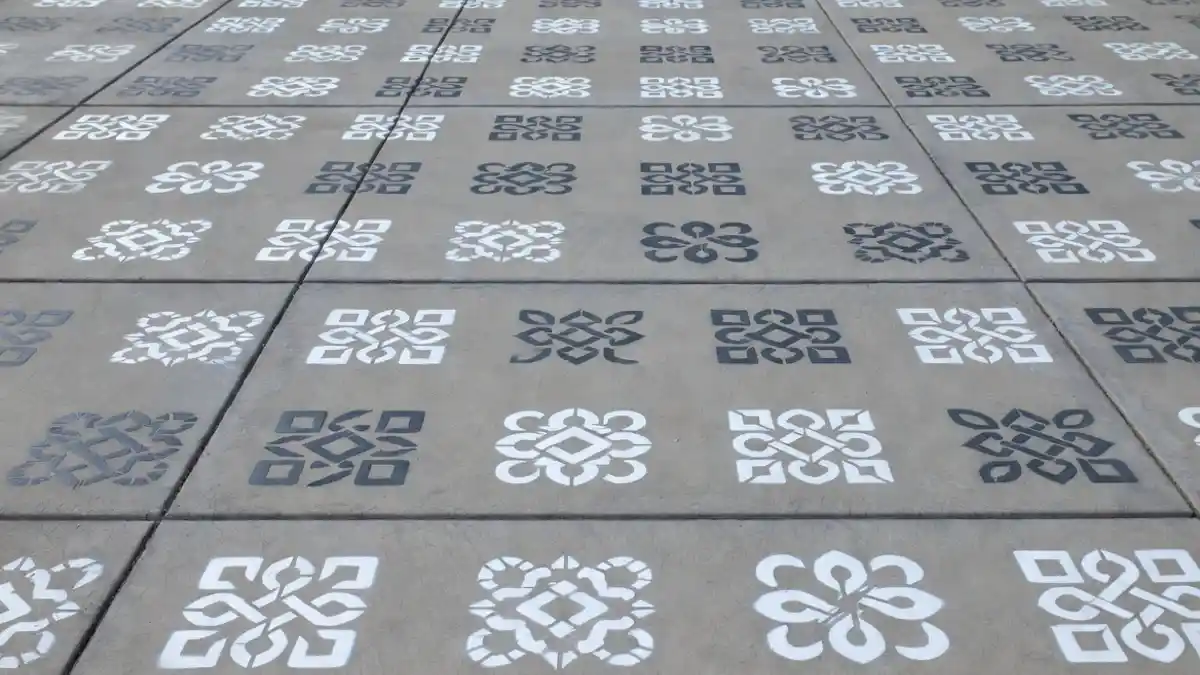
Transforming a dull backyard path involves nothing more than a few cans of paint and a steady hand to achieve this high-end look. Alternating between stark white and deep charcoal designs creates a checkerboard effect that instantly modernizes the space, giving it depth and movement.
Intricate Celtic knots and looping floral geometries replace the monotony of plain cement with an artistic, tiled appearance that feels curated rather than accidental. It’s a smart way to mimic expensive custom pavers without the hassle or cost of actually ripping out the existing hardscaping.
High-contrast black and white palette pops against the neutral gray background for maximum visibility.
Repeating geometric and knot motifs provide a structured, cohesive aesthetic that calms the eye.
Alternating colors on the grid keeps the design from looking too busy or repetitive while defining the walkway.
16. Monochrome Swirl Concrete Pathway – Artistic Stencil Upgrade for Dull Pavers
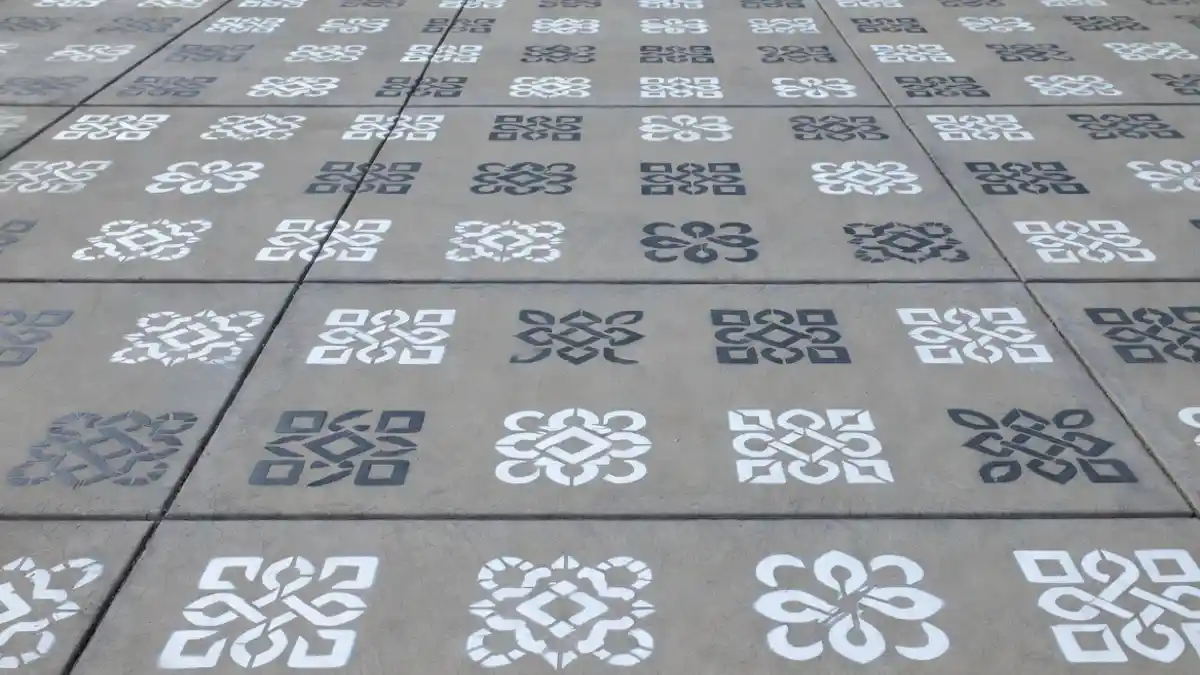
High-contrast black and white swirls completely redefine the personality of these standard square pavers, turning a functional walkway into a dynamic visual journey. Bringing such bold, rhythmic movement to the ground level instantly distracts from the utilitarian nature of concrete, proving that you don’t need expensive stone to achieve a high-end, custom look in your garden.
Free-flowing patterns hide a multitude of sins: Straight lines and geometric grids often highlight cracks or uneven settling in older slabs, whereas organic, curving designs like these swirls confuse the eye and effectively camouflage surface imperfections.
Monochromatic palettes pack a punch: Stick to a simple two-tone color scheme to keep the design feeling modern and cohesive rather than chaotic; the sharp distinction between the bright white and deep black paint makes the pattern pop against the neutral beige background.
Stencil magic makes consistency easy: Using a large-scale stencil ensures the motif repeats correctly across multiple slabs without requiring freehand artistic skills, allowing for a quick weekend project that dramatically boosts curb appeal.
17. Mediterranean Patchwork Faux-Tile Patio – A Concrete Stenciling Transformation
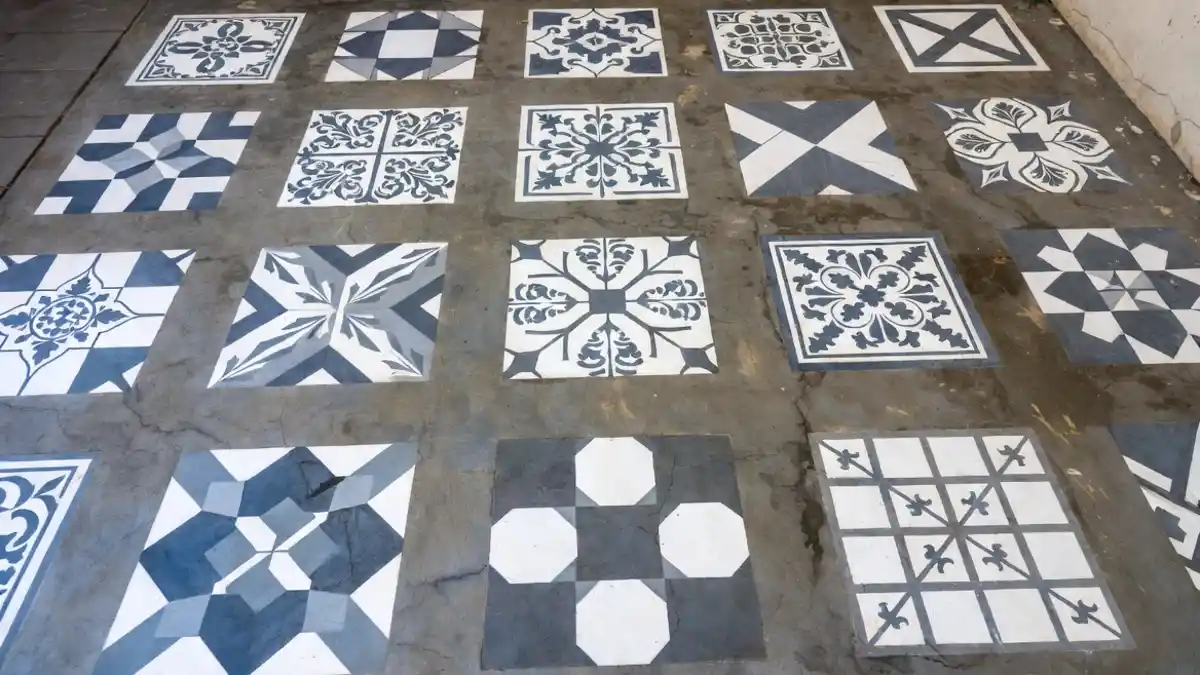
Turning a drab slab into a focal point is easier than tearing it out, especially when you embrace the charm of mismatched patterns. Blue and white paint brings a classic, airy Mediterranean vibe to this outdoor space, mimicking the look of expensive ceramic tiles without the heavy lifting.
Alternating between floral swirls, sharp geometric stars, and classic trellis designs creates a playful “quilt” effect that draws the eye and hides surface imperfections beautifully. Spacing the stencils evenly allows the raw concrete to serve as natural “grout” lines, saving time and adding an authentic, weathered texture to the finish.
Color Combo: Deep indigo and bright white pop against the neutral gray background for a fresh, coastal look.
Design Strategy: Using multiple stencil patterns breaks up monotony and feels eclectic rather than mass-produced.
Texture: The matte finish of the concrete adds a rustic, lived-in feel to the paintwork, making it forgiving of wear and tear.